The Bill of Material number is the closest thing an axle has to a VIN. Find it stamped on the axle tube, and it will tell you the model, the gear ratio, whether the differential is open or limited slip, and every part that fits it. The tag is the shortcut; the casting number and the ratio tag are the backup when the stamping has rusted away.
Quick Answer: Find the BOM First
- BOM stamp. Six digits plus a one or two digit suffix, starting 60 or 61 on traditional axles, stamped into the right or left axle tube next to a date stamp.
- Model number. Cast into one of the housing webs, often visible without cleaning much.
- Ratio tag. A small metal tag bolted under a differential cover bolt.
Where Each Number Lives
| What you are looking for | Where to find it |
|---|---|
| Bill of Material number | Stamped on the right or left axle tube, beside the build date. On some models it is on the carrier instead |
| Build date | Stamped next to the BOM, in a day, month, year pattern |
| Model number | Cast into a housing web, or on the nose of the housing |
| Gear ratio | Small tag under a differential cover bolt |
| Limited slip spec | Second small tag on the cover, naming the friction modifier |
| IFS axle BOM | Vertical tag near the centre of the right hand support arm, or stamped into the left hand support arm, or the nose of the carrier |
Wire brush the tube before you read it. A light pass is usually enough, and heavy grinding will destroy the stamping you are trying to read.
Reading the BOM Number
A traditional BOM runs six digits followed by a one or two digit suffix, and begins with 60 or 61. The trap is that the first two digits are often missing from the tag itself. A tag reading 5661-1 is really 6055661-1, and you have to add the 60 back before the number will decode.
Later BOMs can begin with 200, and on those the leading digits normally do appear on the tag.
Once you have the complete number, enter it into Dana’s own lookup rather than a forum decoder. The BOM defines the assembly as it left the factory, which is more precise than the model name alone.
Confirming the Model
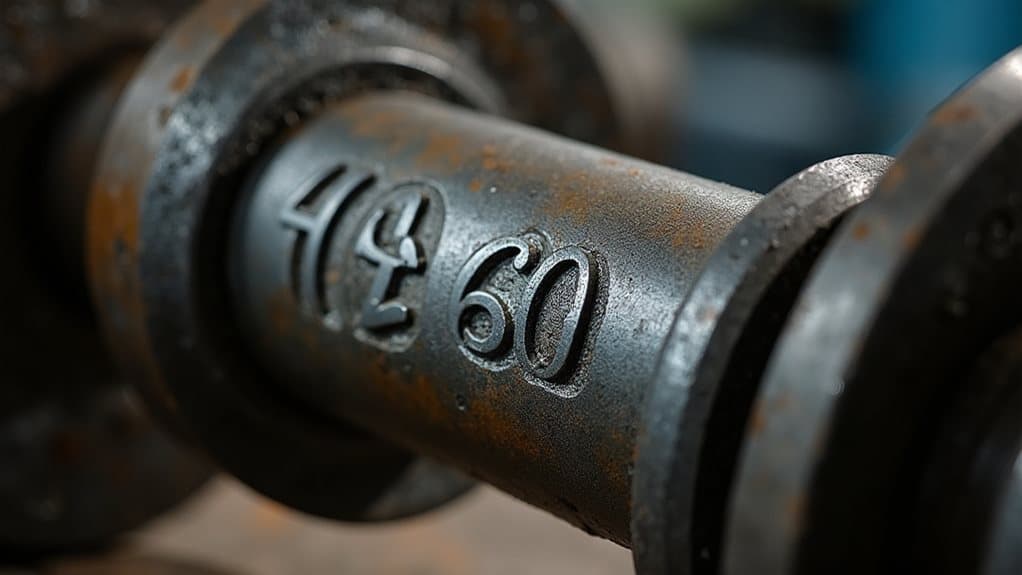
The model number is cast into the housing, which is helpful because castings survive far longer than tags. A Dana 30, 35, 44, 60, 70 or 80 all carry their number in the casting.
Measure the ring gear if the casting is unreadable, because diameter is the reliable indicator of strength. A larger ring gear means more torque capacity, and it usually means a heavier axle that costs more to build.
The Ratio Tag
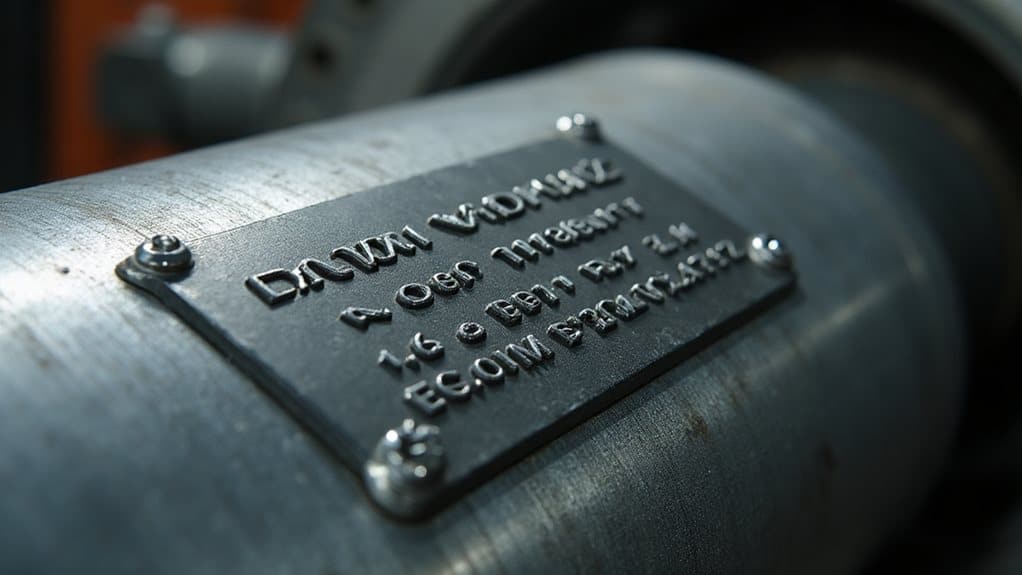
The ratio tag hangs on a differential cover bolt and states the ratio directly, often with the tooth counts. If it has been lost, the ratio can still be read from the ring and pinion teeth, or measured by turning the driveshaft, which is covered in our gear ratio guide.
Do not assume the tag matches the current gears. Axles get regeared and the tag often stays. If the vehicle drives differently from what the tag claims, trust the measurement.
When the Tag and Stamp Are Gone
Work in this order: the casting number for the model, the ring gear diameter for strength, the driveshaft turn test for the ratio, and the cover shape to confirm the family. Between those four you can order bearings, seals and a rebuild kit without a BOM.
What you lose without the BOM is the exact original build, which matters if you are chasing factory parts for a restoration rather than a rebuild.
Related Identification Guides
Axle and gearbox numbers follow similar conventions, which is why the decode method transfers. Our Borg-Warner and GM identification guide covers the transmission side, and the transmission section collects the rest. If the vehicle also has a GM overdrive, the 4L60E and 4L80E comparison explains the family split.
The Models You Will Meet
Dana numbers the family by the model cast into the housing, and that number is the first thing to establish. The common ones in light trucks and Jeeps are the 30, 35, 44, 60, 70 and 80.
| Model | Where it usually turns up | How it is normally marked |
|---|---|---|
| Dana 30 | Front axles on many Jeep and light 4×4 applications | 30 cast into a housing web |
| Dana 35 | Rear axles on lighter Jeeps and small trucks | 35 cast into the web |
| Dana 44 | Front and rear on half ton trucks, Jeeps and older 4x4s | 44 cast into the web |
| Dana 60 | Heavy duty front and rear axles, one ton trucks | 60 cast into the web |
| Dana 70 and 80 | Heavy commercial and towing applications | Cast into the housing or the nose |
The number tells you the family, not the ratio, the width or the brake specification. Those come from the BOM.
Confirming Without a Casting
When the casting is buried under paint or grime, measure the ring gear. Diameter is the honest indicator of which model you are looking at and how much torque it will take, and it does not depend on a readable number.
Pull the cover, measure across the ring gear, and match it to the family. You are already in there to change the oil, so the measurement is free.
BOM Versus the Ratio Tag
These two are often confused, and they answer different questions. The BOM identifies the whole assembly as built, so it covers the housing, the carrier, the ratio, the brakes and the shafts. The ratio tag bolted to a cover bolt only states the ratio.
For ordering a rebuild kit, bearings or a replacement shaft, you want the BOM. For a quick answer on gearing, the ratio tag is faster, but it is also the tag most likely to be wrong on a modified vehicle.
Solid Axle Versus Independent Front Suspension
Solid axles carry the stamping on the tube, which is easy to reach. Independent front suspension moves the identification to the support arm or the nose of the carrier, and the position changed across model years.
On an IFS axle, check all three positions before concluding the number is missing: a vertical tag near the centre of the right hand support arm, a stamp on the left hand support arm, and a stamp on the nose of the carrier.
Frequently Asked Questions
Where is the BOM number on a Dana axle?
Stamped into the right or left axle tube, next to the build date stamp. On some models it is on the carrier instead, and on independent front suspension axles it can be on a tag near the right hand support arm.
What is a Dana BOM number?
A bill of material number that identifies the axle assembly as built, including the model, ratio, differential type and the parts that fit. It works like a VIN for the axle.
Why does my BOM start with 5661 instead of 6055661?
Because the first two digits were dropped from the tag. Traditional BOMs begin with 60 or 61, so add them back before running the lookup.
How do I find the gear ratio if the tag is missing?
Count the ring gear and pinion teeth, or jack the axle up and count driveshaft turns for each wheel revolution. Two wheel revolutions for an open differential, one for a limited slip.
What does the number cast into the housing mean?
It is the model number, such as 30, 35, 44, 60, 70 or 80. It identifies the axle family but not the ratio or the build details.