
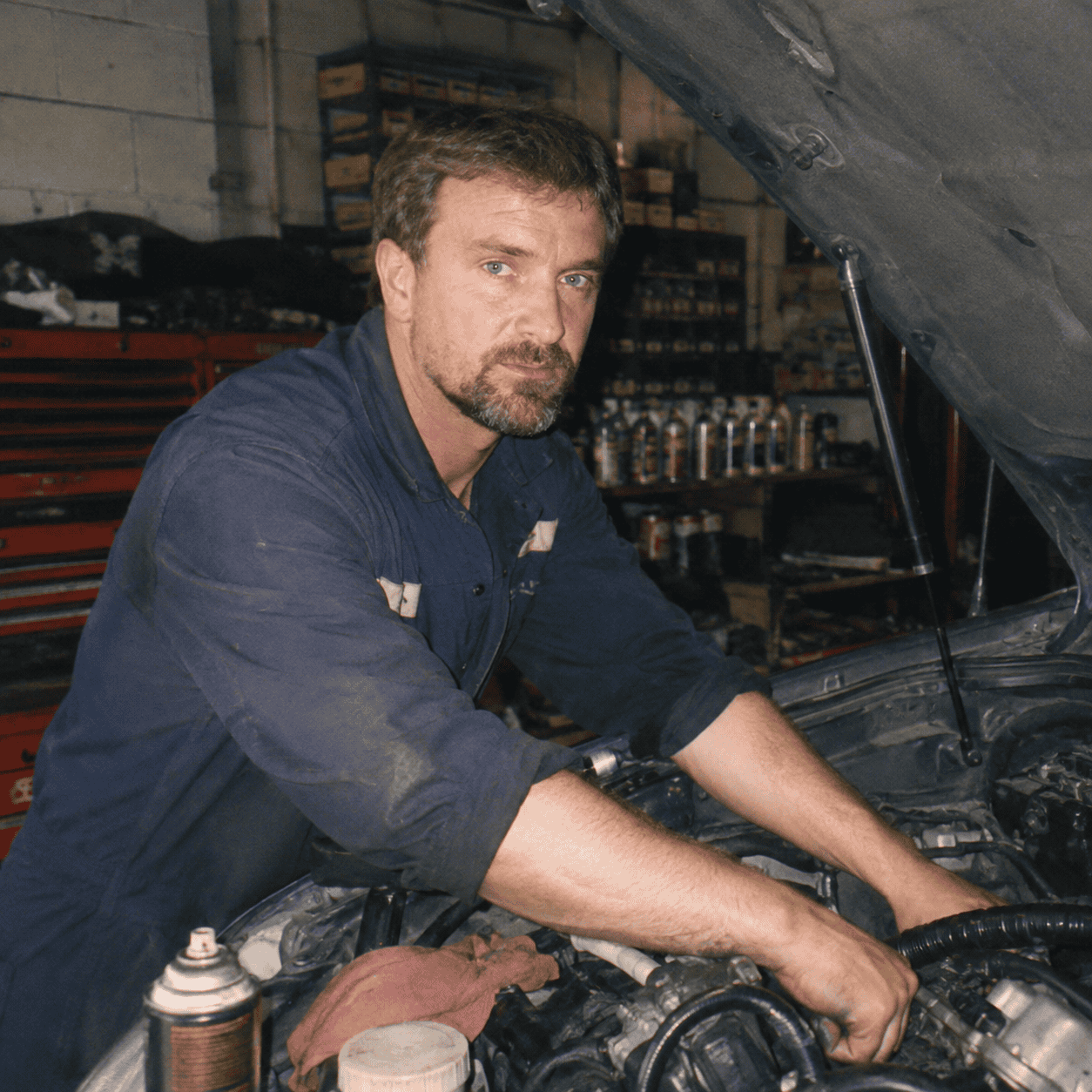
GarageSee is written and reviewed by Michael Seeley, an ASE Certified Master Automotive Technician with more than 30 years of hands-on experience diagnosing, maintaining, and repairing cars, trucks, and SUVs.

Who writes this site
I have spent over three decades under the hood – in workshops, on driveways, and under vehicles that other people had already given up on. Cars, trucks, SUVs. Carburetors through to CAN bus. The kind of experience you only get by being wrong occasionally and having to go back and fix it properly.
I hold ASE Certified Master Automotive Technician status, which requires passing the National Institute for Automotive Service Excellence certification tests across the core automotive service areas and keeping them current through periodic recertification. My individual certifications cover:
- Engine Repair
- Brakes
- Electrical and Electronic Systems
- Engine Performance
- Automatic Transmissions
Why GarageSee exists
GarageSee started in 2021 for a straightforward reason: the same questions came up again and again, and the answers online were mostly useless. Forum threads that trail off without a resolution. Articles that restate the question in five different ways and never actually tell you what to check first.
The aim here is narrower and more useful. Tell you what is most likely wrong, what to check in what order, what it will probably cost, and – just as importantly – when to stop and hand it to someone with a lift and the right diagnostic equipment. Knowing where the line sits between a driveway repair and a workshop job is part of the trade, and it belongs in the advice.
What GarageSee covers
Most of what you will find here is automotive: engine diagnostics, transmissions, brakes, electrical faults, cooling systems, and the tools and parts that go with them. That is where my certifications sit and where the advice carries the most weight.
GarageSee also covers practical problems that live in and around the garage itself – a furnace that will not fire, a frozen water line, a smoke alarm flashing a code nobody can decipher, the right socket for a mower blade. A garage sits between the car and the house, and the diagnostic thinking is the same: work out what the symptom is actually telling you before you start replacing parts.
How articles are researched and reviewed
GarageSee researches automotive content, technically reviews it, and checks it against manufacturer specifications, service information, and established repair practices before publishing. Torque figures, capacities, fault codes, and procedures are verified against source material rather than repeated from other websites.
Where a procedure varies by model year, engine or platform, the article says so instead of flattening it into one answer that is wrong for most readers.
How we test tools, parts and methods
Products, tools, parts and repair methods are evaluated on practical workshop experience – real-world usability, reliability, compatibility, and how they hold up against manufacturer specifications. Not on spec-sheet comparisons or whatever the manufacturer’s marketing copy claims.
If a tool is fine for occasional home use but will not survive daily professional work, that distinction gets made. Most buyers are not professionals, and pretending otherwise helps nobody.
Corrections
Specifications change, parts get superseded, and mistakes get made. If something on this site is wrong, out of date, or unclear, tell me through the contact page. Genuine corrections are made to the article itself, and the updated date changes to reflect it.
How GarageSee is funded
GarageSee is free to read and supported by display advertising. No one pays for coverage, for a favorable review, or for a mention in a recommendation. Advertising revenue is not tied to what any individual article says.
Get in touch
Questions, corrections, or a fault that has you stumped – the contact page reaches me directly. You can also browse everything I have written here.