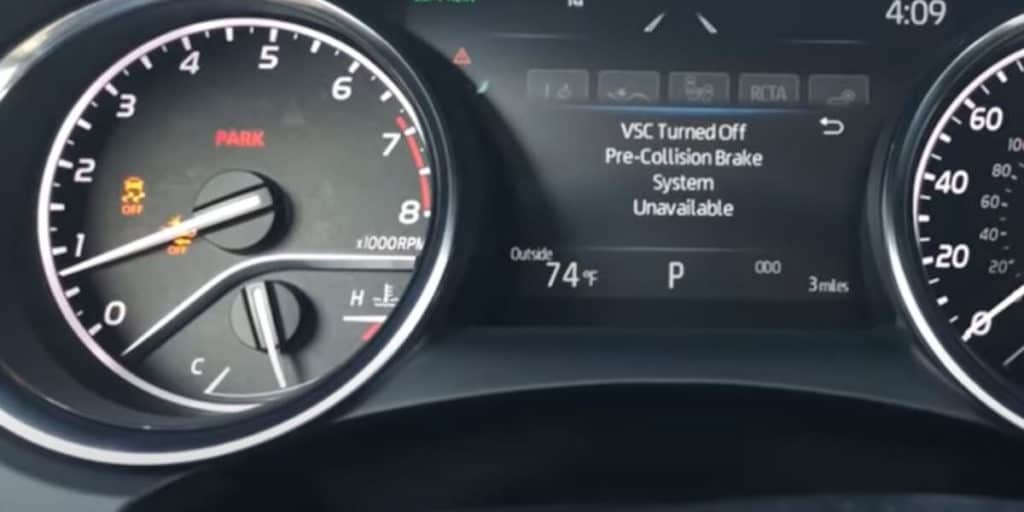
To safely jump-start a modern vehicle with complex electronics, first make sure both cars are off and parked close. Connect the positive cable to the dead battery’s positive terminal, then to the donor’s positive terminal. Attach the negative cable to the donor’s negative terminal, but instead of connecting directly to the dead battery, ground it to a clean, unpainted metal surface away from the battery. Keep the engine RPM steady at 1500-2000 RPM during the process. Properly disconnect in reverse order after the vehicle starts. Continuing will reveal essential safeguards for protecting sensitive electronic systems from voltage surges.
Quick Tips
- Always consult the vehicle’s owner manual for specific jump-start procedures and electronic system precautions.
- Connect jumper cables in the correct order, ensuring positive to positive and grounding to a metal engine part.
- Keep the donor vehicle’s engine at a steady RPM (1500-2000) without revving during the process.
- Use jump starters with appropriate peak amperage to avoid voltage surges damaging sensitive electronics.
- After starting, check for warning lights, error codes, and secure all cable connections before driving.
Why Modern Vehicles Need Extra Care When Jump-Starting
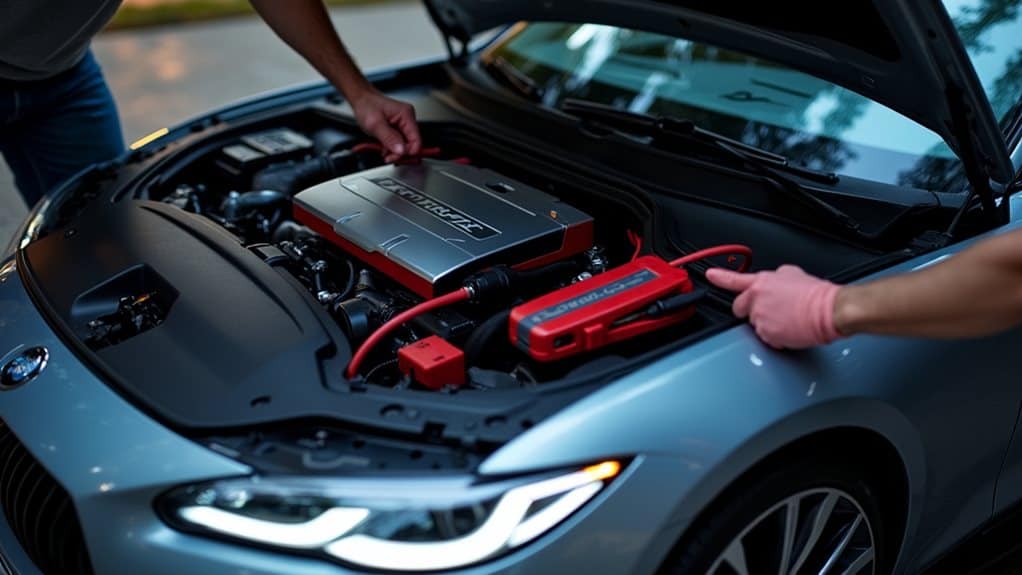
Modern vehicles require extra care when jump-starting because they contain multiple electronic control modules and advanced systems that are sensitive to voltage fluctuations. The battery’s power surges can damage these electronic systems, including critical control units like ECUs.
Incorrect procedures may cause fuse blows or system failures, risking costly repairs and compromising vehicle safety. Improper disposal of solvents like acetone can pose environmental harm and create fire hazards if not handled correctly.
How to Safely Prepare Your Vehicle and Equipment
Before beginning the jump-start process, it’s essential to prepare both your vehicle and equipment properly to prevent damage to sensitive electronic systems.
Make certain the vehicle is parked close enough for the jumper cables to reach, with the battery terminals accessible.
Verify the donor vehicle has a fully charged battery, inspect cables for damage, and consult the owner’s manual for specific instructions.
Also, check and, if necessary, replace the cabin air filter regularly to ensure proper airflow and prevent debris from affecting HVAC components during vehicle servicing.
Step-by-Step: How to Properly Connect Jumper Cables on Modern Cars
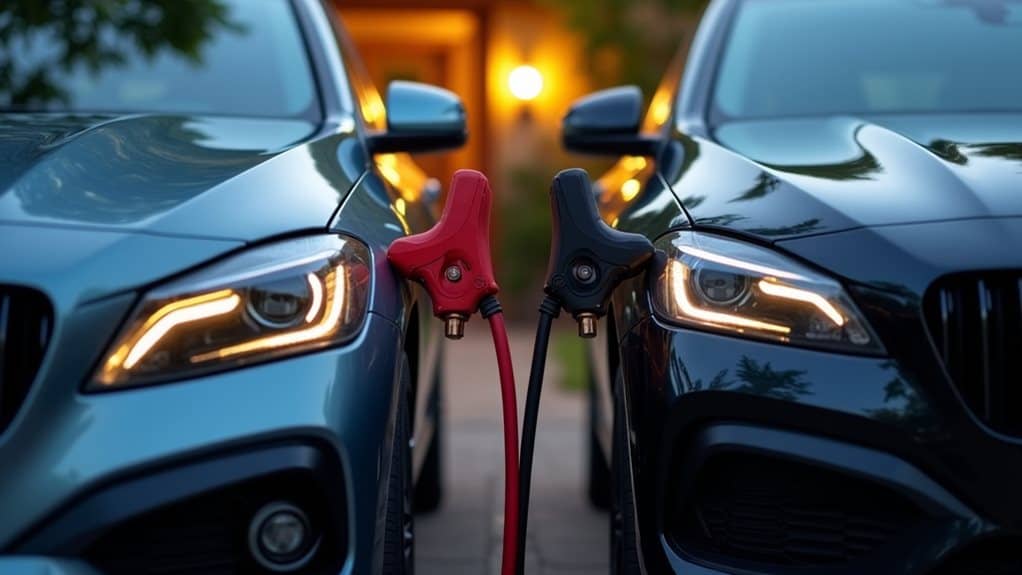
To connect jumper cables properly on modern cars, it’s essential to follow a specific sequence to guarantee safety and prevent damage to electronic components. First, attach the positive (red) jumper cable clamp to the dead battery’s positive terminal, then to the donor vehicle’s positive terminal. Next, connect the black (negative) clamp to the donor’s negative terminal, and finally to a clean, unpainted metal engine block away from the dead battery.
Using a Jump Pack Safely: An Alternative for Modern Electronics
When using a jump pack as an alternative to traditional jumper cables, it’s important to prioritize safety and proper technique to protect your vehicle’s sensitive electronic systems.
If your battery is weak, connect the jump pack’s positive terminal to the vehicle’s positive terminal or jump post.
Keep the pack stable, and disconnect promptly once the engine starts smoothly, following manufacturer instructions.
Always verify the battery voltage is ≥12.4V before attempting a jump to reduce risk to vehicle electronics and ensure a successful start (battery voltage).
Risks of Power Surges and Electronic Damage During Jump-Starting
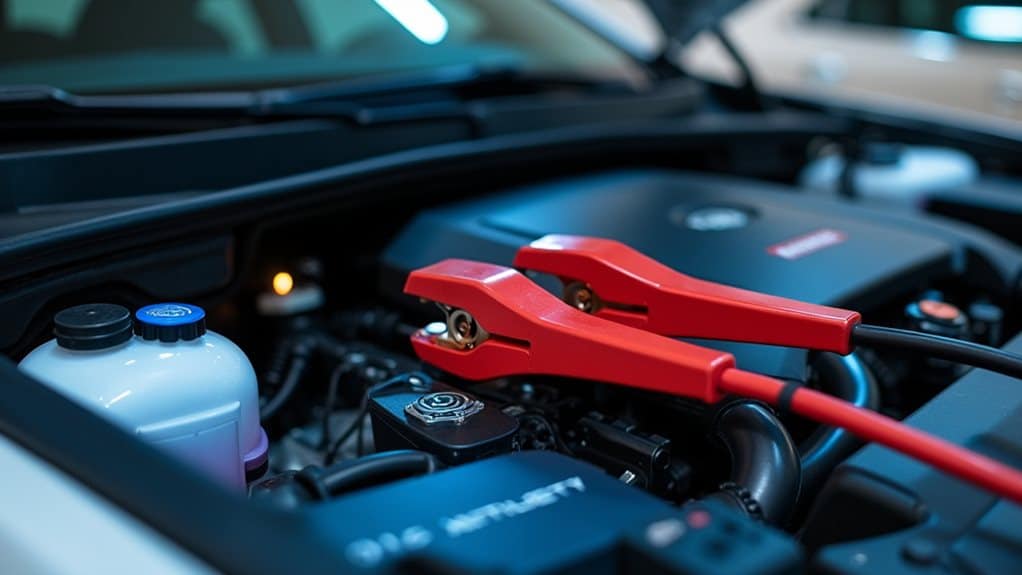
Power surges and electronic damage are significant risks when jump-starting a modern vehicle, especially because of its sensitive electronic control units (ECUs).
Incorrect cable connections, reverse polarity, or improper procedures can cause voltage spikes, which may blow fuses, damage sensors, or impair safety systems like airbags.
Proper technique minimizes these risks and protects expensive electronic components.
Choosing a jump starter with the proper peak amperage rating for SUVs or trucks helps ensure reliable starts and reduces the chance of electrical issues.
Post-Jump Checks to Protect Your Vehicle’s Electronics
After completing a jump-start, it’s essential to inspect the battery terminals carefully for corrosion or loose connections, as poor contact can cause electronic issues.
You should verify that all connections are stable and secure before proceeding, ensuring that no cables are loose or misaligned.
Additionally, monitor your vehicle’s electronic systems during this process by using a diagnostic tool to check for error codes and confirm that warning lights are off, which helps protect sensitive components from potential damage.
Regularly checking fluid levels and looking for signs like fluid leaks can help prevent cascading drivetrain and electronic problems.
Inspect Battery Terminals Carefully
Inspecting your battery terminals carefully is a crucial step to safeguard your vehicle’s sensitive electronics during and after a jump-start. Check for corrosion, which appears as a white or bluish residue, and make certain the terminals are clean, tight, and free of debris.
Look for cracks, swelling, or leaks that could cause arcing or power issues, and remove corrosion with a wire brush if needed.
Verify Connection Stability Properly
Confirming connection stability is a critical step in preventing damage to your vehicle’s sensitive electronics after jump-starting.
You must verify connection stability by inspecting the tightness of battery terminals and cable clamps, checking for corrosion, and confirming secure seating.
After starting the engine, watch for warning lights and use a multimeter to guarantee voltage remains stable before disconnecting cables.
Monitor Vehicle Electronics During
Monitoring your vehicle’s electronics during and immediately after jump-starting is essential for protecting delicate systems.
Use a diagnostic scanner to check for fault codes before and after the process, ensuring all control modules function correctly.
Observe warning lights, electronic displays, and system behavior for irregularities, resets, or voltage surges, confirming that sensitive components operate normally.
When to Call a Professional Instead of DIY Jump-Starting
Modern vehicles often contain advanced electronic systems, such as Start/Stop technology, sensitive control modules, and complex wiring layouts. These systems require careful handling during a jump-start.
If you have a dead battery, notice warning lights, or suspect electronic damage, professional assistance is advisable.
Attempting a DIY jump-start could risk damaging these systems, so seek expert help to guarantee safety and proper care.
Most Chevy radios that won’t shut off can be caused by an overlooked issue like a faulty radio retention circuit, so dealerships rarely check this first during diagnosis.
Common Mistakes to Avoid When Jump-Starting Modern Vehicles
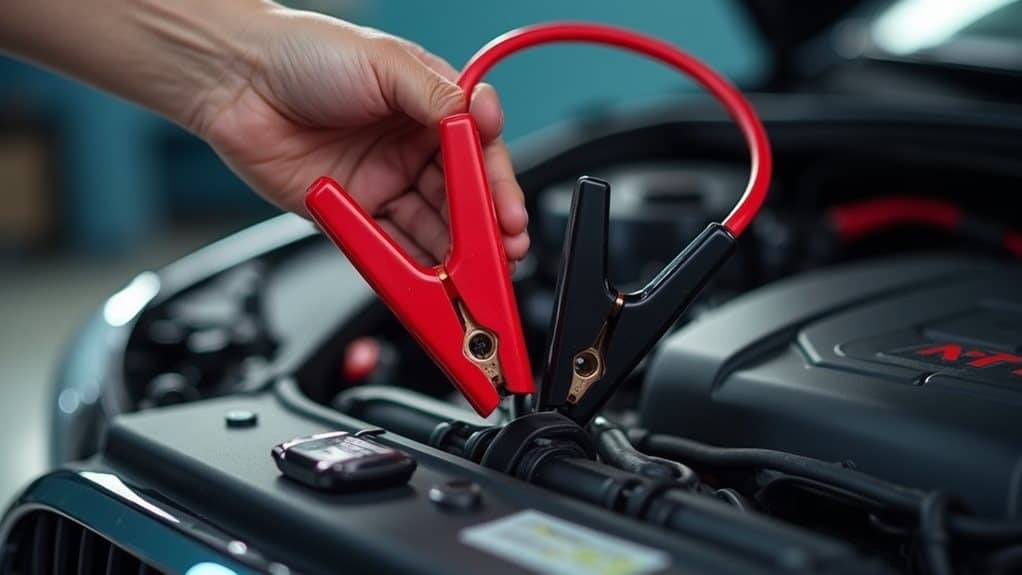
One common mistake is reversing the polarity of the jumper cables, which can send dangerous electrical currents through your vehicle’s sensitive control modules and cause extensive damage.
You must also be cautious when attaching the clamps, avoiding contact with moving engine parts or metal surfaces that could lead to sparks or electrical arcing.
Additionally, revving the donor vehicle excessively can create voltage spikes that threaten your vehicle’s electronic systems, so it’s important to keep the engine at a normal idle during the process.
Reversing Polarity Risks
Have you ever mistakenly connected the jumper cables the wrong way during a jump-start? Reversing polarity can cause severe voltage spikes that damage sensitive electronic modules, such as ECUs and sensors.
Even a brief moment of reversed polarity risks blowing fuses or destroying costly components, emphasizing the importance of double-checking clamp placement against the owner’s manual to prevent damage.
Touching Clamps Caution
When jump-starting a vehicle, it’s essential to handle the clamps carefully to avoid accidental electrical issues, such as sparks, shorts, or damage to the vehicle’s electronic systems.
Never allow clamps to touch each other or metal surfaces. Keep clamps securely attached, and avoid repositioning them while live.
Touching clamps incorrectly can lead to dangerous sparks and electronic damage.
Excessive Revving Hazards
Excessive revving of the donor vehicle’s engine during a jump-start can substantially increase the risk of damaging sensitive electronic components in modern vehicles.
Rapid revving causes voltage spikes and electrical surges, which may overload or harm electronic control modules.
To avoid this, keep the donor engine at a steady, moderate RPM (around 1500-2000 RPM) and refrain from revving during the process.
Understanding Vehicle Features That Make Jump-Starting Riskier
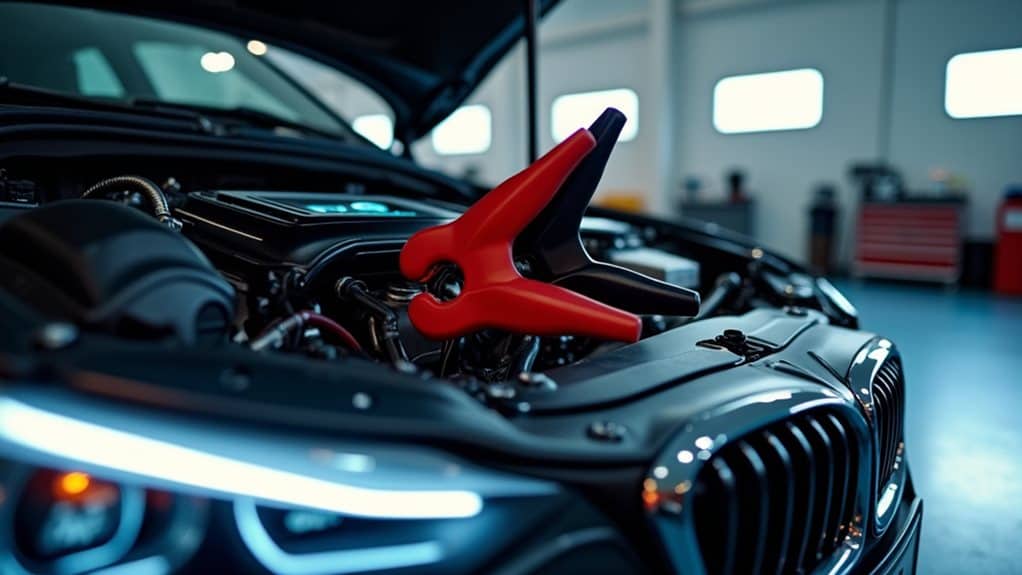
Modern vehicles are equipped with numerous control modules and advanced electronic systems that considerably increase the risks associated with jump-starting. These features can cause damage if voltage surges occur during improper procedures.
Smart alternators and complex wiring make modern vehicles more sensitive, so incorrect jump-starting can trigger warning lights, damage control units, or disable safety features, increasing repair costs.
Wrapping up
Properly jump-starting a modern vehicle requires careful attention to electronic systems to prevent damage. Always verify your vehicle’s manual for specific procedures, use correctly rated jumper cables or a jump pack, and follow step-by-step instructions carefully. Avoid shortcuts or rushing, as incorrect connections can cause power surges that harm sensitive electronics. If unsure, or if the vehicle has complex features like advanced driver-assistance systems, consult a professional. Prioritize safety and precision to protect your vehicle’s electronics effectively.