A transmission tag is the fastest way to turn a mystery gearbox into a known part, but only if you can read the format. Every manufacturer uses a different layout, and the same tag position can carry a date code, an application code or a serial number depending on the year. What follows is the decoding method, family by family, plus what to do when the tag is gone.
Decode in Four Steps
- Identify the family first. Pan outline and bolt count cost nothing and tell you whether you are reading a GM, Ford or Chrysler tag.
- Find the tag or plate. It is usually on the case side, the pan rail or the bellhousing, and it may be a plate, a sticker or a stamping.
- Split the string. Most tags begin with a year or date, then an application code, then a serial or day number.
- Cross check with a casting number. If the tag and the casting disagree, trust the casting for the case and the tag for the build.
Where the Tag Lives
| Family | Where to look | What it gives you |
|---|---|---|
| TH350 | Stamped pad around the bellhousing | Partial VIN plus a broadcast code in some years |
| TH400 | Metal plate, passenger side vertical face | Year, application letter and Julian build day |
| 700R4 and 4L60 | Passenger side, rear, above the pan rail | Year digit, then two or three application letters |
| Ford C4 and C6 | Metal tag bolted to the case | Model and application code, plus a casting number on the case |
Wipe the area with a rag before reading. Most tags that “cannot be found” are simply under grease, and most tags that “cannot be read” are being read at the wrong angle in poor light.
GM Formats in Detail
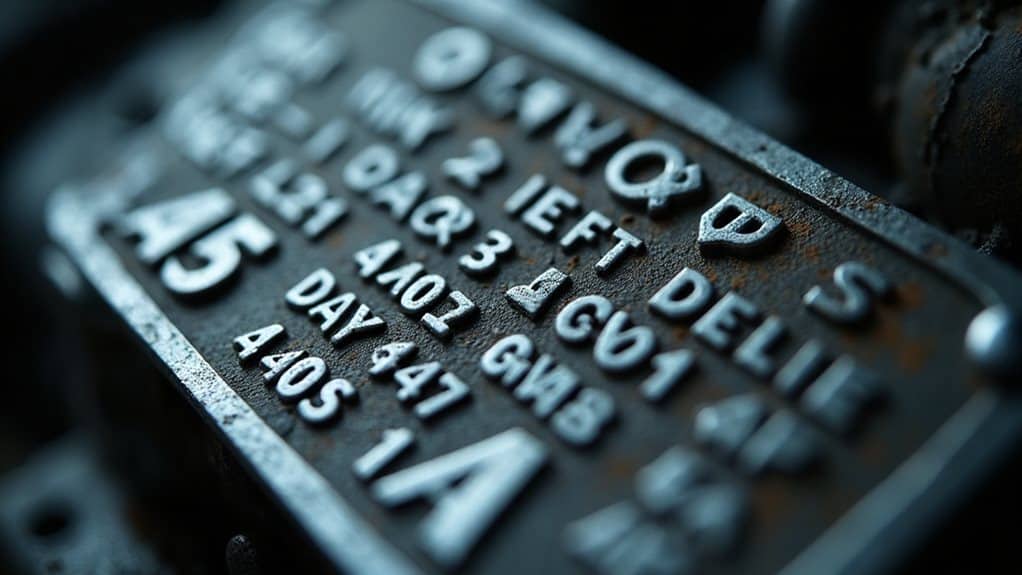
A TH400 plate typically reads as a two digit year, a single application letter, then a three digit Julian day. A plate reading 70 CK 290 is therefore a 1970 unit, CK identifying the application, built on day 290 of the model year.
A 700R4 tag works differently. The first character is the model year, coded so that 9 means 1982 and 3 means 1993, followed by two or three letters for the application and then a serial. A 700R4 tag beginning with 8 is not a 1978 unit, it is a 1988 unit.
Converter identification is separate again. From 1980 GM used a four digit sticker on the converter body, where the first digit indicates the application family and the second the approximate stall speed.
Ford and Chrysler Tags
Ford bolts a small metal tag to the case on most units, and the tag carries a model and application code rather than a full date. The case casting number and the pan outline do most of the identifying, and the C4 and C6 comparison covers which pan goes with which unit.
Chrysler stampings vary by plant and by year far more than GM or Ford, so treat any single decoder as a starting point rather than an authority. Read the stamping, then confirm with the pan and the casting.
When the Tag Is Missing
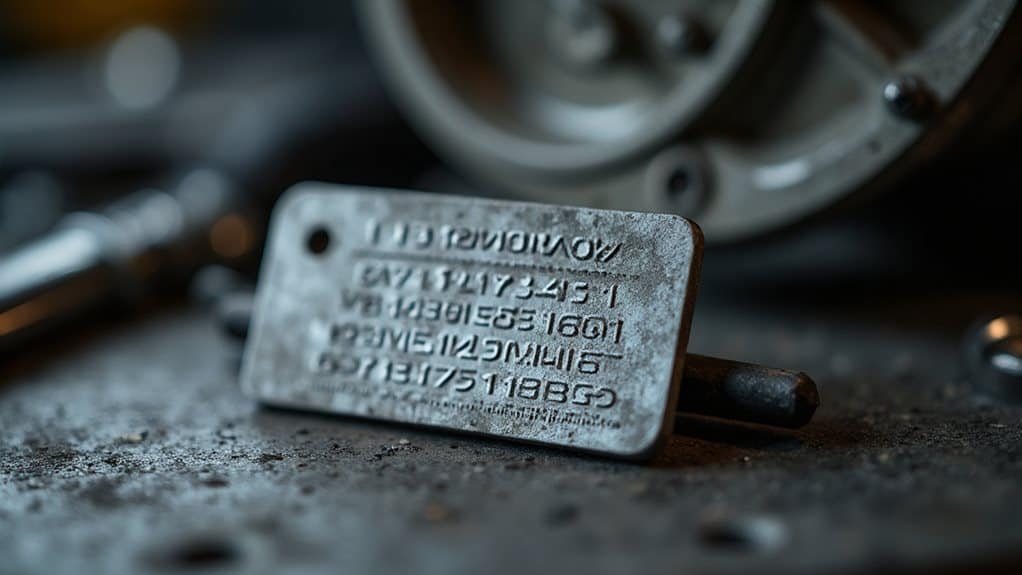
Tags fall off, get painted over and get swapped between units. When there is nothing to read, work from the physical evidence in this order:
- Pan outline and bolt count, which narrows the family immediately.
- Casting number on the case, which dates and identifies the family.
- Output shaft spline count, which separates light duty from heavy duty within a family.
- Control hardware, such as a TV cable, a vacuum modulator or an electronic connector.
That combination is enough to order parts in almost every case. Living with a tag is a bonus, not a requirement.
Three Traps in Tag Decoding
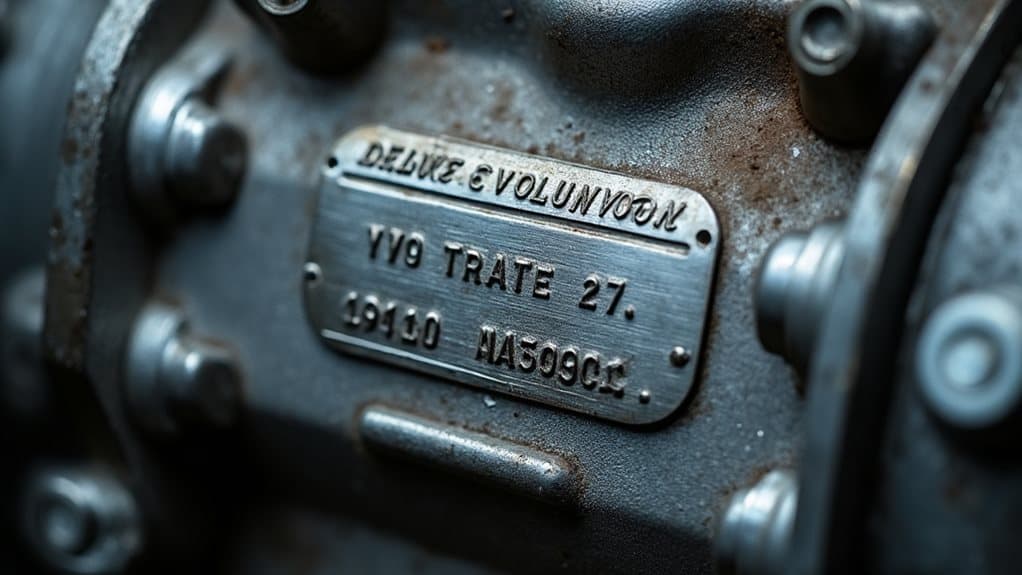
First, a tag describes the build, not the current condition. A rebuilt unit carries the original tag and none of the original internals. Second, date codes are model year codes on some families and calendar years on others, so a December build can carry the following year’s code. Third, service replacements were often shipped without a tag at all.
If you are buying at a swap meet, photograph the tag before you hand over money, and photograph the casting number beside it.
For the individual families, see the TH350 and TH400 identification guide, the Ford C4 and C6 guide, the 700R4 guide and the Borg-Warner numbers. The transmission section has the rest.
Four Worked Examples
Reading a tag is easier with real strings in front of you. These four cover the common GM formats.
| Tag reads | How to split it | What it tells you |
|---|---|---|
| 70 CK 290 | 70 is the model year, CK the application, 290 the Julian build day | A 1970 TH400 built on day 290, which is mid October |
| 8YDM021H | 8 is the model year digit, YDM the application, 021 the day, H the plant | A 700R4 from 1988 rather than 1978 |
| 429 70 CK 290 | Two date fields and a code, which is common on plates that carry both | Read the year and application first, then the two date fields separately |
| 9ABC123 | 9 is 1982 in 700R4 coding, ABC is the application | An early 700R4, which matters because the input shaft is the weaker 27 spline |
The pattern to notice is that GM never standardised on one layout. The year is sometimes the first digit of a model year sequence, sometimes a two digit calendar year, and sometimes absent entirely.
Julian Dates and Model Years
A Julian date counts days from the start of the model year rather than the calendar year, so day 290 is not 17 October in every case. On a plate that also carries a two digit year, the two fields should agree with each other. When they do not, the plate has usually been swapped or restamped.
Model year codes are the other trap. A vehicle built in November 1999 carries a 2000 model year code on most manufacturers, so a December build can look a year newer than the calendar suggests.
How to Photograph a Tag
If you are asking someone else to decode a tag, the photo matters more than the question. Clean the tag first, then shoot it square on with the light across the surface rather than directly at it. Raking light picks up stamped characters that a straight flash will wipe out.
Take one wide shot showing where the tag sits on the case, and one close shot filling the frame with the characters. Include the casting number in a third shot. Those three answer most questions in one pass.
What a Tag Cannot Tell You
Four things a tag will not answer, however well you read it.
- Condition. A tag describes the original build, not the wear inside.
- Rebuild specification. A rebuilt unit carries the original tag and whatever internals the builder chose.
- Whether the vehicle matches. A replacement transmission can be from a different model entirely.
- Ratio, on most units. Transmission tags identify the unit rather than the gearset, so ratio questions belong to the axle tag.
That last point matters if you are chasing fuel economy or acceleration: the transmission tag tells you what the gearbox is, and the axle tag tells you how the vehicle uses it.
Frequently Asked Questions
Where is the transmission identification tag located?
It depends on the family. A TH400 plate is on the passenger side vertical face of the case. A 700R4 tag is on the passenger side above the pan rail. A TH350 uses a stamped pad near the bellhousing, and most Ford units carry a bolted metal tag on the case.
How do I read a TH400 tag?
Read it as a two digit year, a single application letter and a three digit Julian day. A plate reading 70 CK 290 is a 1970 unit built on day 290 of the model year.
What does the first digit of a 700R4 tag mean?
The model year. It is coded from 9 for 1982 through to 3 for 1993, so a tag starting with 8 is a 1988 unit rather than a 1978 one.
Can I identify a transmission without a tag?
Yes. Use the pan outline and bolt count, the case casting number, the output shaft spline count and the control hardware such as a TV cable or a modulator.
Does the tag tell me if a transmission has been rebuilt?
No. A rebuilt unit keeps its original tag, so the tag describes the original build and not the current internals.