
When you run out of diesel, air enters your fuel lines and disrupts the hydraulic pressure needed for injection. After refilling your tank to 85–90% capacity, you’ll need to purge this air from the system. Modern diesels with electronic common-rail systems often self-prime when you turn the ignition to ON without cranking, cycling it two or three times for 30 seconds each. Older mechanical systems require manually bleeding air at filter and pump bleed screws until bubble-free fuel flows. The procedures below cover inspection, priming techniques, safety considerations, and troubleshooting steps.
Quick Tips
- Refill the tank to 85–90% capacity and ensure the engine is off in a safe, well-ventilated location.
- Replace clogged fuel filters and inspect fuel lines, connections, and water separator for debris or blockages.
- Modern diesels often self-prime when ignition is turned to ON; older systems require manual bleeding at filters and pumps.
- For manual bleeding, loosen bleed screws, pump until bubble-free fuel flows, then retighten before cranking the engine.
- Crank in short 5–10 second bursts; successful restart shows smooth idle, normal exhaust, and stable tachometer readings.
Understanding Why Diesel Engines Stop After Fuel Depletion
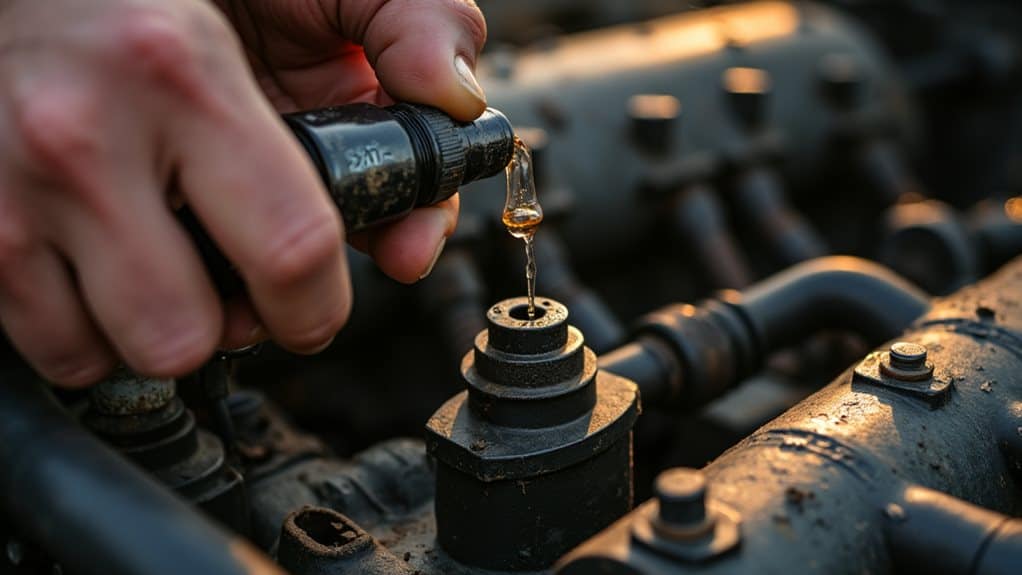
When a diesel engine runs out of fuel, it doesn’t simply sputter and slow down like many gasoline engines do—it stops abruptly and completely.
This happens because air enters the fuel lines, breaking the hydraulic pressure needed for injection. Without pressurized diesel reaching the combustion chamber, ignition can’t occur. The engine’s sensors detect this pressure drop and trigger an immediate shutdown to prevent component damage.
Unlike gasoline engines, diesel engines rely on compression ignition rather than spark plugs, making them particularly sensitive to any interruption in fuel delivery that disrupts the combustion process. Fuel system components such as the fuel pump control module can also be affected when air enters the system, leading to potential faults or failures.
Differences Between Modern and Older Diesel Fuel Systems
Understanding why your diesel engine shuts down after fuel depletion leads naturally to an important question: how you restart it depends largely on which type of fuel system you’re working with.
Older diesels use mechanical injection pumps requiring manual bleeding procedures, while modern engines employ common rail systems with electronic control units that sometimes self-bleed automatically, simplifying the restart process markedly. Modern systems also feature onboard diagnostics that can alert you to air in the fuel lines and guide troubleshooting steps. In many cases, a failed or weak starter can complicate restart efforts and may indicate starter motor failure as an underlying issue.
Initial Steps: Refilling Your Diesel Tank Properly
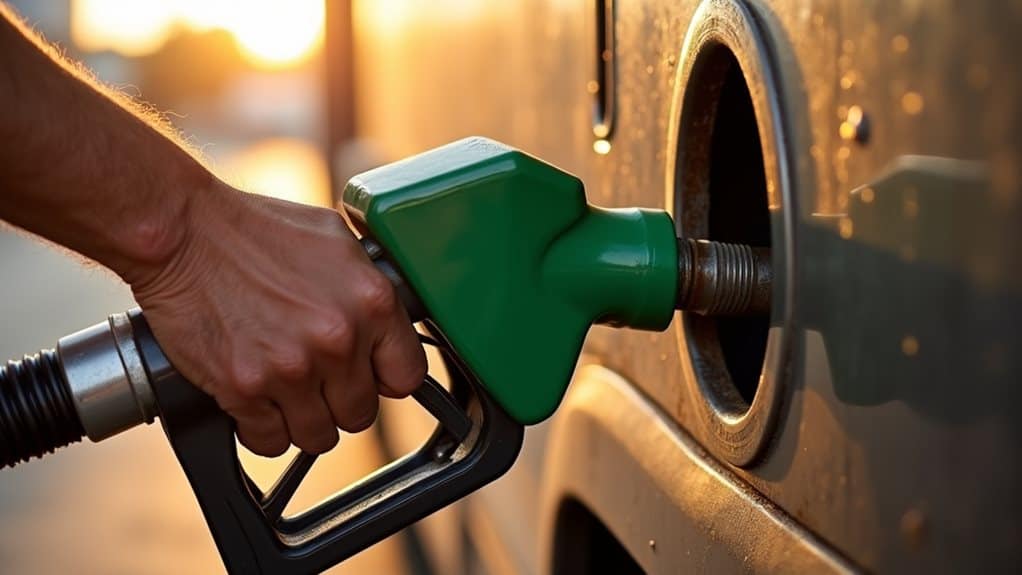
Before you can bleed air from the fuel lines and restart your diesel engine, you’ll need to properly refill the tank—a process that involves more than simply pouring fuel and walking away.
Make certain the engine is completely off and position your vehicle in a safe, well-ventilated area away from ignition sources. Add diesel fuel slowly, filling to roughly 85-90% capacity to allow for expansion and prevent overflow.
Inspecting and Cleaning Your Fuel System Components
After refilling your diesel tank, you’ll need to systematically inspect and clean several fuel system components to make certain they haven’t sustained damage from air contamination or debris accumulation.
Check your fuel filters for blockages, as gelled diesel or particles will damage expensive injection pump components.
Examine fuel lines and connections for leaks that allow air entry, and inspect your water separator’s collection cup, emptying it if necessary to prevent corrosion.
Also verify the wiring and connectors to the fuel pump and fuel level sender to ensure proper power and grounding and prevent pump failure or false gauge readings.
Priming Modern Self-Priming Diesel Systems
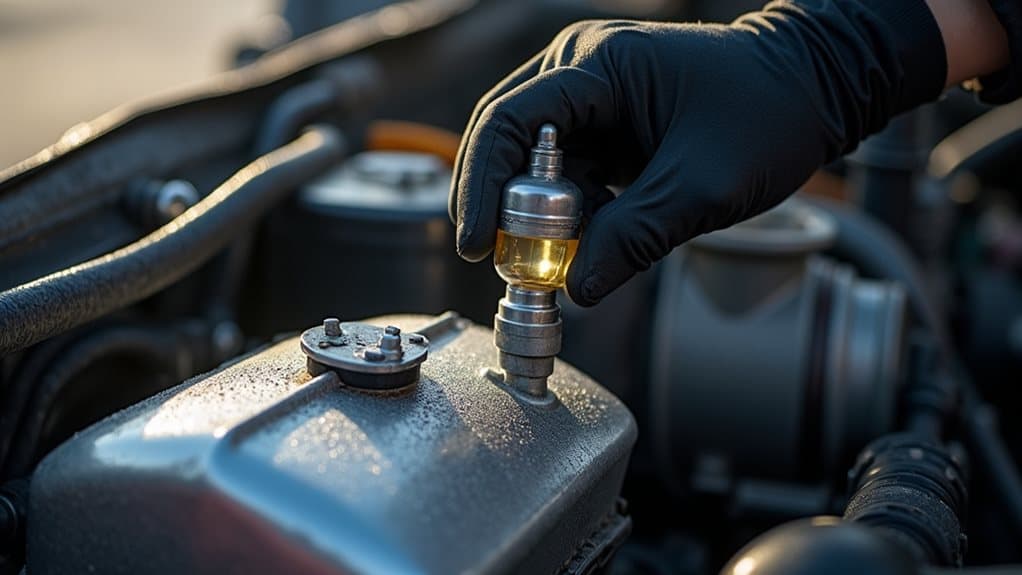
Once you’ve confirmed your fuel system components are clean and intact, modern diesel engines offer a significant advantage through their self-priming capabilities.
These systems use vacuum pressure to draw fuel automatically, eliminating trapped air without manual intervention.
When you turn the ignition to “ON,” electric priming pumps activate, pressurizing the fuel lines and evacuating air pockets, ensuring your injection pump receives continuous fuel flow for reliable starting.
Regular inspection and maintenance of related systems, including the starter and solenoid to prevent starter motor failures, further reduce the risk of damage and costly repairs.
Manual Air Bleeding Procedures for Older Diesel Engines
Unlike modern self-priming systems, older diesel engines require manual intervention to remove air from the fuel system after running out of fuel.
You’ll need to locate bleed screws on fuel filters and manually operate the lift pump to push fuel through, forcing air out.
Loosen each bleed screw, pump until bubble-free fuel flows, then tighten securely before moving to the next component.
Locating and Using Fuel System Bleeder Valves
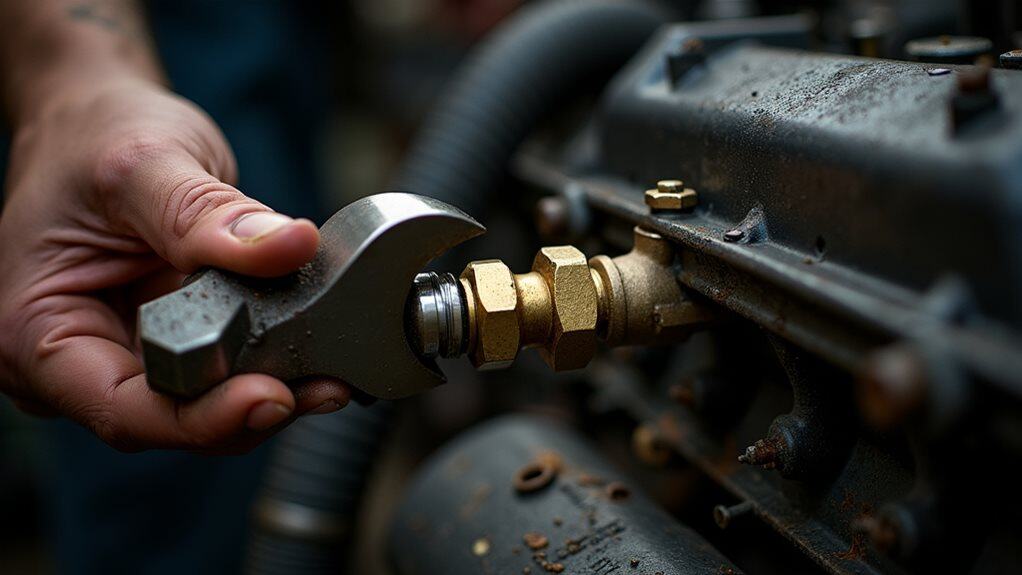
The success of manual air bleeding depends entirely on knowing where your diesel engine’s bleeder valves are located and how to operate them correctly.
Check your injection pump first—it’ll typically have a cylindrical bleeder screw that’s easily accessible.
Secondary fuel filters often feature a bleeder valve on top.
Some engines include a jet start valve on the pump.
Loosen these fittings half a turn, never removing them completely.
Cracking Fuel Injector Lines on Non-Common Rail Systems
When bleeder valves don’t exist or prove difficult to access, cracking the injector lines at the injector bodies provides a reliable alternative method for removing air from your diesel fuel system.
You’ll loosen each fitting approximately one turn using two wrenches to prevent line damage. Crank the engine until fuel flows steadily without air bubbles, then retighten each connection sequentially while monitoring cylinder firing.
Proper Ignition Cycling and Cranking Techniques
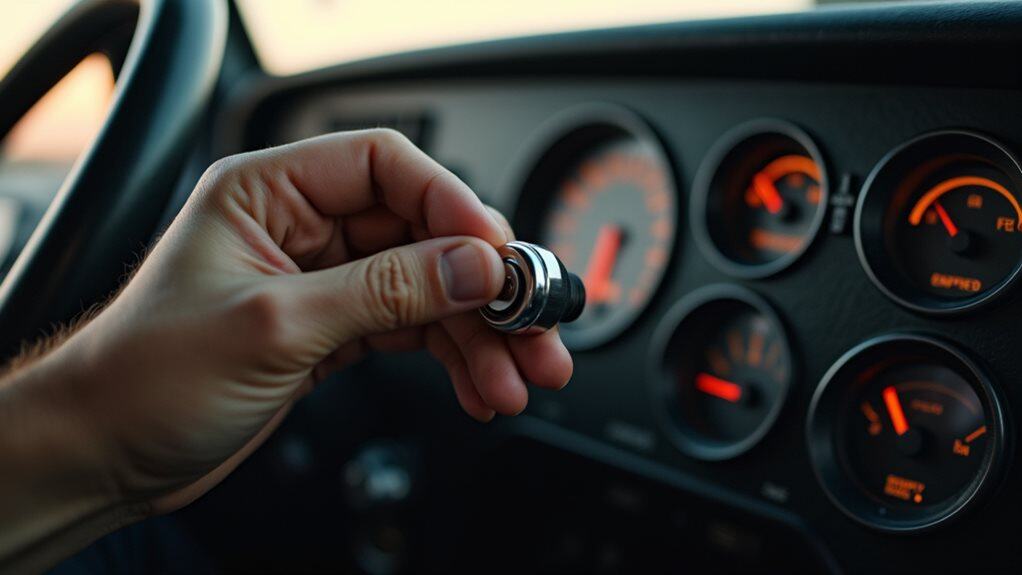
After bleeding air from your fuel lines, you’ll need to crank the engine properly to achieve successful ignition. Use short bursts of five to ten seconds at steady, moderate speed to build compression without overloading your starter motor.
Allow brief pauses between attempts to maintain cylinder temperature and prevent battery depletion. This technique conserves power while gradually purging remaining air from your fuel system.
Recognizing When Air Has Been Successfully Removed
Successfully identifying when all air has been purged from your diesel fuel system requires careful attention to multiple sensory indicators working in combination.
You’ll notice your engine shifts from rough cranking to smooth idling, while exhaust smoke changes from thick white to normal color. The tachometer stabilizes, acceleration becomes responsive without hesitation, and any fuel system warning lights extinguish, confirming complete air removal.
Safety Precautions When Working With Pressurized Fuel
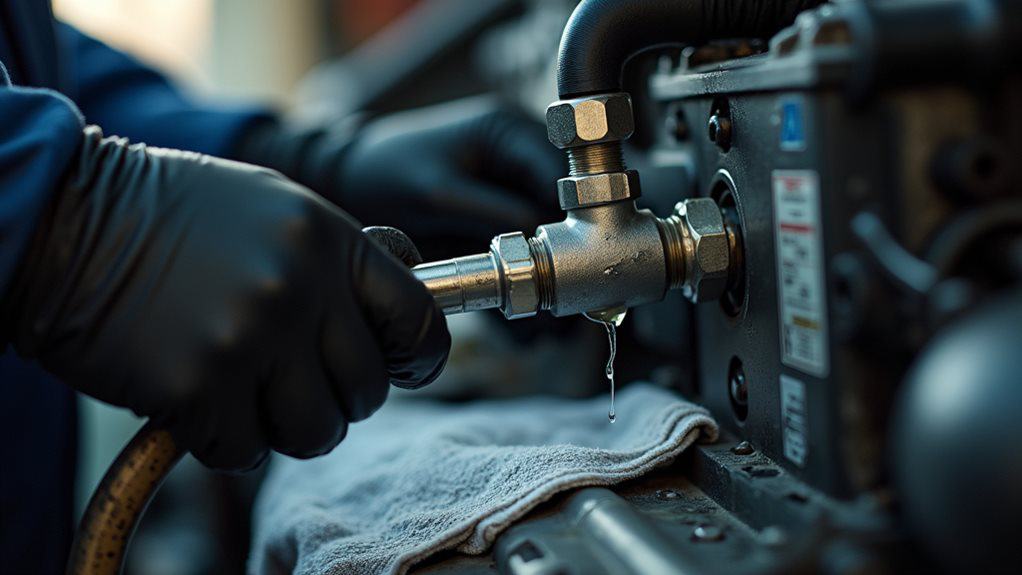
Once you’ve confirmed your diesel engine runs smoothly with all air removed from the system, you must understand the serious hazards associated with the fuel system itself before performing any maintenance work.
Modern diesel injection systems operate at pressures reaching 130,000 psi, creating extreme danger during component removal. High-pressure fuel spray can penetrate skin, causing blood poisoning and severe injuries requiring immediate medical attention.
When to Call for Professional Mechanical Assistance
While bleeding a diesel fuel system might seem straightforward, certain situations demand the skill of a certified mechanic rather than DIY attempts. If your engine won’t start after multiple bleeding attempts, you’re experiencing persistent stalling, or dashboard warning lights appear, professional diagnosis is necessary.
Visible fuel leaks, strong diesel odors, or unusual pump noises also warrant immediate expert attention to prevent safety hazards and costlier damage.
Wrapping Up
Running out of diesel fuel doesn’t mean you’re stranded permanently, but it does require patience and proper procedure. You’ve learned that air infiltration causes the shutdown, and modern systems often self-prime with simple ignition cycling. If you’ve followed the priming steps correctly and your engine still won’t start after multiple attempts, don’t drain your battery further. Contact a qualified diesel mechanic who can diagnose potential fuel system damage or persistent airlock issues that need professional equipment.


