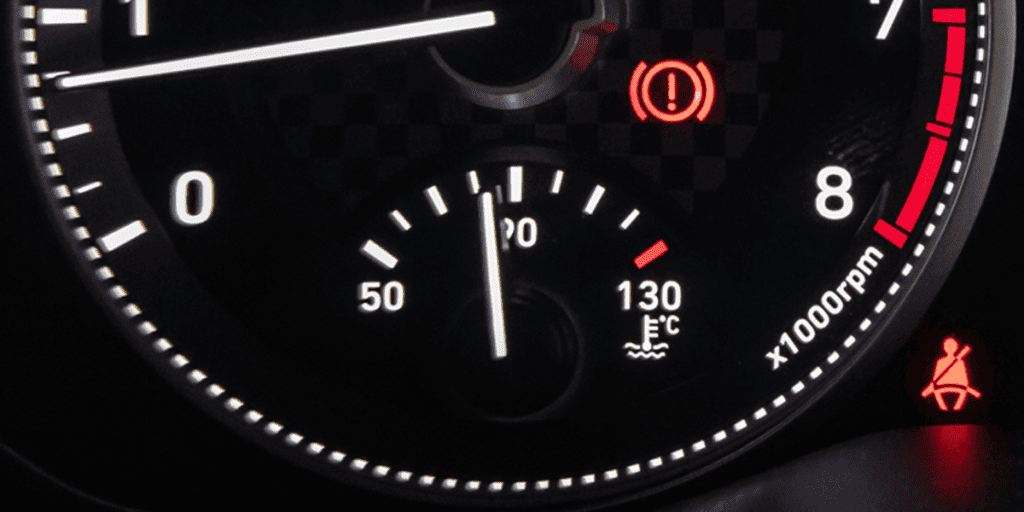
You’ll see several cylinder wall damages: scoring and scuffs are deep vertical grooves that break piston-ring seals and cut compression; irregular wear and corrosion show uneven thinning, pitting, or streaks from oxidation or contamination; surface grooves and scratches range from light to deep and often need honing or re-sleeving; carbon buildup causes ring seizure and poor sealing; thermal or mechanical distortion warps bore shape; foreign objects gouge surfaces, and oil-seal failures lead to dilution and corrosion—keep going to learn repair options.
Quick Tips
- Scoring: deep vertical grooves from abrasives, wrong clearances, or ring damage that reduce compression and require re-sleeving or re-honing.
- Irregular wear/corrosion: non-uniform patches, pitting, or streaks from oxidation or electrochemical attack altering bore geometry.
- Surface grooves/shallow scratches: lighter scratches from poor lubrication or contamination that often need honing to restore sealing.
- Carbon buildup and ring seizure: hardened deposits bake onto walls and rings, causing poor sealing, compression loss, and stuck rings.
- Thermal/mechanical or foreign-object damage: barreling, triangular bores, or localized gouges from overheating, distortion, or ingested particles.
Cylinder Scoring and Scuffs

Frequently, cylinder scoring shows up as deep, vertical grooves or scratches on the cylinder wall that break the seal between the piston, piston rings, and the bore.
You’ll see reduced compression, power loss, rough running, and ticking noises; scoring increases piston-to-cylinder clearance, causing lash.
Causes include wrong clearances, poor rings, contaminated or diluted oil, abrasive particles, and mechanical deformation—repair needs disassembly and often re-sleeving.
Deep grooves form on the inner wall of the cylinder, leading to loss of sealing and further wear.
A failing harmonic balancer can introduce torsional vibrations that accelerate wear on components like piston rings and cylinder walls, potentially worsening scoring and related damage to the crankshaft.
Irregular Wear and Corrosion Patterns
When corrosion or mechanical distortion affects a cylinder wall, you’ll often see irregular wear patterns that differ from the straight, uniform bands produced by normal ring travel; these patterns include bright, shiny streaks, scattered pitting, and uneven polishing that tell you the surface geometry and sealing behavior have changed.
You should inspect for pits, line corrosion, stress-corrosion cracks, and uneven thinning, since each alters sealing, oil control, and strength.
These defects are driven by electrochemical reactions where metals convert to more stable oxides, so mitigation aims to slow this process and preserve structural integrity; inspectors should remember that maintaining or restoring protective barriers is important to reduce further damage and preserve cylinder life protective barriers.
Regular maintenance such as cleaning and applying protective coatings can significantly reduce oxidation on aluminum components and prolong service life, especially when using proper anti-corrosion sealants.
Surface Grooves and Deep Scratches
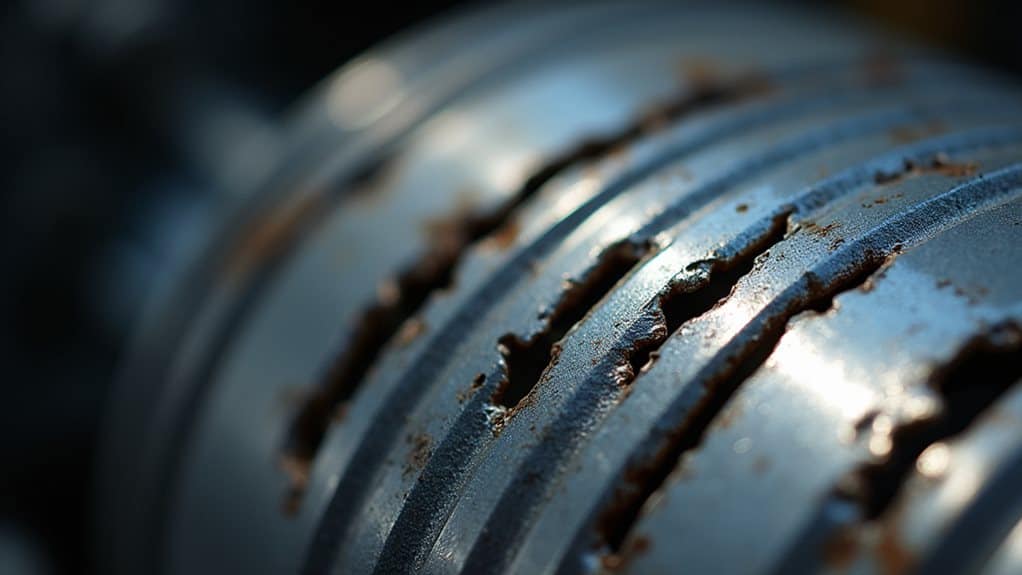
Surface grooves and deep scratches on cylinder walls are common signs that lubrication or contamination has failed, and you should recognize how each type forms and what it means for engine performance.
You’ll learn that grooves often come from poor oil film, abrasives, or piston slap, while deep scratches penetrate the metal, ruin honing, reduce sealing, and usually require honing or cylinder rework.
Weep holes are designed to drain excess fluid and indicate seal failures, helping prevent damage to critical components like the timing cover and alerting you to seal failure in the cooling system.
Carbon Buildup and Piston Ring Seizure
Carbon buildup on cylinder walls and piston rings develops over time as incomplete combustion leaves behind hardened soot and oily residues that bake onto metal surfaces, and you should recognize how this process undermines engine function.
You’ll see reduced sealing, compression loss, rough idle, misfires and higher emissions; GDi engines, poor fuel, stop‑and‑go driving and inadequate oil washing accelerate deposits that can seize rings.
Neglected buildup can also contribute to reduced sealing that hastens component wear and performance loss.
Thermal and Mechanical Stress Damage
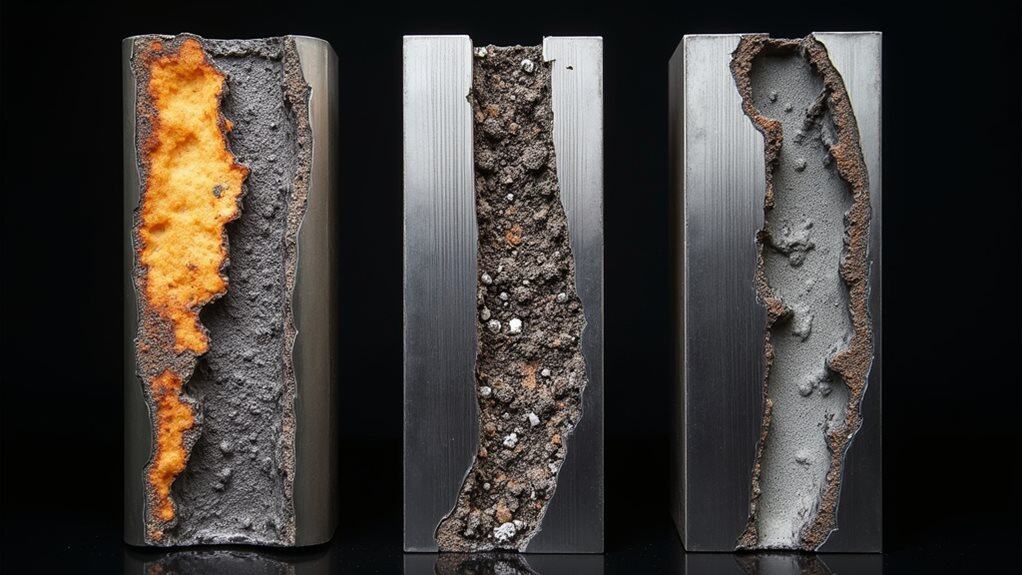
When cylinder walls run at very high temperatures, materials expand unevenly and you’ll see high-temperature distortion that warps the bore and degrades sealing surfaces.
If you lug the engine—holding high load at low RPM—you increase combustion temperatures and mechanical load, which together accelerate thermal cycling, fatigue cracks, and loss of dimensional tolerance.
Inspect cooling passages, maintain correct operating loads, and make certain proper clearances so lubrication can protect mating surfaces and reduce distortion and wear.
High-Temperature Distortion
Although cylinder bores are designed to be round, they won’t stay perfectly circular as temperatures rise and components are bolted together; uneven thermal expansion and mechanical clamping produce measurable distortion that changes the bore’s shape and performance.
You’ll see barrel or triangular profiles from heat and bolt stress, altering ring contact, sealing, and power. Hot honing, correct torque, and controlled cooling reduce distortion and wear.
Engine Lugging Effects
Engine lugging puts unusual mechanical and thermal strain on an engine, and you should understand how those stresses damage cylinder walls and related components.
When you lug, high load at low RPM stresses rods, bearings, and pistons, while low oil flow causes lubrication starvation.
Heat rises, increasing deposits, knock risk, micro‑cracks and sealing loss, which increases blow‑by, corrosion, and accelerated wear.
Foreign Object and Debris Impact
When small particles get sucked into the cylinder, they act like sandpaper and cause ingested particle scoring—fine, vertical scratches that reduce sealing and accelerate wear.
If a piston ring breaks, fragments can gouge the liner and piston, producing deep scores and sudden loss of compression that you’ll often detect as increased blowby or blue smoke.
Check and maintain the intake and oil filtration systems, and keep assembly areas clean, because intake system contamination is the most common path for these abrasive and destructive materials.
Ingested Particle Scoring
Foreign particles that get sucked into the intake can gouge and abrade the cylinder wall as the piston slides, and you’ll usually see this damage as fine to deep scores that disrupt the bore’s honing pattern.
You should inspect for grooves that catch a fingernail, check air and oil filtration integrity, and note increased oil consumption, loss of compression, rough running, and smoky exhaust as signs of particle-induced scoring.
Broken Ring Fragments
Broken ring fragments form when piston rings crack or shatter and their sharp pieces strike the cylinder wall, creating deep, localized gouges that quickly compromise the bore’s surface.
You’ll see excessive blow-by, oil contamination, rattles, and compression loss.
Remove fragments, replace rings, and clean the chamber thoroughly; also address overheating, detonation, vibration, or bearing wear to prevent recurrence.
Intake System Contamination
Pay close attention to the intake air path, because contaminants that get past the filter can slam into the cylinder wall and cause rapid, localized damage.
You’ll see scratches, scoring, or pitting from dirt, metal, or debris, which break the sealing surface and increase blow-by.
Replace filters, inspect seals, and control contamination to protect piston rings, reduce wear, and preserve engine efficiency.
Seal Failure and Oil-Related Cylinder Damage
When seals fail, they usually start quietly — a tiny scratch on the piston rod or a small pressure spike can turn into a major leak if you don’t catch it early.
You’ll see leaks, sluggish or erratic motion, and noisy operation from contaminated oil.
Inspect rods, wipers, and fluid, filter debris, replace swollen or cracked seals, and correct misalignment to prevent wall scoring.
Wrapping Up
You should inspect cylinder walls regularly, looking for scoring, grooves, corrosion, carbon buildup, and signs of thermal or impact damage, since each defect affects sealing and engine performance differently. Use proper measuring tools—micrometers, bore gauges—and follow service specifications to assess wear and out-of-round conditions, and clean or replace components when rings or seals are compromised. Address oil contamination and debris sources to prevent recurrence, and document repairs for future maintenance.