
A timing chain is built to survive the vehicle’s entire service life, but most manufacturers see noticeable stretch or rattling around 150,000–200,000 miles (≈240,000–320,000 km). Proper lubrication, regular oil changes, and moderate driving can extend that to 350,000 km or more, while aggressive driving, short trips, and heavy loads shorten it. Inspect the chain at major services after 100,000 miles, listen for idle rattles, and use a borescope to check for cracks or slack. If you keep up with oil maintenance and tensioner checks, you’ll avoid premature failure and learn more about preventing issues.
Quick Tips
- Timing chains typically last 150,000–200,000 miles (≈240,000–320,000 km) before noticeable wear or rattling appears.
- With proper oil changes, correct oil grade, and regular maintenance, many chains can last the vehicle’s entire service life.
- Aggressive driving, short trips, heavy loads, and poor lubrication accelerate chain stretch and reduce lifespan.
- Inspect the chain and tensioners at major services (≈100k, 120k, 150k, 180k miles) for noise, slack, or metal shavings.
- Replacement cost ranges from $1,200–$2,700 for most cars, potentially exceeding $5,000 for luxury or European models.
How Long Does a Timing‑Chain Last?
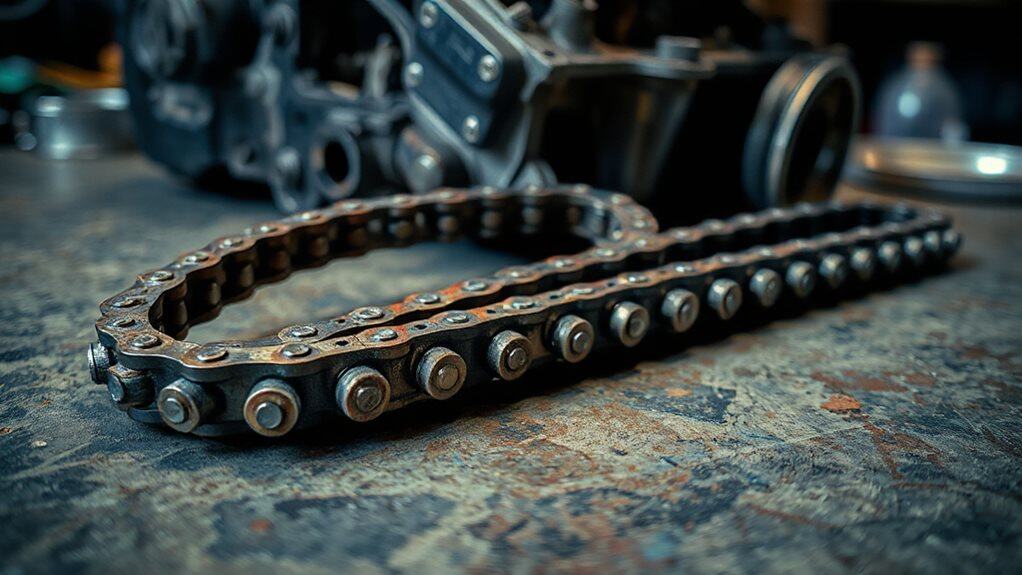
How long does a timing‑chain actually last? You’ll find it typically endures 150,000–200,000 miles before rattling begins, often lasting the vehicle’s life if maintained. Manufacturers claim lifetime durability, yet proactive checks around 200,000 km are prudent. Pushrod V‑engine chains average 3,000 hours, and exceptional units exceed 350,000 km, though wear eventually demands replacement. Proper oil changes are critical for chain lubrication.
What Key Factors Shorten or Extend Timing‑Chain Lifespan?
You’ll find that proper lubrication maintenance—regular oil changes with the right grade—creates a protective film that prevents metal‑on‑metal wear on the chain and its guides.
Aggressive driving habits, frequent short trips, or hauling heavy loads raise stress and temperature, accelerating stretching and tensioner fatigue.
Conversely, steady cruising, timely oil service, and respecting the engine’s design limits keep friction low and extend the chain’s useful life.
Sump pumps are essential for preventing basement flooding by removing excess water and protecting the foundation, so understand how to prevent freezing and maintain them to avoid related damage.
Proper Lubrication Maintenance
Proper lubrication maintenance is the single most influential factor in determining how long a timing chain will last, because the chain, its sprockets, and the hydraulic tensioners all depend on a steady supply of clean, correctly‑graded oil to prevent metal‑on‑metal contact and excessive wear. Change oil every 10,000 miles or yearly, use premium synthetic, keep level correct, and filter debris. Clean oil sustains tensioner pressure, avoids sludge, and protects chain links and guides.
Driving Conditions & Load
What driving conditions and loads you subject your engine to can dramatically influence how long its timing chain lasts.
Stop‑and‑go traffic and short trips keep oil cool, increasing friction and chain stretch.
Towing heavy loads raises torque and temperature, accelerating wear.
Extreme heat or cold stresses metal fatigue.
Aggressive acceleration, high RPMs, and sudden stops add vibration.
Steady highway cruising, however, maintains lubrication and extends lifespan.
How Do Oil Changes Affect Timing‑Chain Life?
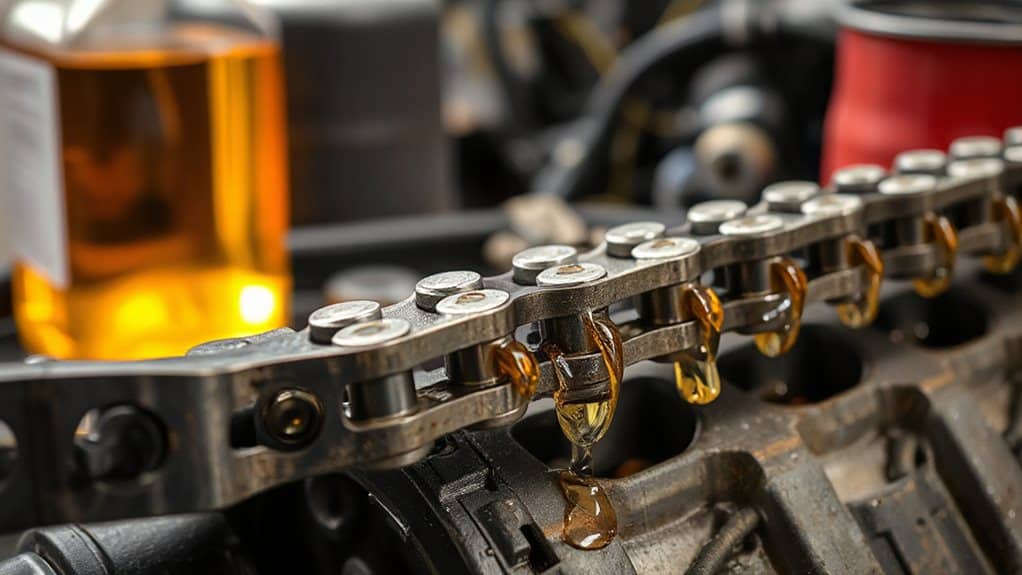
You’ll find that proper lubrication is the single most effective way to keep a timing chain from stretching, because fresh oil carries the additives that protect the chain’s metal surfaces. If you skip oil changes or let the oil become oxidized, the loss of viscosity and the buildup of sludge increase friction, which accelerates wear and can cause the chain to elongate earlier than expected. Regularly using a high‑quality synthetic oil and replacing the filter at the recommended interval thus preserves chain life and maintains the engine’s timing accuracy. For added protection in corrosive environments, using products designed to prevent rust on related components—such as chassis saver coatings—can help reduce indirect wear and deterioration.
Lubrication Reduces Chain Wear
Framing the oil at regular intervals preserves the timing chain’s lubrication film intact, which directly limits wear and stretch. Proper viscosity guarantees the oil coats pins and bushings, reducing friction torque and preventing metal‑particle buildup.
When additives degrade, the film thins, wear scars deepen, and stretch accelerates.
Following manufacturer‑recommended change intervals preserves film integrity, keeps ferrous particles suspended, and maintains efficient energy transfer throughout the chain system.
Neglect In Oil Leads To Stretching
Neglecting regular oil changes strips the timing chain of the protective film it needs to stay lubricated, and without that film the metal pins and bushings grind together faster, causing the chain to stretch.
Dirty oil accelerates wear; you may see 1‑degree stretch per 100,000 miles, or 8‑10 degrees before failure.
Switching to quality synthetics and changing oil frequently halves wear, extending chain life to 300‑400 k miles.
When Do Harsh Driving Conditions Accelerate Chain Wear?
What makes a timing chain wear out faster is the combination of high‑stress driving and insufficient lubrication. Harsh conditions—racing, frequent hard accelerations, or sustained high‑RPM operation—raise tension on links and sprockets, while short trips prevent oil pressure from fully developing, leaving the chain inadequately lubricated. Poor oil quality and dirt further increase abrasive wear, and over‑tightened tensioners add extra stress, all accelerating wear. They can also create a slight cooling sensation on components due to added moisture in the air, though this does not lower ambient temperature and is unrelated to a cool mist humidifier.
What Are the Early Warning Signs of a Stretched Chain?
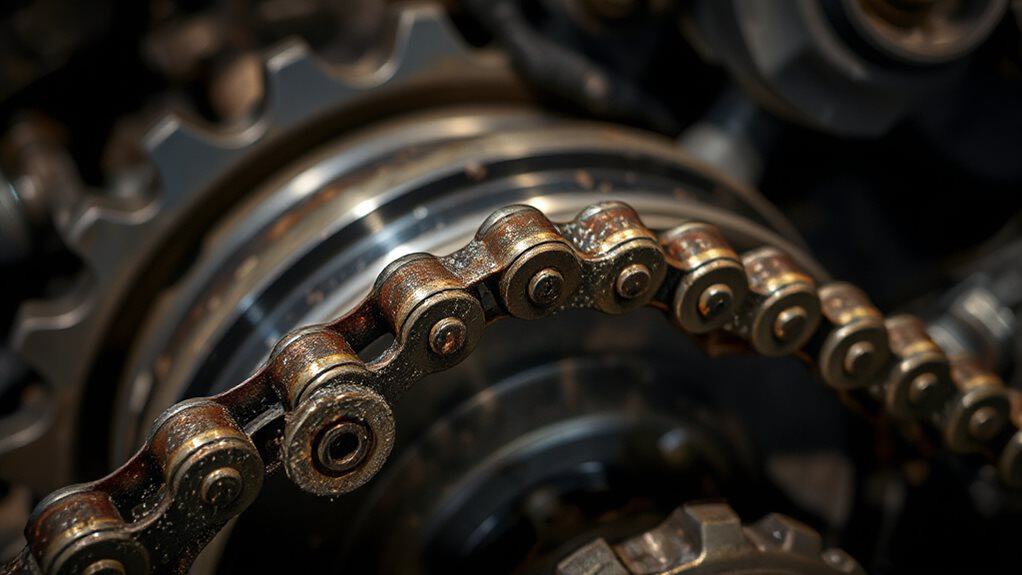
You’ll notice a distinct rattling noise coming from the engine, especially at low speeds, when the timing chain has become slack and is striking its guides.
If you open the oil pan during a filter change and see tiny metallic particles, that’s a clear sign the chain’s links are wearing down and shedding metal.
Both symptoms indicate the chain is stretching and should be inspected promptly to avoid further damage.
Rattling Noise From Engine
Ever notice a rattling sound that appears only when your engine is idle and then fades as it warms up? That clatter usually means a stretched timing chain is slapping against the valve cover, guide, or sprockets. Slack appears at cold start, then tightens as heat expands the metal. Worn guides, a failed hydraulic tensioner, or clogged oil can amplify the noise, signaling impending misfires and reduced low‑speed power.
Metal Particles In Oil
Where do those tiny metal specks you see in a drained oil sample come from, and why do they matter for a timing chain? They’re shavings from friction‑worn bearings, camshafts, or crankshaft steel. Excessive particles signal accelerated wear, often from a stretched chain’s increased tension. Inspect oil under bright light, check filter media, note magnetic versus non‑magnetic debris, and replace oil promptly to limit abrasive damage.
How Can You Spot Metal Particles in Oil Before Failure?
How can you detect metal particles in oil before an engine fails? Drain the oil into a clean white pan, shine a flashlight, and look for shimmering specks or a metallic sparkle. Wipe the filter media with a microfiber cloth; bronze or gold flecks signal wear. Run a magnet through the sample—steel shavings cling, while non‑magnetic particles suggest bearing damage. Inspect the filter housing for clustered debris and note any unusual coloration. H-rated tires often provide a smoother ride and better highway stability, which can reduce vibration-related wear on engine components, so consider H-rated tires when aiming to minimize such stresses.
Why Do Timing Chains Outlast Belts Yet Still Need Inspection?
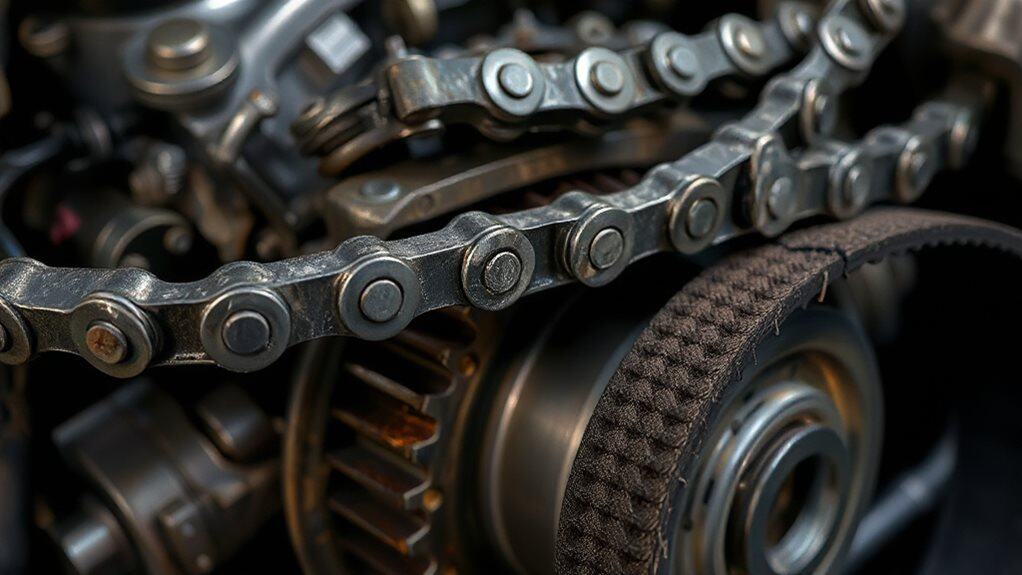
Why do timing chains outlast belts yet still demand regular inspection? Metal chains resist friction and tension thanks to oil lubrication, while rubber belts degrade from heat and constant strain. Chains can stretch gradually, causing timing errors, and oil quality directly affects their wear. Even though they’re designed for a vehicle’s lifetime, you must monitor stretch, noise, and oil condition to prevent costly engine damage. Regular inspections can also reveal unusual noises that indicate component wear.
What Is the Recommended Inspection Schedule for Cars Over 100,000 mi?
When your vehicle passes the 100,000‑mile mark, the timing system—whether a belt or a chain—deserves a focused inspection. Schedule a detailed check at each major service (120k, 150k, 180k miles), looking for rattling, misfires, or metal shavings. Follow the owner’s manual for model‑specific intervals, and have a mechanic measure chain stretch and inspect tensioners during these visits. Consider using OEM parts like Motorcraft filters when servicing related components to help ensure proper fit and reliability.
How Do You Perform a Quick Visual Check on Your Timing Chain?
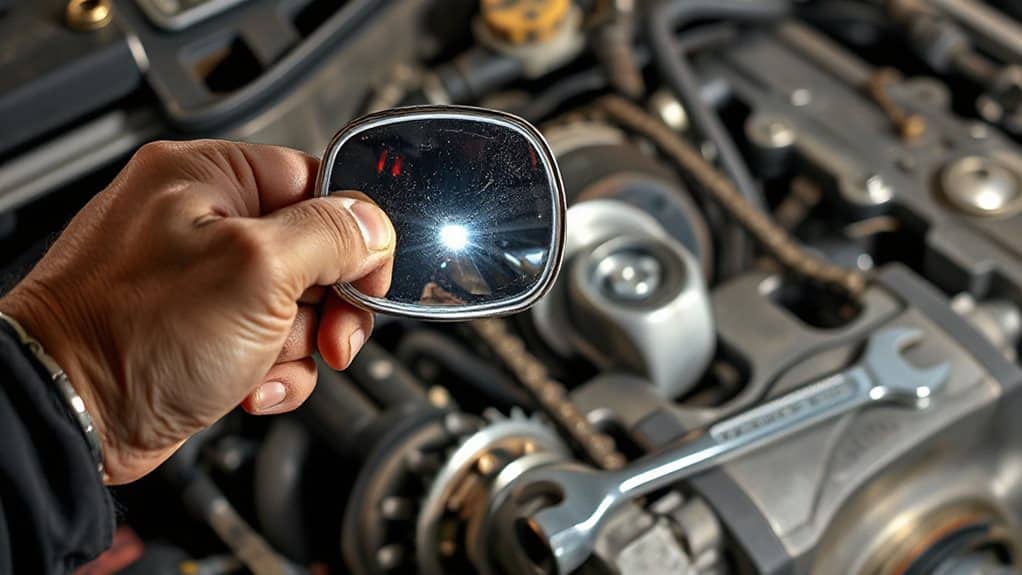
After you’ve hit the 100,000‑mile mark and scheduled a thorough inspection, the next step is a quick visual check of the timing chain before any major service. Use a small borescope, insert it through the removed cover, and look for cracks, fraying, shiny spots, corrosion, or slack. Verify guides, tensioners, and sprockets show no wear, and listen for rattling while turning the crankshaft.
What Happens When a Timing Chain Fails?
What actually happens when a timing chain fails is a cascade of mechanical problems that quickly degrade engine performance. You’ll hear rattling at idle, a clattering sound at low speeds, and a whirring that rises with RPMs. Misfires and a check‑engine light appear, often with codes like P0300. Metal shavings show up in oil, and a broken chain can stall the engine, cause loss of oil pressure, and lead to severe damage.
How Much Does Replacing a Timing Chain Cost?
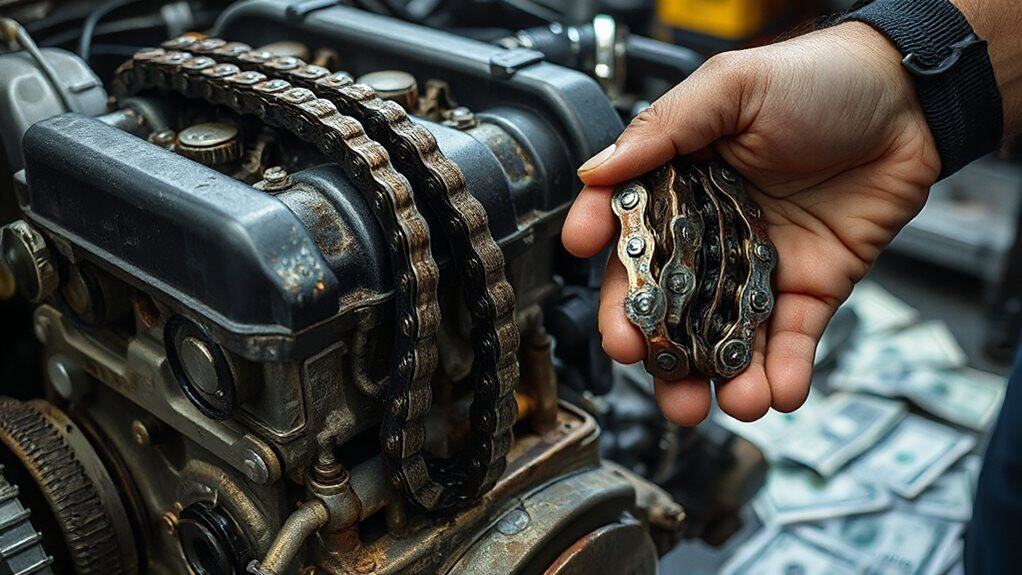
How much does replacing a timing chain actually cost? Expect $2,000‑$2,700 for most cars, with labor comprising $1,300‑$1,900 of that total because mechanics spend four to eight hours disassembling the engine. Parts alone run $750, while kits (guides, tensioners, sprockets) add $100‑$500. Economy models may dip to $1,200‑$1,800; luxury or European vehicles can exceed $5,000.
What Simple Maintenance Hacks Keep Your Timing‑Chain Healthy?
Ever wonder why a timing chain can last well beyond 150,000 miles? Change oil and filter at the manufacturer’s interval, using high‑quality, spec‑matched oil to keep the chain lubricated and cool. Inspect tension, guides, and oil pump every 30,000 miles; listen for rattling at startup.
Replace the chain as a complete kit with certified parts, and never skip scheduled maintenance.
Wrapping Up
In summary, a timing chain can last 150,000 – 200,000 miles if you keep up with regular oil changes, avoid extreme driving, and monitor for early signs like rattling or poor engine performance. Inspect the chain visually during service, and replace it promptly when stretch or wear is detected to prevent catastrophic engine damage. Proper maintenance—using the right oil viscosity and adhering to service intervals—significantly extends its lifespan and minimizes costly repairs.


