
You’ll want about 4.4 US quarts of oil with a filter change (4.1 qt dry) for the 1.8L 2ZR‑FE, and roughly 4.0 quarts with filter (3.7–3.8 qt dry) for the 2.4L 2AZ‑FE XRS; confirm via your VIN or owner’s manual. Use SAE 0W‑20 full synthetic meeting ILSAC/API “Energy‑Conserving” specs, add oil in small increments with 2–5 minute settle times, and run the engine briefly before rechecking to avoid overfill—more procedural details follow.
Quick Tips
- 2010 Corolla 1.8L (2ZR‑FE) holds about 4.4 US qt with filter, 4.1 qt without filter.
- 2010 Corolla XRS 2.4L (2AZ‑FE) holds about 4.0 US qt with filter, ~3.7–3.8 qt without.
- Recommended oil: SAE 0W‑20 full synthetic meeting ILSAC/API energy‑conserving specifications.
- For level checks, start with ~4.0 qt (1.8L), add in 0.5‑qt (or 0.2 qt near min) increments, wait 2–5 minutes to settle.
- After fill, run engine 1–2 minutes, wait 3–5 minutes, then recheck dipstick aiming mid‑range to avoid overfill.
Quick: 2010 Corolla Oil Capacities – 1.8L and 2.4L
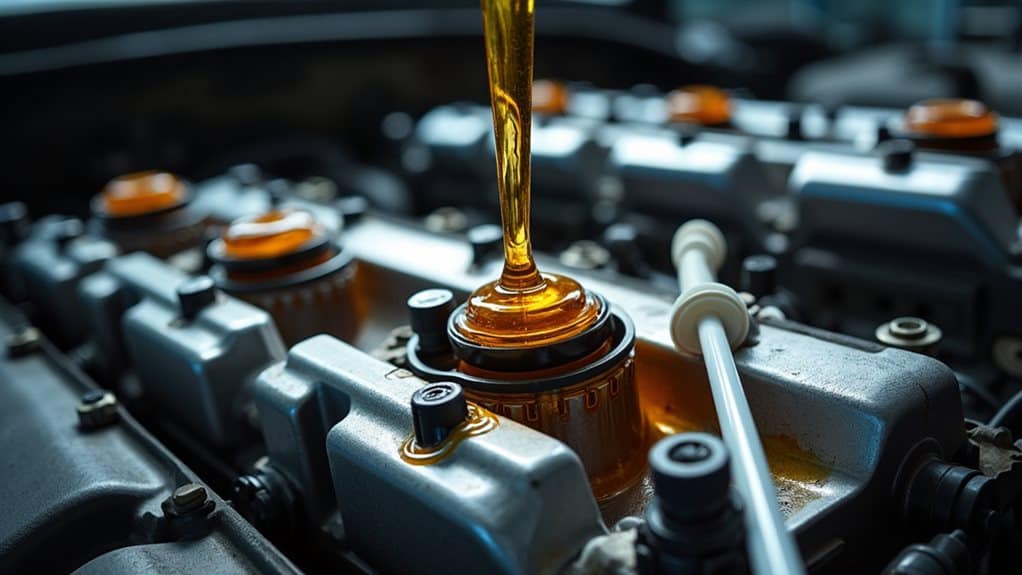
Anyone working on a 2010 Corolla should know the exact oil volumes for the two common engines, because using the right amount prevents damage from over- or under-filling.
For 1.8L, fill 4.4 qt with a filter change (4.1 qt without); for 2.4L, fill 4.0 qt with a filter change (3.8 qt without).
Use SAE 5W-20 or 0W-20; avoid overfilling. Modern synthetic oils also allow longer intervals between changes. Engines with moderate performance modifications may require more frequent oil checks and changes to maintain optimal lubrication.
Which Engine Does Your 2010 Corolla Have? (2zr‑Fe Vs 2.4l)
To identify which 2010 Corolla you have, check the engine code stamped in the bay—“2ZR‑FE” denotes the 1.8L standard engine while “2AZ‑FE” marks the 2.4L XRS—and also look for external badges like the XRS emblem.
Physically, the 2ZR‑FE engine cover will be labeled and lacks an XRS badge, whereas the 2.4L XRS shows a different cover label and rear/front XRS trim, and your VIN decoder or service records will confirm either code.
Finally, remember the practical oil difference: the 1.8L 2ZR‑FE takes about 4.4 US quarts (4.2 L) with filter, while the 2.4L 2AZ‑FE requires a larger capacity, so confirm the correct capacity before you change oil.
Also inspect the vehicle for transmission-related warning indicators and sensor issues such as transmission fluid pressure that can affect drivability.
Engine Codes Explained
While identifying your 2010 Corolla’s engine may seem technical, you can determine whether it has the 1.8L 2ZR‑FE or the 2.4L 2AZ‑FE by checking a few clear indicators: the VIN and engine bay markings, the model trim (the XRS is the only North American trim with the 2.4L), and regional availability (North American base models use the 2ZR‑FE only).
The 2ZR‑FE is a 1.8L DOHC, Dual VVT‑i engine, 132–134 hp, 127 lb‑ft torque, 4.4 qt oil.
The 2AZ‑FE is a 2.4L, 158 hp XRS engine, 162 lb‑ft torque, 4.0 qt oil, lower fuel economy.
Physical Identification Tips
Often the quickest way to confirm which engine your 2010 Corolla has is to look for stamped engine codes and distinctive visual features in the engine bay; you’ll typically find “2ZR‑FE” stamped on the left side of the cylinder block near the transmission bellhousing and on the front timing cover of the valve cover, while the 2AZ‑FE will be labeled “2AZ‑FE” and shows different hardware layouts like an aluminum cooling pipe and a distinct filter housing orientation.
Check VIN eighth character, valve‑cover lettering, cooling pipe presence, and oil‑filter housing orientation to distinguish the 1.8L 2ZR‑FE from the XRS 2.4L 2AZ‑FE.
Oil Capacity Differences
Because the 1.8L 2ZR‑FE and the 2.4L 2AZ‑FE use different internal oil reservoirs and filter housings, you’ll need to use slightly different oil volumes when servicing a 2010 Corolla; the 2ZR‑FE requires 4.4 quarts (4.2 L) with a new filter while the 2AZ‑FE requires 4.0 quarts (3.8 L) with a new filter.
Check dipstick after running, note filter adds ~0.3 qt.
Confirm Your Exact Capacity (VIN, Owner’s Manual, Dealer)
How do you confirm the exact oil capacity for your 2010 Corolla? Check page 411 of the owner’s manual for service fill charts: 1.8L (2ZR‑FE) 4.4 qt with filter, 4.1 qt without; 2.4L (2AZ‑FE) 4.0 qt with filter, 3.8 qt without.
Verify the VIN with a Toyota dealer or online lookup to match engine code and documented service records.
Regular use of high-quality fuel and scheduled maintenance helps protect related systems and overall engine health.
Recommended Oil Type and Viscosity for 2010 Corolla
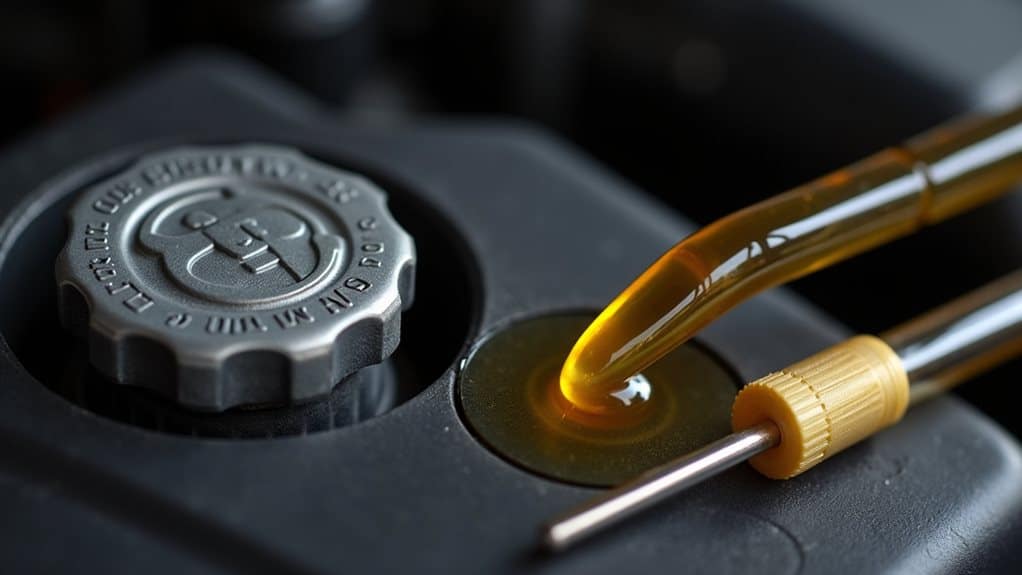
For your 2010 Toyota Corolla, the manufacturer recommends SAE 0W-20 full synthetic oil as the primary viscosity and type, because its lower cold‑start viscosity and consistent film strength improve fuel economy and protect engine parts.
If you operate in very cold climates, SAE 5W-20 or SAE 5W-30 can be acceptable alternatives, but you should stick to oils meeting ILSAC multigrade certification and API SL/SM “Energy‑Conserving” ratings to safeguard proper performance.
Using synthetic oil gives better shear stability, longer protection between changes, and improved flow at low temperatures compared with conventional oils, so choose a high‑quality brand that explicitly lists the required viscosity and certifications.
Recommended Viscosity Grade
Typically, you should use engine oil that matches Toyota’s recommended viscosity grade for the 2010 Corolla to guarantee proper lubrication, fuel economy, and engine longevity.
Use 5W-30 under normal temperatures; 10W-30 or 0W-20 may be specified for certain climates or engine variants.
Check your owner’s manual, consider ambient temperature, and follow recommended API/ILSAC ratings for compatibility.
Synthetic Oil Advantages
Because synthetic oil keeps its viscosity more consistently across temperature extremes, choosing a full synthetic 5W-30 (or 0W-20 where Toyota specifies) gives the 2010 Corolla noticeably better protection and performance than conventional oil.
You’ll get superior cold-start flow, reduced high-temperature breakdown, better wear protection from advanced additives, longer change intervals when monitored, slight fuel economy gains, and careful seal compatibility checks.
How Much Oil to Add Before Checking the Dipstick
How much oil should you add before you check the dipstick? Start with four quarts as a baseline for the 1.8L, then add in 0.5‑quart increments, rechecking each time after a 2–5 minute settle.
Aim for midway between low and high marks, using 0W‑20 (or 5W‑20 if necessary). Small steps prevent overfill, foaming, and inaccurate readings. Regular monitoring of fluids can help spot coolant loss early and prevent engine damage.
Step‑by‑Step Oil Change for 2010 Corolla (Fill, Run, Recheck)
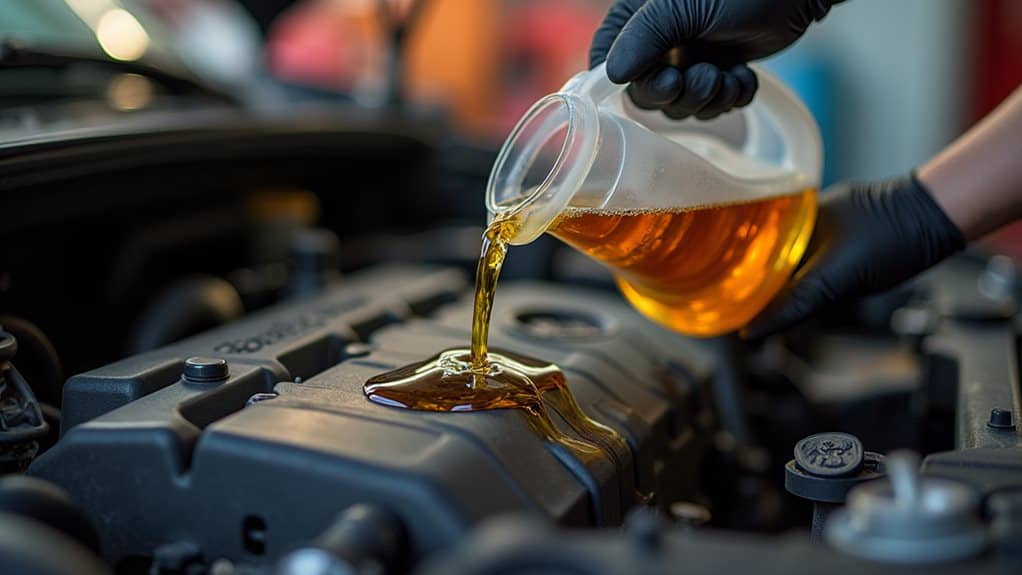
Start by filling the 1.8L engine with 4.4 quarts (4.2 L) of the correct oil, or about 4.0 quarts (3.8 L) for a 2.4L, remembering a new filter adds ~0.2 qt; avoid overfilling since excess oil can foam and damage seals.
After the initial fill, start the engine for 1–2 minutes so oil circulates through the new filter, purges air pockets, and reaches upper components, then shut the engine off and wait 3–5 minutes for oil to drain back to the pan.
Finally, wipe and fully reinsert the dipstick, pull it to verify the oil film reads between the low and full marks, top off if below low, and secure the fill cap while checking for leaks and any dashboard warnings.
If the check engine light appears after the oil change, confirm the oil filler cap and dipstick are properly seated and consider checking the oil level and related sensors to rule out installation issues or sensor faults.
Fill, Run, Recheck
Once you’ve poured the correct volume of oil into the fill port, run the engine briefly to circulate fresh oil through the filter and galleries, then recheck the level after a short settling period.
Run 1–2 minutes, listen for steady operation, then shut off.
Wait 3–5 minutes for oil to drain back, inspect filter and drain plug for leaks, and prepare for dipstick verification.
Dipstick Verification Steps
Before you check the dipstick, position the Corolla on perfectly level ground, engage the parking brake, and let the engine sit for about 3–5 minutes so most oil drains back into the pan; this short settling period gives you a reliable level reading because even a slight incline can skew results by up to 0.2 quarts.
Pull, wipe dry, reinsert fully, wait three seconds, withdraw and read at eye level.
Preventing and Fixing Oil Overfill (Detect & Drain Safely)
When you suspect your Corolla has too much oil, act promptly to prevent mechanical damage by recognizing the signs and draining the excess safely.
Check for smoke, foamy dipstick oil, leaks, or rough running.
Park level, wait five minutes, then use the dipstick.
If overfilled, place a drain pan, loosen the drain plug slowly, drain until correct, reinstall, and recheck levels.
Regular maintenance and using the correct oil type helps prevent overfill-related damage.
Oil‑Change Intervals: Conventional, Synthetic, and Heavy‑Use
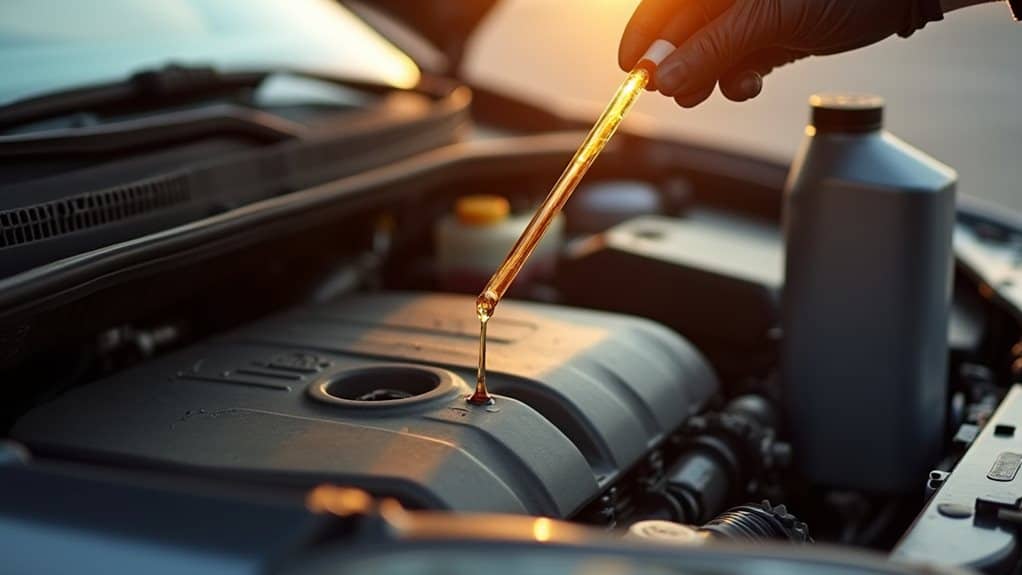
Having confirmed the correct oil level and drained any overfill, you should next set a clear oil‑change schedule based on the type of oil you use and how you drive; oil choice and driving conditions determine both mileage and time intervals, so following the right timetable prevents accelerated wear and contamination.
Use conventional oil at 5,000 miles/6 months (3,000–3,500 if severe).
Synthetic 0W‑20 lasts 7,500–10,000 miles; check every 6 months.
Real‑World Capacity Variations and Trim‑Specific Notes
Although nominal capacity figures are a useful starting point, you should expect small real‑world variations in how much oil your 2010 Corolla actually takes, depending on trim, whether you change the filter, and measurement conditions.
The 1.8L needs about 4.4 US qt with filter (4.1 qt dry), while XRS 2.4L needs ~4.0 qt with filter (3.7 qt dry); temperature, wear, and drain technique affect totals.
Quick Checklist: Safe Top‑Off and DIY Oil‑Change Steps
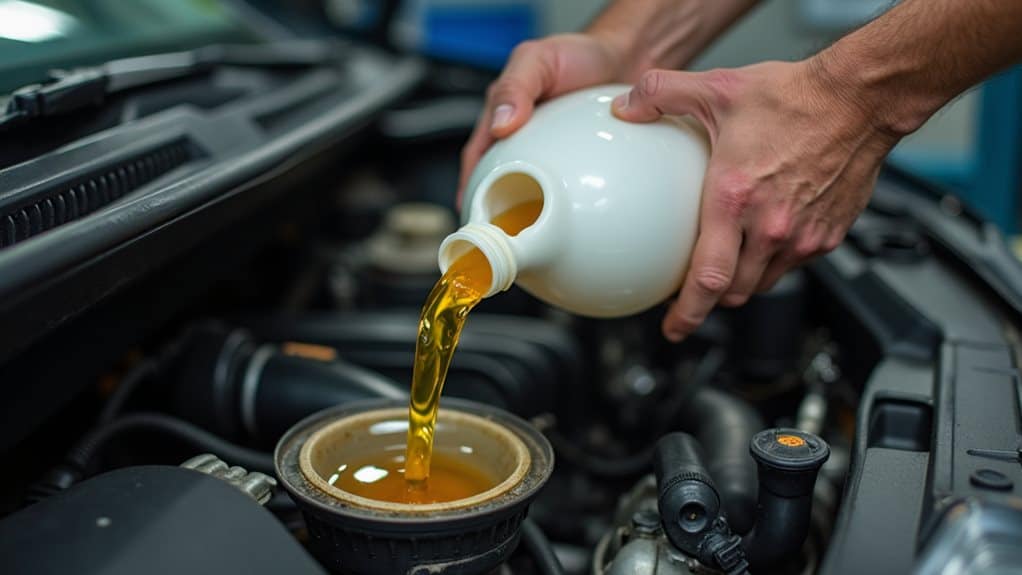
Start by parking on a level surface, turn the engine completely off, and wait five minutes so oil drains back into the crankcase; this gives you an accurate dipstick reading and reduces the chance of overfilling.
Wipe and reinsert dipstick, add 0.2 qt increments for 1.8L near minimum, avoid exceeding capacity, drain via 14 mm plug, replace filter, then recheck and reset indicators.
Wrapping Up
You’ve now got the core facts: know which engine you have, confirm capacity via VIN or the owner’s manual, and use the manufacturer‑recommended oil type and viscosity. Add oil slowly—about half a quart at a time—then wait and recheck the dipstick to avoid overfill; if you do overfill, drain to the correct level. Follow the suggested change intervals for your driving conditions, and keep records so future service stays accurate and safe.


