The cost to tint car windows generally ranges from $100 to over $500, depending on factors like vehicle size, window complexity, and film quality. DIY kits are cheaper, around $30 to $100, but professional installations typically cost more due to labor and material quality. Premium options like ceramic tint offer better UV protection and durability but come at higher prices. Larger vehicles or those with complex window shapes increase costs. Keep exploring for detailed understanding to help you budget effectively.
Window tint cost at a glance
The table below shows what each class of vehicle typically pays in the US in 2026, with parts and labour separated so you can see what the shop is charging for.
| Vehicle class | Parts (USD) | Labour (hours) | Total fitted (USD) |
|---|---|---|---|
| Compact or economy car | $80 to $150 | 2 to 3 | $150 to $250 |
| Mid-size sedan | $100 to $180 | 2 to 3 | $180 to $300 |
| SUV or light truck | $120 to $220 | 3 to 4 | $220 to $400 |
| Ceramic film, luxury vehicle | $200 to $400 | 3 to 4 | $350 to $700 |
Labour is priced at roughly $100 to $150 an hour, which is the usual independent-shop range in the US. These are indicative ranges for planning, not a quote: the same job on two vehicles of the same size can differ by several hundred dollars once engine layout, rust and parts availability are taken into account. Get two quotes before committing.
Quick Tips
- Vehicle size and window area significantly influence tinting costs, with larger vehicles requiring more material and labor.
- The type of tint film (dyed, ceramic, carbon) affects price, with premium options costing more.
- Professional installation ensures quality and legal compliance, adding to overall expenses compared to DIY options.
- Complex window shapes or full coverage tinting increase labor time and costs.
- Additional services like UV protection or removal services can raise the total cost of tinting.
What Factors Affect the Cost of Car Window Tinting?
The cost of car window tinting depends on several key factors that can vary considerably from one vehicle to another.
The type of film used, such as dyed or ceramic, impacts price, with premium options costing more.
Professional installation guarantees quality and legal compliance but adds to the overall expense.
The size and complexity of windows also influence the final cost.
Regular maintenance and components like a clogged cabin air filter can indirectly affect interior conditions and comfort, potentially influencing tinting considerations for airflow maintenance.
How Do Vehicle Size and Window Area Impact Tinting Costs?
Larger vehicles, such as SUVs and trucks, require more tint material and longer installation times, which increase overall costs.
Vehicles with extensive or complex window shapes, like curved or panoramic sunroofs, also raise labor expenses regardless of size.
Additionally, full coverage tinting on bigger models with more window surface area tends to be more expensive than partial tinting on smaller cars.
Heat from lightning can cause glass pitting and cracking that may increase repair or replacement costs.
Vehicle Size Variations
Have you ever wondered how the size of your vehicle influences the cost of tinting your windows? Larger vehicles like SUVs and trucks have more window surface area, increasing window tinting costs, especially for full coverage.
Smaller cars, such as compact sedans, require less material and labor, reducing overall costs. Vehicle size directly impacts the final price based on surface area.
Window Area Complexity
Vehicle size and window shape directly affect the complexity and cost of tinting because larger or more intricately designed windows require more precise installation techniques.
The surface area of the windows increases installation complexity, especially for irregular or curved surfaces. As surface area grows, so does the amount of material needed and the skill required, raising overall tinting costs.
Which Tint Films Offer the Best Value for Your Budget?
When choosing window tint films, understanding which options provide the best value for your budget involves evaluating both upfront costs and long-term benefits.
For heat rejection and durability, ceramic tint offers the highest performance but at a higher price.
Dyed tint is budget-friendly but less effective.
Meanwhile, carbon and hybrid tints provide a balance between cost comparison, heat rejection, and longevity.
Audi A4 models with higher compression engines often require premium fuel to prevent engine knock and ensure optimal performance.
How Does Tint Quality and Darkness (VLT) Affect Price and Performance?
The quality of window tint and its darkness level, measured by VLT, directly influence both the cost and performance of the tinting film.
Lower VLT percentages, which are darker, tend to be more expensive because they require precise installation and higher-quality films.
Better tint quality, like ceramic, offers superior heat rejection and UV protection, ensuring durability and long-term effectiveness.
Consider also that regional availability and demand can affect pricing and access to premium films like ceramic, so local market factors may increase overall costs and influence your choice of film type.
Should You DIY or Hire a Professional for Window Tinting?
Deciding whether to DIY or hire a professional for window tinting involves considering costs, quality, and convenience.
DIY kits are less expensive initially but often lack the precision, durability, and legal compliance provided by experts.
Professionals charge more upfront, yet their work typically results in a cleaner, longer-lasting tint with fewer issues over time.
Check the vehicle’s condition, including transmission fluid level and visible leaks, before starting any DIY projects to avoid unrelated costly repairs.
Cost and Affordability
Choosing between DIY window tinting kits and professional installation depends largely on your budget, skill level, and desired quality.
Car window tint cost varies; DIY tinting can cost $30-$100, but may result in bubbles or uneven application.
Professional installation, though more expensive, offers better durability, warranties, and adherence to tint pricing standards, ensuring longer-lasting, more reliable results.
Quality and Durability
Since professional window tinting involves specialized tools and techniques, it generally results in a more durable and high-quality finish compared to DIY methods.
Professional installation guarantees better adhesion, fewer bubbles, and longer-lasting results, often up to 10 years.
DIY kits lack warranties and may fade or bubble prematurely, reducing overall quality and durability over time.
Time and Convenience
When considering the time and effort involved in tinting your car windows, it’s important to recognize the differences between DIY kits and professional installation.
DIY kits can be completed in under an hour but may result in lower quality, bubbles, or creases.
Professional installation takes 1.5 to 3 hours, ensuring precise fit, durability, and legal compliance.
What Additional Services and Accessories Increase the Overall Cost?
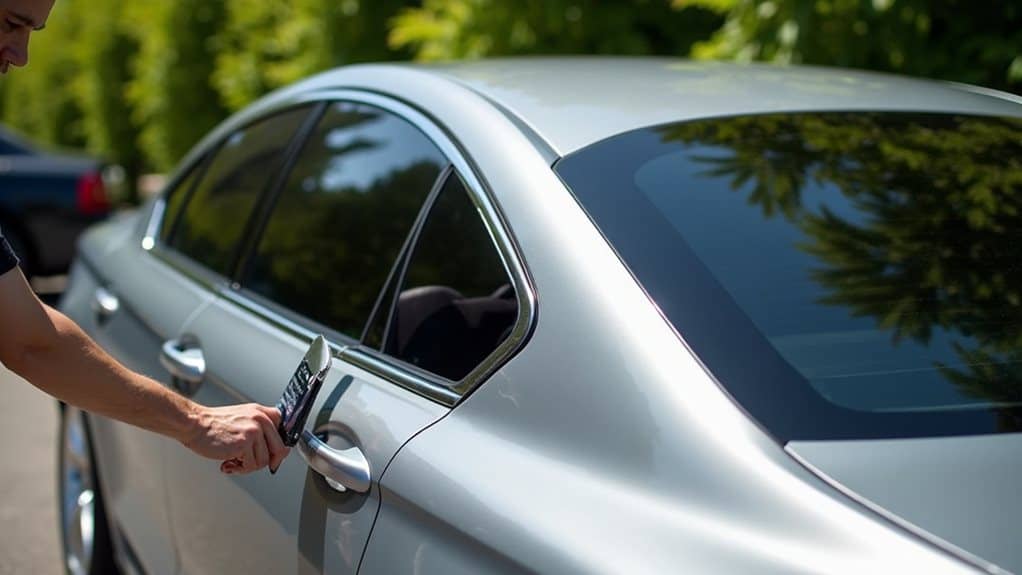
Have you considered how additional services and accessories can considerably increase the total cost of tinting your car windows?
Items like window tint removal, adding UV protection, or installing a windshield or sunroof tint can add $50 to $500 to the overall price.
These extras often come with warranties, which can further raise costs depending on coverage.
Removing moisture and treating electronic components may be necessary if a key fob or other device gets wet during service, so always consider battery removal and proper drying procedures.
How Do Location and Shop Reputation Impact Tinting Prices?
Location plays a significant role in determining the price of window tinting because expenses vary widely between urban and rural areas. Shops in cities or high-cost regions often charge 10-20% more, influenced by local living costs.
Additionally, reputable shops with positive reviews typically have higher prices but provide better quality, longer-lasting results, and reliable warranties, affecting overall window tinting prices.
Is Investing in High-End Tint Films Worth the Extra Cost?
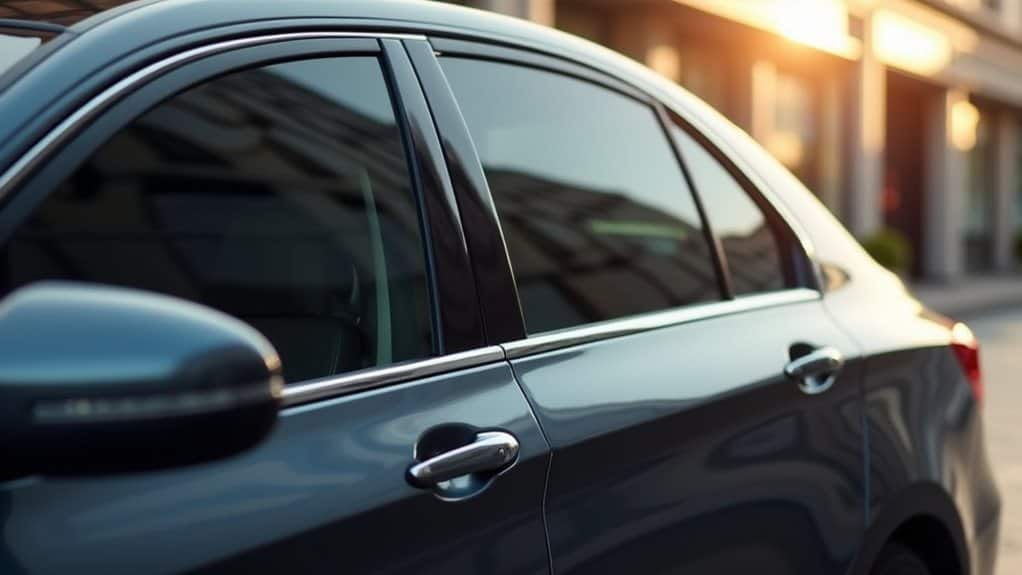
Investing in high-end tint films, such as ceramic and nano-ceramic, is often justified by their superior performance and long-term durability, despite the higher initial cost.
These tints offer up to 95% heat rejection and better UV protection, making them more cost-effective over time.
Their increased durability reduces the need for repairs, saving money in the long run.
How to Estimate Your Car Window Tinting Budget Effectively?
Estimating your car window tinting budget requires careful consideration of several factors that influence overall costs.
Assess your vehicle size and number of windows, as larger cars and full coverage increase expenses.
Research tint film options, like dyed or ceramic, and their prices.
Include costs for professional installation, removal of old tint, and local tint laws to accurately plan your window tinting budget.
Wrapping up
Understanding the factors that influence car window tinting costs helps you make an informed decision. Consider vehicle size, tint quality, and your budget when choosing a film. Professional installation guarantees proper application and durability, often justifying higher prices. Research local shops for reputable service and compare prices. Investing in quality tint may cost more initially but offers better performance and longevity. By evaluating these elements, you can accurately estimate your tinting expenses and select the best option for your vehicle.