
You should check wheel bearing seals for leaks, contamination, physical damage, and seating fit to protect lubrication and bearings. Look for oil or grease streaks on rims and hubs, wetness near hubcaps, and mixed or discolored grease that signals water, dirt, or metal wear; run a magnet for flakes. Manually feel seal lips for cuts, hardening, or incorrect lip orientation, make certain clean hub/spindle surfaces, and monitor hub temperature and noise—keep inspecting to learn more.
Quick Tips
- Check for visible oil or grease streaks on rims, tires, and around hubcaps indicating seal leakage.
- Feel seal lips for cuts, hardening, or missing sections that compromise the seal.
- Inspect for water, mud, dust, or salt contamination entering the hub area.
- Look for metallic flakes or burnt‑colored grease that signal internal bearing wear or overheating.
- Monitor hub temperature, unusual noise, and excessive play when rotating or rocking the wheel.
Quick 5‑Minute Wheel‑End Seal Inspection
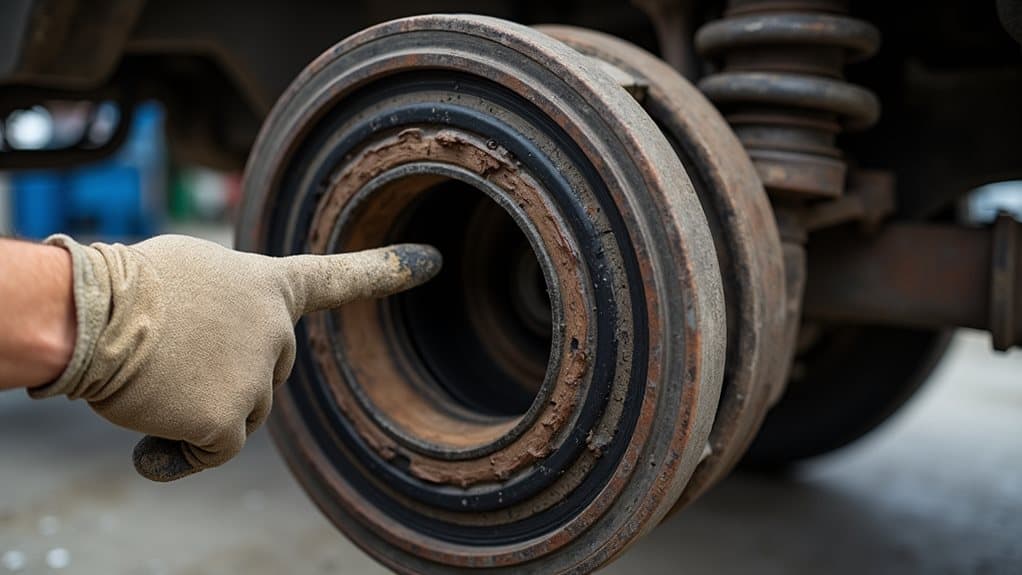
Before you begin, gather a flashlight, a clean rag, and a magnet (if available), because a quick wheel‑end seal inspection is most effective when you can clearly see and feel potential issues.
Check for oil streaks on rims or tires, wetness near hubs, leaking hubcap gaskets, missing bolts, hot or noisy hubs, grease contamination (use magnet), and document findings with photos and notes. Wheel seals should be checked for leaking to confirm lubricant containment. Professionals also inspect seals as part of routine suspension checks to detect wheel bearing wear early.
Wheel‑End Seal: Manual and Functional Tests
How do you confirm a wheel‑end seal is doing its job once it’s installed and the wheel is spinning? Manually feel for flat seating and correct lip orientation, check for cuts or hardening, and make certain hub and spindle surfaces are clean.
Functionally, monitor lubricant level and clarity via the sight glass, watch for leaks or water ingress, and verify consistent retention during rotation and temperature changes.
Also inspect related electrical and sensor wiring for damage or interference, since issues like a knock sensor fault can indicate correlated vibration or contamination problems.
Trace Contamination Sources and What They Mean
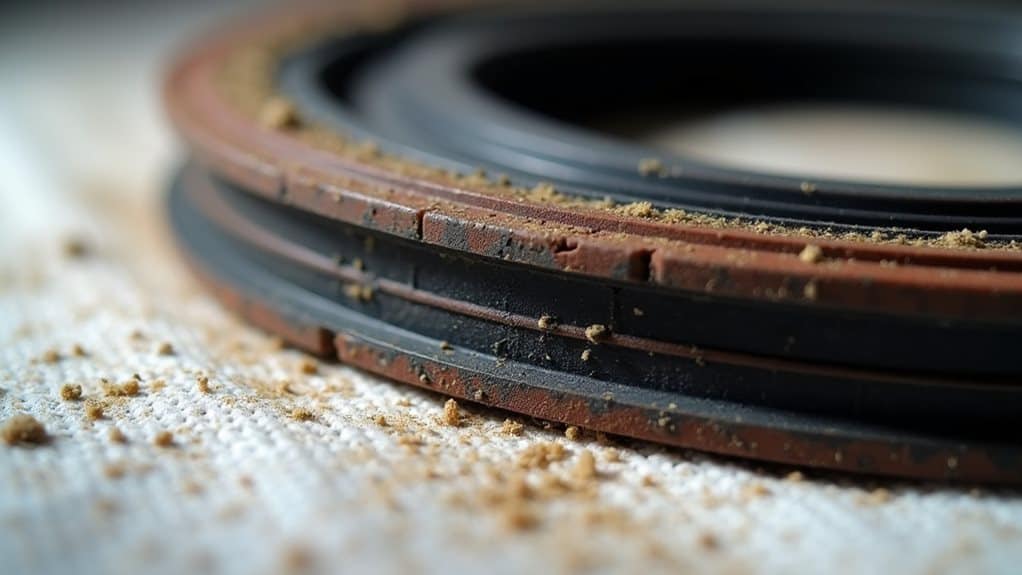
Why does contamination show up in specific patterns around wheel ends, and what can those patterns tell you about the source and severity of the problem? You’ll see water streaks from washing or failed seals, mud clumps from off‑road use, dust or salt deposits from roads, and metallic flakes or burnt‑colored grease indicating internal wear or overheating.
Note breather clogging and lubricant mixing as distinct causes.
Cooling time depends on ambient temperature, weather conditions, and vehicle design, so always ensure components feel cool to touch before inspecting for failed seals to avoid burns and false results.
Diagnose Heat, Noise, and Play: Seal vs. Bearing
When you’re diagnosing whether heat, noise, or play at a wheel end comes from a seal or the bearing, start by combining visual, tactile, and thermal checks so you get a clear, evidence-based image:
Inspect seal lips for cracks, dried grease, metal shavings or rust.
Rock the wheel at 12/6 and 3/9, listen for whining versus grinding, and measure hub temperature differences with an infrared gun.
Also consider checking nearby components for related issues like oil level concerns that can affect bearing lubrication and performance.
Repair or Replace: When to Act and Step‑by‑Step Next Steps
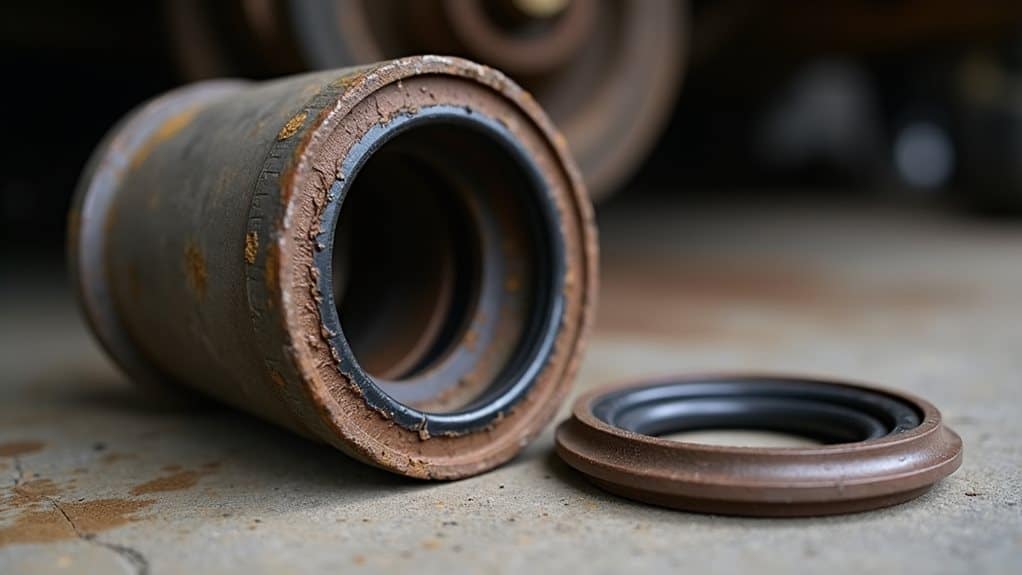
Although a failed seal can start as a small leak, you should act quickly once visual, tactile, or thermal checks show deterioration, because delays let contamination and moisture reach the bearing and cause rapid, expensive damage.
Inspect for grease streaks, torn lips, hardening, or milky grease; replace if damaged.
Use proper tools, seat the new seal evenly, grease bearings, torque correctly, then verify smooth spin and correct endplay.
Also check nearby components and systems for related issues like low fluid, sensor faults, or corroded grounds that can indicate broader brake or ABS electrical/hydraulic problems and require professional diagnosis brake system faults.
Wrapping Up
You should check wheel bearing seals for right fit, tears, hardening, and grease leakage, because those issues let contaminants enter and bearings fail. Inspect the seal lip, mounting flange, and mating surface for nicks or corrosion; feel for grease seeping or dry bearings when you spin the hub. Look for metal shavings, water staining, or uneven grease patterns to trace contamination sources. If seals are damaged, replace them and clean or repack bearings to prevent premature wear.


