A Ford C4 and a C6 look similar from two feet away, and both are three speed automatics, so the usual advice to “look at the pan” needs a number attached to it. The C4 uses an 11 bolt pan. The C6 uses a 17 bolt pan with an S shaped rear edge. Those two counts are the fastest way to tell them apart, and everything else on this page confirms it.
Quick Answer: 11 Bolts or 17
- C4. 11 bolt pan, nearly square with a small bulge on one side. Removable bellhousing. Lighter case.
- C6. 17 bolt pan, irregular outline with an S shaped rear edge. One piece case with an integral bellhousing. Noticeably larger.
- Drain plug. On the bottom of the pan points to a C4. On the side of the pan points to a C6.
Ford C4 vs C6 at a Glance
| Feature | C4 | C6 |
|---|---|---|
| Pan bolts | 11 | 17 |
| Pan shape | Nearly square, small side bulge | Irregular, rear edge S shaped |
| Bellhousing | Removable | Integral to the one piece case |
| Drain plug | Bottom of the pan | Side of the pan |
| Production years | 1964 to 1981, C5 to 1986 | 1966 to 1996 |
| First gear | 2.46:1 | 2.46:1 |
| Top gear | 1.00:1 | 1.00:1 |
| Best known for | Light cars, small blocks, swaps | Trucks, big blocks, towing |
Both are three speeds with no overdrive and the same basic ratio spread, so you are choosing on strength and fit rather than on gearing.
Count the Pan Bolts
Eleven bolts is a C4 or C5. Seventeen is a C6. The C6 pan is the one people describe as the outline of Utah, and the giveaway is the S shaped rear edge rather than a straight line.
Put the gasket on the bench next to the pan when you are buying parts. Gasket shape matches pan outline, and it settles the question faster than counting under a car in poor light.
Bellhousing: Removable or Cast In
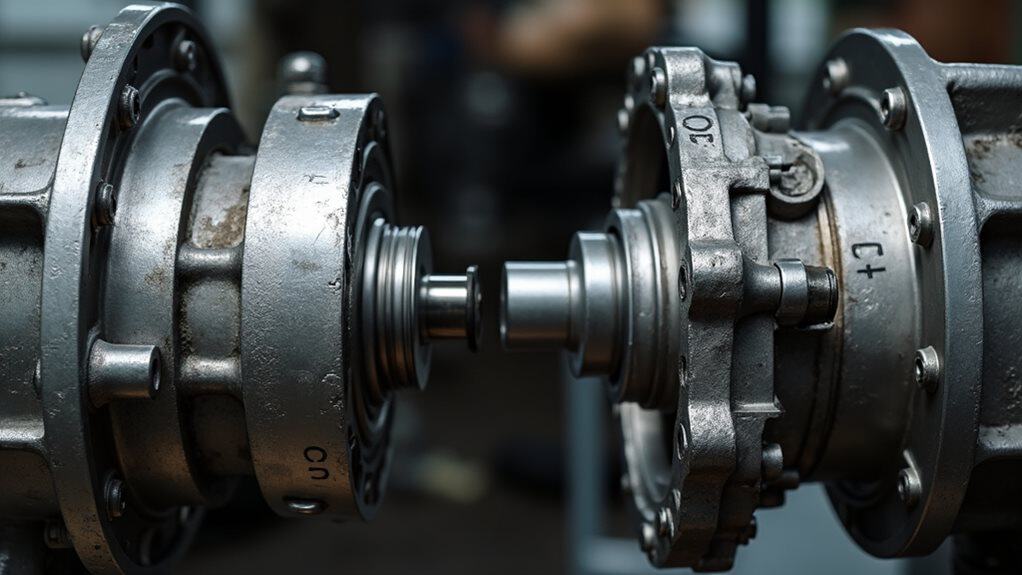
The C4 has a removable bellhousing, which is why it turns up in so many engine swaps. You can match the transmission to a different block by changing the bellhousing rather than the whole unit.
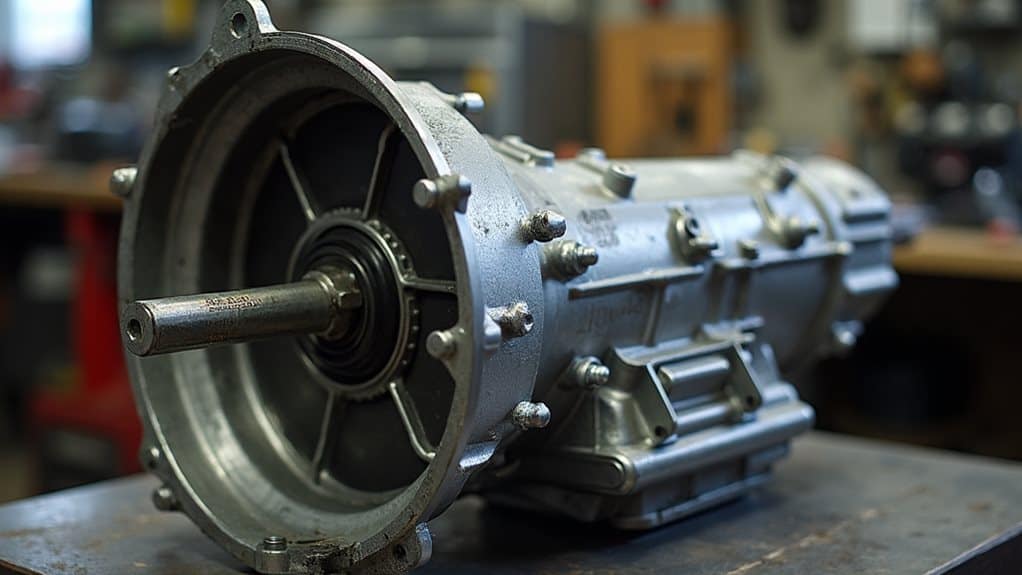
The C6 is a one piece aluminium case with the bellhousing cast into it. You cannot swap bellhousings, so a C6 built for a 460 big block will not bolt to a 351 Windsor. The big block pattern measures about 7 and 11/16 inches across the top bolt centres.
Case Ribs and Casting Numbers
Look along the top of the case. The C6 carries pronounced ribs that the C4 does not, and the whole casting is visibly heavier. Casting numbers then confirm the family and the year.
Our Ford C4 identification page covers the C4 casting and tag codes in detail, and the Borg-Warner and GM identification guide shows the same decode method applied to another family.
Filler Tube and Dipstick
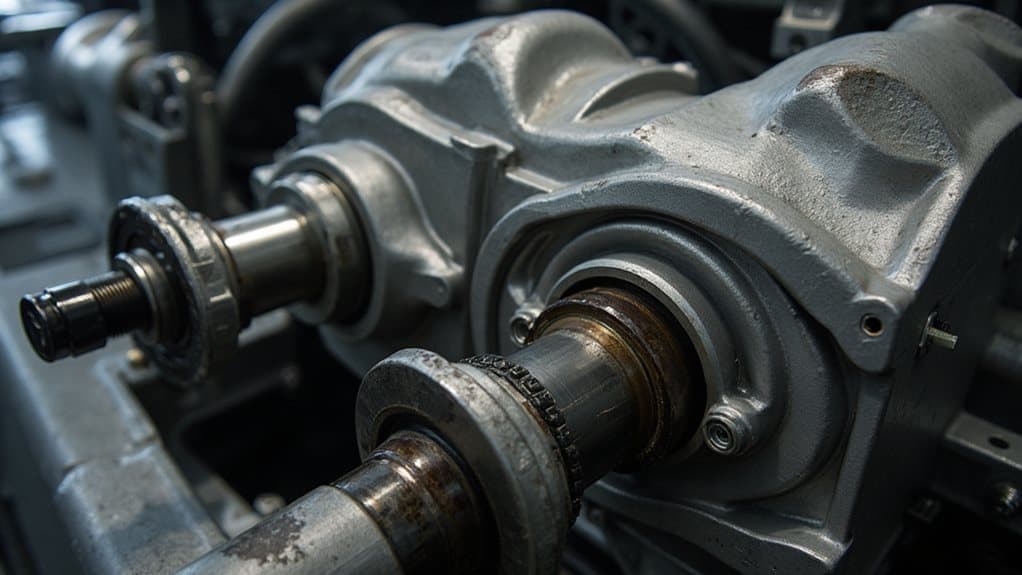
On the C4, early units fill through the case and later ones fill through the pan. Look at where the dipstick tube enters: a tube into the case itself is one pattern, a tube into the pan is the other, and the two take different service procedures.
The C6 fills through a tube into the case and has a long dipstick that is easy to misread when the transmission is hot. Check the level with the engine running, in park, on level ground.
Ratios and Driving Behaviour
| Gear | C4 | C6 |
|---|---|---|
| First | 2.46:1 | 2.46:1 |
| Second | 1.46:1 | 1.46:1 |
| Third | 1.00:1 | 1.00:1 |
Because the ratios match, the difference you feel is weight, converter and internal strength rather than gearing. Neither unit has an overdrive gear, so highway rpm is set by the rear axle ratio, not by the transmission.
Which One to Use
For a light car with a small block, the C4 is the sensible choice: it is lighter, it takes less power to drive, and the removable bellhousing makes it adaptable. For a truck, a big block or anything that tows, the C6 is the one that survives.
If the transmission is already in the vehicle and the complaint is behaviour rather than identity, the model number will not help much. A unit that shifts fine until it warms up is usually a pressure or electronics fault, and a harsh shift after a rebuild is often adjustment rather than wear.
The rest of the family, including GM equivalents, sits in the transmission guides section. If you are comparing Ford against GM, the TH350 and TH400 split along the same light duty and heavy duty lines.
Where the C4 and C6 Sit in the Ford Range
Both are three speed automatics, and Ford used several other units alongside them. Pan bolt count separates the whole group in one pass.
| Transmission | Pan bolts | Character |
|---|---|---|
| C4 and C5 | 11 | Light duty, removable bellhousing, small case |
| FMX | 14 | Cast iron case, heavier than a C4, used in mid size cars |
| C6 | 17 | Heavy duty, integral bellhousing, S shaped pan rear edge |
| AOD | 14 | Four speed with overdrive, different pan shape to the FMX |
That table is worth having in your head before you crawl under anything, because the count alone rules out three of the four.
C4 Variants Worth Knowing
The C4 was built for nearly two decades and changed along the way. Two variations catch people out when ordering parts.
The first is case fill versus pan fill. Early units fill through a tube into the case, later ones fill through the pan, and the dipstick and service procedure differ between them. Look at where the tube enters before you buy a filter kit.
The second is the C5, built from roughly 1982 to 1986. It looks like a C4, shares the 11 bolt pan, and adds a lockup converter. If you are chasing a lockup fault on something that looks like a C4, this is why.
Input shaft splines also changed: 24 by 24 splines in the early years, a 26 by 26 version for one year, then 26 by 24 from the early 1970s onwards. Count them before matching a converter.
C6 Variants and Bell Patterns
The C6 is a one piece case, so the bellhousing pattern decides what it will bolt to and cannot be changed. The small block pattern and the big block pattern are different castings, and the big block pattern measures roughly 7 and 11/16 inches across the top bolt centres.
That is the single most important measurement to take before buying a used C6. A big block unit is worthless behind a small block without an adapter, and the seller’s description is not always accurate.
Production ran from 1966 into the mid 1990s in trucks and vans, which is why C6 units turn up in much later vehicles than the car applications suggest.
Tags, Castings and Dates
Ford bolts a small metal tag to the case carrying the model and application code, and the case itself carries a casting number. The tag identifies the build, the casting identifies the family and the year range.
If the tag is missing, the casting number plus the pan outline plus the bell pattern will identify the unit well enough to order parts. Photograph all three before you buy at a swap meet.
Buying Checklist
- Count the pan bolts, 11 or 17, and check the pan shape.
- Check whether the bellhousing is removable (C4) or cast in (C6).
- On a C6, measure the bell pattern and confirm small block or big block.
- Spin the input and output shafts and feel for roughness.
- Check the fluid for a burnt smell and the pan for debris.
- Read the tag and photograph it beside the casting number.
Frequently Asked Questions
How can I tell a Ford C4 from a C6?
Count the pan bolts. Eleven is a C4 or C5, seventeen is a C6. The C6 pan also has an S shaped rear edge, and the C6 has a one piece case with an integral bellhousing.
How many pan bolts does a C6 have?
Seventeen. The C4 and C5 use eleven, and the FMX uses fourteen.
Does a C4 have a removable bellhousing?
Yes. The C4 bellhousing unbolts, which is why it is popular for swaps. The C6 bellhousing is cast into the case and cannot be changed.
What years was the C4 built?
Roughly 1964 to 1981, with the C5 variant continuing to about 1986. The C6 ran from 1966 to 1996.
Is a C6 stronger than a C4?
Yes. The C6 was built for big block engines and trucks, with a larger case and heavier internals. A C4 behind a mild small block is fine, but it is not the unit for towing.
Do a C4 and C6 use the same fluid?
Both use a conventional automatic transmission fluid of the period. Use a fluid rated for older Ford units and check the level hot, in park, with the engine running.