When your Nissan Altima’s battery and brake lights come on together, it usually means your charging system isn’t working right—often due to a failing alternator or bad voltage regulator. Low voltage from a weak alternator can trigger both warnings, even if your brakes are fine, because shared circuits link these systems. Check your battery voltage with the engine off and running using a multimeter. If voltage stays below 13.5V when running, the alternator likely needs attention. Keep an eye on belt condition and connections, since loose or corroded parts can worsen the issue. Understanding the underlying electrical relationship helps pinpoint the real problem fast.
Quick Tips
- A failing alternator may cause both battery and brake lights to illuminate due to low charging voltage.
- Low system voltage below 12.5V when off or under 13.5V when running can trigger multiple dashboard warnings.
- Shared wiring in Nissan Altima can link battery and brake lights, causing them to activate simultaneously during charging issues.
- Check alternator output with a multimeter: expect 13.5–14.5V when running to confirm proper charging.
- Persistent or flickering lights warrant professional diagnostics to identify alternator, belt, or electrical faults.
Why Both Battery and Brake Lights Come On
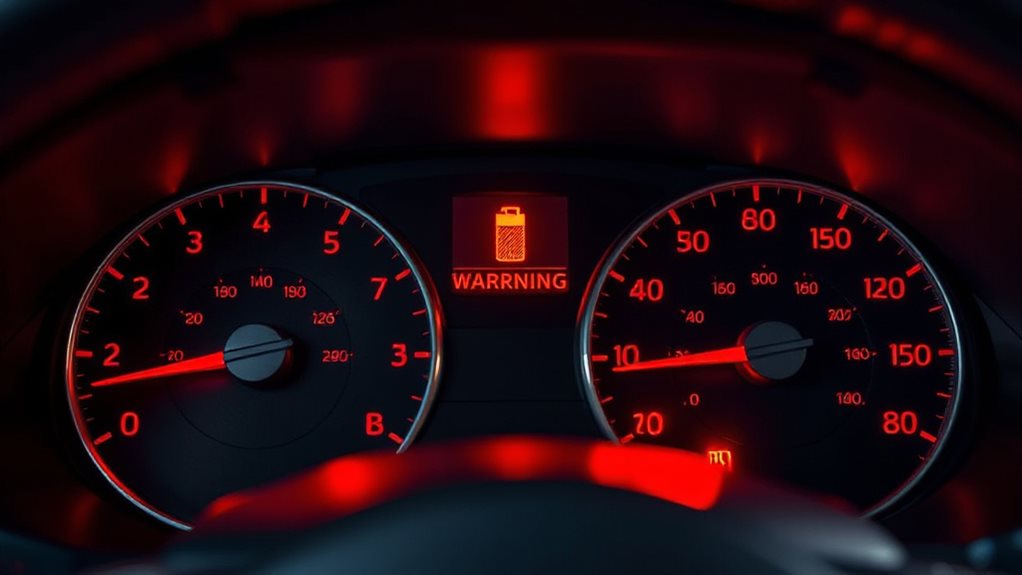
While your Nissan Altima is running, the alternator keeps the battery charged and powers the electrical systems—but if the alternator fails, both the battery and brake warning lights often come on together.
A faulty alternator, usually due to a bad voltage regulator, can’t recharge the battery. Low voltage then triggers the brake light, as systems detect insufficient power.
Alternator voltage expected around 14 volts when charging ensures stable electrical operation, and deviations can lead to warning lights. Additionally, early detection through visual inspections of belts and connections can prevent complete alternator failure.
What the Battery Light Means in Your Altima
Turn the key in your Nissan Altima, and if that red battery symbol glows on the dashboard after the engine starts, it’s telling you something’s wrong with the electrical system.
This light means your battery isn’t charging properly, often due to a failing alternator, loose serpentine belt, or corroded terminals.
Voltage issues, blown fuses, or a weak battery can also trigger it.
Check components promptly.
Early detection using a dedicated alternator check can identify charging problems weeks or months before total failure.
Why the Brake Light Activates During Charging Failures
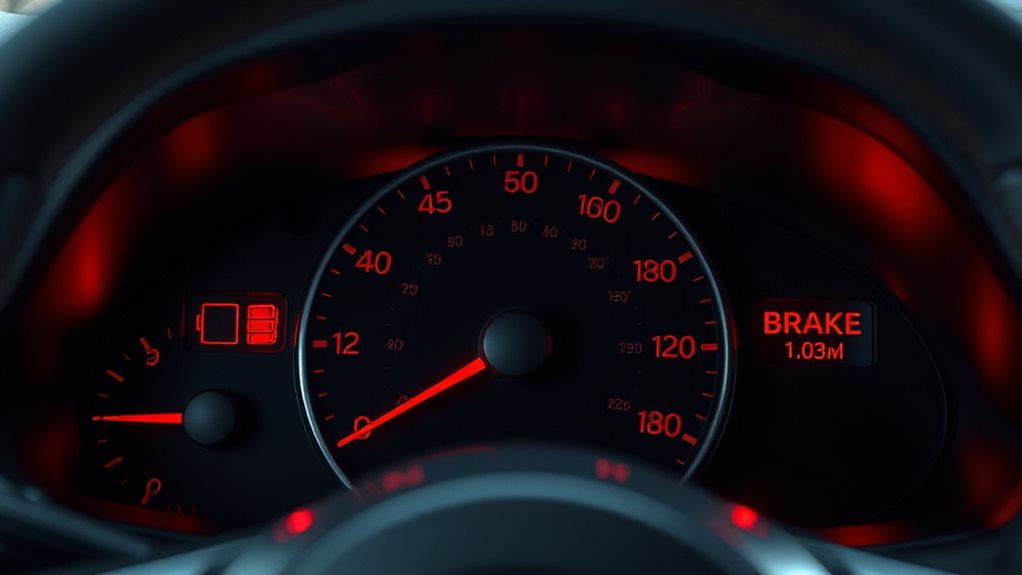
If your Nissan Altima’s brake warning light comes on at the same time as the battery light, it’s likely not a brake issue at all—instead, it’s a sign of a charging system failure affecting multiple dashboard indicators.
Low voltage from a failing alternator or weak battery tricks the system into thinking there’s insufficient power for brake functions. Shared wiring links these warnings, so when charging drops below 12.5V off or fails to reach 14V running, both lights activate as a safety alert. Regular inspection of battery connections and alternator output can help identify the problem early, especially issues with loose battery connections that commonly disrupt power flow.
How to Test Your Alternator at Home
Grab your multimeter and pop the hood—testing your Nissan Altima’s alternator at home is a straightforward process that helps pinpoint charging system issues.
Park on level ground, turn off the engine, and wear safety glasses.
Check for loose wires, belt wear, and housing damage.
Test battery voltage (should be ~12.5V off, 13.5–14.5V running).
Under load, voltage shouldn’t drop below 13V.
If you see the battery or brake warning light while driving, consider testing for voltage output as it can indicate alternator problems.
When to Take Your Altima to a Mechanic
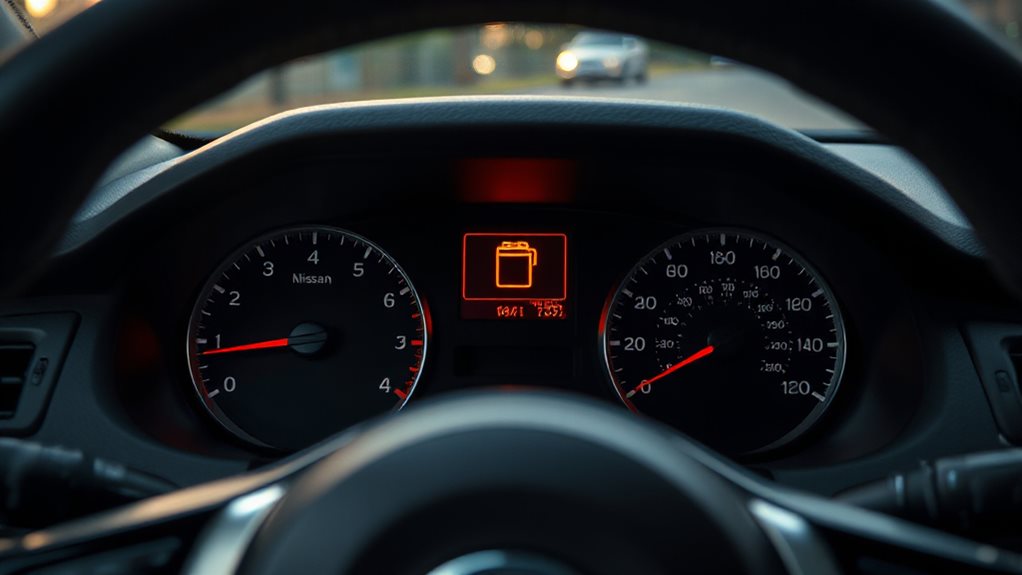
Seeing both the battery and brake warning lights illuminate on your Nissan Altima’s dashboard means it’s time to seek professional help, especially if you’ve already checked the basics.
If lights persist, flicker, or coincide with power loss, low voltage, or worn brake components, schedule a mechanic visit. Diagnostics starting around $95 can pinpoint alternator, relay, or sensor issues before bigger damage occurs. Regular checks of the charging system can help catch problems early.
Wrapping Up
If both the battery and brake lights are on, your Altima’s charging system likely has an issue—often a failing alternator. The battery light signals low voltage, while the brake light may activate because shared circuits rely on proper voltage. Test the alternator voltage with a multimeter; it should read 13.8–14.4 volts when running. If it doesn’t, replace it promptly to avoid a dead battery or breakdown. See a mechanic if you’re unsure.