No, you shouldn’t put WD-40 on your brakes. It leaves a greasy film that reduces friction between the pads and rotors, increasing stopping distances and risking brake fade. The residue can damage rubber seals, invite moisture into the system, and permanently contaminate components. If applied, clean it off immediately with brake-specific cleaner, replace compromised pads, and inspect the system thoroughly—understanding the full risks and proper alternatives helps guarantee your brakes work safely when you need them most.
Quick Tips
- No, WD-40 should not be used on brakes as it leaves a greasy residue that reduces friction and braking performance.
- Applying WD-40 can contaminate brake pads and rotors, leading to slippage, longer stopping distances, and potential brake fade.
- WD-40 may damage rubber seals and attract dirt, increasing the risk of hydraulic leaks and component wear.
- If WD-40 contacts brakes, clean immediately with brake cleaner and inspect pads for permanent damage or glazing.
- Use brake-specific products like brake cleaner, high-temperature grease, or silicone spray instead of WD-40 for safe maintenance.
What Happens When You Spray WD-40 on Brakes?
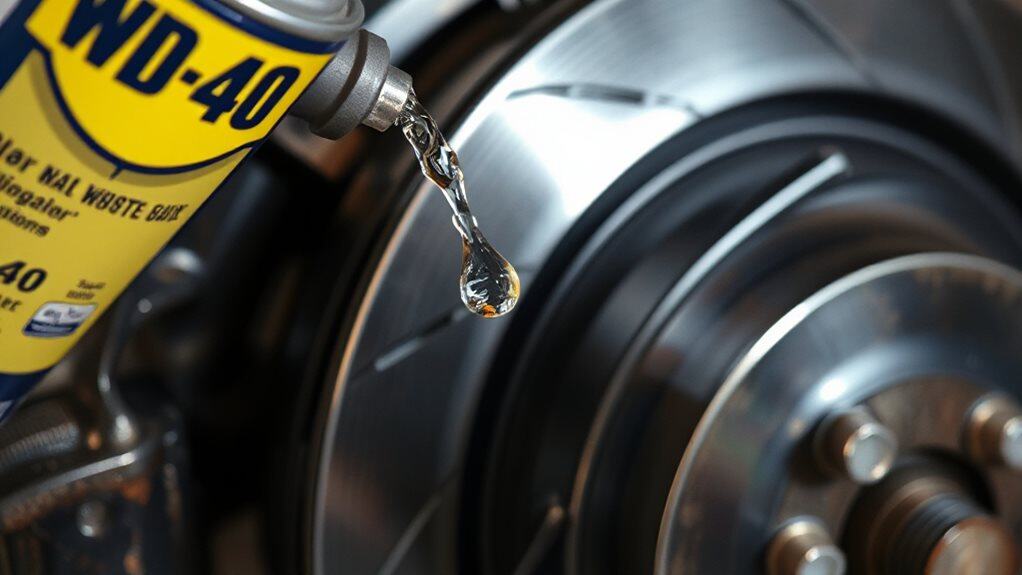
While you might think spraying WD-40 on your brakes could help quiet a squeak or clean off rust, doing so introduces serious risks to your braking system.
It leaves a hazy, greasy film that reduces friction, especially during hard stops. Though braking may seem fine at first, the residue can impair performance, damage rubber seals, and compromise hydraulic function—leading to potential brake failure over time. Applying WD-40 to brake components can damage rubber seals and result in dangerous fluid leaks. If the brake fluid reservoir cap is missing, exposure like this can let moisture and contaminants enter the system and rapidly worsen performance.
Why Does WD-40 Reduce Stopping Power?
Spraying WD-40 on your brakes might seem like a quick fix, but it quickly undermines the core function of your braking system—friction.
The oily residue reduces pad-to-rotor grip, causing slippage.
Contaminated pads can’t generate enough friction, leading to brake fade, longer stopping distances, and compromised safety.
WD-40 penetrates deep, permanently damaging pads and creating hazardous driving conditions under normal use.
Always replace or thoroughly clean any pads or hardware contaminated with lubricants to prevent reduced braking performance.
Why Are My Brakes Squeaking? (And Safe Fixes)
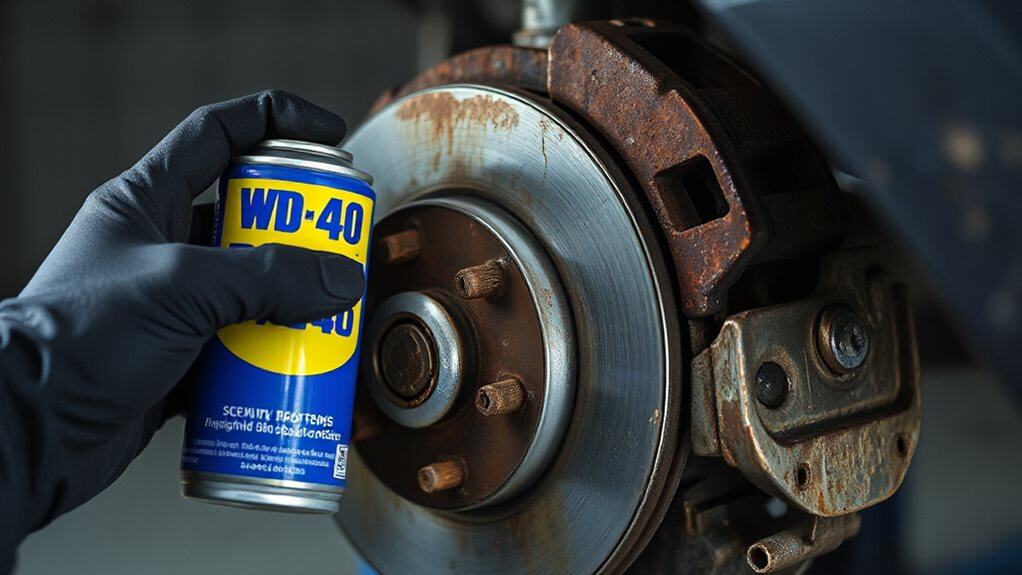
Listen closely the next time you hit the brakes— that squeak could be your car telling you something’s wrong.
Worn pads, glazing, lack of lubrication, debris, or sticking parts often cause noise.
Thin pads trigger squeals via metal indicators; glazed surfaces reduce grip.
Dirt or moisture may create temporary sounds.
For safe fixes, inspect pad thickness, clean components, lubricate contact points, and replace damaged parts—never use WD-40.
New ceramic pads can also make noise during the initial bedding process, especially if there is moisture-induced rust on the rotors.
How Do You Remove WD-40 From Brakes?
You just realized you made a mistake—WD-40 is on your brakes, maybe after trying to quiet a squeak.
Spray brake cleaner generously on the discs, using a high-pressure nozzle for even coverage.
Wipe with a lint-free cloth and scrub stubborn spots with a soft toothbrush.
Rinse with hot water and degreaser, then dry thoroughly with compressed air.
Inspect pads; replace if contaminated.
Test brakes cautiously.
Also consider that some brake cleaners can damage rubber components, so choose a compatible product and avoid overspray on tire rubber.
What Should You Use Instead of WD-40 on Brakes?
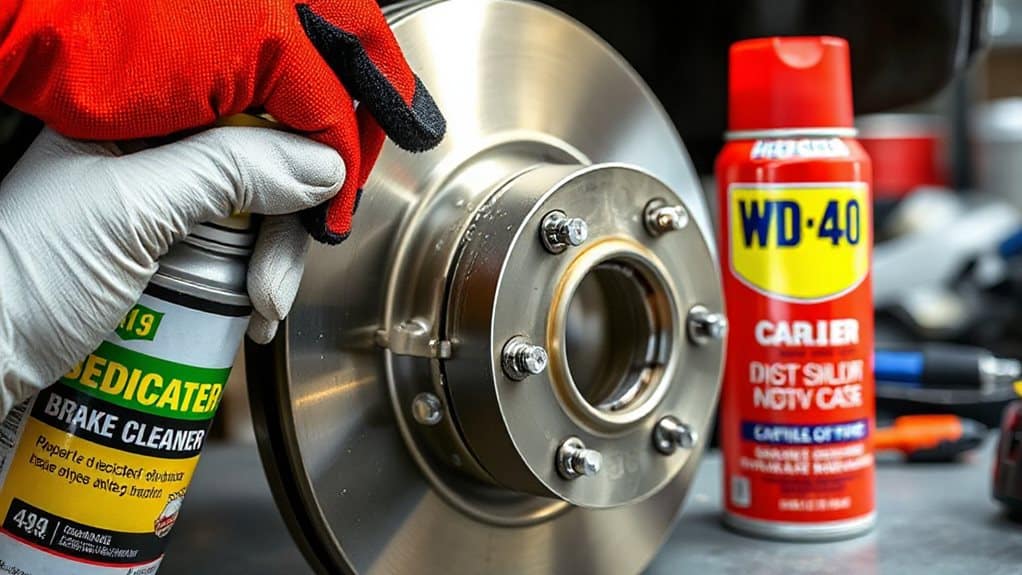
Using the wrong lubricant on your brakes can lead to dangerous consequences, so choosing the right alternative to WD-40 is critical for both safety and performance.
Use brake cleaner to remove contaminants—its residue-free formula restores proper friction.
Apply silicone spray on rubber or plastic parts, and high-temperature brake grease on caliper pins.
These specialized products guarantee safe, effective brake operation without compromising performance.
Always inspect and lubricate the caliper slide pins regularly to prevent corrosion and sticking.
Wrapping Up
You should never use WD-40 on brakes—it’s not a lubricant for braking systems. It leaves a slippery residue that reduces friction, compromising stopping power. If applied, clean it immediately with brake cleaner. For squeaks, inspect for worn pads or debris instead. Use products labeled specifically for brakes, like brake lubricants for caliper pins. Always prioritize safety and proper materials to maintain effective brake performance.