
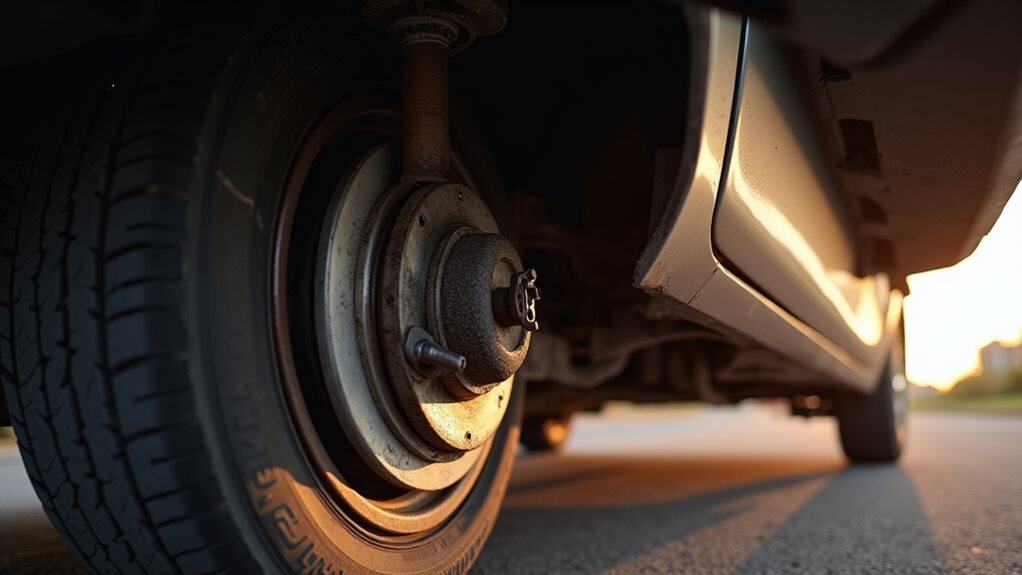
If you hear a loud rhythmic clicking while driving straight, you’re likely dealing with a mechanical issue: worn CV joints or a damaged axle click under load, especially if boots are torn; wheel, tire, or hub problems (stones in tread, loose lug nuts, or bad bearings) can create repeating impacts; brakes or caliper hardware may be loose or worn; suspension bushings, tie rods, or ball joints can also click; less commonly, valvetrain ticks from low oil mimic road noises—inspect those items and continue for repair steps.
Quick Tips
- Wheel or tire issues (stones in tread, tread separation, or unbalanced/worn tires) can cause rhythmic clicking while driving straight.
- Failing wheel bearings or damaged hub assembly produce repetitive clicks or grinding, especially at consistent speeds.
- Loose lug nuts, improperly seated wheels, or bent wheel components create intermittent clicking and unsafe wheel movement.
- Brake problems—loose pads, worn indicators, or bent backing plates—can click rhythmically as the wheel rotates.
- Damaged CV joints or axles (torn boots, grease loss) click under load and may produce noise even when coasting straight.
CV Joint or Axle Failure

Listen for the rhythm of the drivetrain: a repetitive clicking when you drive straight or especially when you turn often points to a failing CV (constant velocity) joint or a damaged axle.
You’ll hear clicks or clunks under torque, often when turning; inspect CV boots for grease, check for vibration during acceleration, and reproduce noise by circling tight in reverse to isolate the affected outer joint.
A torn boot can let grit in and grease out, which quickly damages the joint and often requires axle replacement, so check boots and grease levels regularly and replace the axle if the joint shows excessive wear.
Regular inspections of suspension components like wheel bearings can help catch related issues early.
Wheel, Tire, and Hub Assembly Issues
Wheel, tire, and hub assembly problems are common sources of a rhythmic clicking when you drive straight, and they cover several distinct components that you can inspect methodically.
Check wheel bearings for play or grinding, inspect lug nut torque and wheel seating, look for stones or tread separation in tires, and spin the hub alone to isolate warped hubs or damaged races; repair or replace faulty parts promptly. Rapid clicking often points to a weak battery or alternator issue that should be ruled out if electrical symptoms accompany the noise. Driveshaft-related issues such as worn U-joints or excessive vibration can also cause similar rhythmic noises and should be inspected as part of drivetrain diagnostics, especially if there is noticeable vehicle vibration or inconsistent wheel turning; consider examining the driveshaft components.
Brake System Clicking and Wear

When a rhythmic clicking comes from the brakes while you’re driving straight, the brake system is a likely culprit and you should inspect pads, calipers, backing plates, and associated hardware methodically; loose or improperly seated pads can shift inside the caliper and produce intermittent clicks, while worn pads or exposed pad wear indicators may create metal-on-metal contact that sounds similar and reduces stopping performance.
Check caliper guide pins, mounting bolts, pad fitment, and backing plate alignment for looseness, corrosion, bending, or improper installation; replace worn pads, service sticky calipers, and correct bent plates to restore quiet, consistent braking and prevent rotor damage. Additionally, treat seized or rusty fasteners with penetrating lubricant and, if necessary, use proper extraction tools like a broken bolt extractor to avoid further damage.
Suspension and Steering Component Problems
Check the suspension and steering when you hear persistent clicking while driving straight, because worn suspension bushings let metal parts move or rub together and that creates sound.
Inspect control arms, sway bar links, and strut mounts for cracked or shredded bushings, and understand that replacing these rubber or polyurethane mounts often stops the noise by restoring proper spacing and dampening.
Also check the steering linkage—tie rods, drag links, and ball joints can have play or damaged seals that produce click-like noises, so measure for looseness and tighten or replace components to correct the issue.
Low or degraded power steering fluid can also cause noises, so check fluid level and condition and top up or replace as needed to prevent power steering issues.
Worn Suspension Bushings
Suspension bushings often wear out over time and can produce a distinct clicking or clunking noise when you drive straight, because they no longer isolate movement between metal components.
You’ll notice loose-feeling suspension, uneven tire wear, and clicks over bumps; inspect control arm, sway bar, and shock mounts.
Replace degraded rubber or polyurethane bushings promptly to restore alignment, reduce metal contact, and improve ride quality.
Faulty Steering Linkage
Faulty steering linkage covers several steering and wheel-support components that can produce clicking or clunking noises while you’re driving straight, and diagnosing them means looking beyond obvious causes like worn bushings.
Check wheel bearings for early wear, inspect CV joint boots for grease loss, examine steering shaft U-joints and column bushings for play, and assess the rack for internal gear or mount damage.
Engine Valvetrain or Lubrication Ticks

Check your engine oil level and condition first, because low or dirty oil can’t supply the hydraulic lifters with the pressure they need, causing lifter bodies to collapse or stick and produce a distinct ticking at idle or low RPM.
If the lifters are worn, clogged, or failing, they won’t maintain proper valve clearance and you’ll hear a persistent tick that often lessens as the engine warms and oil thins; cleaning or replacing faulty lifters is the corrective step.
Use a dipstick check, maintain regular oil changes with the correct viscosity, and have a mechanic inspect lifter operation or valve clearance if ticking persists, since prompt action prevents further valvetrain damage.
Low Oil Level
A low engine oil level is a common cause of a sharp ticking or clicking noise from the valvetrain, and you should treat it as a priority because oil both lubricates and cushions moving parts.
Low oil reduces lubrication and pressure, so cam lobes, rocker arms, and lifters contact metal-to-metal, especially on cold starts; top up oil, check for leaks, then inspect for wear.
Worn Valve Lifters
Listen for a rhythmic ticking coming from the top of the engine, because worn or failing valve lifters often make that exact sound and it tells you there’s a problem in the valvetrain.
Hydraulic lifters lose oil pressure from a bad check valve or piston wear, trapping air or causing lash variation.
Inspect lifters, cam lobes, pushrods, and oil pressure; replace all lifters if faulty.
Post-Shutdown Electrical and Cooling Clicks
Although the engine is off, your car’s control modules will often power relays and small coolant pumps for a short time to manage residual heat, and those activations are what you usually hear as clicking under the hood or near the radiator.
These relays engage fans or auxiliary pumps based on coolant temperature and battery voltage, running seconds to minutes to prevent heat soak; normal behavior.
Wrapping Up
When you hear a loud clicking while driving straight, don’t ignore it: check the CV joints and axle first, since torn boots or worn bearings often cause rhythmic clicks that worsen with speed. Inspect wheels, tires, and hubs for loose components or damaged tread, and examine brakes for pad movement, caliper issues, or debris. Look over suspension and steering links, then verify engine valvetrain lubrication and post-shutdown electrical or cooling relays, replacing faulty parts promptly.