You perform head-in parking by driving forward into a space so your front faces the curb and your rear points into traffic. This method simplifies entry, speeds up exits, and improves forward visibility when leaving. It’s common in driveways and lots with ample space, often required by signage to enhance safety and traffic flow. Backing out can be risky due to limited rear visibility and blind spots. Many lots enforce head-in only to reduce congestion and collisions—knowing the correct technique helps you avoid common mistakes and stay compliant.
Quick Tips
- Head-in parking means driving forward into a parking space, with the front of the car facing the curb.
- It allows easier entry and quicker, more visible exits compared to backing in.
- This method is common in driveways and lots with ample space and clear traffic flow.
- Many parking lots enforce head-in only rules to improve safety and maximize capacity.
- Despite easier entry, exiting requires backing into traffic, which can pose visibility and collision risks.
What Is Head-In Parking?

Pulling into a parking spot front-first is what’s known as head-in parking, a method you’ve likely used many times without even thinking about it. You drive straight in, front end toward the curb, back facing traffic. It’s simple, common, and ideal for driveways or lots with space. Unlike back-in parking, it requires no reverse maneuvering—just forward motion. Head-in allows for easy entry and visibility when leaving the spot. Many drivers prefer it because it avoids the need to back into traffic and allows for quicker exits.
How to Park Head-In: Step by Step
Getting into position for head-in parking starts with a clear plan and careful observation.
Signal toward the spot, stay 2 meters from parked cars, and align your side mirror with the line.
Approach parallel, turn the wheel fully, and drift in slowly.
Straighten as you center, check spacing, and adjust if needed.
Finally, set the brake and straighten wheels.
Regularly inspect and maintain your vehicle’s ventilation, including the cabin air filter, to ensure comfort while parked.
Head-In vs Back-In: Key Differences

When you park head-in, you drive forward into the spot, making entry quick and simple, but you’ll have to back out blindly into traffic, which increases risk.
Back-in parking takes a little more effort at first, since you reverse into the space, yet it lets you pull forward safely when leaving, with full visibility of pedestrians and oncoming vehicles.
Studies show back-in parking reduces accidents and injuries, especially in busy lots, even though most drivers still choose head-in out of habit.
Professional locksmiths can help with vehicle access and key issues, including emergency lockouts and creating replacements for lost chip keys, which can be important for drivers who keep a spare in a secure location for emergency access.
Entry Method Comparison
Choosing how to park your vehicle isn’t just about convenience—it shapes how safely and efficiently you’ll leave the spot later.
You’ll find head-in parking easier to enter, pulling forward with minimal maneuvering, ideal for angled spots or steep hills. Back-in requires more skill and space but offers better visibility when exiting, especially in tight or busy areas.
Exit Safety Contrast
Pulling into a parking spot head-first might feel simpler at first, but it sets you up for a riskier exit compared to backing in.
When you reverse out, your rearview visibility is limited, increasing the chance of hitting pedestrians or obstacles. With back-in parking, you exit forward, seeing clearly. Backup cameras help, but blind spots remain—especially for small children or pets. You’re safer pulling forward.
When to Use Head-In Parking
Although head-in parking may seem like the default choice in many lots, knowing when to use it requires balancing convenience against safety.
Use it in low-traffic areas where quick entry matters, visibility is clear, and pedestrian activity is minimal.
Avoid it in busy zones with poor sightlines, especially when children or cyclists are present.
Consider installing a carport structure when you need added protection from the elements and increased vehicle longevity.
Where Head-In Parking Is Required
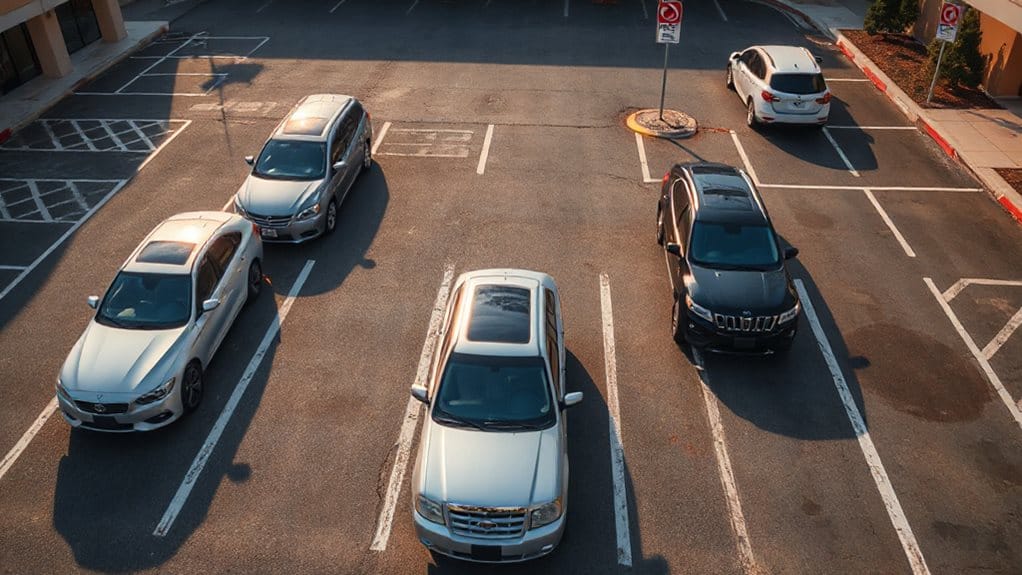
When maneuvering designated parking areas, you’ll often find head-in parking isn’t just a suggestion—it’s a requirement enforced by local regulations and design standards.
You must park head-in in commercial lots, residential complexes, and approved redevelopment sites.
It’s required where visibility, safety, and traffic flow matter most.
Always check signage and local rules—compliance avoids fines and keeps parking efficient and safe for everyone.
3 Benefits of Head-In Parking
You’ve likely seen signs or markings that require you to park head-in, especially in commercial or residential areas where traffic flow and safety are top priorities.
You save time pulling straight in, avoid reversing in tight spots, and maintain better visibility. Loading is easier with the trunk near walkways, and you reduce risks to pedestrians. It’s simpler, safer, and more efficient overall. Proper ventilation in enclosed parking areas can also improve safety by reducing buildup of hazardous gases like carbon monoxide, so ensuring adequate ventilation is important.
Why Backing Out Is Risky

When you back out of a parking spot, your blind spots hide pedestrians, bikes, and other vehicles, making collisions more likely.
You can’t see traffic approaching from the side, so you might pull out too slowly or at the wrong time, increasing risk.
Even with mirrors or cameras, critical areas around your vehicle stay hidden, especially low to the ground where small children play.
Mystery vibrations plaguing your highway drives could signal serious issues like failing components that need inspection before they fail completely.
Blind Spot Dangers
Though backing out of a parking space seems routine, it carries significant risk due to blind spots—areas around your vehicle that remain invisible from the driver’s seat.
Larger vehicles like SUVs and trucks have bigger blind zones, especially to the rear, where children or objects can easily hide. You mightn’t see a child stepping behind you, even with careful checking.
Rear visibility drops up to 58% in bigger vehicles, making slow, cautious backing essential.
Always turn your head, use cameras if available, and never assume the area is clear—even familiar driveways hide dangers.
Limited Traffic Awareness
Because backing out requires you to maneuver without a clear view of your surroundings, it greatly increases the risk of collisions in busy parking environments.
You’re less aware of moving vehicles, pedestrians, or carts, especially when blind spots block your sight.
Even at low speeds, limited traffic awareness during reversal leads to disruptions, near-misses, and crashes, particularly when others assume you’ve seen them.
Delayed Exit Maneuvers
You mightn’t realize how much risk comes with backing out of a parking space, even though it seems like a simple move.
Backing takes up less than 1% of driving time but causes 25% of crashes.
It limits visibility, increases pedestrian strike chances, and disrupts traffic flow.
Conditions change quickly, so always check surroundings, use cameras, tap your horn, and exit slowly to stay safe.
How to Park Head-In Safely
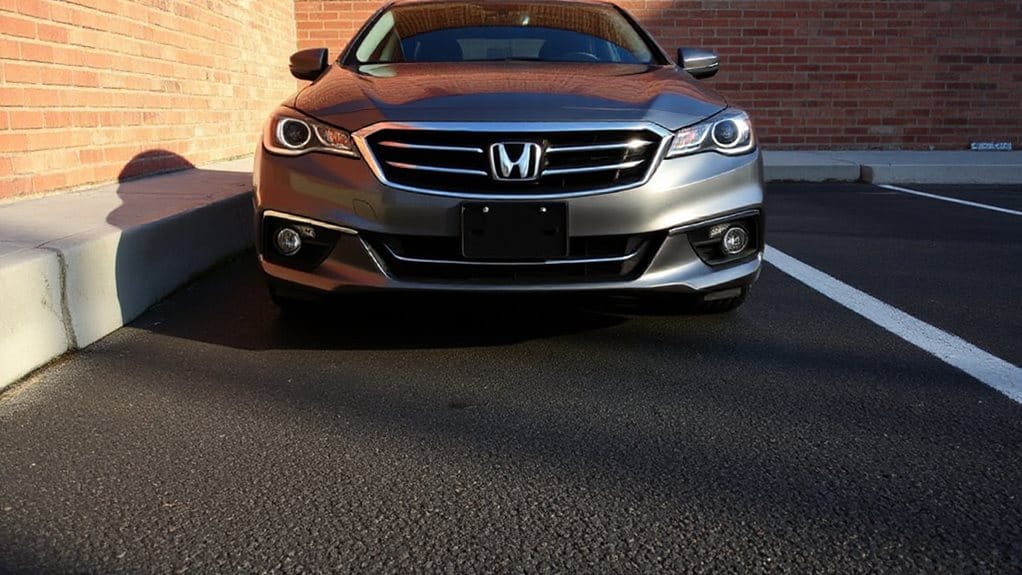
Start by signaling your intention to enter the parking space at least 100 feet in advance, giving others plenty of warning. Check mirrors and blind spots, then approach slowly—under 5 mph.
Align your vehicle parallel, 2–3 feet from parked cars. Drive straight in, centering between lines. Stop when your rear clears the aisle by at least 2 feet, then shift to park.
5 Common Head-In Parking Mistakes
You might pull in too far to the left or right, making it hard to center your car in the space and increasing the chance of a scrape.
If you don’t straighten your wheels fully before shifting into park, they’ll stay turned, which can cause uneven tire wear and make your exit trickier.
Misalignment with the curb or adjacent vehicles often happens when you don’t check your side mirrors and rear guidance lines, leading to awkward angles and tight squeezes when you leave.
Incorrect Vehicle Positioning
Pulling into a parking space front-first might seem like the quickest and most convenient option, but it often leads to incorrect vehicle positioning that increases safety risks during exit maneuvers.
You may park too close to adjacent vehicles, limiting space to maneuver out. Misalignment reduces visibility, especially to the right, and forces blind backward exits into traffic, raising collision and pedestrian risks despite rear sensors.
Misaligned Wheel Placement
When parking head-first into a space, even a slight misalignment in wheel placement can compromise both safety and vehicle longevity, especially if the steering wheel isn’t properly positioned during or after the maneuver.
You risk drifting off-center, damaging ball joints, or hitting nearby cars. Turn only when your mirror aligns with the road’s center, avoid mid-reverse corrections, and always straighten wheels before finishing—this reduces stress and earns points on driving tests.
Poor Space Alignment
Though proper wheel alignment sets the foundation, poor space alignment often undermines a successful head-in park, especially when body positioning and spatial awareness are overlooked.
You misjudge gaps if you don’t check surrounding vehicles, bay lines, or side distances. Leaning or shifting your head skews sightlines. Without sticky markers or consistent seating, reference points fail, leading to crooked, uneven parking.
Why Some Lots Require Head-In Only
Because forward-facing parking improves safety and efficiency, many lots enforce head-in only policies to manage traffic effectively.
You’ll exit smoothly into view, avoiding blind backing. This layout fits more cars, reduces congestion, and keeps movement predictable.
Signs clearly mark rules, and violations may result in tickets—especially in busy commercial or metered areas where order and visibility matter most.
Wrapping Up
You now know head-in parking means entering a space front-first, which is common and often safer. It lets you exit quickly and see traffic clearly. Always check mirrors and blind spots before moving. Some lots require it for better visibility and flow. Avoid common errors like misaligning or ignoring signs. When in doubt, follow posted rules—safety and awareness matter most in any parking situation.