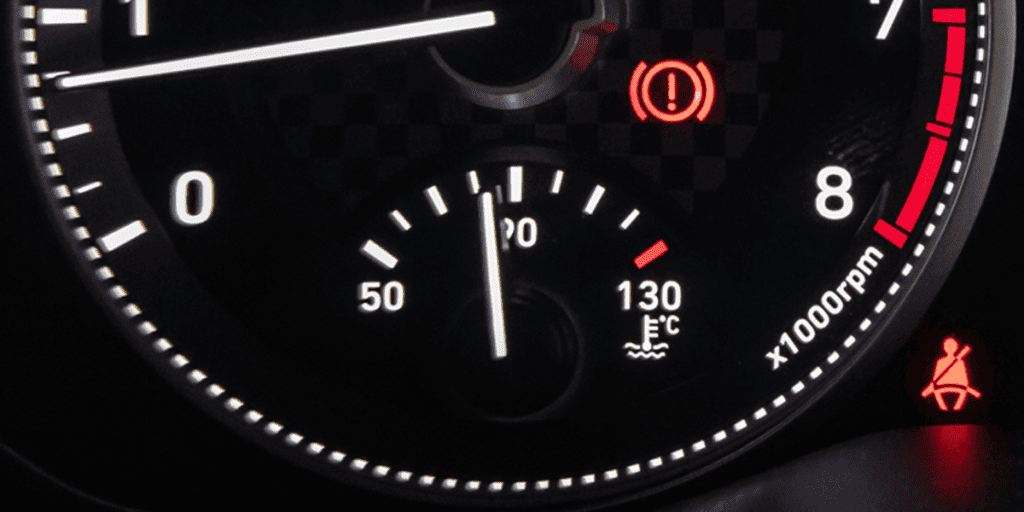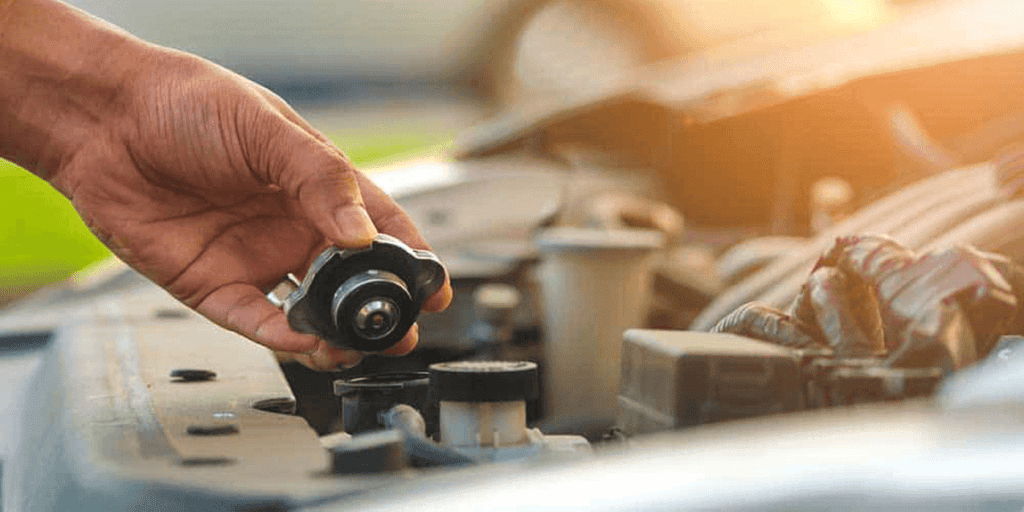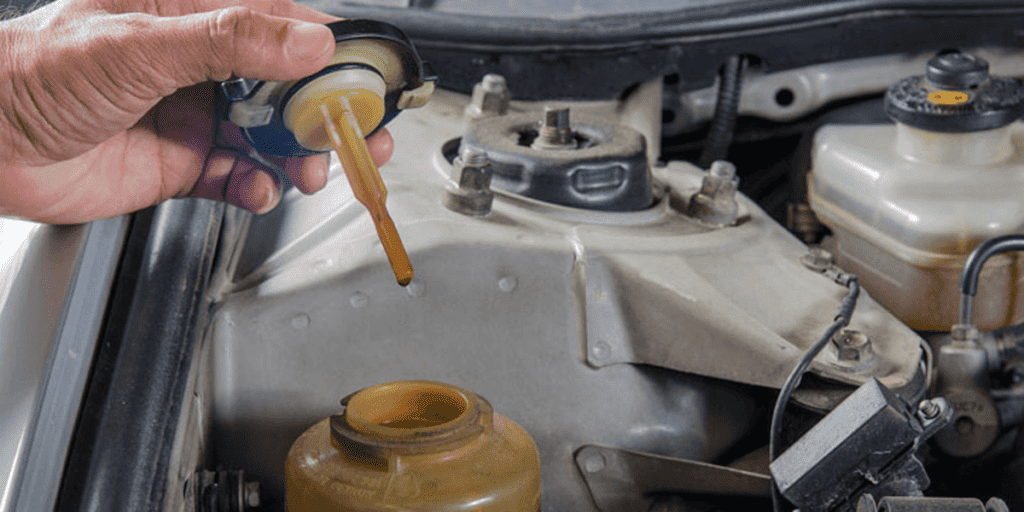
You’re likely hearing a growl or whine from the front of your engine that worsens with acceleration—this usually means your water pump pulley’s bearings are failing. A whirring or grinding noise, especially at idle or when hot, suggests looseness or internal damage. Look for wobbling, cracks, or corrosion on the pulley, and check for belt misalignment or glazing. Excess play or noise means replacement is urgent, since continued use risks overheating, belt failure, or engine damage—there’s more to watch for as you assess the full scene.
Quick Tips
- Growling or grinding noises from the front of the engine often indicate advanced water pump bearing wear.
- High-pitched squeaking before failure may result from dried grease or coolant contamination in the bearings.
- Visible pulley wobble during operation signals bearing looseness or internal damage requiring immediate attention.
- Whirring sounds worsening with heat suggest hub imbalance or early-stage bearing deterioration in the water pump.
- Play exceeding ~1 mm in the pulley indicates severe bearing wear and imminent risk of failure.
Why Is My Water Pump Making Noise?
While your engine runs smoothly most of the time, a sudden growling, squealing, or whining noise from the front of the engine could mean your water pump is failing.
You’re likely hearing bearing wear or pulley damage. These sounds often worsen with acceleration.
Coolant leaks, belt slippage, or overheating may also occur. Ignoring the noise risks belt breakage or engine damage, so act quickly. Excessive belt tension can accelerate bearing wear, leading to premature failure and the characteristic noises described excessive belt tension.
Inspect pulleys and belts for wear and proper tension to prevent further damage and maintain correct belt tension.
What Does a Bad Water Pump Pulley Sound Like?
You might hear a whirring or grinding noise from the front of the engine, especially as you accelerate, which often means the pulley’s bearings are worn or failing.
A growling sound during operation usually points to internal bearing damage, while a high-pitched squeak can pop up before complete failure, signaling the seal is going.
If you notice any of these sounds, check for play in the pulley or use a screwdriver as a stethoscope to confirm the noise is coming from the water pump.
Also be aware that a failing water pump pulley can be tied to wider cooling system issues like a faulty fan relay or temperature sensor, which can cause the fan to run constantly and further stress the pulley constant fan operation.
Whirring Or Grinding Noise
Often, a failing water pump pulley reveals itself through distinct noises that help pinpoint the issue before complete failure. You’ll hear a high-pitched whirring at idle, often worsening with engine heat—this usually means pulley hub looseness or imbalance, not bearing wear.
A grinding noise, however, signals bad bearings or impeller contact, especially after warmup, requiring immediate inspection.
Growling During Operation
When the engine is running and a low, rumbling growl emerges from the front of the engine bay, it’s a strong sign that the water pump pulley’s internal bearings have deteriorated to the point of metal-on-metal contact.
This growling means failure is near, so inspect it now.
Unlike earlier squealing, growling signals advanced wear.
Check for wobbling, resistance, or play—exceeding one millimeter means replacement is urgent.
Squeaking Before Failure
Though it might start faint and intermittent, a high-pitched squeak coming from the front of the engine is one of the earliest warnings that your water pump pulley’s bearings are beginning to fail.
You’ll notice the noise worsens with engine speed, often due to dried grease or coolant seeping into worn bearings.
Squeaking typically precedes grinding, signaling early wear.
Check for pulley wobble, coolant residue, or belt slippage.
Use a stethoscope to confirm the sound’s source.
Replace the pump promptly to prevent overheating or timing belt issues.
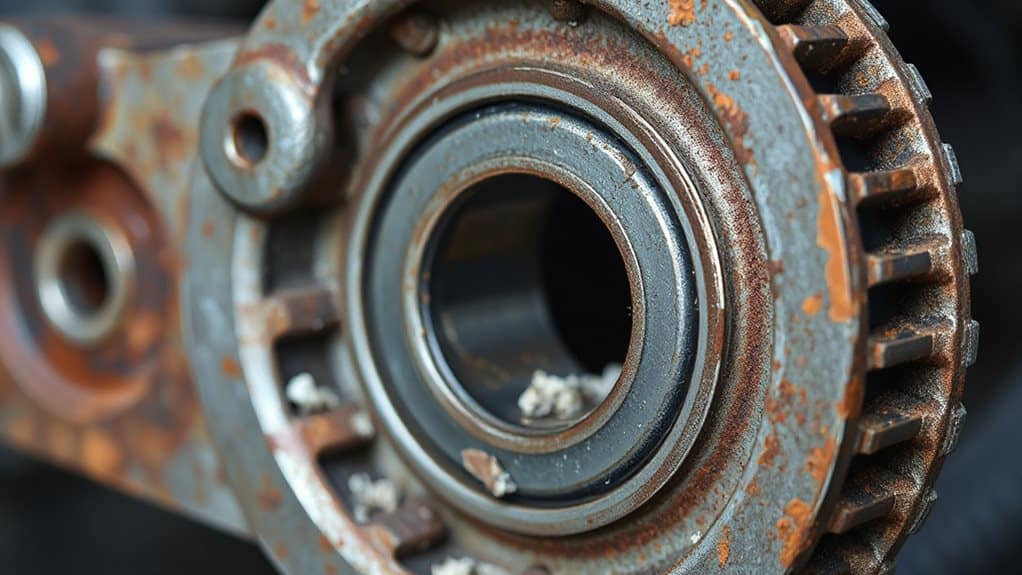
How to Spot Water Pump Pulley Damage by Sight
You can usually catch early signs of water pump pulley damage just by looking closely and knowing what to watch for.
Check for wobbling, cracks between bolt holes, or visible corrosion.
Look at the pulley face for warping, scoring, or uneven wear.
Inspect for rust, coolant residue, or missing pieces.
These visual cues signal internal failure, misalignment, or contamination—address them early to prevent belt damage and overheating.
A failing water pump can also cause excess pressure in the cooling system, so inspect related components and coolant condition as well.
How a Failing Pulley Damages the Serpentine Belt
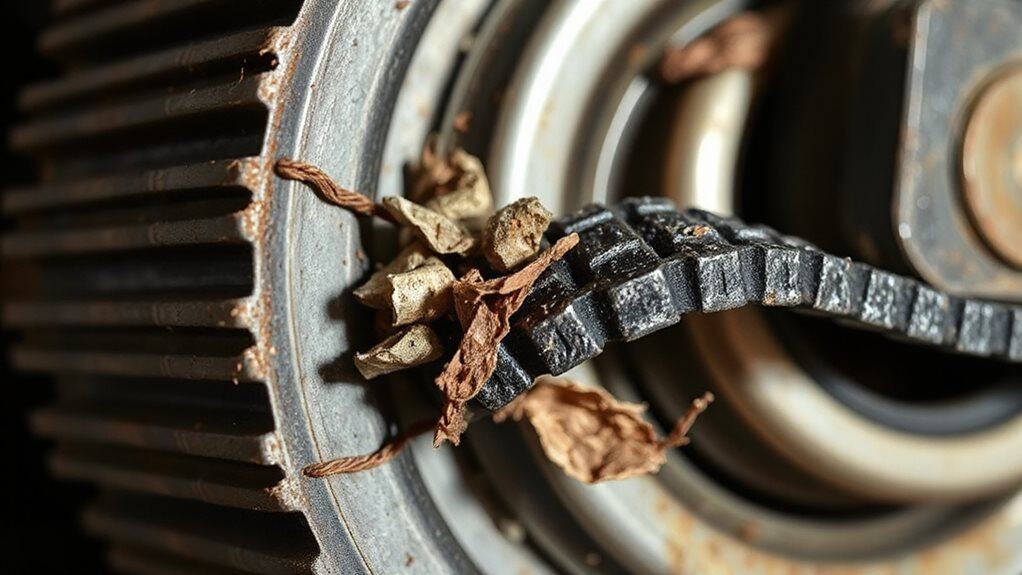
If your water pump pulley wobbles, it’ll throw off the belt’s alignment and cause it to slip, creating uneven wear and dangerous heat.
A misaligned or loose pulley doesn’t just let the belt slide around—it forces it to rub against the wrong parts of the pulley groove, speeding up cracking and failure.
And when the bearings wear out completely, the pulley can seize or jerk suddenly, snapping the belt or flinging it right off the engine.
Proper inspections can catch bearing wear early and prevent extensive drivetrain damage.
Pulley Wobble Causes Belt Slip
As the water pump’s bearings wear down from age, misalignment, or corrosion, the pulley can develop a noticeable wobble during engine operation.
You’ll see this wobble disrupt belt tension, causing the serpentine belt to slip off track.
Even if it spins freely at idle, under load, the loose pulley loses grip.
This misalignment leads to repeated belt slippage, reducing efficiency and risking engine damage over time.
Misaligned Pulley Damages Belt
A misaligned water pump pulley doesn’t just wobble—it actively grinds down your serpentine belt through constant sideways scrubbing.
Even a slight 1/4-degree offset creates friction, generating dust and uneven edge wear. This scrubbing produces heat, accelerates bearing wear, and promotes slippage.
Contaminants like oil worsen the damage, leading to glazing, fraying, and reduced efficiency—ultimately shortening belt life and risking system failure.
Worn Bearings Break Belts
When the bearings inside your water pump pulley wear out, the pulley starts to wobble during rotation, and that wobble sets off a chain reaction of damage to the serpentine belt.
You’ll notice inconsistent tension, belt slippage, and lateral movement, all accelerating wear.
Friction from unbalanced spinning causes cracking, while severe looseness may lead to complete belt breakage, disrupting essential engine functions.
Engine Damage Risks From Ignoring Pulley Noise
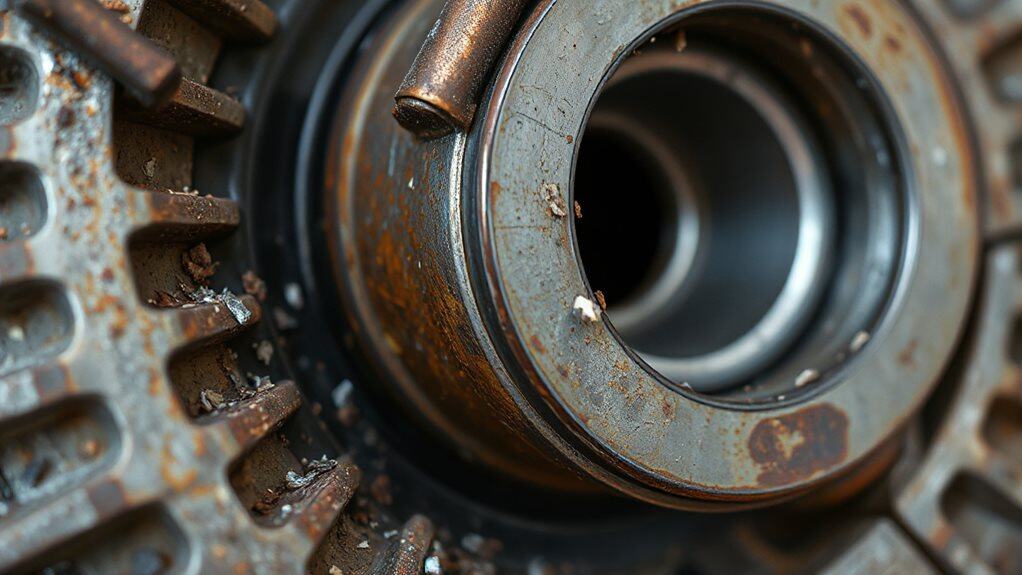
Though it might seem minor at first, ignoring water pump pulley noise can set off a chain reaction of serious engine damage.
Worn bearings disrupt coolant flow, causing overheating, warped heads, and cracked blocks.
A failing pump may seize, snapping the timing belt and bending valves.
Metal fragments block passages, while lost lubrication ruins adjacent components—ultimately risking complete engine failure if unaddressed.
Regular inspections reveal weep hole leaks early, allowing timely repairs to prevent further damage.
How Can You Prevent Water Pump Pulley Failure?
Because catching problems early keeps repairs manageable, you’ll want to stay ahead of water pump pulley failure with consistent, proactive steps.
Inspect every 30,000 miles for cracks or wobbling, and check belt condition regularly.
Install components correctly, align precisely, and use quality parts with proper tension.
Monitor vibrations, maintain coolant, and replace belts alongside the pulley to guarantee long-term reliability.
Also, regularly lubricate and inspect the bearing mechanism to prevent premature wear and failure.
Wrapping Up
You might hear grinding or squealing if your water pump pulley’s bearings are failing. Catching this early helps prevent belt damage and costly engine repairs. Visually inspect the pulley for wobbling or rust, and replace it if movement feels loose. A worn pulley stresses the serpentine belt, leading to slippage or breakage. Regular maintenance and proper belt tension reduce failure risk. Address noise promptly—it’s a clear warning.