Your brakes may smoke after replacement because new pads release resin vapors during bedding-in, creating light smoke and odor—this is normal. Use the 30-30-30 method: 30 moderate stops from 30 mph with 30 seconds between. If smoke persists, check for stuck calipers, seized pistons, or collapsed brake hoses trapping pressure. Continuous smoke, burning smells, or pulling signal mechanical issues needing immediate attention. Know the difference between break-in and failure to stay safe. You’ll soon see how simple checks can prevent costly damage.
Quick Tips
- Light smoke after brake replacement is normal during bedding-in, caused by resin off-gassing and transfer film formation.
- Proper bedding involves repeated stops to create an even pad-rotor transfer layer and minimize excessive smoke.
- Continuous smoke may indicate a stuck caliper, seized piston, or slide pin preventing pad retraction.
- Collapsed or restricted brake hoses can trap pressure, keeping brakes engaged and causing overheating and smoke.
- Persistent smoking, burning smells, or dragging require immediate inspection for mechanical faults or installation errors.
Is Your Car Smoking After Brake Replacement?
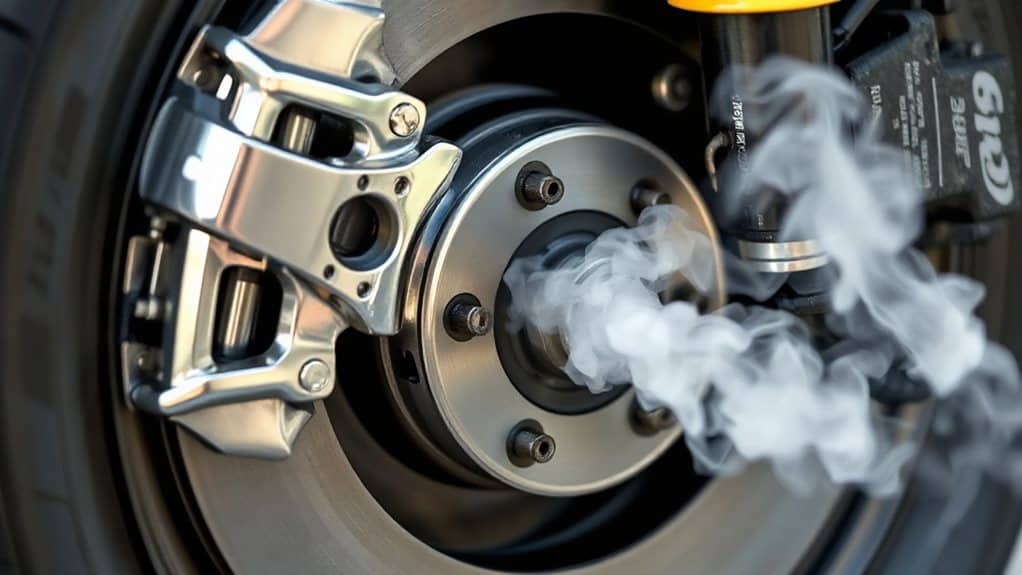
If you’ve just replaced your brake pads and rotors and now notice smoke coming from a front wheel after a short drive, don’t panic—this isn’t always a sign of failure.
Light smoke, heat, and a burning smell can occur as new pads bed in.
The mating process creates friction, heating components and releasing smoke.
Wheels may feel hot, and you might see grey residue.
As long as there’s no pulling, vibration, or pulsation, this is often normal.
Ensure the anti-rattle clips and abutment surfaces are installed and functioning properly to prevent excessive pad movement and noise.
Why New Brakes Smoke and Smell: It’s Usually Normal
While you might feel uneasy seeing smoke near a wheel after replacing your brakes, it’s typically part of the normal break-in process.
Your new pads generate heat from friction, curing the resin and releasing a burning smell. This bedding-in phase, lasting a few days, requires controlled stops. Light smoke or odor is expected—especially after hard braking—and signals proper curing, not failure. New brake pads during bedding-in can produce a temporary burning smell due to the high heat generated as the pads and rotors wear in together. Also, minor noise or dust may appear as the pads settle into the proper seating during the initial miles.
Use the 30-30-30 Method to Bed In Brakes Safely
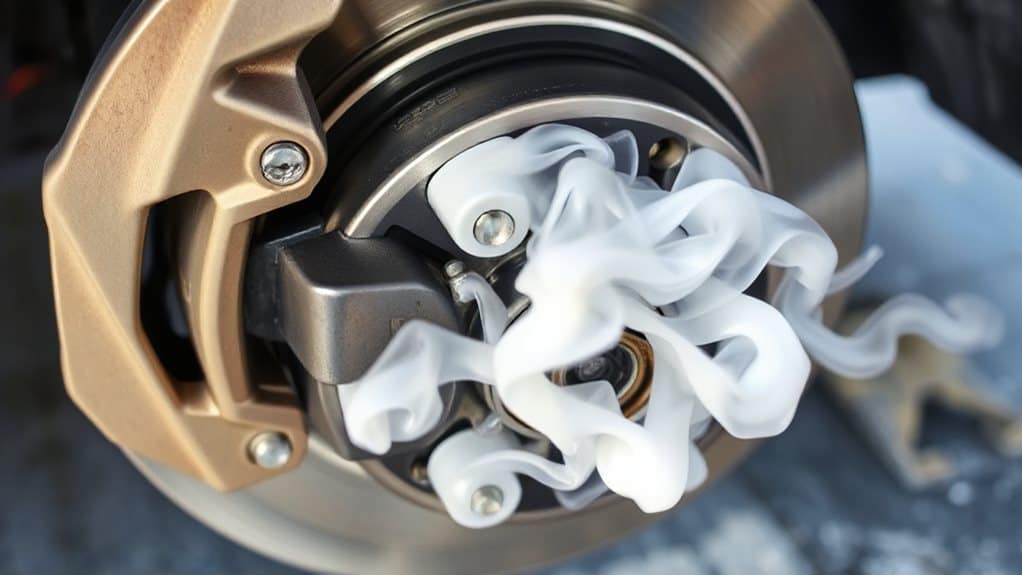
Seeing smoke after installing new brakes might catch you off guard, but it’s usually a normal part of the curing process as the pads heat up and release gases from the resin.
To bed them safely, use the 30-30-30 method: make 30 slow stops from 30 mph with 30 seconds of coasting between each. This builds a consistent transfer film, improves braking performance, and prevents warping or glazing by gradually conditioning the pad and rotor surfaces to work together efficiently.
Allow a cooling drive of 5–15 minutes at moderate speed after bedding to prevent thermal shock and help the transfer layer solidify.
When Brake Smoke Means Bedding-In Is in Progress
You’ll likely see smoke coming from your front brakes after several hard stops, and that’s normal—it means the bedding-in process is actively bonding pad material to the rotors.
As heat builds to 400–500°C, volatiles in new ceramic or performance pads burn off, creating visible fumes and a distinct odor, especially with pads like EBC Ultimax or track-focused Bluestuff.
Once the smoke clears and rotors show an even gray or light blue tint, you’ll know a consistent transfer layer has formed, reducing noise and improving brake response.
Be aware that excessive heat can also degrade brake fluid and seals, potentially leading to caliper seizure if not monitored and addressed.
Normal Smoke During Break-In
Often, you’ll notice smoke coming from your wheels after replacing brake pads, and in many cases, that’s completely normal.
You’re likely seeing volatiles burn off ceramic pads during bedding, especially after aggressive stops.
Smoke, a bluish rotor tint, and a strong smell mean the pads are transferring material and reaching proper temperatures.
This fades after cooling, confirming effective break-in.
Proper Bedding-In Procedure
Start the bedding-in process correctly, and you’ll make sure your new brakes deliver reliable, consistent performance.
Prepare by cleaning rotors and removing coatings.
Perform moderate to hard stops gradually, allowing cooling between applications.
This transfers pad material evenly, prevents brake fade, and guarantees smooth, quiet operation.
Finish with a slow cool-down to lock in performance.
Expected Smell And Fumes
While smoke and strong odors might seem alarming, they’re actually expected signs your brakes are bedding in correctly.
You’ll notice a pungent smell as volatiles burn off the new pads, especially during aggressive stops. Smoke typically appears after the 6th or 7th pass, then fades.
Blue-tinged rotors and a gray transfer layer confirm proper bedding.
Stuck Brake Pads: Hidden Friction and Heat
When your brake pads get stuck, they keep rubbing against the rotors even after you take your foot off the brake pedal, creating constant friction that builds up intense heat.
You might notice a burning smell, smoke, or a hot wheel rim.
This heat can warp rotors, damage bearings, boil brake fluid, and wear pads down quickly.
Causes include corroded calipers, damaged seals, or trapped air.
Check fluid levels, inspect calipers, and bleed the system to fix it.
Regular inspection is important because improperly installed pads or incorrect orientation (such as mixing up wear indicators) can cause accelerated wear and other braking problems.
Seized Calipers: Why Brakes Stay Engaged After Release
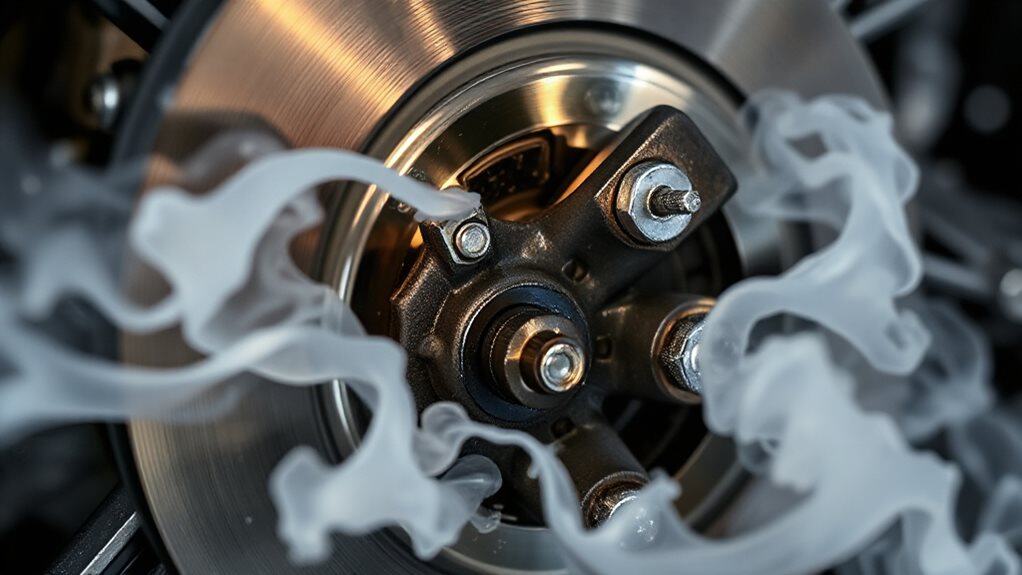
If your brake caliper seizes, it’s usually because the piston can’t retract due to internal corrosion or contaminated fluid, keeping constant pressure on the pads.
This sustained contact creates intense heat, leading to smoking, warped rotors, and even brake fluid breakdown over time.
You’ll notice the wheel getting hotter than the others, a burning smell, or the car pulling to one side because the caliper isn’t releasing properly.
Bleeding all four brakes after replacing a caliper helps ensure there’s no trapped air and maintains braking efficiency throughout the system.
Stuck Piston Causes
Because moisture naturally accumulates in brake fluid over time, corrosion can develop inside the caliper bore where the piston slides, and this rust buildup is one of the leading reasons a piston gets stuck.
You’ll notice the brake pad stays pressed against the rotor, creating heat, drag, and smoke.
Contaminated fluid, seized slide pins, debris, or poor reassembly during service can also prevent proper piston retraction, worsening the issue.
Constant Pad Pressure
A seized caliper piston keeps your brake pad pressed against the rotor even after you let off the brake pedal, and this constant pad pressure is a clear sign of a caliper that’s no longer functioning properly.
Corrosion or damaged seals prevent the piston from retracting, so friction continues, generating heat. This drag wears pads and rotors quickly, reduces fuel efficiency, and can overheat components, potentially leading to brake fade or fluid boil if left unaddressed.
Overheating Consequences
When your caliper seizes and the brake stays engaged, friction doesn’t stop—it keeps building, and that’s where serious trouble begins.
Excessive heat wears pads fast, especially against the backing plate, and damages rotors through metal grinding.
Boiling brake fluid causes total brake failure, while prolonged heat harms wheel bearings—so act quickly to prevent costly, dangerous damage.
Restricted Brake Hoses: Trapped Pressure Causes Drag
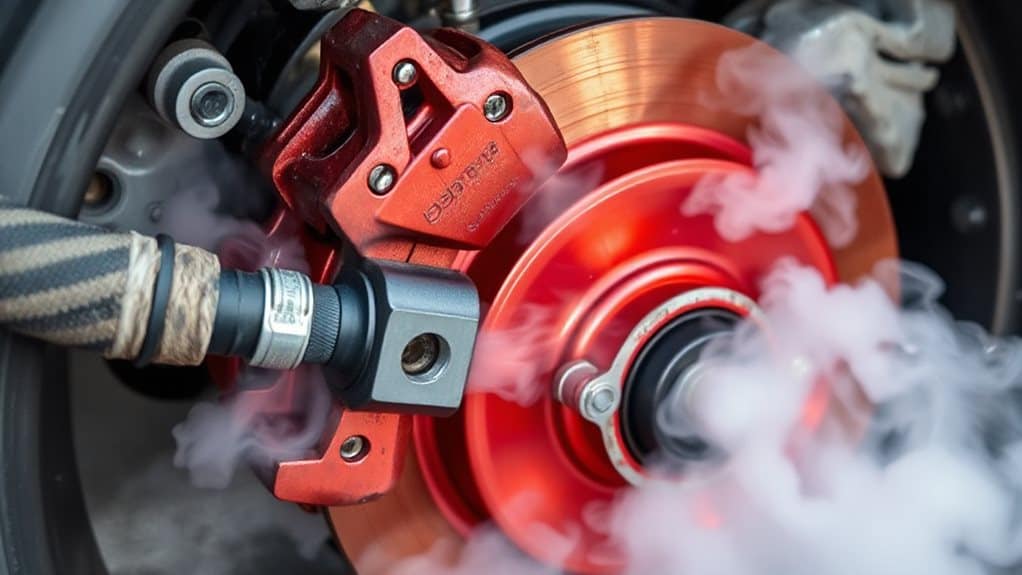
Under pressure, your brake system relies on smooth fluid movement to apply and release the brakes effectively—so if a brake hose becomes internally restricted, it can trap hydraulic pressure even after you let off the pedal. That trapped pressure keeps the caliper engaged, causing constant drag. Over time, this leads to overheating, uneven pad wear, and even smoking.
Restrictions often stem from rust, kinks, or internal collapse—common after collisions or improper installation. A restricted hose acts like a one-way valve, letting fluid in but not out. You might notice pulling, excess heat, or squeaking.
Diagnose it by opening the bleeder screw; if the piston retracts easily, the hose is likely blocked. Replace all hoses if one fails—since they age together—and always inspect brackets for rust before reassembly.
Seized Drum Brakes: Hidden Rear Brake Smoke
That persistent smoke you’re seeing isn’t always coming from up front—sometimes the real issue hides in the rear drum brakes, where corrosion quietly takes hold. You may notice heat, a burning smell, or dragging while driving.
Rust seizes wheel cylinder pistons or brake shoes, especially if the vehicle sits. Even slight drag creates friction, overheating components.
Check rear wheel temperature; if hot, inspect for seized parts, damaged boots, or frozen handbrake mechanisms.
Overheating From Long Descents vs. Mechanical Failure
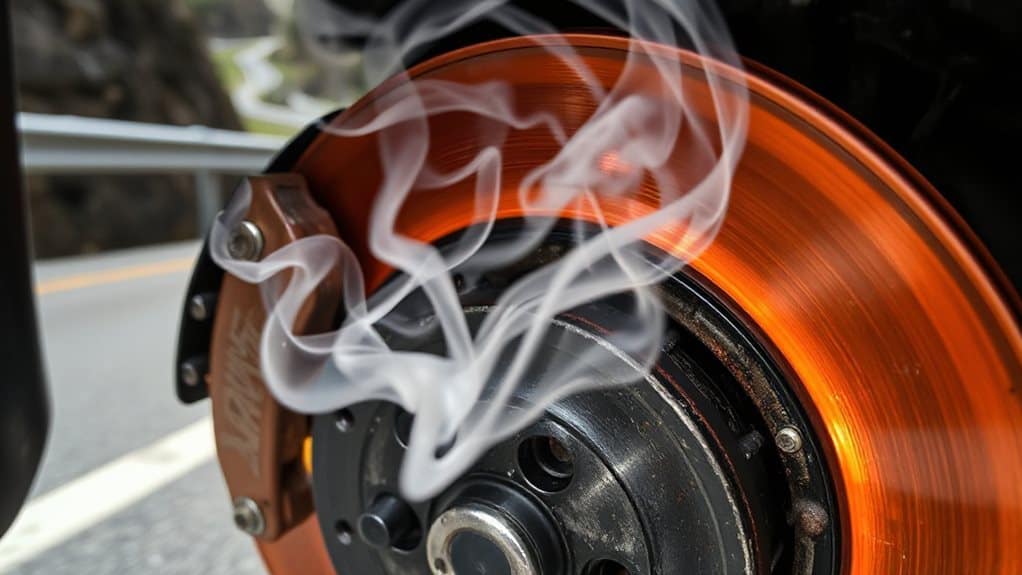
While descending steep mountain roads, your brakes can overheat even if everything’s working properly—continuous use turns kinetic energy into intense heat, and without breaks, temperatures climb fast.
You’re not dealing with failure; it’s physics. Overheating happens under extreme load, while mechanical issues cause heat without cause. Know the difference: one’s expected, the other’s dangerous.
Normal vs. Dangerous Smoke: Key Differences
You might notice a slight smell or light smoke when breaking in new brake pads, but that’s usually normal as resins burn off during the first few drives.
If you see thick smoke, smell something sharp, or the odor lingers after cooling, something’s wrong—like a stuck caliper or seized component causing dangerous overheating. Watch for discolored wheels or reduced braking power, since those are clear signs the system’s running too hot and needs immediate inspection.
Normal Bedding Smoke
Often, you’ll notice a light puff of smoke coming from your brakes after new pads and rotors are installed, and in most cases, this is completely normal.
This bedding smoke appears around the 6th or 7th brake application as friction transfers material evenly.
You’ll see a blue tint on rotors, a gray film forming, and the smoke fading quickly once you stop.
Stuck Component Warning
If the light smoke you see after new brake installation doesn’t fade within a few stops and instead grows heavier, it’s time to suspect a stuck component rather than normal bedding.
Continuous smoke, extreme heat, and a burning smell mean something’s wrong—like a seized piston or caliper pin.
You might also notice grey powder, warped rotors, or cracked pads.
These signs demand immediate inspection to prevent damage and guarantee safe braking.
Overheating Danger Signs
Smoke after new brake installation isn’t always a cause for alarm—light wisps during the bedding process are normal as pads and rotors wear in.
But thick, continuous smoke with a burning smell? That’s dangerous. You might also notice a spongy pedal, reduced braking, squealing, or vibrations.
These signs mean overheating, not bedding. Stop driving immediately to avoid damage or failure.
What to Do If Brakes Keep Smoking After Replacement
While some light smoke after brake replacement is normal during the initial break-in period, you should take action if the smoking continues beyond the first few miles or hard stops.
Inspect brake calipers for seizing, check fluid lines for leaks or blockages, and examine pads and rotors for damage or glazing.
Make certain components are correct and high-quality.
Let brakes cool, drive gently, and seek a professional inspection if smoke persists.
Wrapping Up
Your brakes might smoke slightly after replacement, and that’s usually normal. This happens during bedding-in, when pads and rotors form an even transfer layer. Use the 30-30-30 method: 30 stops from 30 mph, 30 seconds between each. But if smoke persists, check for stuck pads or seized calipers. Continuous smoke could mean friction where there shouldn’t be. Inspect thoroughly—safety depends on proper function.