You should never apply WD-40 to your brake pads or rotors because it creates an oil film that drastically reduces the friction coefficient necessary for safe stopping power. While WD-40 might temporarily silence brake squeal by displacing moisture, it contaminates friction surfaces, degrades rubber seals in calipers, and leaves residue that resists cleaning—often requiring premature replacement of expensive components. WD-40 evaporates quickly under braking temperatures but leaves behind harmful deposits that compromise your vehicle’s ability to stop effectively. Understanding proper brake maintenance and approved lubrication points will help you avoid these costly, dangerous mistakes.
Quick Tips
- WD-40 should never be applied to brake pads or rotors as it reduces friction and compromises stopping power.
- Using WD-40 on brakes can damage rubber seals, cause fluid leaks, and lead to dangerous brake system failures.
- While WD-40 may temporarily silence brake squealing, it creates hazardous contamination requiring professional cleaning or component replacement.
- Only apply high-temperature brake grease to specific non-friction parts like caliper guide pins, never friction surfaces.
- If WD-40 contacts brakes, immediately clean with isopropyl alcohol or specialized brake cleaner before operating the vehicle.
Understanding How WD-40 Affects Brake Performance
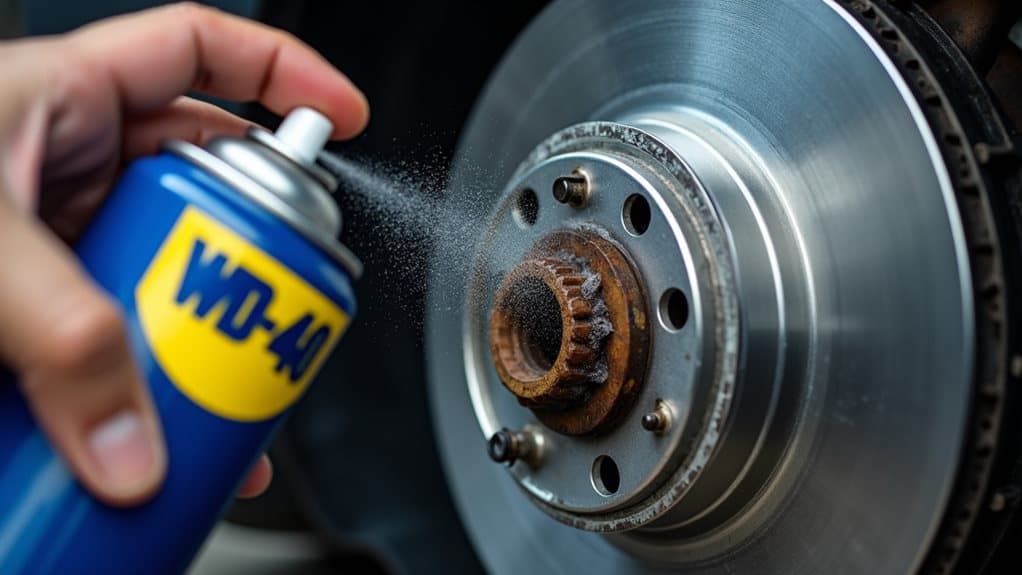
While WD-40 serves effectively as a general-purpose lubricant for household applications, its chemical composition makes it fundamentally incompatible with brake systems.
When you apply it to brake components, it reduces the friction coefficient between pads and rotors, directly compromising your vehicle’s stopping power. The product also evaporates rapidly under braking temperatures, leaving residues that accumulate and degrade system performance over time. Additionally, using WD-40 on brakes can interfere with the bedding process that is crucial for optimal brake performance.
However, many users report that small amounts of WD-40 on brake discs produce minimal observable effects, as the thin oil film typically rubs off quickly under the pressure and heat generated during normal braking.
Potential Damages to Brake Components From WD-40
Beyond the immediate loss of stopping power, WD-40 inflicts lasting harm on multiple brake system components that weren’t designed to withstand its chemical properties. The product deteriorates rubber seals in calipers and brake lines, which can cause hydraulic fluid leaks and eventual brake failure. Contaminated brake pads require premature replacement, while rotors develop persistent residue that resists simple cleaning, compromising your vehicle’s safety systems. When seals and lines become compromised, the resulting brake system failures can create dangerous driving conditions. Additionally, using WD-40 can interfere with the function of anti-rattle clips, leading to increased noise and potential brake system instability.
Why Brake Squeal Occurs and What WD-40 Actually Does
Your brakes squeal for several distinct reasons, ranging from moisture-related rust buildup on rotors to worn brake pads triggering metal wear indicators, and in some cases, inadequate lubrication on caliper components.
While WD-40 might seem like a logical solution since it displaces water and reduces friction, it’s actually designed for freeing stuck parts and preventing rust rather than serving as a brake lubricant.
Understanding why your brakes make noise helps explain why WD-40 provides only temporary relief at best—and at worst, creates dangerous conditions by reducing the friction your brake pads need to stop your vehicle effectively. Additionally, using proper tool handling is crucial when dealing with brake components to ensure safety and effectiveness during repairs.
Common Causes of Squealing
Before you can understand why applying WD-40 to your brakes is dangerous, you need to know what causes brake squealing in the first place.
Most commonly, worn brake pads trigger high-pitched sounds through embedded metal wear indicators that alert you when pad thickness reaches ⅛” to ¼” remaining.
Moisture creates temporary rust layers on rotors, while glazed surfaces from excessive heat and embedded debris also produce squeaking.
WD-40’s Temporary Moisture Displacement
When moisture forms on your brake rotors overnight or after driving through rain, it creates a thin layer of water that interferes with the normal contact between your brake pads and rotors.
This moisture film reduces friction temporarily, causing squealing noises during braking. WD-40’s solvents can displace this water quickly, eliminating the squeal immediately.
However, this fix only lasts until moisture returns.
Why Lubrication Worsens Performance
Understanding brake squeal starts with recognizing that your braking system relies entirely on friction to function properly.
When you apply any lubricant, including WD-40, you’re reducing this critical friction between pads and rotors. This decreased friction compromises stopping power, creates longer stopping distances, and causes inconsistent brake response.
WD-40 also burns off quickly under high temperatures, leaving residue that interferes with proper pad-to-rotor contact.
The Difference Between Proper Brake Maintenance and Lubricant Application
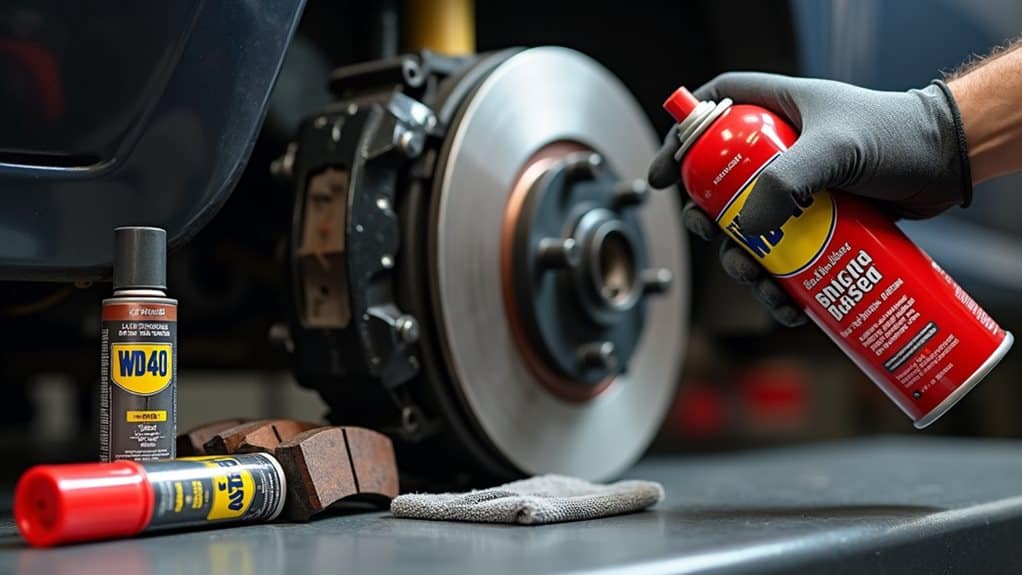
While many vehicle owners recognize that brakes require regular attention, there’s often confusion between maintaining the braking system and knowing which components actually need lubrication.
Proper maintenance includes inspecting brake pads every 12,000 miles, replacing fluid every 2-3 years, and checking rotors for damage. However, lubrication applies only to specific parts like caliper guide pins using high-temperature brake grease, never friction surfaces. Regular brake fluid checks help prevent issues like air trapped in the brake line, which can lead to compromised braking performance.
Common Myths About Using WD-40 on Brake Systems
You’ve probably heard conflicting advice about using WD-40 to fix noisy brakes or improve their performance, but these common recommendations stem from misunderstandings about how brake systems actually work.
Two persistent myths—that WD-40 eliminates brake squeaking and that lubricants enhance braking power—contradict the fundamental engineering principle that brakes depend entirely on friction between pads and rotors to stop your vehicle.
Before you reach for that familiar blue and yellow can to address brake issues, you’ll need to understand why these widespread beliefs can compromise your safety rather than solve your problems.
WD-40 Stops Brake Noise
Many drivers mistakenly reach for WD-40 when their brakes start squeaking, believing this common household product will silence the annoying noise and solve their problem.
While WD-40 might temporarily displace moisture causing squeaks from condensation or rust particles, this fix only lasts briefly. The underlying issues—worn pads or rotor rust—remain unaddressed, making continuous application impractical and potentially masking critical brake wear warnings.
Lubricants Improve Brake Performance
Some car owners believe that applying lubricants like WD-40 to their brake systems will enhance performance, but this misconception poses serious safety risks.
Brakes rely on friction between pads and rotors to stop your vehicle effectively. Lubricants reduce this essential friction, which increases stopping distances and compromises braking power.
You should never apply WD-40 to brake pads or rotors, as it creates dangerous conditions that can lead to accidents.
What to Do If WD-40 Accidentally Contacts Your Brakes
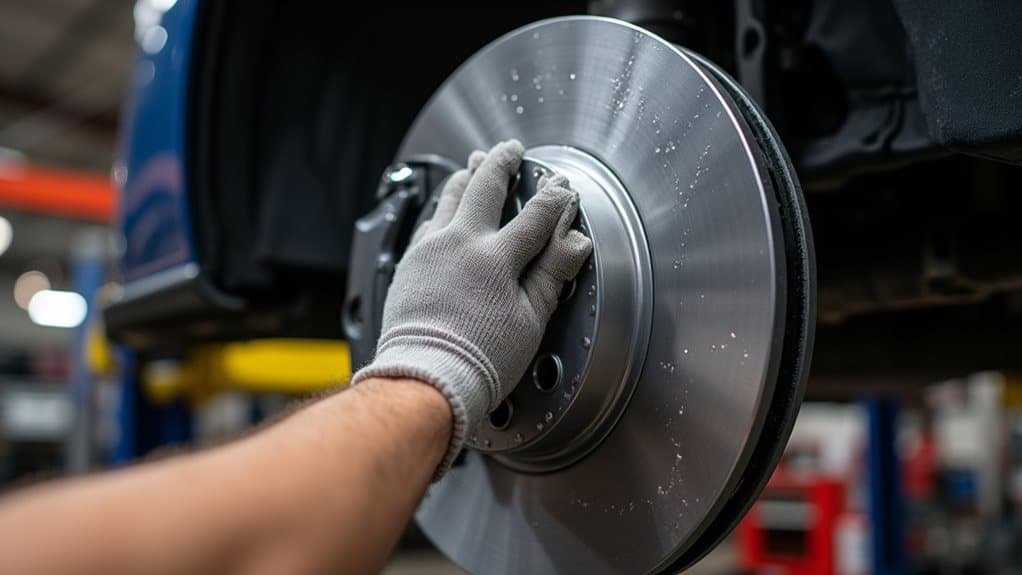
When WD-40 makes contact with your brake components, whether through overspray or misapplication, you’ll need to address the contamination immediately before operating your vehicle.
Apply isopropyl alcohol or specialized brake cleaner to dissolve the oily residue from rotors and pads.
Multiple applications make certain complete removal of the lubricant barrier.
If contamination is severe, professional cleaning services should handle the restoration to guarantee safe braking function.
Effective Solutions for Brake Noise Without Compromising Safety
After addressing WD-40 contamination, you’ll need reliable methods to eliminate brake noise that won’t sacrifice your vehicle’s stopping power.
Start by using brake parts cleaner to remove contaminants from pads and rotors without leaving residue.
Apply anti-squeal compounds or high-temperature brake grease only to hardware, never friction surfaces.
If squealing persists, inspect pad alignment and consider replacing worn components with quality parts for lasting results.
Best Practices for Maintaining Brake System Integrity
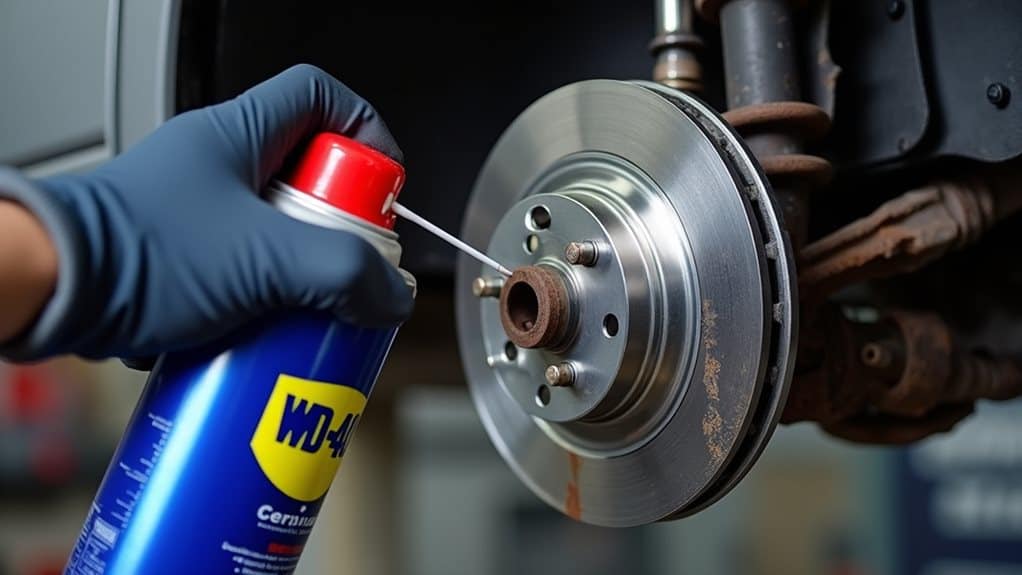
Regular maintenance forms the foundation of a reliable brake system, and understanding which products to use—and which to avoid—can prevent costly repairs and dangerous failures.
Clean brake components with products specifically designed for brakes, never multipurpose lubricants like WD-40.
Perform routine inspections of pads, rotors, and seals for wear or contamination.
Maintain hydraulic fluid properly, and avoid using lubricants on calipers, pistons, or any friction surfaces.
Wrapping Up
You shouldn’t apply WD-40 to your brake components, as it’ll compromise friction between pads and rotors, dramatically reducing stopping power. If you’ve accidentally sprayed WD-40 on your brakes, clean them immediately with brake cleaner and let them dry completely. For squealing brakes, use proper brake lubricant on caliper slides and backing plates only—never on friction surfaces. When you’re addressing brake issues, prioritize safety over quick fixes, and consult a professional mechanic if you’re uncertain about proper maintenance procedures.