
Your car rocks back and forth because worn shocks fail to dampen spring movement, letting the body bounce excessively after bumps. Unbalanced tires or bent rims create uneven rotation, especially at highway speeds, while misaligned wheels worsen instability and tire wear. Failing engine mounts allow engine vibrations to shake the cabin, particularly at idle. Damaged suspension components, brake issues like warped rotors, or heavy loads can also amplify rocking—especially on rough roads. Knowing which part is responsible helps pinpoint the fix, and there’s more to contemplate if the sway persists under different conditions.
Quick Tips
- Worn or leaking shocks fail to control spring movement, leading to excessive bouncing and rocking after bumps.
- Unbalanced tires or bent rims create vibrations that amplify at higher speeds, contributing to car rocking.
- Wheel misalignment from impacts or wear causes instability, pulling, and increased rocking motion while driving.
- Damaged or cracked engine mounts allow engine movement, resulting in noticeable vibrations and clunking during acceleration.
- Overloading the vehicle or driving on rough roads worsens sway and stress on suspension, increasing rocking sensations.
Why Your Car Rocks Back and Forth (And When to Worry)
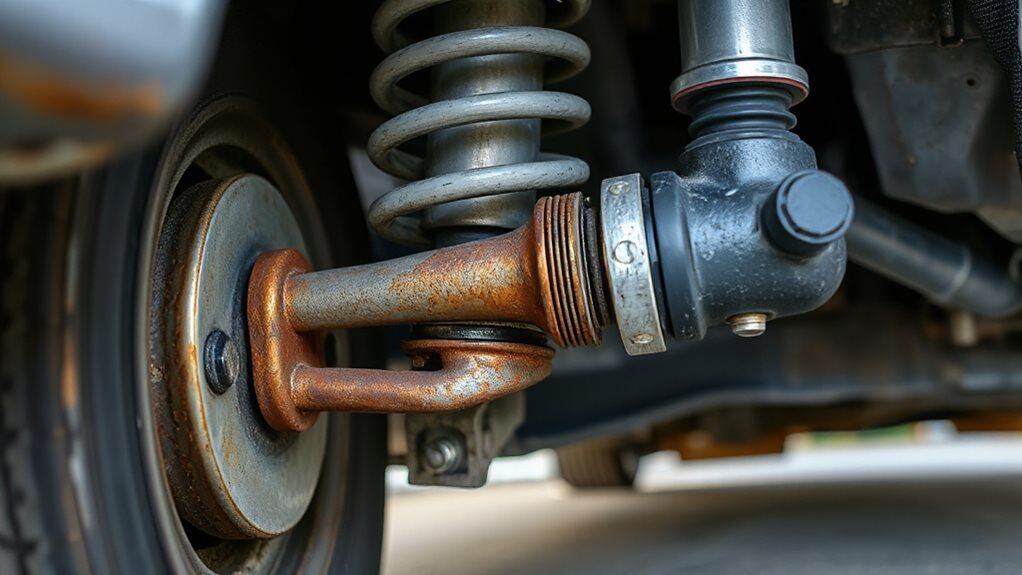
While driving, you might notice your car rocking back and forth, especially when accelerating, braking, or coming to a stop—and though some movement is normal, excessive rocking usually points to an underlying mechanical issue.
Worn suspension parts, bad engine mounts, warped brakes, uneven tires, or transmission problems can all cause this. Each affects stability and control, so if rocking feels unusual, it’s wise to get your vehicle inspected promptly. Regular inspections of suspension components can catch wear early and prevent more costly repairs, especially issues like sway bar bushings and end link failures.
Out-of-alignment suspension can also lead to noticeable rocking, particularly after hitting potholes or driving over curbs.
Unbalanced Tires and Car Rocking: The Hidden Culprit
You mightn’t realize it, but unbalanced tires can quietly set off a chain reaction that makes your car rock back and forth, especially as you pick up speed.
Uneven weight distribution causes tires to bounce, sending vibrations through the steering wheel or seat. Heavier spots pull with each rotation, worsening at 65–70 mph due to resonance.
Left unbalanced, this strains suspension, wears tires unevenly, and reduces fuel efficiency—get them checked every 6,000–8,000 miles. Bearings and suspension components can also be stressed by these vibrations, so inspect suspension components if rocking persists.
Bent or Damaged Wheels That Cause Steering Shake
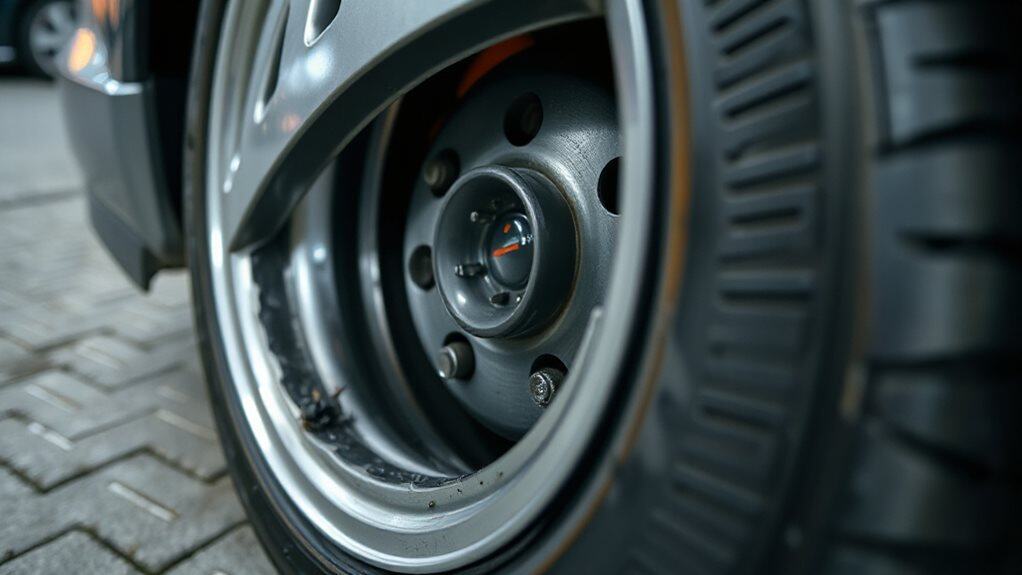
You might notice your steering wheel shaking, especially at higher speeds, if you’ve hit a pothole or curb hard enough to bend a wheel.
A bent rim throws off your tire’s balance, causing vibrations that travel through the steering and into the cabin.
Look for uneven tire wear or a wobbling sensation while driving—these are key signs of wheel damage that need attention.
After repairs like a tie rod replacement, monitor for lingering vibrations and get a professional wheel alignment to ensure proper steering and handling.
Bent Rim Symptoms
A telltale shimmy in your steering wheel or a subtle tremor through your seat could be your first clue to a bent rim.
You’ll notice shaking worsen at 60–70 mph, especially if the bend is front or rear.
Check for visible gaps between tire and rim, or rotate the wheel to spot uneven bends.
Even minor damage disrupts balance.
Wheel Damage Effects
When a bent rim starts affecting your drive, the resulting wheel damage doesn’t just stop at vibrations—it actively disrupts how your vehicle handles and stays stable on the road.
You’ll feel steering shake, especially at higher speeds, due to uneven wheel rotation. Potholes or heavy loads often cause this.
Over time, misalignment and tire wear worsen, reducing control and safety during everyday driving.
Worn Suspension: How Bad Shocks Lead to Rocking
Feel the car bounce long after hitting a bump? That’s your shocks failing to dampen motion.
Worn shocks let springs oscillate freely, causing excessive bouncing and a rocking sensation. You’ll notice swaying in corners, nose-diving when braking, and uneven tire wear from unstable contact.
Fluid leaks or cracked mounts confirm damage.
Replace bad shocks promptly to restore control, stability, and safe handling on rough or winding roads. Overheating from excessive braking can worsen suspension problems by accelerating component wear and causing thermal damage to related parts.
Wheel Misalignment and Its Role in Car Instability
Because your wheels aren’t properly aligned, they may not roll parallel to each other or at the correct angles relative to the road, and this throws off your entire vehicle’s balance and control.
You’ll notice pulling, vibration, or delayed steering response.
Misalignment stresses suspension parts, wears tires unevenly, and reduces stability—especially in turns or wet conditions—compromising safety and increasing long-term repair costs.
Regular checks every 6,000–10,000 miles can catch alignment problems early and prevent progressive tire and suspension damage.
Failing Engine Mounts That Trigger Rocking at Idle
Watch your engine closely the next time you’re stopped at a red light with your foot on the brake—excessive rocking back and forth could signal failing engine mounts.
You might feel strong vibrations in the steering wheel or seat, hear clunking when accelerating, or notice visible engine movement.
Cracked rubber, cold weather, or prior accidents can degrade mounts, reducing stability and risking damage to hoses, exhaust, and transmission over time.
Inspect mounts for wear and consider having a technician check driveability and related components like the engine mounts to prevent further damage.
Brake and Drivetrain Issues Behind Car Shuddering
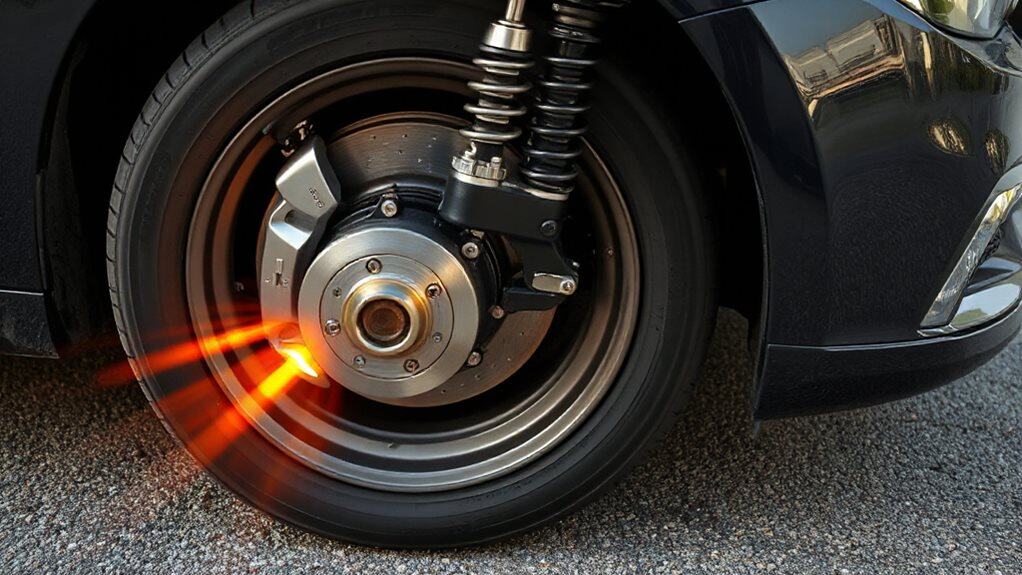
When your car shudders during braking, especially at higher speeds, warped brake rotors are often to blame.
Heat and sudden cooling warp rotors, creating uneven surfaces that cause vibrations.
Worn pads, stuck calipers, or misaligned wheels worsen the shake.
Unbalanced tires or internal damage also mimic brake shudder.
Check brakes, alignment, and tires to pinpoint the source and restore smooth stops.
Overloading and Road Conditions That Worsen Sway
Loading your vehicle beyond its recommended capacity can throw off its balance and make it much harder to control, especially when road conditions aren’t ideal.
Overloading shifts your center of gravity, increasing sway and rollover risk. On slopes or in bad weather, brakes overheat and tires stress easily.
Rough roads worsen instability, while high speeds reduce steering response—compromising safety.
Wrapping Up
You now know several reasons your car might rock or sway. Unbalanced tires, bent wheels, or worn shocks often cause instability, especially at higher speeds. Misaligned wheels pull the car off track, while failing engine mounts create shake at idle. Brake and drivetrain issues may lead to shuddering, and overloading worsens sway. Check these systems early—ignoring signs risks safety. Regular maintenance prevents most problems.