
You’ll find the Mack E7 produces 250 hp at 1,700–1,800 rpm in its base model, climbs to 350 hp in mid‑range units, and reaches up to 400 hp in the top tier, all from a 12‑liter block. Torque starts low‑end at 975 lb‑ft for the 250 hp version, rises to 1,277 lb‑ft at 350 hp, and peaks at 1,660 lb‑ft for 460 hp variant, all around 1,200 rpm, which eases heavy‑load startups and cuts gear shifts. Reliability stems from a 4 7/8‑inch bore, 6 1/2‑inch stroke, water cooling, SwirlTechnology for better air‑fuel mixing, and a reduced compression ratio (16.5:1 to 15.3:1) paired with turbocharging that maintains fuel economy near 0.30 lb/bhp‑hr. Common issues include EGR failure, injector wear, and turbo clogs, each fixable by cleaning or replacing the affected component. Continue for deeper insights on maintenance and performance.
Quick Tips
- The Mack E7 family shares a 12‑liter displacement, delivering 250 hp (1,700‑1,800 rpm) up to 400 hp, with mid‑range models around 350 hp and E‑Tech variants reaching 500 hp.
- Torque peaks between 1,200‑1,250 rpm, with 250 hp models producing 975 lb‑ft, 350 hp models 1,277 lb‑ft, and 460 hp models 1,660 lb‑ft, aiding heavy‑load start‑up and reducing gear shifts.
- Bore and stroke are 4 7/8‑in × 6 1/2‑in; water‑cooled construction, SwirlTechnology, and VMAC/Econovance software enhance durability and low‑maintenance intervals.
- Compression ratios drop from 16.5:1 to 15.3:1; turbocharging provides high horsepower without knock and maintains peak torque near 1,200 rpm, achieving ~0.30 lb/bhp‑hr fuel economy.
- Common reliability concerns include EGR failure, injector wear, turbo/air‑system clogs, and CCV carbon buildup; regular cleaning, component replacement, and ECM diagnostics mitigate these issues.
How Much Power Does the Mack E7 Deliver Across Its Model Range?
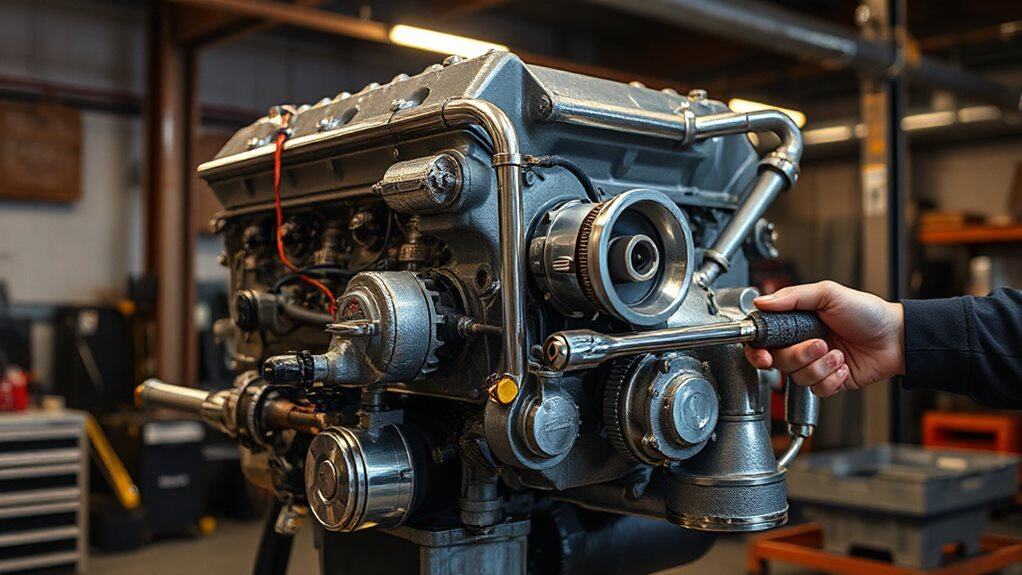
How much power does the Mack E7 deliver across its model range? You’ll find standard E7 horsepower spans 250 hp at 1,700‑1,800 RPM up to 400 hp on top‑tier units. Mid‑range models sit around 350 hp. The E‑Tech variant pushes output further, ranging from 360 hp to 500 hp, thanks to electronic enhancements and a single‑camshaft design, all within the same 12‑liter displacement. The engine’s compression ratio of 16.5:1 contributes to its robust performance.
Low‑End Torque Numbers & Their Hauling Advantage for the Mack E7?
The Mack E7’s low‑end torque figures are a key factor in its hauling performance, building on the power range discussed earlier. You’ll see 975 lb‑ft at 1200 rpm on the 250, 1277 lb‑ft on the 350, and 1660 lb‑ft on the 460, all within 1200‑1250 rpm. This early torque lets you start heavy loads without excessive gear shifts, reduces wheel slip, and improves grade‑climbing stability. A failing starter can cause engine lockup and lead to severe mechanical damage if not diagnosed and addressed promptly.
Design Features That Make the Mack E7 Extremely Reliable?
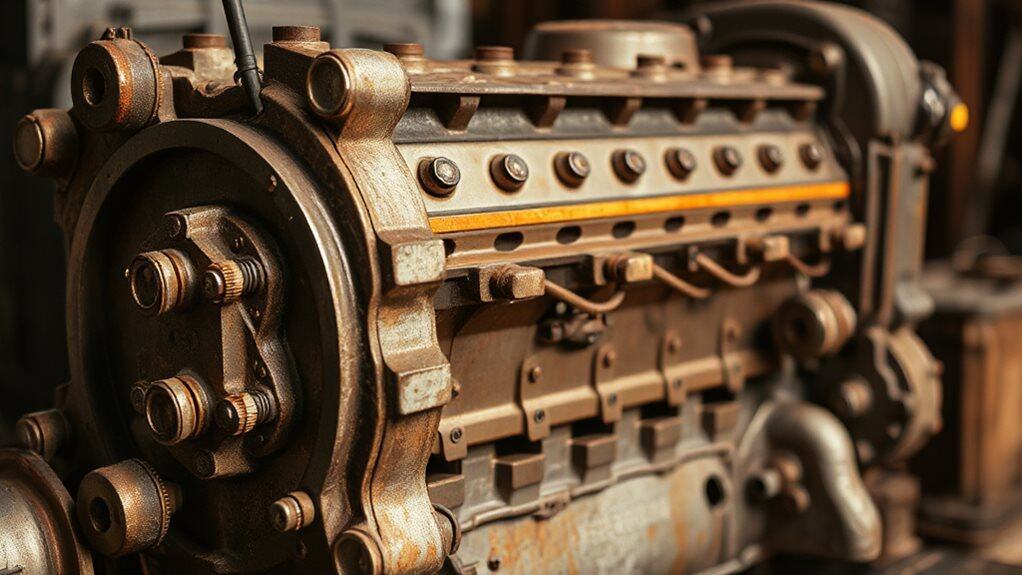
Why does the Mack E7 maintain such a reputation for reliability? Its 4 7/8‑inch bore and 6 1/2‑inch stroke give bulletproof durability, letting you run over a million miles with minimal overhaul.
Water‑cooled models keep temperatures stable, while SwirlTechnology improves air‑fuel mixing, easing injector stress.
Low‑maintenance traits—minimal oil leaks, reliable cold starts, and extended overhaul intervals—combined with service‑friendly VMAC software and the Econovance system’s variable injection timing, ensure consistent performance across buses, fire trucks, and dump rigs.
Regular inspection and maintenance of components like the collet and chuck enhances lifespan and helps prevent unexpected failures.
Compression Ratio & Turbocharging: Effects on Power & Fuel Economy for the Mack E7?
Lowering compression from 16.5:1 to 15.3:1 lets the turbo enhance without knocking, so high‑hp models retain power while keeping fuel consumption near 0.30 lb/bhp‑hr.
Turbocharging compensates for reduced compression, supplying peak torque around 1200 rpm and improving economy across the range.
A stable electrical supply is important for engine management when modifying boost and fueling to avoid drivability issues like limp mode and low voltage.
What Are the Most Common Maintenance Issues on Mack E7 Engines and How Can They Be Fixed?
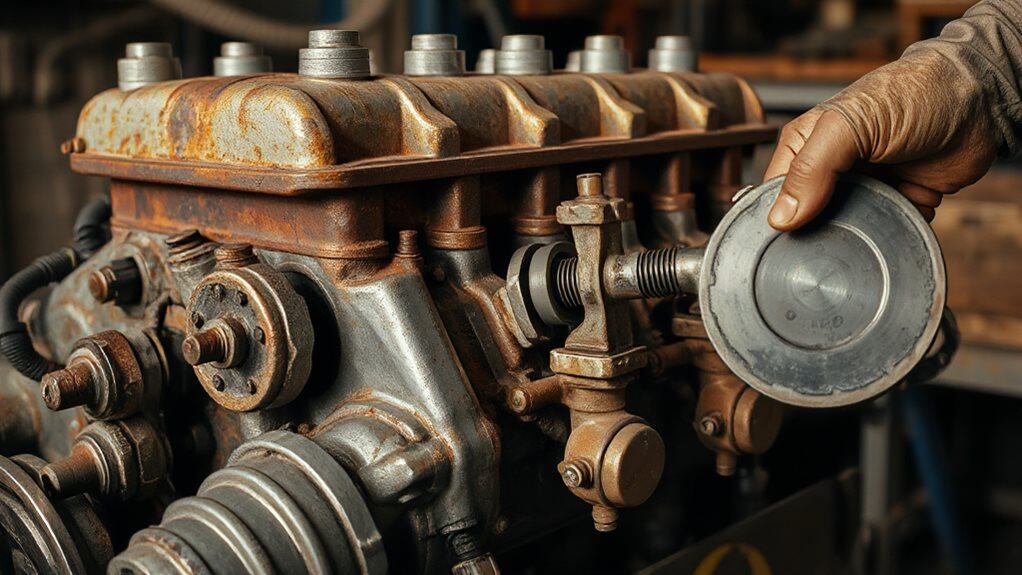
Ever wondered which problems keep a Mack E7 off the road? You’ll most likely encounter EGR failures, fuel‑injector wear, turbo or air‑system clogs, CCV carbon buildup, and sensor glitches.
Fix them by cleaning or replacing EGR components, testing and swapping injectors, servicing the turbo and filters, renewing the breather filter, and running ECM diagnostics to reset or replace faulty sensors.
Regular inspections prevent power loss, smoke, and overheating.
See which 2026 floor jacks combine lifting power with safety ratings and portability to handle your vehicle’s weight without compromise.
Wrapping Up
You now see that the Mack E7 balances strong horsepower with sturdy low‑end torque, giving you dependable hauling performance across its model range. Its reinforced block, high‑strength pistons, and effective cooling system underpin its reputation for reliability, while the optimized compression ratio and turbocharging boost power without sacrificing fuel economy. Regularly inspecting the turbo, coolant system, and fuel injectors will prevent the most common maintenance issues, ensuring the engine stays efficient and durable throughout its service life.


