
First, make sure the steering wheel is centered so the electronic steering‑column lock (ESCL) disengages, and confirm the shifter is fully in Park; the interlock won’t release the key otherwise. Then press the key gently with your left index finger, keep your foot on the brake, and wiggle the wheel left‑right while turning the key slightly; the combined motion frees the lock pin. If it still sticks, spray a little electrical contact cleaner into the cylinder, let it dry, and apply a thin coat of graphite powder to the key’s edges for dry lubrication. Finally, if the key remains stuck, the ignition cylinder may need replacement, which requires disconnecting the battery and removing the steering‑column covers. Continue for a more in‑depth guide.
Quick Tips
- Center the steering wheel and ensure the shifter is fully in Park; this disengages the ESCL lock and allows the key to turn.
- While pressing the key lightly, gently wiggle the steering wheel left‑right and turn the key simultaneously until the lock releases.
- Apply a small amount of dry graphite powder to the key’s cut edges and blow it into the cylinder to reduce friction.
- Use an electrical contact cleaner spray in the ignition slot, let it dry, then retry turning the key with light pressure.
- If the key remains stuck, disconnect the battery, remove the steering‑column cover, and replace the ignition lock cylinder following OEM procedures.
Safety Check: Steering‑Wheel Lock & Shifter in Park
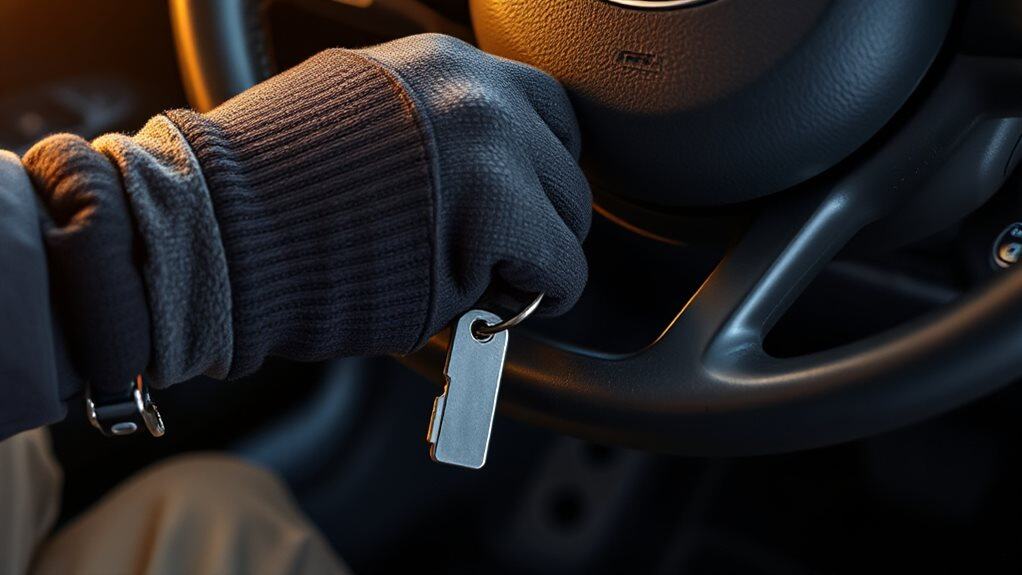
How do you confirm that the steering‑wheel lock and shifter are correctly set before trying to remove a stuck key? First, ensure the steering wheel is centered; the ESCL motor will disengage the lock only when the angle sensor reads a neutral position.
Next, verify the shifter is fully in Park; the safety interlock prevents key removal otherwise. You can also consult OEM-equivalent specifications to confirm interlock tolerances and settings.
Finally, check for BCM warnings; if a lock‑failure alert appears, resolve it before proceeding. If the key turns with difficulty, apply gentle pressure while rotating it to release the pin tension.
Jiggle Steering Wheel and Stuck Ignition Key Together for Instant Release
After confirming the steering wheel is centered and the shifter sits firmly in Park, you can move on to the simultaneous wiggle technique.
Press the key cylinder lightly with your left index finger, keep your foot on the brake, and gently turn the key while moving the wheel left‑right.
Repeat this small motion until the lock disengages, then remove the key.
For some vehicles the issue can stem from a locked steering column or electrical interlock, so check the ignition lock housing and related connectors if the key still won’t release.
Why the Key Sticks and How the Jiggle Frees It
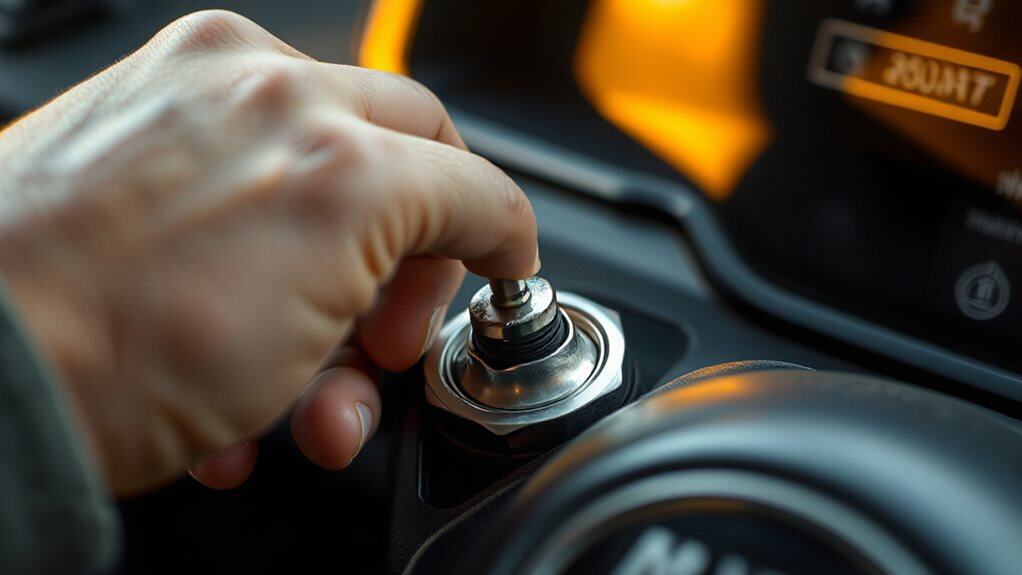
Why does the key stay lodged in a Kia ignition?
The key sticks when the ignition cylinder’s wafers wear, bend, or collect dust, and when the shifter isn’t fully in park, activating the interlock solenoid.
A misaligned steering column can also press against the lock.
Gently jiggling the steering wheel while lightly rocking the key realigns the wafers, releases the interlock, and lets the key slide out.
Low battery voltage can also cause electronic locks to behave erratically, similar to voltage sag issues described in ignition systems.
Apply Graphite Lubricant for Easy Key Removal
Ever wondered why a little graphite dust can free a stuck Kia key? First, spray an electrical contact cleaner into the slot and let it dry; this removes grease and dust.
Then, using a small brush, coat the key’s edges with a thin layer of graphite powder.
Wiggle the key slowly while blowing a puff of powder into the stem.
The dry lubricant reduces friction without gumming, allowing the key to turn freely.
Use sparingly to avoid buildup.
This method can help prevent ignition wear by improving fuel efficiency over time when driving under optimal conditions.
Replace Ignition Cylinder: DIY Tools & Steps if the Key Still Won’t Budge
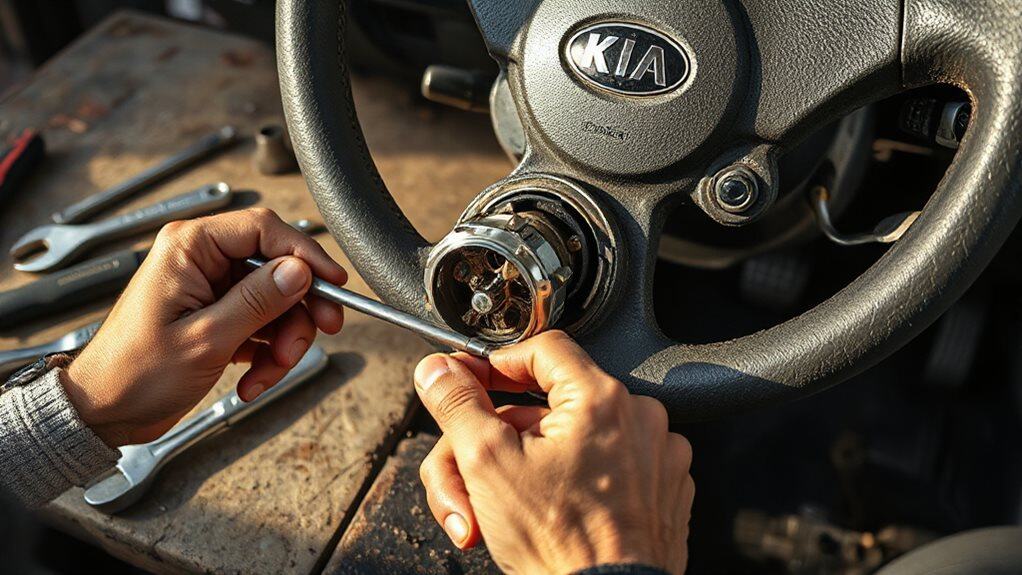
Can you replace the ignition cylinder yourself when the key still won’t budge? First, disconnect the negative battery terminal and gather a Phillips screwdriver, flathead screwdriver, small pick, and a new ignition lock cylinder. Remove the three Phillips screws securing the lower steering‑column cover, separate the covers, and locate the release pin. Depress the pin with the pick, pull the old cylinder, align the new one, click it into place, reassemble the covers, reconnect the battery, and test all ignition positions. Consider using a high-mileage synthetic oil if your vehicle has over 100k miles and you’re already addressing ignition or steering maintenance.
Wrapping Up
By checking the steering‑wheel lock and confirming the shifter is in park, you eliminate the most common mechanical block. Jigging the wheel while turning the key often releases a misaligned tumblers, restoring rotation. If that fails, a graphite‑based lubricant reduces friction within the ignition cylinder, allowing the key to free. When neither method works, replace the ignition cylinder using the appropriate tools and follow the step‑by‑step guide to restore full functionality.