
You’ll hear a low hum and a click when the AC engages, which is normal pump and pressure‑equalization noise. If the fan squeals continuously, grinds, or produces a jet‑like high‑speed whine, it usually means belt wear, damaged bearings, or restricted airflow from a clogged filter or dirty evaporator. Those sounds signal that the blower motor, belt tension, or refrigerant pressure needs inspection. A persistent squeal or grinding also points to a loose or misaligned compressor clutch. Check the fan wheel for debris, verify belt tightness, and ensure proper refrigerant levels; doing so can prevent minor wear from turning into a costly repair. Continuing will show you how to diagnose and fix the issue.
Quick Tips
- A low hum or brief hiss at AC startup is normal; persistent squealing or grinding signals belt wear, clutch failure, or damaged bearings.
- A high‑speed “jet‑like” whine often means restricted airflow from a clogged filter, dirty evaporator, or high refrigerant pressure.
- Rattling or knocking noises usually indicate loose fan blades, debris, or worn motor bearings that need inspection.
- Misaligned or loose serpentine belts can cause the compressor to transfer vibration to the fan shaft, producing abnormal noises.
- Regular maintenance—checking the cabin filter, belt tension, refrigerant level, and cleaning the condenser—helps prevent and diagnose excessive fan noise.
How to Spot Normal vs. Faulty AC Fan Noise
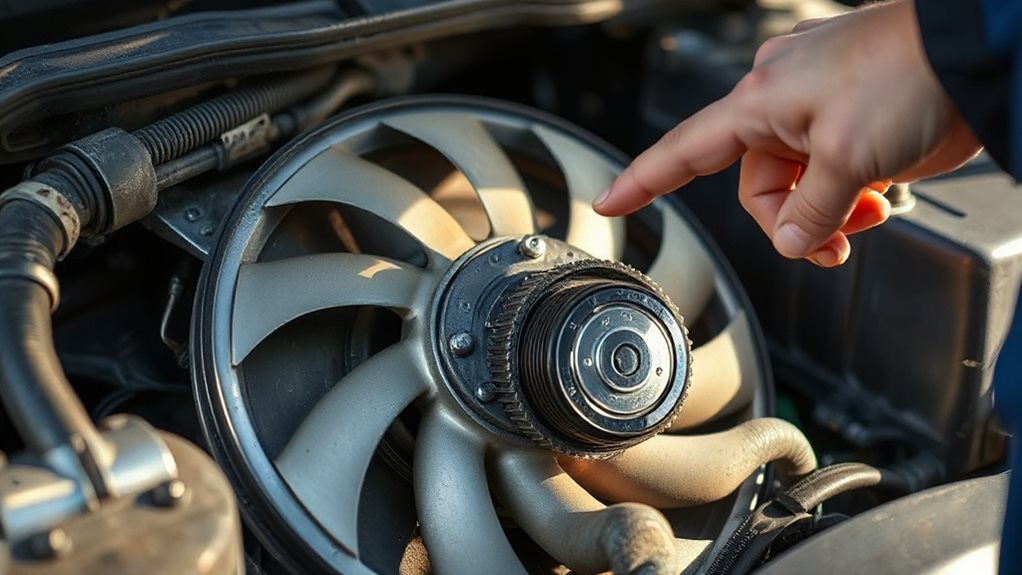
Ever wondered how to tell whether your car’s AC fan noise is normal or a sign of trouble? Listen for a low hum, brief hissing at shutdown, or a single click when the AC engages—these are standard pump and pressure‑equalization sounds.
In contrast, persistent squealing, grinding, or knocking indicates belt wear, clutch failure, or internal component damage that needs professional inspection.
If the fan shaft is tilted, you may notice one side spinning faster than the other, which adds extra stress to the motor and can cause abnormal noises.
Also inspect nearby components for electrical arcing damage if you notice burning smells or scorch marks, as high-voltage events can affect motors and wiring.
What Different Fan Noises Reveal About Your AC
You’ll notice a jet‑like high‑speed whine when the blower motor spins near its limit, which usually means the system is overcharged with refrigerant or the fan’s air‑direction gate is vibrating. If you hear rattling or grinding, that points to worn bearings, damaged fan blades, or debris‑induced imbalance in the motor, and it can also involve loose mounting brackets or a failing compressor clutch. A squealing belt indicates a loose or worn serpentine belt, a slipping compressor clutch, or insufficient lubrication, all of which can cause component wear and reduced cooling efficiency.
Jet‑Like High‑Speed Whine
What makes a jet‑like, high‑speed whine appear when your car’s AC is on? It usually means airflow is restricted—clogged cabin filter, blocked vents, or a dirty evaporator core force the fan to work harder, producing a high‑pitched whistling.
The radiator fan may surge, or worn motor bearings can bind, creating the whine. Check belts, hoses, and refrigerant pressure to pinpoint the source.
Rattling or Grinding Indications
A rattling or grinding sound that appears when you turn on the car’s AC is often a warning sign that something inside the system is wearing out or misaligned.
It may indicate internal compressor damage—worn pistons, bearings, or metal debris causing grinding.
It can also stem from a failing blower‑motor cage, loose mounting brackets, or a worn belt tensioner.
Low refrigerant can exacerbate these noises.
Squealing Belt and Component Issues
When the AC clicks on and a high‑pitched squeal erupts, the culprit is usually the serpentine belt or the compressor clutch rather than the fan itself. A loose or worn belt slips, producing a high‑pitched whine especially at idle or acceleration; replace it after 60,000 mi or when cracks appear.
A failing clutch plates screech when engaging, indicating worn plates or magnetic misalignment. Tighten or replace the tensioner, clean contaminated belts, and inspect the clutch for bearing wear to eliminate the squeal.
Why Hot Weather Makes AC Fan Noise Sound Like Jets
Ever wonder why your car’s AC fan sounds like a jet engine on a scorching day? In extreme heat the compressor works harder, revving at higher RPM and creating louder friction.
The blower motor speeds up, its bearings overheat, and debris rattles the blades. Clogged filters and evaporator turbulence raise pressure, producing a jet‑like whine that intensifies as temperature climbs. Regular maintenance, including checking the clogged filter and fluid levels, can prevent excessive wear and noise.
How Misaligned Installation and Belts Raise Fan Noise
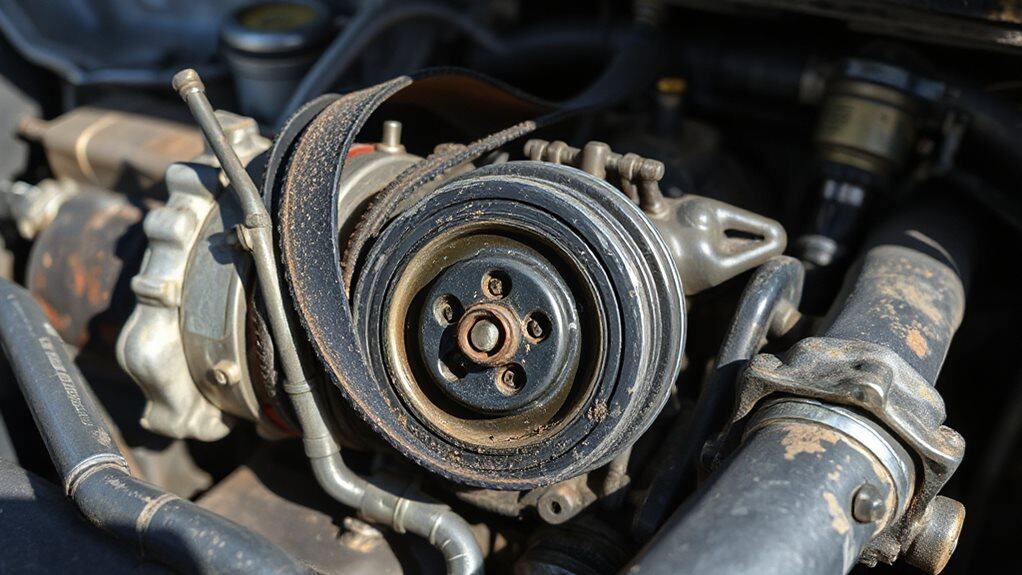
The jet‑like whine you heard on a hot day often masks deeper mechanical issues, and one of the most common culprits is misaligned installation combined with improper belt tension. When the compressor sits off‑center, its vibration transfers to the fan shaft, causing it to tilt.
Loose or worn serpentine belts slip, amplifying squeals and uneven spinning. Inspect belt tightness, align hoses, and verify the shaft spins straight to reduce noise. Early intervention prevents minor issues from developing into major mechanical repairs and extended downtime, and regular maintenance—such as checking belt tightness and related components—helps keep the system running smoothly.
How to Inspect the AC Blower Motor and Evaporator for Fan Issues
Where should you begin when checking the AC blower motor and evaporator for fan problems?
First, locate the motor under the dash or glove box, disconnect the battery, and remove fasteners.
Inspect the fan wheel for debris, then test voltage at the connector with a multimeter.
Check the fuse and relay for continuity, and measure resistor pack resistance.
Finally, verify airflow at each speed.
Most technicians expect only minor mileage on a new vehicle used for delivery and test drives, so document any higher mileage before proceeding.
Simple Maintenance to Keep Your AC Fan Quiet
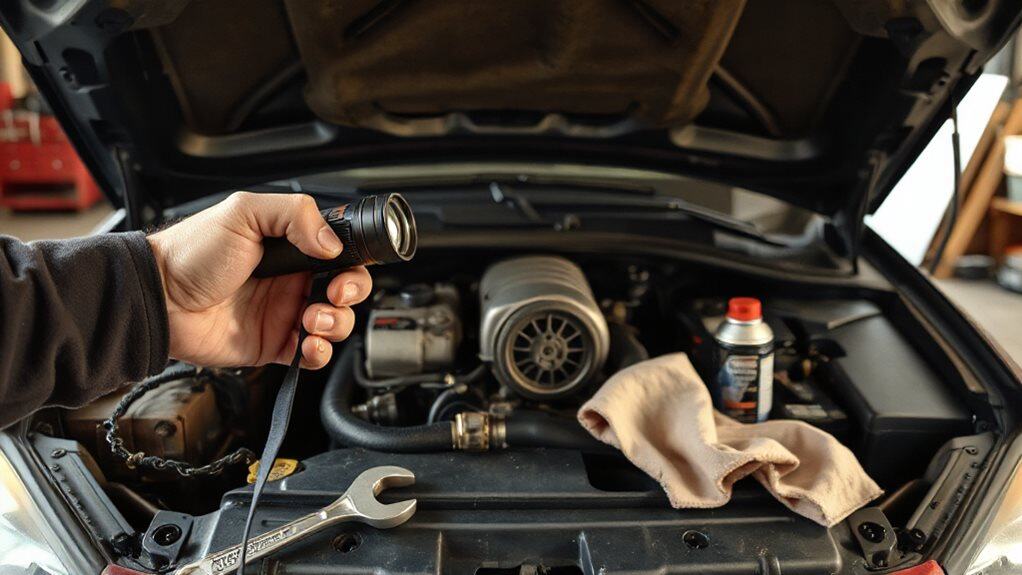
Why does your AC fan start sounding louder as time goes on?
Check the cabin air filter every 12,000‑15,000 miles; a clogged filter starves the fan, forcing it to work harder. Clean or replace it with the correct spec.
Rinse condenser coils and straighten bent fins to preserve airflow. Inspect belt tension and cracks.
Keep refrigerant at proper level and run the AC weekly on low fan speed to prevent strain. This routine keeps the fan quiet.
Ensure electrical connections and grounding are inspected regularly to avoid issues like poor grounding that can affect blower performance.
Wrapping Up
By checking the fan’s pitch, volume, and consistency, you can tell whether the noise is normal or a sign of wear. A steady, low‑rumble usually means the blower motor and belt are healthy; rattles, squeals, or sudden spikes often indicate misalignment, loose components, or a failing motor. Regularly inspect the motor, belt, and evaporator, and replace worn parts promptly to keep the AC quiet and reliable.


