
A vacuum leak lets unmetered air slip past the throttle, leaning the mixture and forcing the ECU to add fuel and raise RPMs, especially at idle when the throttle is nearly closed. A sticking idle‑air‑control (IAC) valve or air‑bypass valve stays open, admitting extra air that the ECU interprets as higher demand, so the engine revs on its own. Carbon buildup in the throttle body can cause the plate to stick, while dirty or failing throttle‑position (TPS) or mass‑air‑flow (MAF) sensors mislead the ECU into enriching the mixture, both leading to idle surges. Low battery voltage or a faulty cam‑phaser can destabilize timing and sensor signals, further aggravating the problem. If you keep exploring, you’ll discover additional factors and diagnostic steps.
Quick Tips
- Vacuum leaks introduce unmetered air, leaning the mixture and causing the ECU to raise idle RPMs, especially noticeable when the throttle is closed.
- A sticking idle‑air‑control (IAC) valve stays open, allowing excess air past the throttle plate and prompting the ECU to increase fuel and revs.
- A malfunctioning air‑bypass valve that remains open admits more air than expected, raising engine speed while the vehicle is stationary.
- Dirty throttle body carbon buildup can cause the throttle plate to stick, leading to erratic airflow and unintended idle surge.
- Low battery voltage or a faulty cam‑phaser/VVT system can destabilize sensor signals and valve timing, resulting in sudden revving at idle.
How Vacuum Leaks Trigger Idle Revving
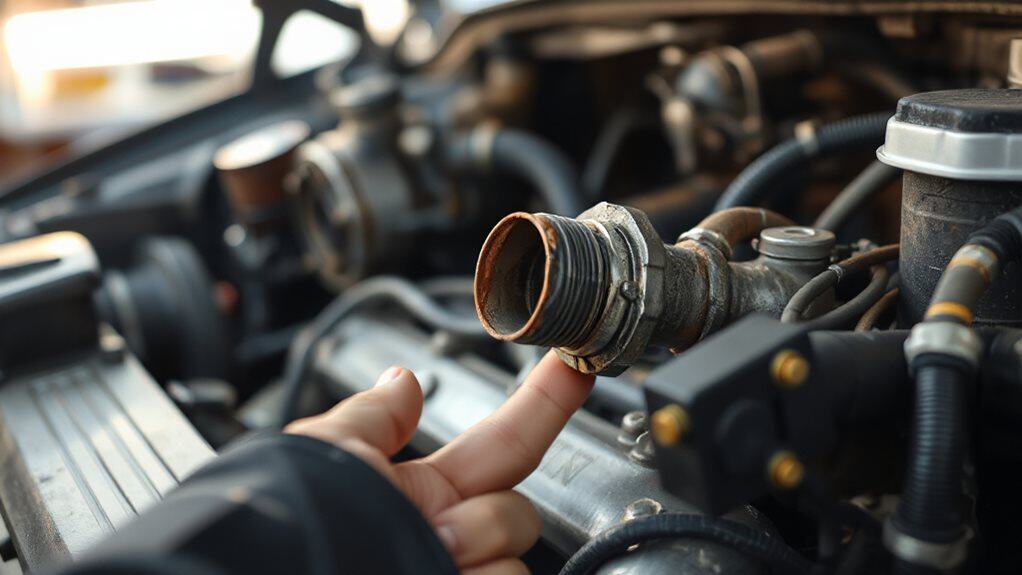
Why does your engine rev higher when it’s stopped? A vacuum leak lets unmetered air slip into the intake manifold, bypassing the throttle body and ECU’s air‑fuel calculations. The extra air leans the mixture, so the ECU adds fuel, raising RPMs. At idle, the throttle plate is nearly closed, making the leak’s effect pronounced. Leaks often come from cracked hoses, faulty gaskets, or broken manifold sections. Unmetered air can also cause the engine to stall when the accelerator is released. In addition, failing vacuum hoses can also lead to reduced brake booster performance if left unaddressed.
Why a Sticking Idle‑Air‑Control Valve Increases RPM (Idle Revving)
When the idle‑air‑control (IAC) valve sticks open, it lets extra air bypass the throttle plate, which directly raises the engine’s RPM.
The ECU interprets the increased airflow as a demand for more fuel, but because the valve won’t close, the air‑fuel mixture stays lean and the idle stays high.
As a result, you’ll notice the engine revving on its own even though you haven’t pressed the accelerator.
A sticking IAC can also cause fluctuating temperature readings as the engine load and cooling demand change.
Air Bypass Increases RPM
Ever wonder why your engine revs higher even when the foot isn’t on the gas? The air‑bypass valve opens a small passage behind the throttle plate, letting air into the intake while the pedal is released. When the valve sticks open, it lets more air than the ECU expects, raising the idle speed. This excess airflow pushes the pistons faster, so the tachometer climbs without you pressing the accelerator.
Valve Sticks Open
What happens when the idle‑air‑control (IAC) valve refuses to close? Carbon buildup, wear, or a faulty solenoid can jam the valve open, letting excess air bypass the throttle.
The engine receives uncommanded airflow, so the ECU adds fuel to keep the mixture balanced, pushing idle RPM above the normal 600‑1000 range. You’ll notice a high, steady revving until the valve is cleaned or replaced.
ECU Receives False Signal
How does a sticking idle‑air‑control (IAC) valve trick the ECU into raising idle RPM? When the IAC sticks, it sends delayed or erroneous position signals, so the ECU thinks more air is bypassing the throttle. The ECU then opens the valve further, misadjusts fuel, and raises RPM above 1000, even while stationary. OBD‑II codes P0505‑P0509 confirm this fault.
How a Dirty Throttle Body Causes Idle‑Speed Surges
Why does a dirty throttle body make your engine rev up when the car is stopped? Carbon buildup clogs the bore and sticks the throttle plate, so airflow fluctuates even though the ECU commands a steady opening. The engine compensates with richer mixtures, causing high‑idle surges up to 3000 RPM. After cleaning, the ECU must relearn the new airflow; without a proper reset, the idle remains erratic. Use proper refueling and keep ventilation in mind when working with fuel-contaminated parts to reduce fire and odor risks.
How Faulty Throttle‑Position or MAF Sensors Mislead the ECU (Idle Revving)
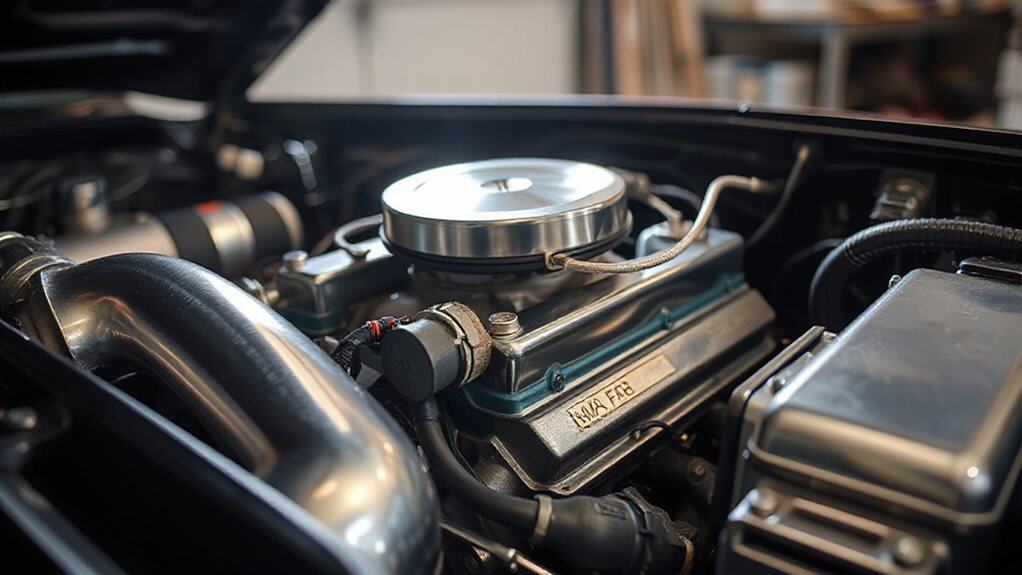
A dirty throttle body can cause the engine to rev erratically, but the problem often persists even after it’s cleaned because the ECU still receives false information from the throttle‑position sensor (TPS) or the mass‑air‑flow (MAF) sensor.
A faulty TPS reports the throttle as more open, so the ECU adds fuel, upsetting the air‑fuel mix and raising RPMs.
Likewise, a dirty or failed MAF misreads airflow, prompting excessive fuel delivery.
Both conditions cause idle surging, jerking, and rough transitions.
Test sensor voltage, scan for error codes, and clean or replace sensors to restore stable idle.
Ensure proper ventilation and cooling are considered when planning any modifications to engine bays with appropriate ventilation.
Why Clogged Fuel Injectors Destabilize Idle Revving
Can a clogged fuel injector really throw your engine’s idle out of whack? When deposits restrict flow, some cylinders get too much fuel while others run lean, causing uneven combustion.
The ECU tries to compensate, adjusting fuel pulses, but the spray remains inconsistent, leading to RPM fluctuations and misfires. You’ll feel rough idling, shaking, and occasional rev spikes as the engine struggles to maintain a steady idle. Regular maintenance like replacing a cabin air filter can help prevent related HVAC and airflow issues that compound driver discomfort.
How Low Voltage or Bad Cam Phaser Leads to Unstable Idle Revving
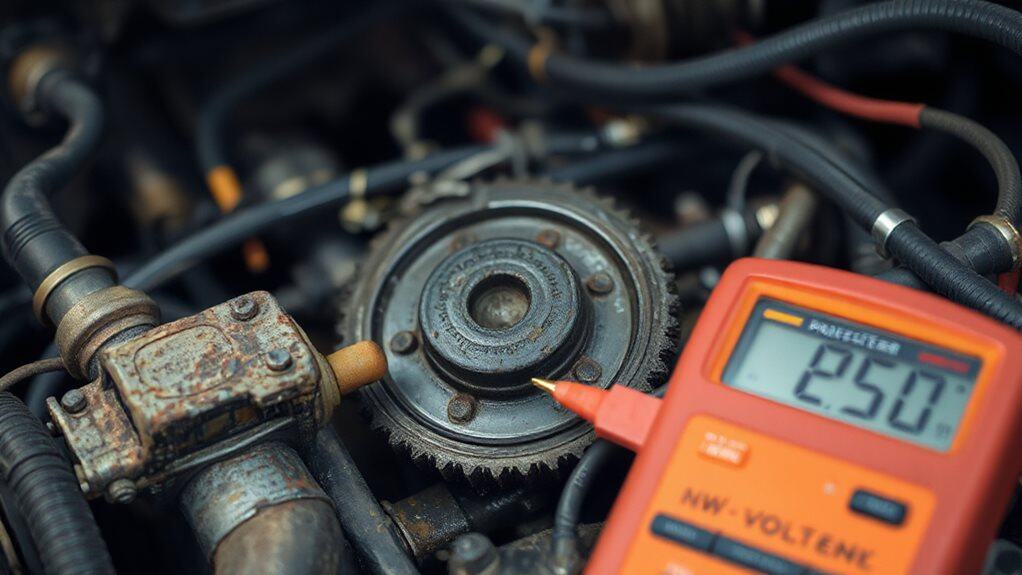
When the battery voltage drops below about 12.7 V at idle, the ECU receives weak signals from sensors like the MAF and O₂, so the air‑fuel mixture becomes unstable and the engine’s RPM jumps.
At the same time, a faulty cam phaser—whether it’s worn, stuck, or receiving insufficient oil pressure—mis‑times valve opening, which also throws off the combustion balance and causes the idle to surge.
Together, low voltage and a bad cam phaser create a feedback loop that forces the engine control unit to constantly adjust, resulting in the erratic revving you hear while the car sits still.
Regular inspection of the charging system and related ground wire connections can help diagnose and prevent these low‑voltage related idle issues.
Low Voltage Impact
Ever wondered why a car idles roughly even though the engine feels fine? Low voltage, typically below 13.5 V, starves the ECU and sensors of power, so they can’t keep the air‑fuel mixture steady. When the alternator can’t maintain voltage, RPMs dip as the system balances load. Accessory demand worsens the drop, and misdiagnosing this as a sensor issue is common. Check battery and alternator output to confirm.
Cam Phaser Malfunction
Why does a car’s idle jump or stall when the cam phaser isn’t working right?
A faulty cam phaser mis‑times valve opening, disrupting air‑fuel flow and causing rough, unstable revving.
Low oil pressure, sludge, or worn lock pins block the phaser’s movement, while a bad VVT solenoid prevents proper oil‑driven adjustment.
Replace the solenoid, clean passages, and use correct oil to restore stable idle.
Wrapping Up
By checking for vacuum leaks, cleaning the throttle body, and inspecting the idle‑air‑control valve, you’ll often eliminate unwanted revs. Faulty sensors—such as the MAF or throttle‑position sensor—can mislead the ECU, so replace or calibrate them promptly. Clogged injectors and low‑voltage or cam‑phaser issues also destabilize idle, requiring cleaning or electrical repair. Addressing these components systematically restores a stable idle and prevents the engine from revving on its own while stationary.


