You’re smelling burning oil through the vents because oil is leaking onto hot engine parts—usually a warped valve‑cover gasket, a failing oil‑pan seal, or a turbo inlet O‑ring. The heat vaporizes the oil, which the HVAC system pulls into the cabin and expels as a burnt‑oil odor. This can happen soon after start‑up when the engine warms, then eases as temperatures stabilize. The vapor can ignite near exhaust manifolds, creating a fire hazard if the leak persists. Check the valve cover, oil pan, and turbo seals for drips, and replace any damaged gaskets promptly; the next sections will show you how to pinpoint the source.
Quick Tips
- Leaking valve‑cover gasket or oil‑pan seal drips oil onto hot exhaust manifolds, creating burning odor that the HVAC system pulls into the cabin.
- Turbo‑inlet O‑ring or PCV failures can allow oil into the turbo housing, where high temperatures vaporize oil and produce a strong, acrid smell.
- Oil vaporizes around 200‑220 °F; when it contacts surfaces above oil flash point (≈300 °F), it ignites, generating the burning‑oil scent that peaks during warm‑up.
- Persistent oil leaks on hot engine parts increase fire risk by forming combustible oil‑air mixtures that can ignite near the turbo or exhaust.
- Early detection—checking valve‑cover gaskets, oil level, and smoke paths—prevents damage, reduces emissions, and avoids potential engine or cabin fire.
Oil Smell Through Vents – What’s Really Happening Under the Hood?
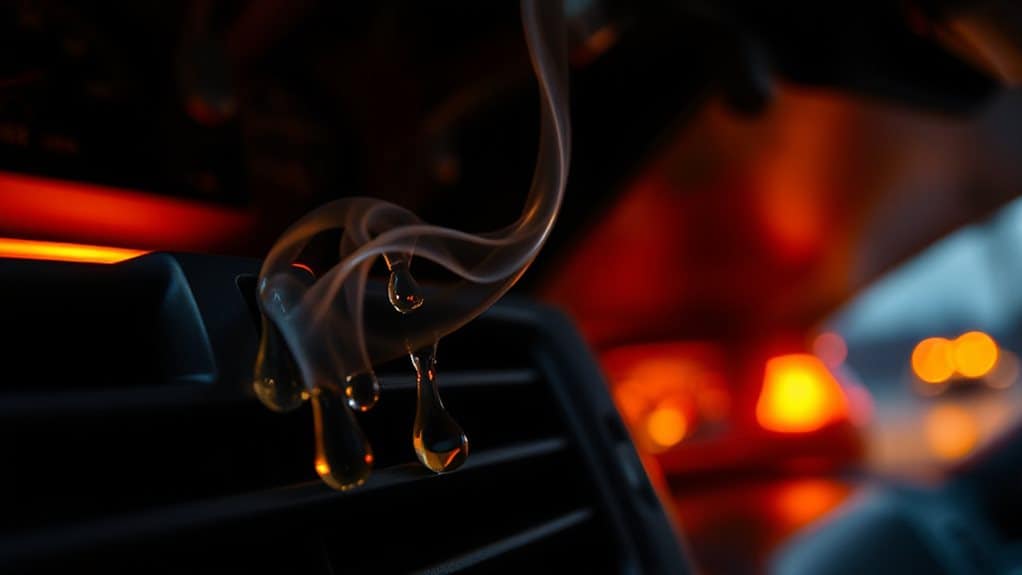
Why does a burning oil smell drift through your car’s fresh‑air vents? Oil leaks from a failed valve‑cover gasket, usually on the left side, drip onto the hot exhaust manifold. The oil burns, creating fumes that the HVAC system pulls into the cabin when you select the outside‑air intake. Inspect the valley below the valve cover for pooling oil, replace the entire cover, and check PCV components to stop the odor. Turbo inlet O‑ring leaks can also introduce oil into the turbo, adding to the smell. If you’re troubleshooting, also inspect related valve cover seals and PCV parts for leaks that allow oil to reach hot engine surfaces.
Why Oil Smell Turns Into Burning Odor After Warm‑Up?
Ever notice the oil smell turning sharp and acrid right after the engine warms up? As temperature climbs to 200‑220 °F, oil vaporizes, and the heating system pushes those vapors through the vents. Leaked oil hits exhaust or hot components, igniting around 300 °F, which creates the burning odor.
The intensity peaks early, then eases as the engine reaches steady‑state temperature.
Common Gasket Failures That Leak Oil Onto Hot Parts
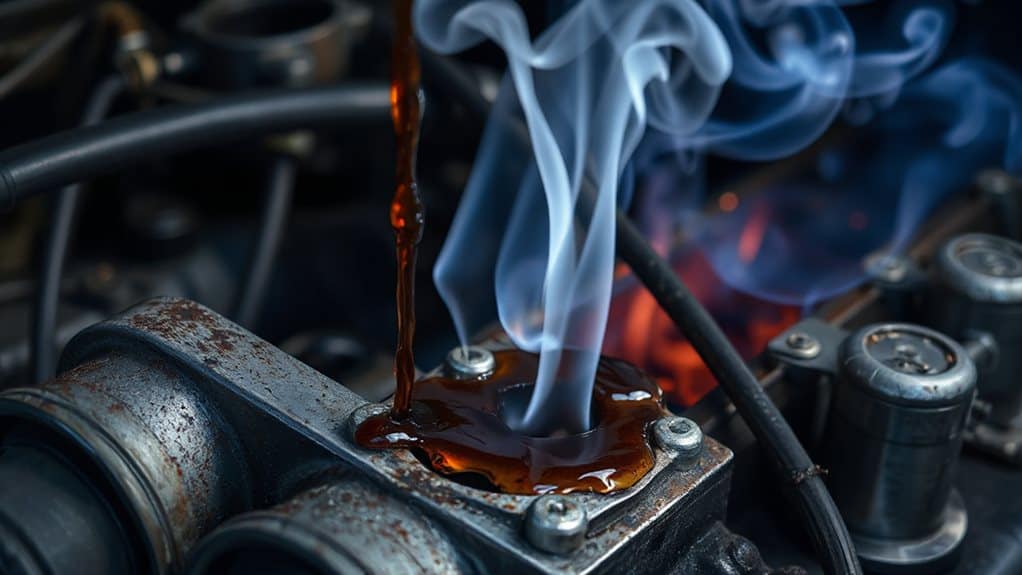
After the engine warms up and the oil vapor reaches the vents, the next common source of the burning smell is oil that leaks directly onto hot components through failed gaskets.
Valve‑cover gaskets warp or lose elasticity, letting oil drip onto the cylinder head.
Oil‑pan gaskets erode from debris or old oil, spilling onto the exhaust.
Head‑gasket cracks mix oil with coolant, while crankshaft and camshaft seals shrink, allowing oil to splash onto hot manifolds.
Which Vehicle Models Show Oil‑From‑Exhaust Leak Signs?
Which vehicle models typically display oil‑from‑exhaust leak signs? Most manufacturers that use push‑rod or overhead‑valve engines report the issue, but the problem is especially common in older American sedans such as the Chevrolet Cobalt, Ford Focus, and Dodge Neon, as well as in several Japanese models like the Toyota Corolla (1998‑2002), Honda Civic (1996‑2000), and Nissan Sentra (1999‑2004).
You’ll notice blue smoke when worn piston rings, damaged valve seals, clogged PCV valves, blown head gaskets, or cracked blocks let oil into the combustion chamber.
These faults degrade performance, foul spark plugs, and raise emissions, so early diagnosis saves costly repairs.
Insulating the garage ceiling above a workspace can help protect stored vehicles and components by reducing temperature swings and thermal transfer that accelerate oil seal and gasket deterioration.
How Turbo Heat Accelerates Valve‑Cover and Sump Gasket Damage
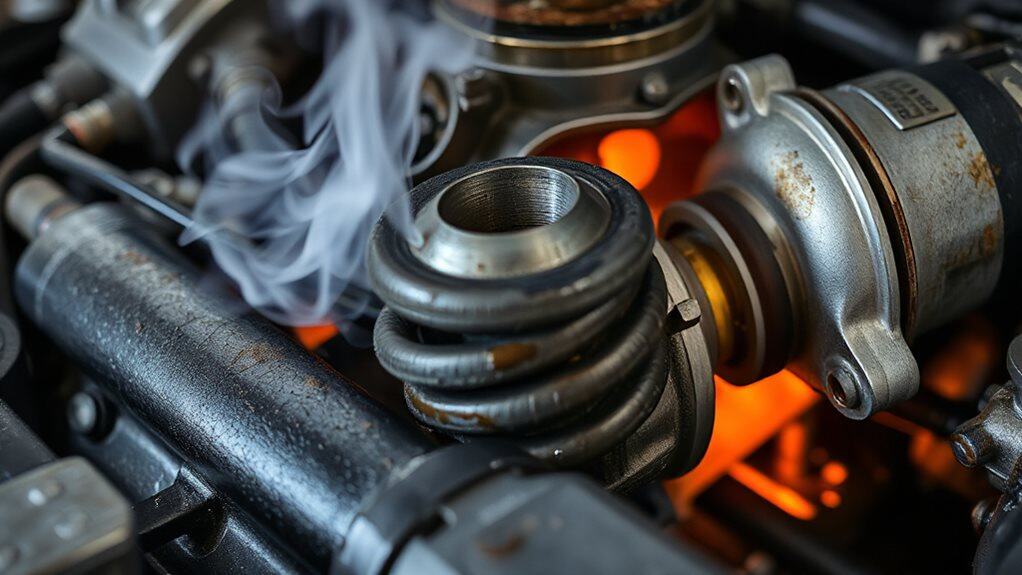
You’ll notice that turbo heat pushes gasket temperatures well beyond their design limits, so each time the engine cycles the seal expands and contracts, gradually losing its elasticity.
This repeated thermal cycling causes the material to harden, crack, and eventually let oil seep past the valve‑cover and sump gaskets.
When the oil sits in a heat‑soaked environment, it oxidizes faster, which accelerates wear and makes the gasket failure even more likely.
Local ordinances often limit the number of visible junk vehicles on private property, so prolonged storage of leaking or inoperable cars can lead to fines and enforcement if they are not stored indoors.
Turbo Heat Increases Gasket Temperature
Turbo heat rapidly raises the temperature of nearby gaskets, and that heat transfer can quickly degrade both valve‑cover and sump seals. You’ll notice that exhaust‑housing heat radiates onto the valve cover, softening the seal and allowing oil to seep.
Simultaneously, oil‑return lines conduct scorching energy to the sump gasket, causing expansion, cracking, and premature failure if the material isn’t heat‑rated.
Thermal Cycling Degrades Seal Integrity
What happens when the valve‑cover and sump gaskets are repeatedly heated by turbo‑induced exhaust and then cooled by coolant? Thermal cycling stresses the seal material, causing brittleness and loss of elasticity. Differential expansion between steel and gasket compounds creates mechanical strain that exceeds tensile strength, forming micro‑cracks. Confinement can suppress cracking, but repeated cycles still reduce compression, leading to leaks and premature gasket failure.
Heat‑Soaked Oil Accelerates Wear
How does sustained turbo heat turn oil into a thin, ineffective film that accelerates gasket wear? When temperatures exceed 250°F, oil viscosity drops quickly, thinning the lubricating layer.
Additives deplete by 20‑30% faster, so the oil loses anti‑wear protection.
At 550°F, 0W‑20 loses 68% viscosity, allowing metal‑on‑metal contact on valve‑cover and sump gaskets, which speeds wear and leaks.
Spotting Oil‑Smell Signs: Residue, Smoke, and Low Oil Levels
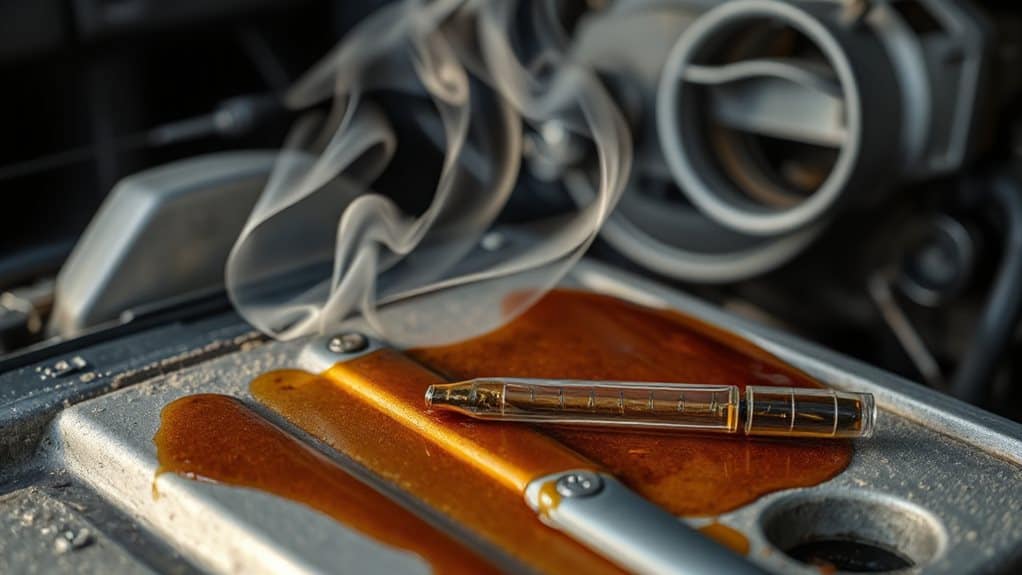
A noticeable oily residue under the vehicle, especially where drips collect on the ground, is often the first clue that oil is escaping the engine. You’ll also see oil buildup around the valve‑cover gasket, exhaust manifold, or filter housing. Smoke under the hood or entering vents signals burning oil on hot parts, while a low dipstick reading confirms loss. Regularly inspect these signs to prevent further damage. For leaks that produce odors near the exhaust, also check vulnerable connection points like joints and gaskets for escaping gases and soot buildup.
Health Risks of Inhaling Burning Oil Fumes
When you inhale burning oil fumes, the irritants in the vapor trigger coughing, shortness of breath, and chest tightness, and even brief exposure can cause nausea and eye irritation.
Prolonged inhalation of aromatic hydrocarbons such as benzene, toluene, and xylene may lead to persistent lung injury, reduced respiratory function, and long‑term symptoms that can last years after the initial exposure.
Additionally, chronic exposure raises your risk of cardiovascular problems, liver and kidney damage, and carcinogenic effects from polycyclic aromatic hydrocarbons, so recognizing and minimizing these hazards is essential.
Consider using rust‑prevention and maintenance products like chassis saver to reduce vehicle corrosion that can contribute to burning oil smells through vents.
Respiratory Irritation Risks
Ever wondered why a brief whiff of burning oil can make your eyes sting and your throat tighten? Inhaled vapors contain PAHs and aromatic hydrocarbons that irritate mucous membranes, causing coughing, throat swelling, and shortness of breath. You may feel dizziness, headache, or nausea, especially in enclosed spaces.
Children, elderly, and those with pre‑existing conditions are especially vulnerable and should evacuate promptly.
Long‑Term Toxic Exposure Effects
Breathing oil fumes over weeks or months can lead to lasting health problems that go far beyond the immediate irritation of eyes and throat. You may develop chronic neurological issues like confusion, memory loss, dizziness, and delayed visual response caused by xylene.
Cancer risk rises for lungs and bladder due to PAHs and benzene. Cardiovascular strain, liver and kidney damage, and genetic oxidative stress also persist, increasing heart attack, hypertension, and chromosome abnormalities.
Fire‑Hazard Scenarios When Oil Contacts Exhaust Manifolds

Oil that drips onto an exhaust manifold can quickly turn a routine leak into a fire hazard, because the manifold’s surface temperature often exceeds the flash point of motor oil, causing the oil to vaporize and ignite when it meets oxygen. When vapor accumulates, it mixes with ambient oxygen and ignites, especially near turbochargers where temperatures are higher. Even small drips can create a combustible cloud, and improper hose support or loose clamps increase exposure. This scenario accounts for roughly five percent of vehicle fires, highlighting the need for proper maintenance and monitoring. Pipes in uninsulated areas can be more vulnerable to freezing, which can cause leaks that allow oil to escape and contact hot exhaust components, increasing fire risk if not addressed — see uninsulated areas.
DIY Inspection Steps to Pinpoint the Exact Leak
Start by visually inspecting the valve cover for cracked gaskets or oil streaks, then check the oil reservoir level on the dipstick to see if it matches the amount you collected underneath the car.
Next, trace any smoke or vapor pathways from the engine bay to the cabin vents, noting where the odor is strongest.
Finally, combine these observations to confirm the exact leak source before deciding whether a DIY fix or professional repair is needed.
Visual Inspect Valve Cover
Where do you begin when you need to locate a valve‑cover leak? Cool the engine, disconnect the battery, and clear any hoses or wires blocking access. Shine a flashlight, use a mechanic’s mirror, and look for wet spots, oil residue, or drips around the cover’s edge and spark‑plug tube seals. Clean the area with degreaser, tighten bolts to 8‑10 ft‑lb in a criss‑cross pattern, then re‑inspect for fresh oil or UV‑dye glow.
Check Oil Reservoir Levels
A few quick steps can get you the exact oil level and help you spot a leak before it turns into a burning smell through the vents. Park on a level surface, let the engine cool ten minutes, and clean the area. Remove the dipstick, wipe, reinsert, pull out, and read the mark between min‑max. Note foam, dark oil, or milky appearance, then inspect nearby seals, fittings, and use bubble solution to confirm any drip source.
Trace Smoke Pathways
After confirming the oil level and spotting any obvious leaks, the next step is to trace the exact path the oil‑laden smoke takes to reach the cabin vents. Insert a non‑toxic smoke tube at the HVAC intake, run the blower on low, and watch the plume travel. Note which vents show the strongest concentration, then use a smoke pencil near suspected seals to follow the intrusion. Record the movement for later analysis.
When to Replace the Whole Valve Cover vs. Just the Gasket?
Why replace the entire valve cover instead of just the gasket? If you see warping, cracks, or corrosion on the cover, oil drips from its edges, or the smell returns days after a gasket swap, the cover itself is compromised.
Multiple seal failures—spark‑plug tube seals, ignition coil seals—also demand full replacement.
A warped cover can’t seal even a new gasket, leading to repeat leaks and higher labor costs.
Quick Fixes to Stop Oil Smell Right Now & Prevent Future Leaks
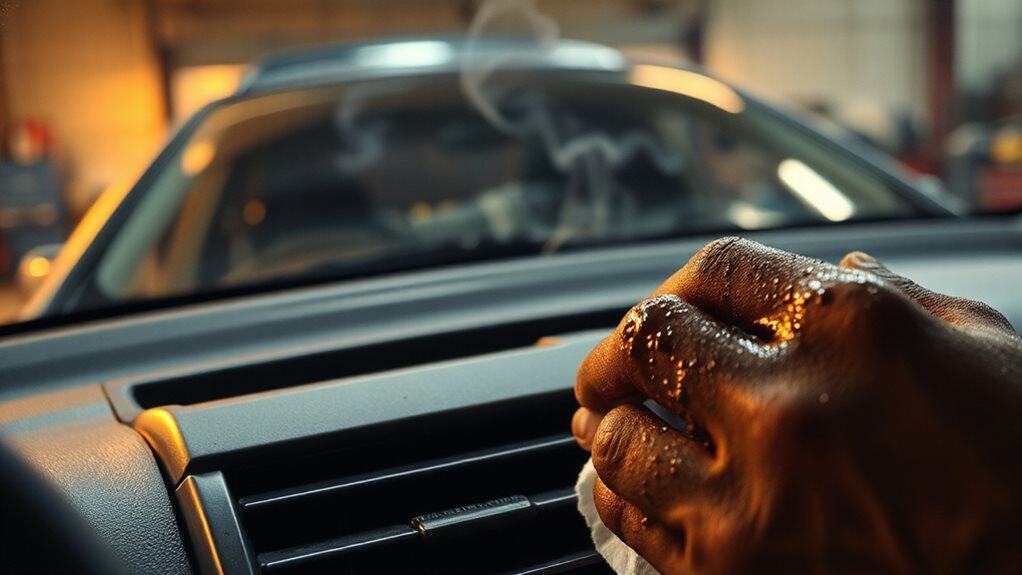
A faint, acrid odor drifting through the cabin often signals oil leaking onto a hot engine surface, and you can curb it immediately with a few practical steps.
Turn off fresh‑air vents, park to cool, wipe visible oil, and place cardboard to catch drips.
Clean the exhaust manifold with degreaser, replace a worn PCV valve, and tighten valve‑cover bolts in sequence to prevent future leaks.
Wrapping Up
By checking for oil deposits on the valve cover, exhaust manifold, and turbo, you can pinpoint the source of a burning smell before it becomes a fire hazard. Replace damaged gaskets promptly, and inspect the sump and turbo heat shields regularly. If the leak persists after a gasket swap, consider a full valve‑cover replacement. Maintaining these components prevents oil from contacting hot surfaces, reduces odor, and protects your vehicle’s safety and performance.