
You still feel a spongy pedal after bleeding because air, moisture‑laden fluid, or a leaking seal is preventing full hydraulic pressure from reaching the wheel cylinders. Tiny leaks in hoses, seals, or the master cylinder let air slip in, while hygroscopic fluid absorbs water and forms compressible vapor bubbles. Contaminated fluid appears cloudy or dark, and a failing master‑cylinder seal can reduce pressure even with a sealed system. If you keep experiencing this, the next sections will explain how to diagnose and fix the problem.
Quick Tips
- Incomplete bleeding leaves air bubbles or moisture in the system, causing the pedal to stay soft.
- A failing master‑cylinder seal or leaking fitting reduces hydraulic pressure, resulting in a spongy feel.
- Hygroscopic brake fluid absorbs moisture, forming vapor bubbles that compress under pressure and mimic air.
- Air can enter through tiny hose leaks, un‑bench‑bleeded components, or contaminated fluid after repairs.
- Dark, cloudy fluid or visible bubbles indicate contamination; replace fluid and faulty hardware if the pedal remains spongy.
Why Does the Pedal Stay Soft After Bleeding?
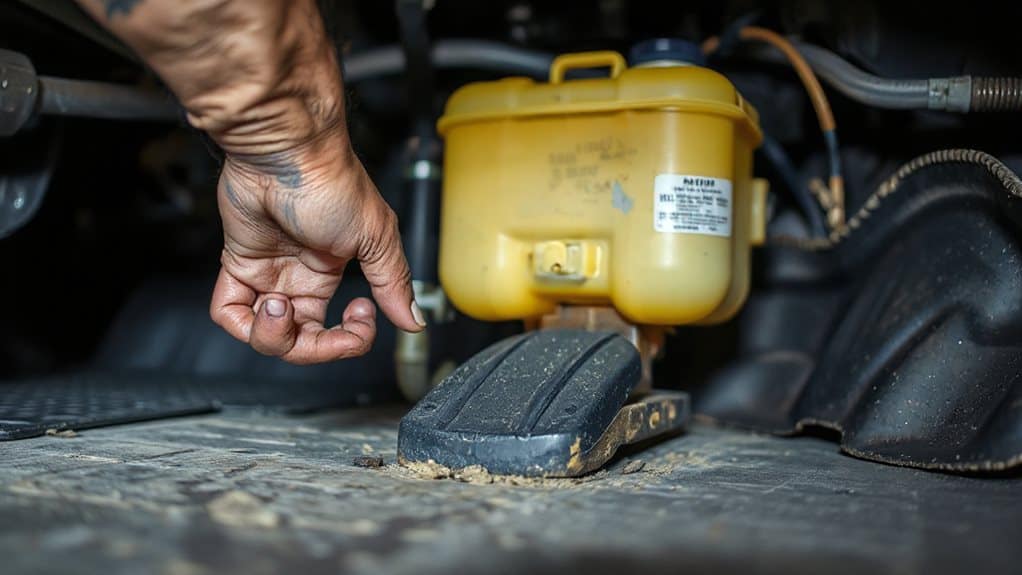
Inadequate pedal presses per wheel, premature valve closure, or a leaking fitting can also leave bubbles.
Finally, a failing master‑cylinder seal or moisture‑laden fluid reduces pressure, keeping the pedal soft. Brake fluid contamination can also cause the pedal to remain soft despite bleeding.
How Air Gets Trapped in Brake Lines and How to Spot It
You’ll notice that tiny leaks in hoses, seals, or the primary hydraulic chamber let air slip into the hydraulic circuit, and the fluid’s hygroscopic nature can pull moisture from the open reservoir, creating bubbles that compress under pressure. When those air pockets accumulate, the brake pedal feels spongy, the car’s stopping distance lengthens, and you may experience a soft or sinking pedal that doesn’t return quickly. Spotting these symptoms early—especially after a fluid change or component replacement—helps you identify trapped air before it compromises braking performance. Using lubricants like WD-40 on brake components is a risky mistake because they can contaminate friction surfaces and reduce stopping power.
Causes of Air Entry
Ever wonder how air sneaks into a brake system and turns a firm pedal into a spongy one? Air enters when you replace calipers, wheel cylinders, ABS pumps, or boosters without bench‑bleeding the master cylinder first, or when you change fluid improperly.
Low fluid levels draw air into the sealed reservoir, and corroded or leaking lines let atmospheric air in.
Water‑laden fluid can boil, forming steam pockets, while a failing master cylinder also admits air.
Signs of Trapped Air
After learning how air can enter a brake system, the next step is to recognize the signs that that air is trapped in the lines. You’ll notice a spongy, mushy pedal that sinks deeper before the brakes bite, longer stopping distances, and a bouncy, erratic feel. In severe cases the pedal may go to the floor, indicating significant pressure loss and potential system failure.
How Moisture‑Absorbing Fluid Creates Air Bubbles
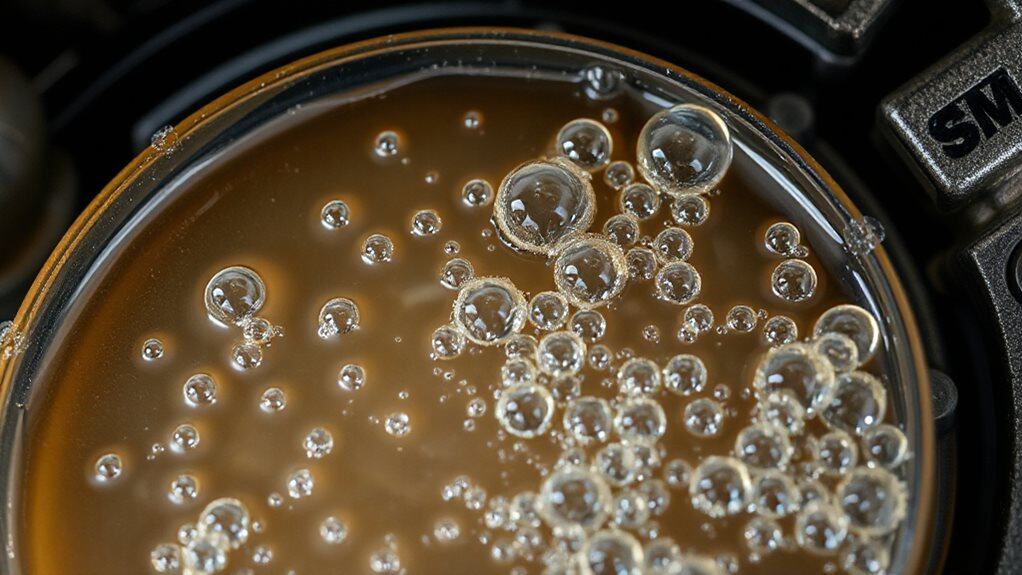
Why does a brake pedal feel soft when moisture see absorbed into the fluid? As the hygroscopic fluid takes in water, its boiling point drops; under hard braking the heated fluid vaporizes, forming tiny gas bubbles. Those bubbles compress easily, so pressure from the pedal isn’t fully transferred to the wheel cylinders. The result is a spongy feel, even though the system is still sealed. Regular inspection and replacement of worn abutment clips and other hardware helps ensure brakes operate quietly and reliably.
How to Spot Contaminated Brake Fluid Before Re‑bleeding
You’ll first examine the fluid’s color; a clean, light‑amber or clear appearance means it’s likely uncontaminated, while dark brown, black, or murky hues signal oxidation or dirt. Next, look for moisture bubbles—tiny, frothy spheres that rise to the surface indicate water has mixed with the brake fluid, which can lower its boiling point and cause sponginess. Finally, assess the fluid’s clarity and consistency, as a cloudy or uneven texture, or any visible particles, points to solid contaminants or rust that must be removed before you re‑bleed the system. Also bear in mind that mixing fluids with different additive packages can alter performance, so avoid combining brake fluid from different sources without checking manufacturer recommendations.
Fluid Color Check
How can you tell if your brake fluid is still good before you start re‑bleeding? Look at the reservoir: fresh DOT 3 fluid is clear or light amber, while dark brown or black indicates contamination. Any floating particles or milky emulsion also signals impurity. If you see these signs, replace the fluid and flush the system before proceeding. Regular monthly checks prevent spongy brakes.
Presence of Moisture Bubbles
After checking the fluid’s color, the next step is to look for moisture‑related bubbles, which directly indicate contamination. Tiny strings of bubbles appear in the lines as you bleed the brakes, especially when they exit the front‑brake bleeder valves.
Persistent bubbles after settling suggest trapped moisture vapor. Inspect the reservoir and connections for wet spots, and swab the master-cylinder back for dampness, which reveals internal leaks that feed moisture into the system.
Fluid Clarity and Consistency
What does the brake fluid look like, and why does that matter before you bleed the system again? Clean fluid is light amber or crystal clear, while a dark brown or black tint signals contamination, and a cloudy, milky appearance often points to water mixing with the fluid. Examine the reservoir: any discoloration, floating particles, or milky emulsion means moisture or debris entered. If you see a yellow‑to‑brown shift, sediment, or sludgy texture, the fluid is compromised and must be replaced before re‑bleeding. Use test strips for moisture and compare against fresh fluid’s transparency to confirm.
Common Leak Sources That Keep Air Entering a Spongy Brake System
Ever notice a brake pedal that feels soft even after you’ve bled the system?
Corroded or chafed brake lines develop cracks that let fluid escape and air in; age‑related pinholes act similarly.
Heat‑damaged hoses split near wheels, admitting air under pressure.
Leaky master‑cylinder seals or a cracked reservoir draw air when fluid drops.
Worn caliper seals and faulty valves also leak, constantly re‑introducing air into the hydraulic circuit.
Proper inspection and maintenance — including checking for leaking hoses and ensuring all fittings are tight — help prevent recurring air intrusion.
Parts That Can Make Your Pedal Feel Soft (Even Without Air)
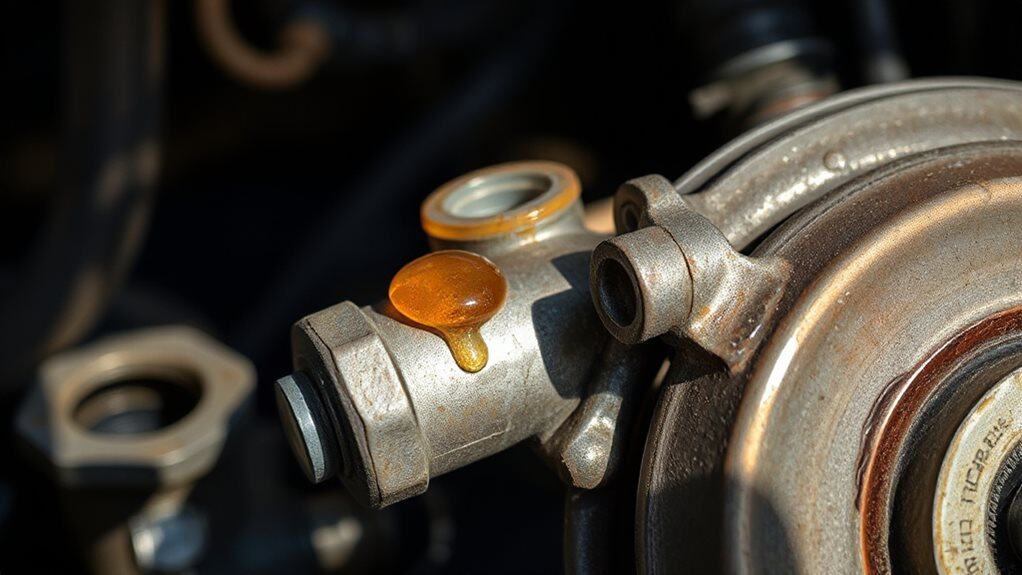
Why does your brake pedal stay soft even after a perfect bleed? Worn pads reduce friction, so the pedal feels spongy despite proper fluid. A leaking master cylinder or caliper lets fluid escape, lowering pressure. Collapsed hoses balloon under pressure, mimicking air compressibility. Weak return springs or mis‑installed drum shoes prevent proper retraction. Inspect and replace these parts to restore firm pedal feel. Check the charging system as low voltage from a failing alternator can affect brake warning circuits and related components, so test the alternator output with a multimeter 13.5–14.5V.
Step‑by‑Step Bleeding to Remove Hidden Bubbles
A proper bleed removes most of the air, but tiny bubbles can linger in the lines and cause a spongy pedal. First, park on a flat surface, chock wheels, and lift the car. Attach clear tubing to the farthest bleeder, submerge the other end, and have an assistant press the pedal slowly. Open the valve a quarter turn, let fluid and bubbles escape, then close before the pedal hits the floor. Repeat 4‑5 times per wheel, moving inward, keeping the master-cylinder reservoir topped up, and verify clear fluid before finishing.
When to Replace the Master Cylinder or Other Components
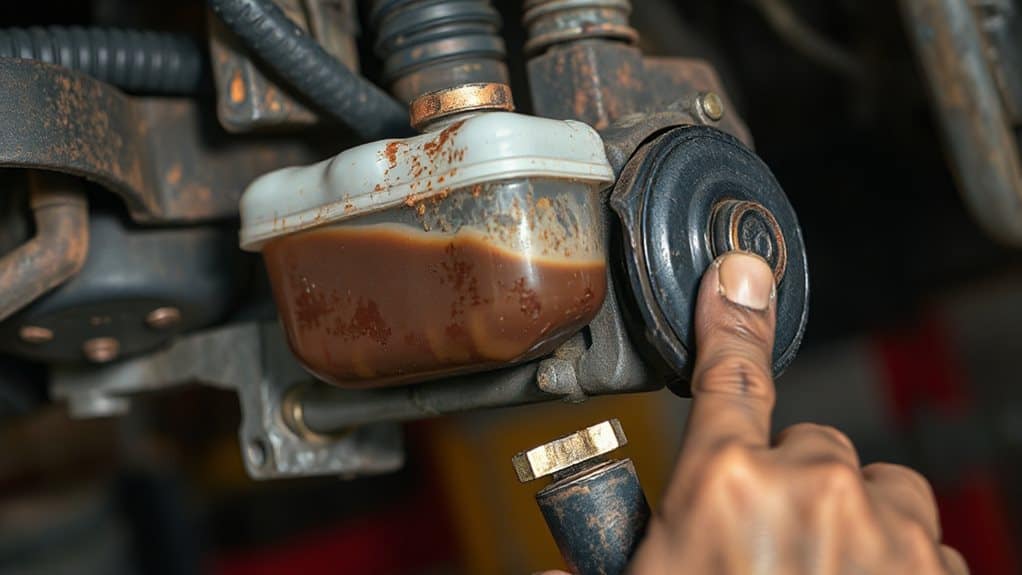
When does a spongy brake pedal indicate that the master cylinder or related components require replacement?
If the pedal still sinks after thorough bleeding, if fluid leaks appear under the cylinder or reservoir, or if the brake warning light stays on despite normal fluid levels, you should replace the master cylinder.
Persistent contamination, metal shavings, or uneven braking forces also signal a faulty cylinder or seals needing new parts.
Wrapping Up
If the pedal stays soft after bleeding, you’ve likely got trapped air, moisture‑laden fluid, or a leaking component. Identify and eliminate the source—whether it’s a cracked hose, a faulty master cylinder, or contaminated fluid—then bleed the system correctly, using the proper sequence and pressure. Re‑bleed until no bubbles appear, and replace any worn parts. Proper maintenance restores firm pedal feel and guarantees reliable braking performance.