You’ll find a brake piston won’t compress when corrosion or rust builds up on the piston or guide pins, moisture infiltrates through torn boots, collapsed hoses trap fluid, or brake fluid is contaminated with water or debris. Inspect the caliper boots for tears, look for rust spots with a boroscope, and test hoses by opening the bleeder while pressing the pedal to see if fluid flows. Replace worn seals, clear or replace collapsed hoses, and flush the fluid, then use the proper wind‑back tool to retract the piston; more details follow if you keep going.
Quick Tips
- Corroded or rust‑filled piston boots and seals lock the piston; replace boots and reseal or rebuild the caliper.
- Collapsed or kinked brake hoses trap fluid, preventing return flow; inspect hoses, replace damaged sections, and bleed the system.
- Contaminated or moisture‑laden brake fluid causes seal swelling and piston seizure; flush with fresh DOT‑specified fluid and purge air.
- Stuck caliper guide pins or binding slides impede piston movement; clean, lubricate, or replace pins and slide bushings.
- Incorrect wind‑back or improper piston retraction technique can leave pistons jammed; use the proper rewind tool and verify full piston travel before reassembly.
Identify Why a Brake Piston Won’t Compress
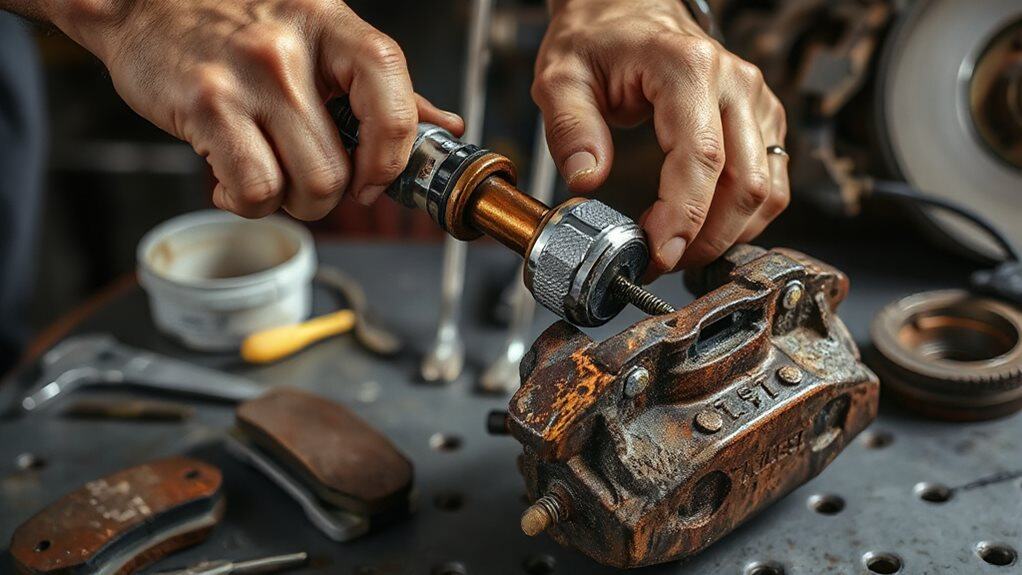
A brake piston won’t compress when its sealing system or hydraulic pathway is compromised, so the first thing you should check is the condition of the piston seals. Worn or torn rubber boots let water in, causing the piston to lock; broken seals keep pads against the rotor even off‑pedal. Collapsed hoses trap fluid, blocking return flow, while contaminated fluid or improper wind‑back procedures also prevent retraction. Inspect seals, hoses, and fluid clarity to pinpoint the issue. Pistons may seize due to corrosion and require replacement. Regular cleaning and inspection help prevent brake dust buildup that can hide or accelerate piston and seal damage.
Detect Corrosion That Keeps a Brake Piston From Compressing
You’ll start by visually inspecting the piston boots, caliper brackets, and rotors for any rust or corrosion that could be blocking the piston’s motion.
Next, test for water intrusion by checking the brake fluid with moisture strips and measuring the open‑circuit potential on metal parts to spot hidden moisture.
Combining these observations lets you pinpoint whether corrosion is the culprit behind the piston’s failure to compress.
When ID tags are missing, use casting numbers stamped into the case and cross-reference them with documented charts to help verify whether corrosion-related issues may be linked to a specific component history.
Visual Inspection for Rust
Where does the rust hide, and how does it stop the brake piston from compressing? You’ll spot darkened spots on the piston bore, torn boots, or flaking brake‑line coating. Inspect the caliper body, slides, and guide pins for rust that binds movement. Use a boroscope for hidden lines. Document any corrosion, because even thin rust can impede retraction and cause uneven wear.
Testing for Water Intrusion
Is water silently compromising your brake piston? Use moisture test strips: dip them in the fluid reservoir; darkening signals water, which lowers the boiling point and risks vapor lock.
Perform a pressure leak test: pressurize the chamber to 600 psi, watch the gauge for a 15‑psi drop over two minutes—any loss indicates corrosion‑related leakage.
Finally, inspect seals and boots for damage that could admit moisture.
Spot Worn Boot Seals That Prevent Brake Piston Compression
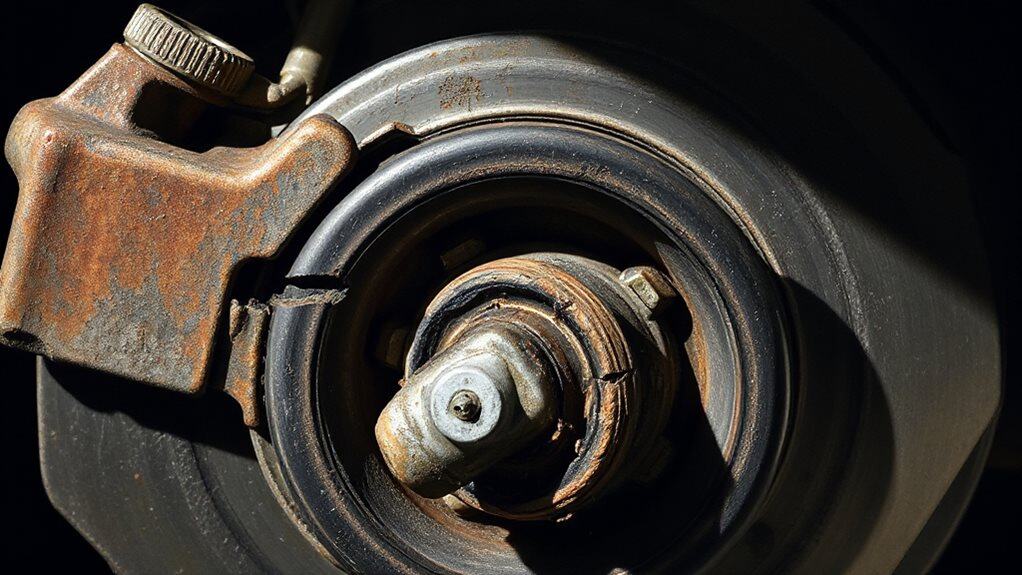
A worn or torn brake‑boot seal is often the first clue that a piston won’t compress properly. You’ll see ripped boots, deflated dust seals, or popped‑out boots exposing the piston to dirt, grime, and water. Contaminants cause pitting, corrosion, and binding, which trap the piston and produce a soft, spongy pedal. Inspect boots during every brake job and replace any damaged seal to restore proper compression. Improperly seated CV axles can also create abnormal driveline stresses that aggravate seal wear and lead to similar premature seal failure.
Find Hidden Hose Problems That Stop Brake Piston Movement
Why do some brake pistons refuse to move even after you’ve replaced the caliper? A hidden hose collapse can act like a one‑way valve, trapping fluid after you press the pedal. Open the bleeder screw; if the piston still sticks, the hose is likely collapsed. Look for fluid dribbling from the banjo bolt, and test pressure with a load cell. Replace the damaged hose and avoid using vice grips on it. In some vehicles, electrical or module-related issues can mimic hydraulic symptoms, so also check the BCM and related wiring for faults.
Test Brake Hoses for Internal Collapse Before Repair
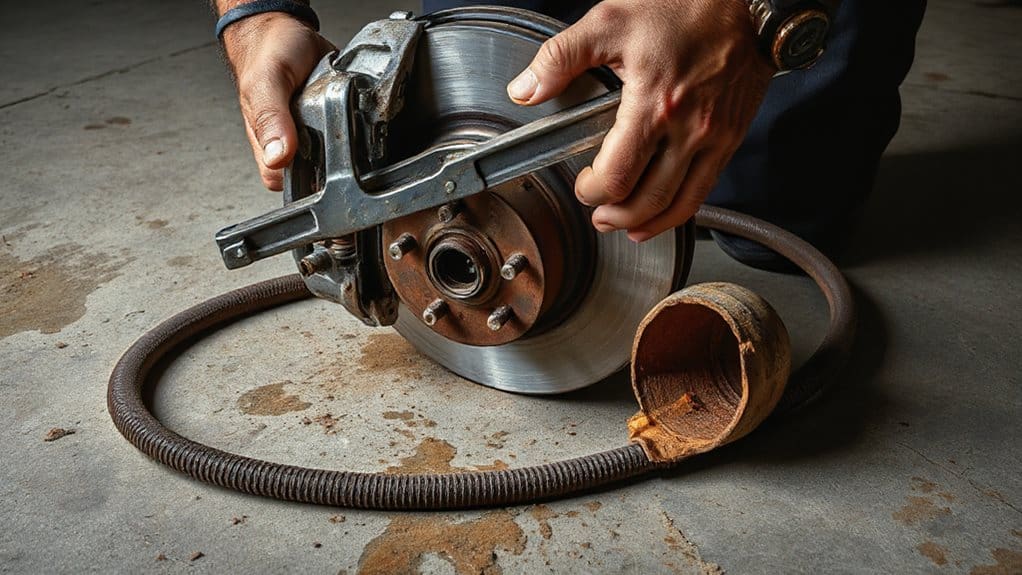
You’ll start by visually inspecting each hose: flex it to reveal cracks, run your fingers for bulges or blisters, and check fittings for corrosion that could constrict flow.
Next, perform a pressure test: loosen the upstream line, pump the pedal, and watch for fluid reaching the caliper—no flow means the hose is collapsed inside.
Finally, confirm the failure by opening the bleeder screw while holding the brake; if fluid releases and the caliper moves, the internal blockage is confirmed.
Also consider checking your vehicle’s reserve fuel capacity to better plan service stops and avoid getting stranded while conducting repairs.
Visual Inspection Techniques
How can you spot an internal collapse in a brake hose before you start any repairs? Look for cracks when you flex the hose; any size means replacement.
Watch for blisters or bubbles as you pump the brake pedal—shape changes signal failure.
Run your fingers along the hose for irregularities, chafe marks, or wet stains.
Check fittings for corrosion, rust on brackets, and guarantee the hose feels firm yet flexible.
Pressure Test Procedures
Ever need to verify whether a brake hose can hold pressure before you start a repair? Park the car on a flat surface, engage the parking brake, and wear gloves and goggles. Attach a pressure gauge to the master‑cylinder port, press the pedal, and watch the reading. Hold 1.2 MPa for 60 seconds; any drop indicates internal collapse. Compare front‑to‑rear pressures; discrepancies reveal weak spots. Follow DOT standards for burst strength and temperature exposure.
Apply the Correct Wind‑Back Technique to Release a Stuck Piston
Why does a rear brake caliper piston refuse to budge when you try to wind it back? You must rotate clockwise while pushing inward, using the correct adapter plate with two pegs that lock into the piston’s grooves. Align the pegs at 90° to the pad plane, press the backing plate against the caliper, and turn steadily, re‑tightening as needed. Patience and proper direction prevent slippage. Hidden electrical and mechanical causes, such as a jammed latch or corroded mechanism similar to issues that can leave a BMW trunk stuck, can also prevent movement—check for corroded components and obstructions before forcing the piston.
Choose the Right Tool to Compress a Stuck Brake Piston
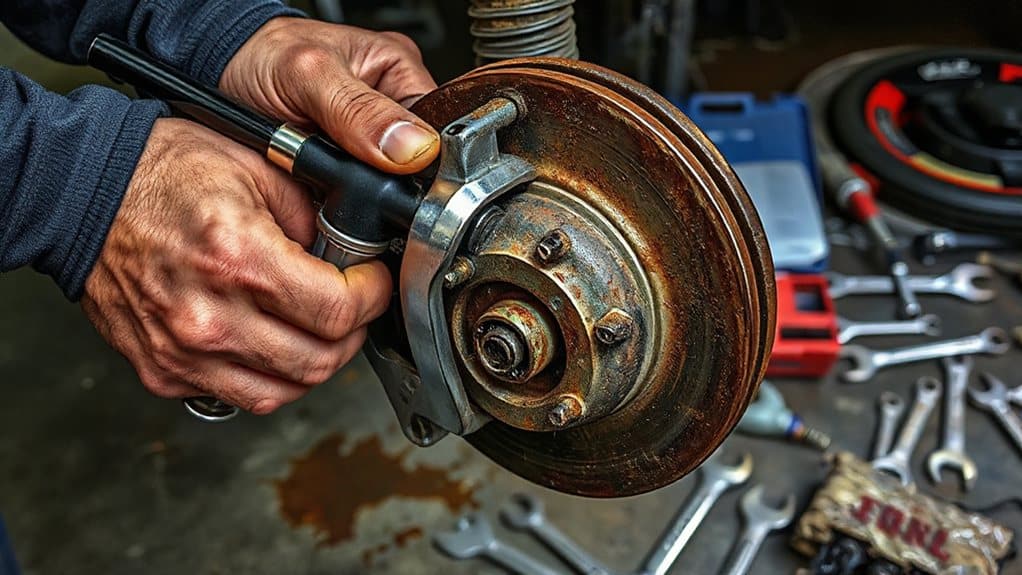
Choosing the right tool to compress a stuck brake piston starts with identifying the caliper’s design and the piston’s actuation method. If you have a floating caliper, use a compression‑style tool like the Lisle 29100 for broad contact.
Rear calipers with screw‑in pistons need a rewind/windback kit such as MAC/Proto. Universal adapters work on both, while hand‑screw or pneumatic windback tools suit budget or professional needs respectively.
Compress the Piston Step‑by‑Step, Safely and Effectively
After picking the right tool, you’ll need to compress the piston methodically to avoid damage and guarantee a proper seal.
Loosen the wheel, remove the caliper, and support it with wire ties.
Place an old pad against the piston, then use a C‑clamp or wind‑back tool to push the piston straight back.
Keep steady pressure, watch for fluid overflow, and verify the piston fully retracts before installing new pads.
Know When to Call a Pro for a Stuck Brake Piston Overhaul
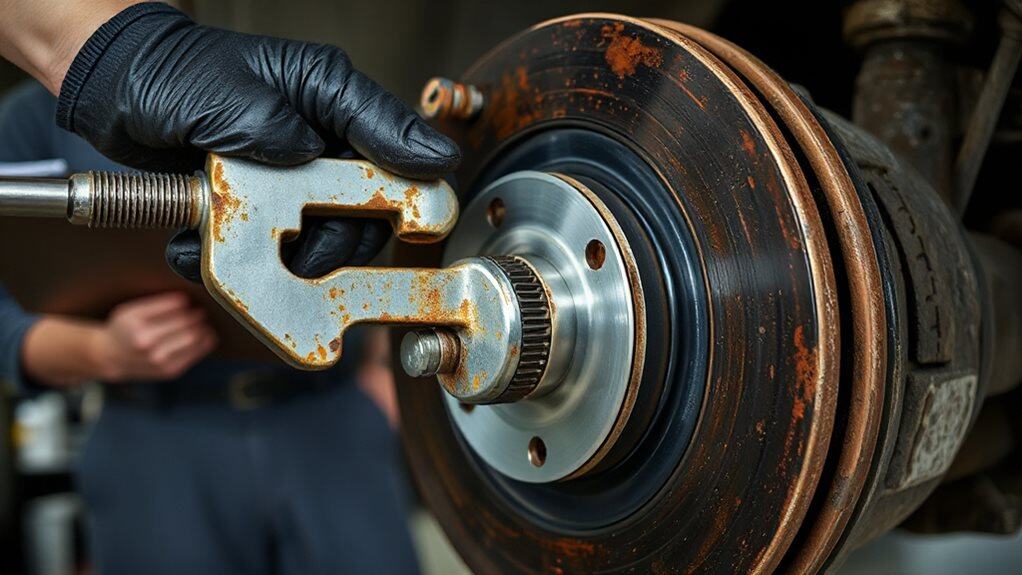
When the piston refuses to retract even after applying the proper tools and techniques, it’s a clear sign that professional intervention is required.
You’ll notice corrosion, deep scoring, or rust that a DIY bench can’t clean.
Uneven tolerances, damaged threads, or stuck pistons despite compressed‑air attempts also demand a hydraulic test bench, ultrasonic cleaning, and precision machining—capabilities most home shops lack.
Call a specialist before safety is compromised.
Wrapping Up
By now you should see that a brake piston won’t compress when corrosion, damaged seals, or hose collapse obstruct its movement. Inspect each component, test hoses for internal failure, and apply the proper wind‑back technique with the correct tool. Follow the step‑by‑step compression procedure safely, and recognize when the damage exceeds DIY limits. If the piston remains stuck after these checks, seek professional service to avoid compromising brake performance.