You’ll notice a broken or dark‑gap filament inside a transparent fuse, often with melted plastic or a burnt smell near the fuse box. The radio and interior lights may go out together, and you might detect an acrid, melting‑plastic odor when the compartment feels hot. Flickering lights or a “CHECK FUSES” warning usually accompany these signs, indicating an overload or short circuit. If you keep seeing these cues, the next sections will explain how to locate the short and prevent repeat blows.
Quick Tips
- Intermittent or completely dark interior lights, indicating a blown fuse in the lighting circuit.
- Radio or infotainment system losing power, often accompanied by a “CHECK FUSES” warning on the dashboard.
- A sharp, acrid burning smell from the fuse box or wiring, signaling overheating or a short.
- Visible damage to a fuse: broken filament, dark gap, or melted plastic housing when inspected.
- Repeated fuse failures after adding accessories, suggesting an overloaded circuit or wiring short.
What a Blown Fuse Looks Like in Your Car
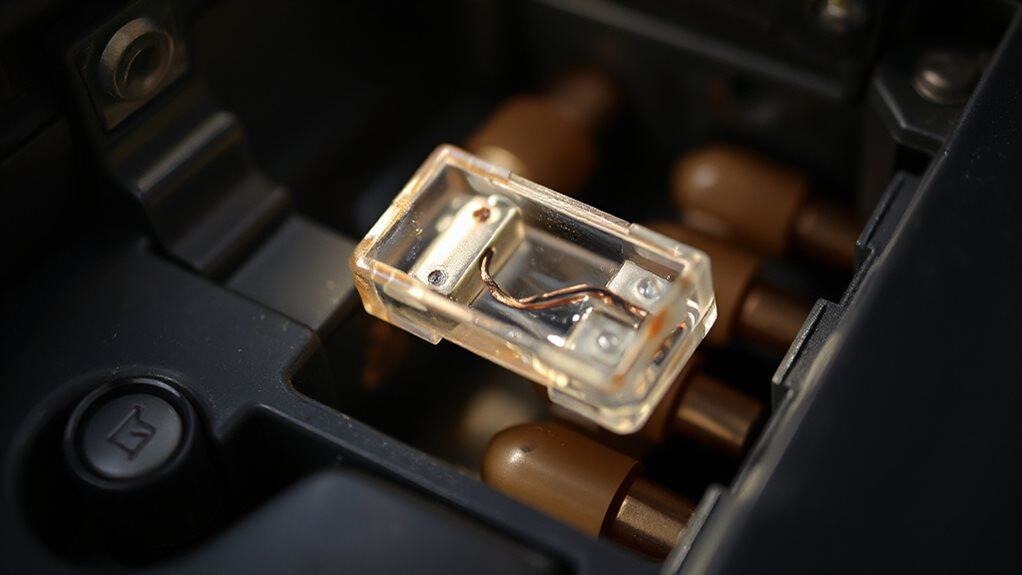
Ever wonder how a blown fuse actually appears inside your car? You’ll see a broken or separated filament in a transparent fuse, a clear gap where the metal strip once ran continuously. Black or brown burn marks may scar the interior, and the plastic housing can melt or warp.
Hold the fuse to a light; if only one side glows, the filament is interrupted, confirming a blown fuse. A blown fuse prevents power from reaching the connected electrical device.
Why Your Radio and Interior Lights May Quit on the Same Day (Car Fuse Problem)
If your radio and interior lights die at the same time, it’s usually because they share a circuit that’s being overloaded. A fuse that’s rated for a lower amperage than the combined load will blow, cutting power to both devices.
Development of portable fast-charging solutions and improved infrastructure aim to reduce reliance on improvised power sources while stranded.
Shared Circuit Overload
Because the radio and interior lights share a single fuse, a failure in one often signals a problem with the other.
Overload happens when multiple devices—phone chargers, dash cams, aftermarket amplifiers—draw more current than the fuse can handle.
Faulty relays or worn wiring increase resistance, further stressing the circuit.
Check the fuse, unplug accessories, and inspect wiring to prevent repeated blows.
Fuse Rating Mismatch
Why a mismatched fuse rating can shut down both your radio and interior lights lies in the loss of proper circuit protection. A higher‑amp fuse bypasses the safety limit, allowing excess current to overheat the socket, melt plastic housing, and damage terminals. This thermal stress breaks connections, causing the radio to die and lights to flicker or quit. Replace fuses with the exact rated amperage to prevent further damage.
Spotting the Burning Smell That Signals a Car Fuse Problem
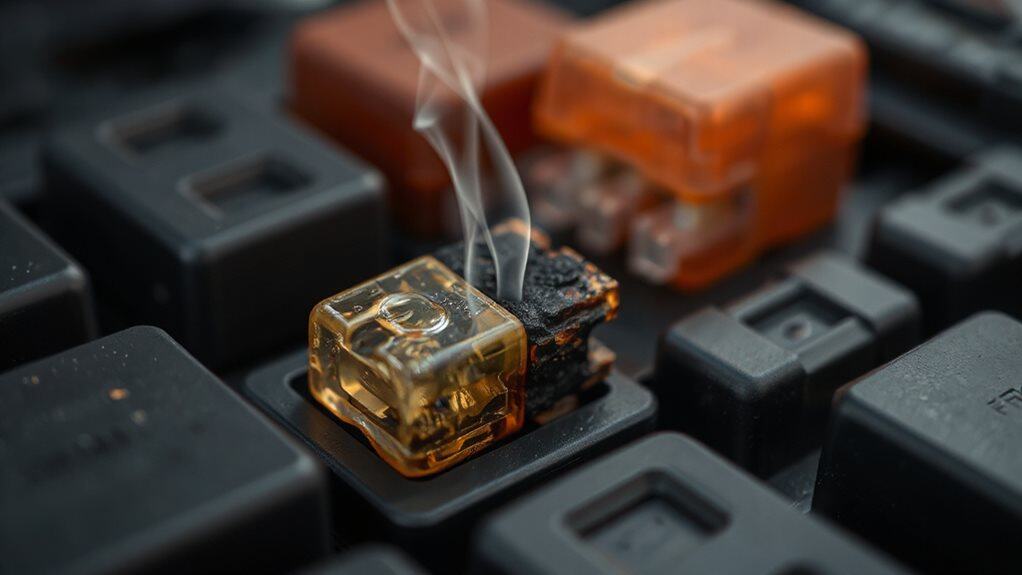
You’ll notice a sharp, acrid odor that smells like melting plastic when a fuse overheats, and it often comes from the fuse box or nearby wiring.
If the scent is brief and appears alongside a hot fuse compartment, it’s a clear sign that the fuse is blowing and the insulation is melting.
Pinpointing the exact heat source—whether it’s a faulty wire, an overloaded circuit, or a failing relay—lets you address the problem before it damages other electrical components.
Regular inspection and treatment of corroded contacts can prevent failures, especially when using products like rust removers that target rust and corrosion on electrical grounds.
Identifying Fuse Smell
Ever notice a sharp, acrid odor drifting from under the dashboard when you turn on the headlights? That smell usually means a fuse or its wiring is overheating, producing a plastic‑like scent. You’ll often detect it near the fuse box, under the dash, or at the battery junction.
Pair the odor with flickering lights, weak battery charge, or a “CHECK FUSES” warning to confirm a failing fuse.
Locating Heat Sources
Where does the heat come from when a fuse starts to fail, and how can you pinpoint its source? You’ll notice a plastic‑like burning smell, smoke, or a hot‑to‑touch component. Inspect the battery for swelling or heat, examine wiring for frayed insulation, check the alternator for overcharging, and look near fuses for discoloration or melted connectors. Listen for buzzing or hissing, and feel for hot spots around voltage regulators.
What Visual Fuse Damage Looks Like in a Car Fuse
What does a blown fuse actually look like when you open it up? You’ll see a broken metal filament, a dark brown or black gap where the wire should be, and possibly two separate pieces of wire. The plastic case may be warped or melted, and the housing often shows a metallic smear or blackened spots. Hold the fuse to light; an intact fuse shows a continuous, unbroken wire. Split beam torque wrenches can help ensure fasteners are tightened correctly to avoid electrical component damage, so check torque specifications with a calibrated torque tool.
What Makes New Fuses Keep Blowing and How to Find the Short Circuit
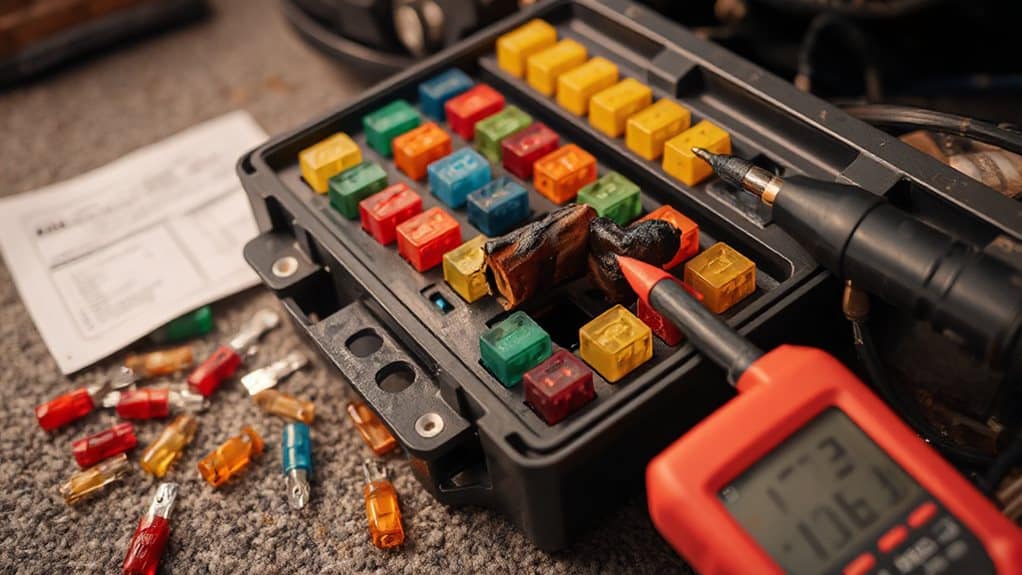
Why do new fuses keep blowing? You may be using the wrong amperage, inserting a 15‑amp in place of a 10‑amp, or selecting an incorrect type for that box location.
Poor connections, frayed insulation, or wet conductors create short circuits that instantly overload the circuit.
Aftermarket accessories, malfunctioning lights, or damaged switches can also draw excess current, forcing the fuse to act as a safety device.
Identify the exact component or wiring fault before reinstalling a fuse.
Acetone and other solvents are flammable and can increase fire risk if spilled near electrical faults, so follow proper storage practices when keeping them near vehicles.
How to Locate the Short Circuit Causing Intermittent Car Fuse Issues
After confirming that a fuse keeps blowing because of an incorrect amperage or a faulty component, the next step is to pinpoint the exact spot where the short circuit is occurring. Open the fuse box, test each fuse slot with a test light to see if it lights—this shows a ground short. Then use a multimeter to measure millivolt drops across each fuse; a significant drop flags the faulty circuit. Finally, employ a circuit‑tracing kit or V500pro probe to follow the wire to the precise short location. A blown transmission fuse can cause gear and shift problems that require immediate attention.
Severe Car Fuse Symptoms: Engine Stalls, Starting Problems, Whole‑System Failure
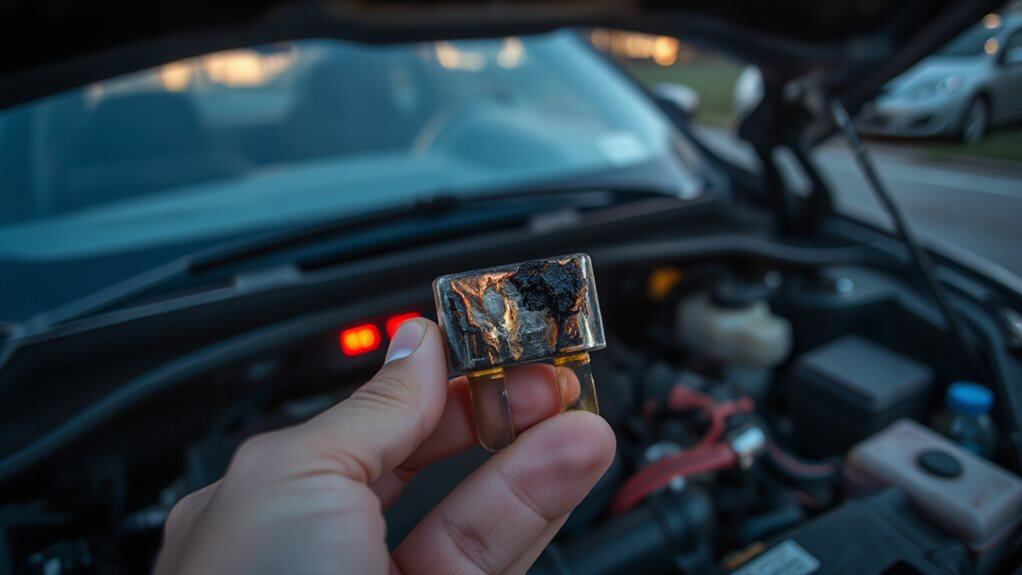
When a fuse blows in a critical engine‑management circuit, the vehicle can stall, refuse to start, or lose power to multiple systems all at once. You’ll notice the engine cutting out abruptly, the starter motor not cranking, and lights, radio, or wipers flickering. Repeated stalls after a fuse replace signal wiring shorts or damaged components, while burning odors or hot wires indicate severe overloads that demand immediate attention. Regular checks of cabin components and HVAC airflow, including the cabin air filter, can help detect related electrical or ventilation issues early.
When to Call a Pro and What the Repair Looks Like
Ever notice a fuse blowing right after you replace it, or a persistent burning smell drifting from the dash? Call a professional when the fuse fails instantly, after a battery swap, or when smoke appears; these signs point to short circuits or damaged wiring.
A technician will remove the fuse, inspect wires, test continuity with a multimeter, replace the correct‑amperage fuse, and, if needed, trace and repair the underlying fault.
Wrapping Up
If you notice flickering lights, a burnt odor, or repeated fuse failures, treat them as early warnings of an electrical fault. Inspect the fuse box, replace any damaged fuses, and trace the circuit to locate shorts before they cause engine stalls or total system loss. Regularly check wiring connections and avoid overloading circuits. When the problem persists or you can’t identify the source, seek a qualified mechanic to diagnose and repair the underlying issue safely.