
The F‑150 Styleside bed gives you a flat, 51.5‑inch interior width, roughly 7 inches wider than the Flareside’s 44.5‑inch width, which adds about 65.5 cu ft of cargo volume versus 59.5 cu ft for the Flareside. Internal fenders on the Styleside pull the wheel arches inward, creating a continuous floor that lets 4×8 lumber lie flat without overhang, while the Flareside’s external fenders reduce interior width and often require staggering or tilting bulky loads. Styleside’s boxy shape and flush sides simplify canopy installation, but the higher bed can create a reach gap that Flareside’s ribbed side steps help mitigate. Choose Styleside for maximum width and everyday utility, or Flareside if you need to haul long items and prefer classic styling. Keep reading to see which configuration best matches your hauling priorities.
Quick Tips
- Styleside bed width is about 51.5 in, roughly 7 in wider than Flareside’s 44.5 in, giving ~500 sq in more floor area.
- Styleside’s flat, internal fenders create a continuous cargo floor, while Flareside’s external fenders reduce interior width and add a tapered tailgate.
- Styleside accommodates full 4×8 sheets and wider loads without overhang; Flareside often requires staggering or tilting bulky items.
- Flareside includes ribbed side steps for easier side access, whereas Styleside’s flush sides lack built‑in access features.
- Aesthetically, Styleside offers a sleek, minimalist silhouette, while Flareside provides a classic, three‑dimensional look with pronounced external fenders.
Styleside vs Flareside: Matching Bed Shape to Your Hauling Needs
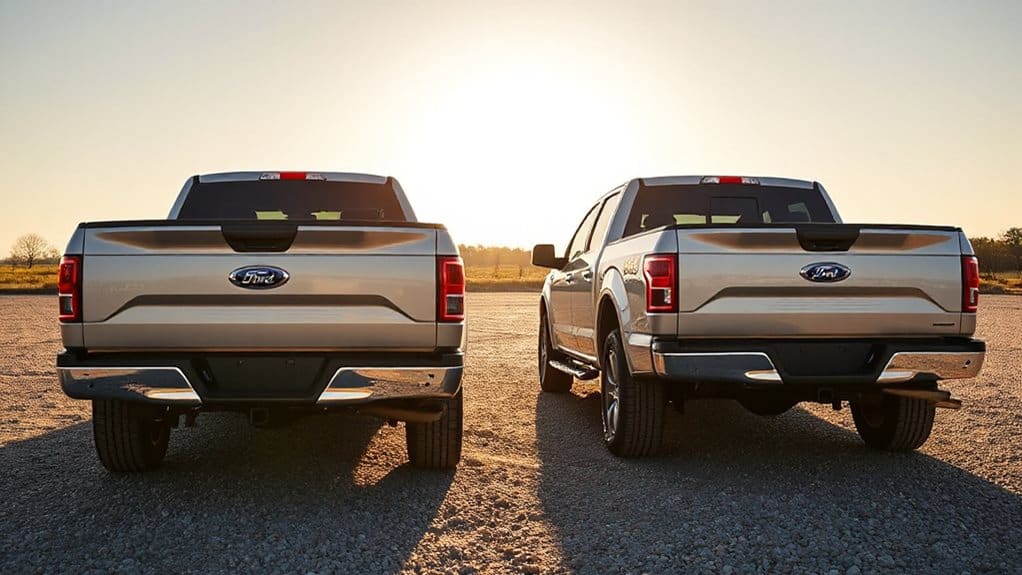
How does the shape of your truck bed affect what you can haul?
A Styleside bed spans the full cabin width, giving you a flat, uninterrupted floor that fits standard 4×8 lumber and larger items without narrowing.
In contrast, a Flareside bed tapers inward, reducing width near the tailgate, which limits oversized cargo but adds external fender flares and built‑in side steps for easier access.
Choosing the right shape aligns capacity with your specific hauling needs. The 12th‑gen F‑150 and Super Duty models only offer a Styleside configuration, reflecting the industry’s shift toward interior width.
Regular inspection and maintenance of bed hardware and fasteners help ensure safe hauling and prevent unexpected failures during use, especially when carrying heavy loads with regular inspection.
Styleside vs Flareside: How Internal Fenders Expand Cargo Width
You’ll notice that the Styleside’s internal fenders push the wheel arches inward, which adds several inches of usable width compared to a Flareside. This sidewall arch design creates a flatter, continuous floor that maximizes cargo space, allowing larger sheets or pallets to fit without obstruction.
In contrast, the external fenders on a Flareside occupy side room, narrowing the interior and reducing the effective payload width. Circuits should be sized so that total load does not exceed 80% of capacity to prevent overloads and potential hazards.
Internal Fenders Add Width
What makes a Styleside bed noticeably wider than a Flareside is the placement of its internal fenders. By integrating the fenders into the side walls, the Styleside creates arches that eliminate external wheel humps, freeing the cargo floor. This adds several inches of usable width, allowing wider loads and more versatile stacking, whereas the Flareside’s external fenders intrude on the floor space, limiting width.
Sidewall Arch Benefits
Ever notice how a Styleside’s cargo floor feels wider than a Flareside’s? The internal wheel arches sit inside the sidewalls, turning the arch into a functional fender that adds a few inches of usable width. Because the arch doesn’t protrude, you keep a flat, uninterrupted surface.
In contrast, the flareside’s external fenders occupy space outside the bed, narrowing the floor area and creating a slight step near each wheel. This internal design maximizes cargo width while preserving a clean, boxy sidewall shape.
Maximized Cargo Space
How does an internal fender design translate into more usable cargo width? By integrating wheel arches into the bed walls, the Styleside creates arched side sections that sit inside the flat‑sided exterior, eliminating external protrusions.
This adds seven inches of floor width, giving a 51.5‑inch bed versus the Flareside’s 44.5 inches. The extra space yields 500 sq inches more floor area and a six‑square‑foot volume increase, allowing wider loads and easier accessory fit.
Styleside vs Flareside: The Real-World Impact of a 2-Inch Per-Side Width Loss
You’ll notice that losing two inches on each side cuts the total cargo width by about four inches, which directly reduces the amount of material you can fit in a single layer and limits how many wide items—like lumber or large boxes—you can stack without overhang.
This narrower floor also changes loading flexibility; you may have to angle or stagger bulky loads to avoid hitting the side walls, and the reduced clearance can make it harder to slide in accessories such as bed liners or toolboxes that rely on the full width.
Finally, the external fenders on a flareside create protrusions that can interfere with aftermarket add‑ons, so you’ll need to check each accessory’s dimensions before purchase.
Regular inspection and maintenance can prevent unexpected issues, and keeping components dry helps avoid moisture ingress that might otherwise cause problems.
Cargo Capacity Reduction
What does a 2‑inch per‑side width loss actually mean for your cargo capacity? You lose roughly 500 sq in of floor space, dropping from 3,669 sq in (styleside) to 3,171 sq in (flareside).
Volume shrinks from 65.5 cu ft to 59.5 cu ft. The narrower bed still fits standard 4 × 8 sheets, but you’ll need tighter packing and can’t place items wider than 44.5 inches without overhanging.
Loading Flexibility Impact
Losing two inches on each side of the bed doesn’t just shrink the floor area; it also reshapes how you can load and arrange cargo. You’ll find the styleside’s uninterrupted width lets you place wide lumber, plywood, or equipment flat without overhang, while the flareside’s fenders force you to stagger or tilt items.
Stacking height stays consistent on flareside, but styleside’s arch reduces vertical space near the edges, so you must adjust load placement for optimal balance.
Accessory Compatibility Concerns
Two inches on each side may seem trivial, but it reshapes the entire accessory ecosystem for the F150. You’ll find standard drop‑in liners work only in Styleside beds, while Flareside demands custom liners because its exterior fenders cut the width to about 45 inches.
Tonneau covers, cargo rails, and full‑width toolboxes also favor Styleside’s smooth, uniform sides, whereas Flareside limits options to niche, narrower models, reducing universal compatibility by four inches total.
Styleside vs Flareside: Boxy vs Rectangular – Bed Length & Shape Explained
How do the boxy Styleside and the rectangular Flareside differ in bed length and shape? The Styleside offers a flat‑sided, boxy interior with 5.5‑ft (67.1 in), 6.5‑ft (78.9 in), or 8‑ft (97.6 in) floor lengths and a consistent 21.4‑in height, maximizing width.
The Flareside’s rounded fenders narrow the floor by about 2 in, tapering 2 in per side at the tailgate, which opens roughly 42 in wide, giving a slightly shorter, more tapered rectangular space. Regular inspections can help catch issues early, especially for electrical system connections that may affect vehicle reliability.
Loading 4×8 Lumber on Styleside Vs Flareside: Practical Tips
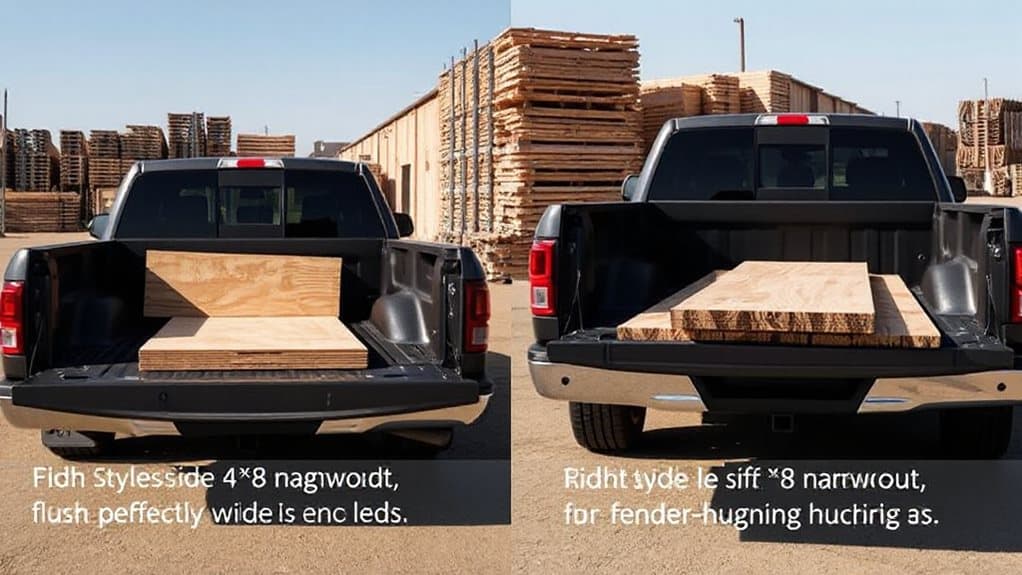
Wondering how to get a 4 × 8 sheet of lumber into a F‑150 without hassle?
On a styleside, slide the sheet flat against the smooth interior walls; use a bed liner to stop it from sliding on the arch.
On a flareside, lower the tailgate, stand the sheet on its edge, and pull it forward using the ribbed side steps for advantage.
Secure both with straps, placing them over the fenders for even weight distribution.
Also, check and maintain the bed liner to prevent movement and protect the truck bed.
Styleside vs Flareside: Side-Step Access Benefits of Ribbed Steps
What makes the ribbed side‑steps on a flareside F‑150 so useful? They give you solid grip, preventing slips even in mud, and let you step onto the bed from ground level without climbing. Two steps per side provide intermediate footholds, reducing reach and strain for taller users. The steps attach to the flared fenders, preserving interior cargo space while adding structural strength and safe, efficient loading. Such durable components are often made from materials designed to resist wear and provide long-lasting performance.
Styleside vs Flareside: Overcoming Reach Challenges on Higher Styleside Beds
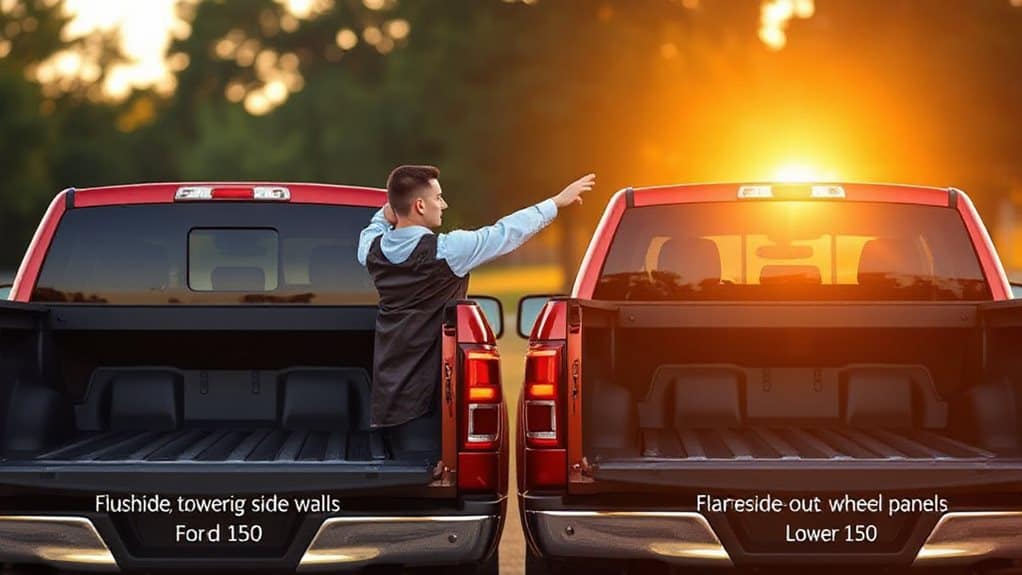
Ever since the 2004 model year, Ford raised the floor of the Styleside bed to accommodate larger wheel arches, and that extra height creates a noticeable reach gap for anyone loading or unloading cargo from ground level. Flareside’s ribbed side steps bridge that gap, giving you direct side access and reducing the need to climb on the bed. The steps align with the fenders, allowing a smoother, safer reach for tall users and long items, while the Styleside’s flush sides lack this advantage, making higher beds harder to access without ladders or extra equipment.
Aesthetic Appeal: Modern Styleside vs Retro Flareside on the Ford F-150
The reach‑gap issue that makes higher Styleside beds harder to access also influences how each bed style looks, because the design choices that solve the gap affect the truck’s overall silhouette.
Modern Styleside presents smooth, uniform sides, integrated fenders, and a sleek, minimalist profile that feels contemporary and practical.
Retro Flareside showcases pronounced external fenders, sculpted hips, and angled flares, giving a classic, three‑dimensional character that appeals to enthusiasts.
Both designs balance aesthetics with functional considerations.
Pick the Bed That Fits Your Lifestyle and Hauling Priorities
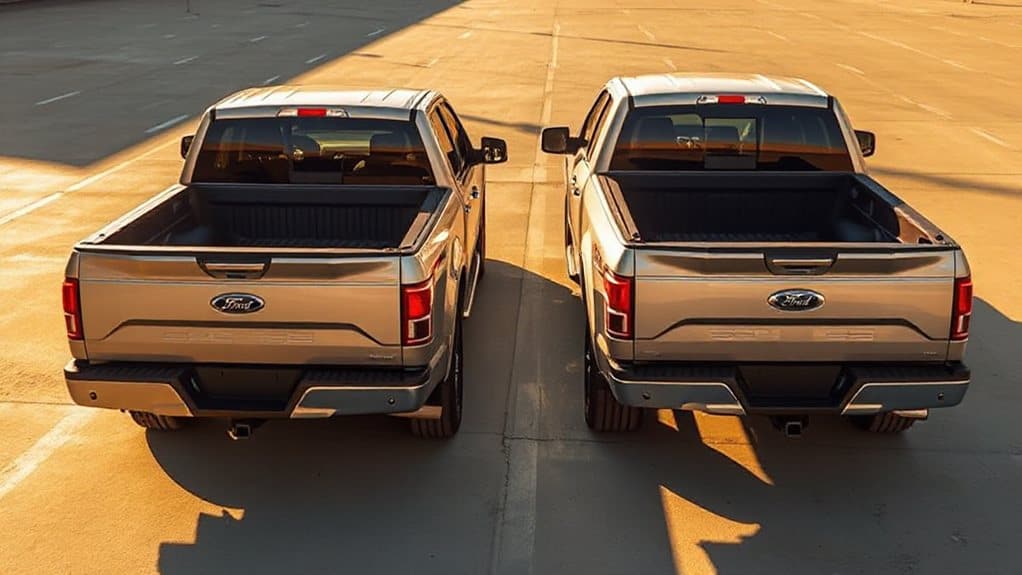
Choosing the right bed hinges on how you use your F‑150 and what you haul most often. If you need maximum width for bulky gear, a styleside gives you a flat, wider floor, easier canopy installation, and better daily utility. If you transport long lumber, sheet metal, or prefer classic styling, a flareside’s rectangular shape and side steps suit those priorities despite narrower width. Select the configuration that matches your regular load dimensions and accessory needs.
Wrapping Up
Choose the bed that aligns with your hauling profile. If you need maximum cargo width, a flareside’s wider fenders give you an extra two inches per side, which matters for bulky items. A styleside offers a lower step‑up height and easier side‑step access, but its narrower width may limit larger loads. Consider bed length, shape, and your typical load dimensions before deciding, ensuring the truck meets both functional and aesthetic preferences.