
You’ll find that Chevrolet Silverado’s Active Fuel Management (AFM) deactivates cylinders 1, 4, 6, and 7 by shutting their intake and exhaust valves with oil‑pressured lifters and a cam phaser, letting the V8 run as a V4 under light load. Early signs include a cold‑start ticking noise, rough idle, or misfire codes like P3400, often caused by lifters collapsing and locking down. When a lifter fails, the pushrod can bend, side‑loading the camshaft and accelerating wear, which may lead to costly repairs. The issue is most common on 2007‑2010 and 2014‑2021 5.3 L models, and GM typically issues service bulletins rather than a recall because the defect isn’t deemed safety‑critical. If you keep exploring, you’ll discover diagnostic steps, DIY deletion options, and warranty considerations.
Quick Tips
- AFM deactivates cylinders 1, 4, 6, 7 at ≤2000 RPM, using oil‑controlled lifters and a manifold to close intake/exhaust valves.
- Common symptoms include rough idle, hesitation, misfire codes (P3400, P3425), and ticking noises that fade as the engine warms.
- Faulty lifters, cam phasers, or a dirty oil control valve can lock valves, leading to bent pushrods and accelerated camshaft wear.
- Diagnosis requires scanning for AFM codes, inspecting lifters, OCV, wiring harnesses, and verifying oil quality and level.
- Early intervention—replacing lifters or cleaning components—prevents costly drivetrain damage and improves fuel economy.
Understand How AFM Turns a Silverado V8 Into a V4
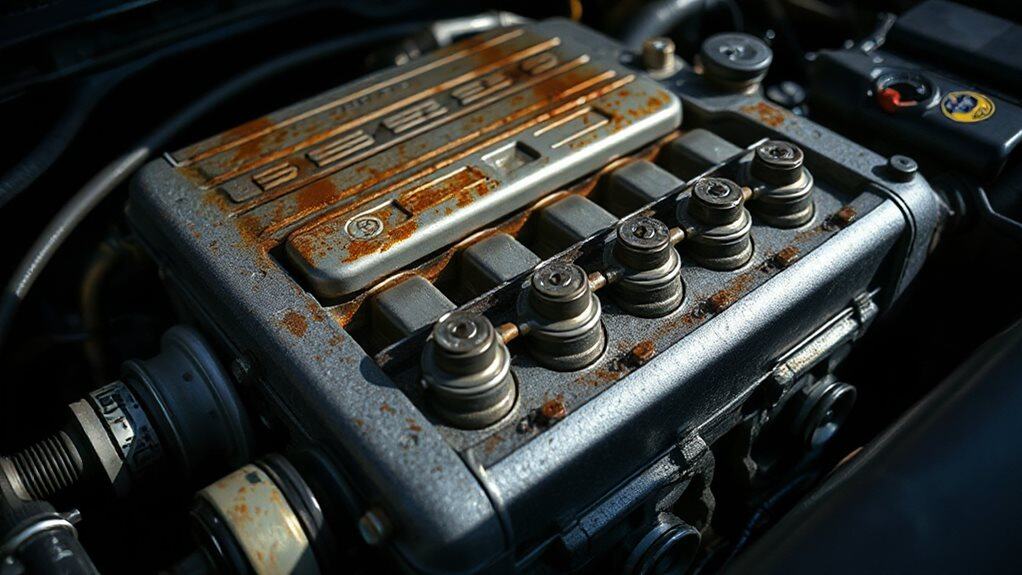
How does AFM actually turn a Silverado V8 into a V4? You’ll notice the ECM monitors speed and load, then deactivates cylinders 1, 4, 6, 7 by closing their intake and exhaust valves. Specialized lifters and an oil manifold enable this shut‑off. When cruising below 2000 RPM, the engine runs in V4 mode, saving fuel; pressing the accelerator reactivates all eight cylinders for full power. Real‑world gains are typically around 5% rather than the advertised 12%. Modern jump starters with high peak amperage ratings can help ensure reliable cold-weather starts for vehicles like the Silverado.
Identify Early AFM Warning Signs (Ticking, Rough Idle, Misfire Codes)
When you hear a cold‑start ticking noise that fades as the engine warms, it’s often the AFM lifters collapsing during deactivation, especially under low‑load cruising.
A rough idle that vibrates at stoplights, combined with misfire codes like P3400 or P3425, indicates uneven V4‑to‑V8 transitions and possible intake valve control faults.
Watching for rising oil consumption alongside these symptoms can help you catch AFM failures before they cause serious engine damage.
Dyno tuning can help verify performance losses and optimize engine parameters after AFM repairs by measuring power and making adjustments to air-fuel ratio and timing.
Cold‑Start Ticking Noise
What you hear as a rapid, rhythmic ticking when a Chevy Silverado V8 first cranks is often the first clue that the Active Fuel Management (AFM) system is struggling. Cold oil delays, pressure lif, or debris can cause lifters to stick or collapse, producing the ticking. In low temperatures, lubrication worsens, amplifying the sound. Listen for persistence beyond thirty seconds; that signals AFM‑related lifter failure, not normal startup noise.
Rough Idle & Misfire Codes
After the ticking fades, the engine often settles into a rough idle that signals the Active Fuel Management (AFM) system is having trouble. You’ll notice misfire codes on cylinders 2, 4, 6, and sometimes 1 or 7, especially under light load. Dirty throttle bodies, MAF sensor fouling, or collapsed lifters can cause these irregularities. Scan tools reveal P0073 and P0097 sensor faults, confirming AFM‑related roughness.
Rising Oil Consumption Trends
Ever notice a faint ticking that grows louder as your Silverado ages? That tick often precedes oil‑burning spikes.
After 30 k‑50 k miles, AFM lifters may collapse, causing oil loss of 2‑3 quarts per 5 k miles—well above Chevrolet’s 1‑quart/2 k‑mile limit.
Watch for rising consumption after 30 k miles; it signals deactivation problems and impending engine work.
Which Silverado Years & Engine Codes Fail AFM Most?
Which Silverado model years and engine codes are most prone to Active Fuel Management (AFM) failures? You’ll find the 2007‑2010 5.3 L models, especially early L83 engines, report the highest lifter failures between 50 k‑90 k miles. The 2014‑2018 L83 5.3 L (EcoTec3) and 2015‑2017 peak years also suffer heavily, despite redesigns. Finally, 2019‑2021 5.3 L Ecotec3 engines continue to show frequent AFM problems. Moisture and corrosion in affected components can exacerbate AFM-related failures, particularly in vehicles used in humid or salty environments moisture ingress.
How Collapsed Lifters Cause Bent Pushrods & Cam Damage
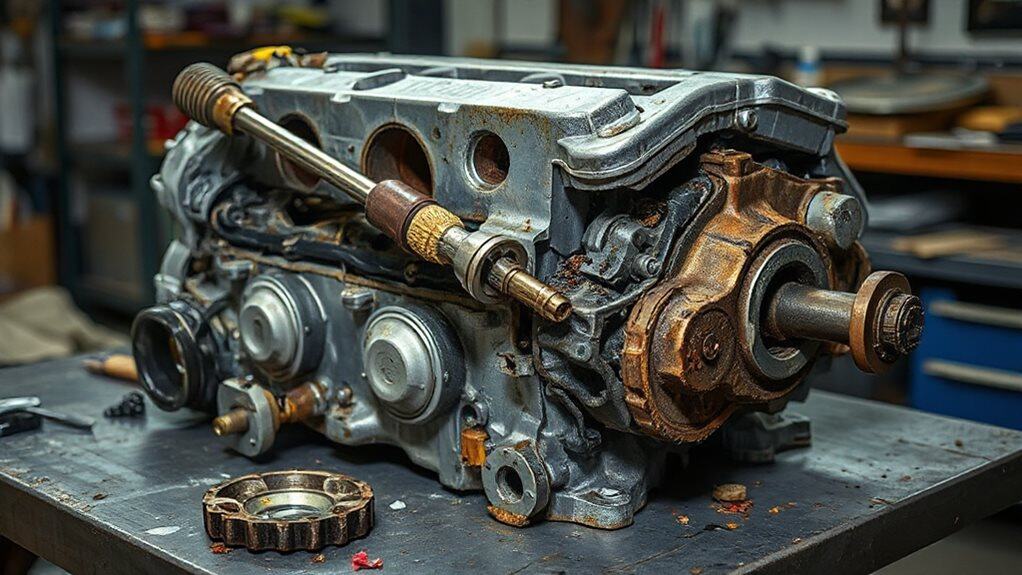
When a collapsed lifter locks in the down position, the pushrod can’t move and the engine forces it to bend as it tries to re‑engage the valve train.
This bending creates abnormal side‑loading on the camshaft lobes, which accelerates wear and eventually pits or flattens the cam surface.
The resulting chain reaction—locked lifters, bent pushrods, and camshaft damage—can lead to misfires, reduced power, and costly repairs.
Electrical control modules like the TIPM can indirectly contribute to such failures by causing erratic engine operation and starting issues that stress moving components, particularly when intermittent starter control disrupts normal engine cycles.
Collapsed Lifters Locking
Why do collapsed lifters lock and then damage pushrods and camshafts? When a lifter sticks in its collapsed state, oil pressure can’t move the plunger, so the lifter seizes against the cam lobe. This metal‑to‑metal contact creates shavings that circulate, scoring the cam surface and preventing pushrod motion. The locked lifter also halts valve actuation, causing zero compression and increasing stress on adjacent components.
Pushrod Bending Mechanics
How does a collapsed lifter turn a pushrod into a bent, damaged component? When a lifter over‑pressurizes, the valve travels too far and hits the piston, sending a sudden force down the pushrod. That impact creates resonance, vibrating the 9‑inch rod and causing uneven bending. Repeated impacts, especially at cold start or idle, permanently deform the rod and can also warp the cam.
Camshaft Wear Propagation
What happens after a lifter collapses is that the camshaft lobe immediately begins to grind against a stationary surface, and that contact sets off a chain reaction of wear.
The stuck lifter forces the cam lobe into metal‑on‑metal contact, rapidly scoring the lobe and loading the pushrod.
The pushrod bends, the bearing wear spreads, and oil contamination accelerates further cam damage, eventually disabling the cylinder.
Why GM Issues Bulletins but No AFM Recall?
Typically, GM chooses to issue service bulletins instead of a full AFM recall because the underlying problems don’t meet the regulatory threshold for a safety‑related defect. You’ll find that bulletins let GM target lifter failures with specific swaps or oil upgrades, avoiding the massive cost of recalling millions of engines.
Recalls, by contrast, require proven crash‑risk defects, which AFM issues haven’t demonstrated. This approach keeps repairs under warranty while limiting legal exposure.
DIY or Pro? AFM Deletion, Lifter Replacement, Engine Rebuild
Ever wondered whether you should tackle an AFM deletion, lifter swap, or even a full engine rebuild yourself or leave it to a professional? A DIY AFM delete uses an OBD‑II tuner, plugs in, and disables the system, but may cost 1–2 MPG.
Pros handle full kits, prevent error codes, and replace cam/lifters.
DIY lifter replacement needs valve‑cover removal and compressed‑air extraction, while professionals diagnose with scan tools and swap components.
Rebuilds address oil consumption and cam failures, extending life with proper oil changes.
A common related issue is that electrical faults and sensor problems — such as a faulty door ajar sensor causing false warnings — illustrate why pros diagnose wiring and sensors when addressing engine work.
Long‑Term AFM Protection: Warranties, Lawsuits, and Safer Engines
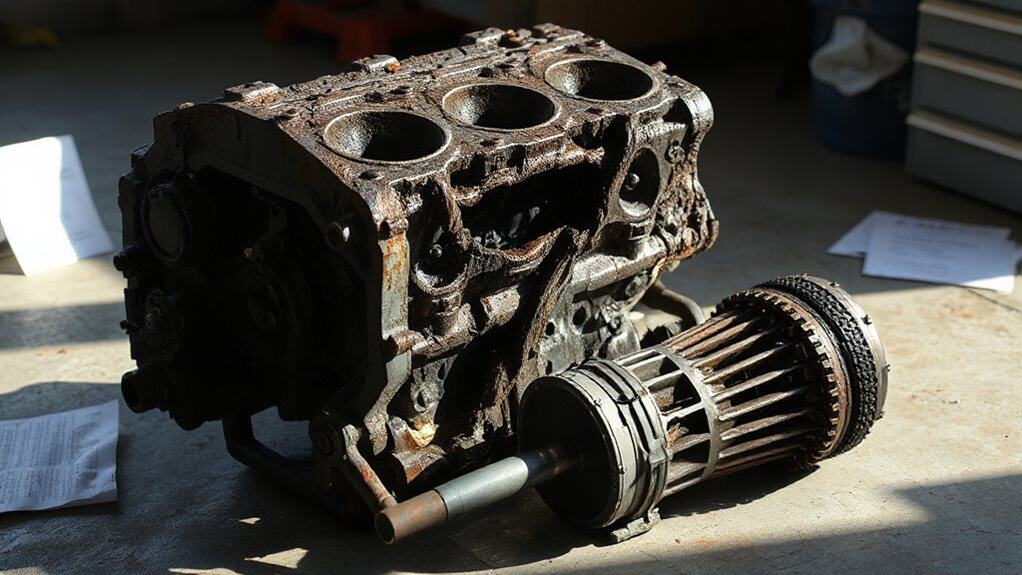
How long can you count on your Silverado’s warranty when Active Fuel Management (AFM) starts to fail? You have three years or 36,000 miles bumper‑to‑bumper, and five years or 100,000 miles for the powertrain. Special fuel‑injector coverage may extend to ten years/150,000 miles in certain states, but missed maintenance voids claims.
Disabling AFM can risk denial, yet some dealers honor it. Litigation continues over inconsistent warranty handling. If AFM-related failures lead to additional repairs, be aware that contaminated or damaged components—such as seals or hydraulic parts—may require cleaning or replacement, and should be addressed promptly with proper brake cleaner and inspection.
Wrapping Up
By understanding AFM’s operation, spotting early symptoms, and knowing which model years and engine codes are most vulnerable, you can prevent costly damage. Replacing collapsed lifters, repairing bent pushrods, and addressing cam wear before they fail preserves engine integrity. Although GM hasn’t issued a recall, bulletins and warranties offer guidance; consider professional service for major repairs. Regular maintenance and vigilant monitoring remain the most reliable defenses against AFM‑related failures.


