
You’ll find that both the 210 and Bel Air share a 115‑inch wheelbase, 58‑inch front track, and the same I6‑to‑V8 engine progression, but the Bel Air stands out with premium exterior trim—anodized ribbed rear‑triangle accents, gold‑finished tail‑fin louvers, and two‑piece side trim with color inserts—plus upscale interior touches like plush carpeting, chrome dash accents, and optional power accessories. These refinements position the Bel Air as Chevrolet’s flagship and drive its higher collector value, while the 210 remains a simpler, more affordable model; continue for deeper details.
Quick Tips
- Bel Air features premium trim—anodized ribbed rear‑triangle, gold tailfin louvers, longer tailfin and two‑piece side trim with color inserts—while the 210 uses painted ribbed trim and chrome louvers.
- Both share a 115‑inch wheelbase, 58‑inch front track and identical engine options, progressing from a 235‑cu in I6 to later 265‑ and 283‑cu in V8s.
- Interior positioning differs: Bel Air offers plush carpeting, top‑steering wheel, chrome dash accents, and optional power accessories; the 210 lacks chrome scripts and has a simpler dash.
- Body‑style lineups are similar, but Bel Air adds chrome belt moldings, windshield/rocker trims, bright rear guards and later full‑width grilles, whereas the 210 emphasizes modest exterior detailing.
- Collectibility and pricing diverge: Bel Air averages around $70 K at auction with higher premiums, while the 210 averages about $51 K and benefits from abundant stock parts; VIN prefixes (C for Bel Air, B for 210) help verify authenticity.
Chevrolet 210 vs. Bel Air: Quick Comparison Table
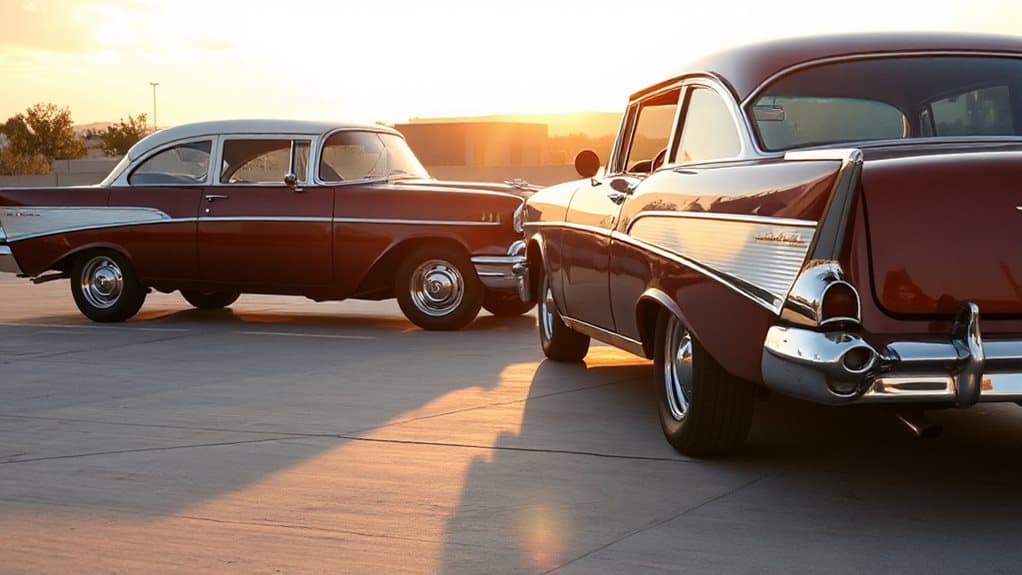
How do the 210 and Bel Air differ at a glance? The table lists exterior trim, body styles, engines, chassis, and identification. The 210 shows painted ribbed trim, chrome louvers, and single‑piece side trim; the Bel Air uses anodized ribbed trim, gold louvers, longer tailfin trim, and two‑piece side trim with color inserts. Both share a 115‑inch wheelbase, 58‑inch front track, and identical engine options, but VIN prefixes differ: A for 150, B for 210, C for Bel Air. The Bel Air’s gold louvers are anodized, while the 210’s are chrome‑like. Many restorers also note that headers vs downpipes affect exhaust fitment and performance.
Why the Bel Air Was Chevrolet Premium Choice (Model Positioning)
The comparison table just showed how the 210’s exterior trim and chassis match the Bel Air’s, but the real distinction lies in how Chevrolet positioned the Bel Air as its premium offering. From 1950 to 1954 the Bel Air sat at the top of the Deluxe Styleline, then became the flagship Styleline in 1953. It featured wider chrome strip molding, full wheel covers, plush carpeting and a top‑steering wheel, plus optional power locks, windows and air conditioning, marking it as the upscale choice. Excessive clutch plate slippage can create heat and emit a burning odor, a sign of overheating friction material.
Exterior Trim Highlights – 210 vs. Bel Air
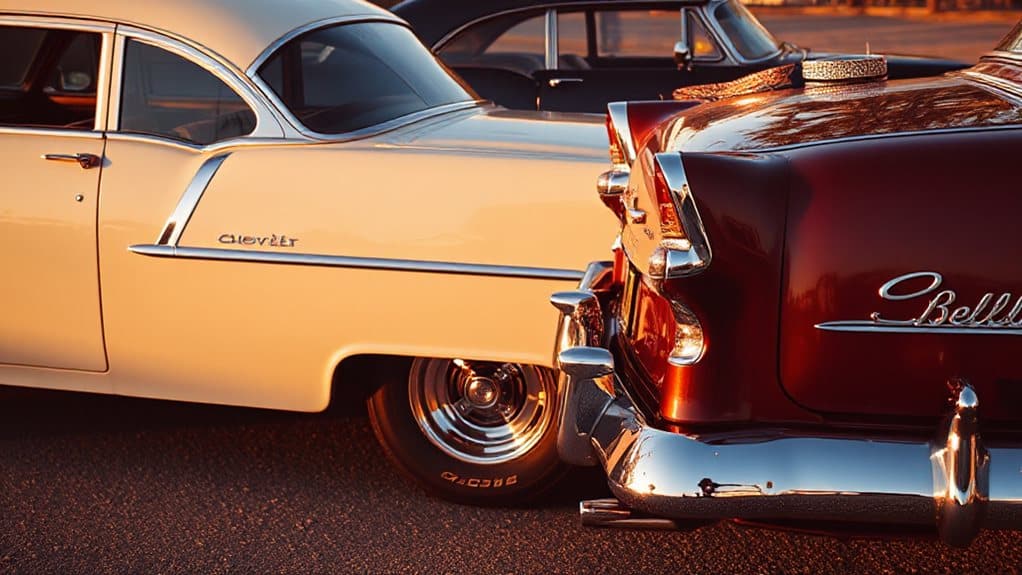
What really sets the 210 apart from the Bel Air is the level of exterior trim detail each model receives. The Bel Air sports anodized ribbed rear‑triangle trim, gold tailfin louvers, and stainless‑steel wedge accents, while the 210 uses painted trim, chrome louvers, and painted or two‑tone wedge panels with a Chevrolet script. Both share stamped aluminum grilles, but the Bel Air adds extra stainless moldings for a premium look. Proper installation and documentation can help preserve warranty coverage when making aftermarket changes, especially for components like headers.
Interior Feature Comparison – Materials & Gold Accents
Ever notice how the Bel Air’s cabin feels richer than the 210’s? You’ll see the Bel Air’s dash wrapped in optional chrome, a steering wheel with a full chrome horn ring, and interior stripes painted body color, while the 210’s dash stays painted and lacks chrome scripts. Gold‑like accents appear as chrome headliner bands and stainless steel window moldings on the Bel Air, but the 210 uses plain trim without such embellishments. The Bel Air’s attention to trim detail creates a more luxurious feel, similar to how choosing high-quality fuel can preserve a vehicle’s finish and performance over time.
Body‑Style Lineup for 1953‑57 210 and Bel Air
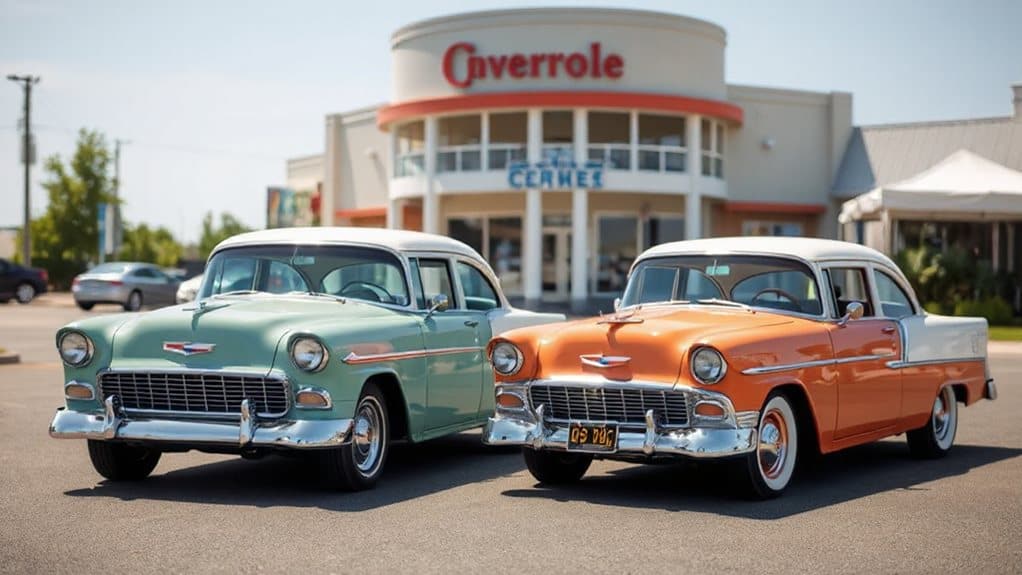
Where did Chevrolet’s 1953‑57 lineup diverge between the 210 and the Bel Air? You’ll see the 210 offered a 2‑door sedan, a 4‑door sedan (the most produced), a Club Coupe, a short‑run convertible, and 6‑ or 8‑passenger wagons.
The Bel Air shared those bodies but added premium trim: chrome belt moldings, windshield and rocker trims, bright rear guards, and later, full‑width grilles, two‑tone sides, and gold‑anodized accents.
Loctite threadlockers typically set in about 10 minutes and fully cure in 24 hours, which is important to remember when restoring or reassembling vintage cars and fasteners that may receive threadlocker during maintenance.
Engine Options Shared by 210 and Bel Air
How did Chevrolet’s powertrains evolve across the 210 and Bel Air from 1953 to 1957? You start with the 235‑cu in Blue Flame I6, an OHV six delivering 123 hp (manual) or 125 hp (Powerglide automatic). In 1955‑56 both models gain the 265‑cu in Turbo‑Fire V8 (162 hp base, 205 hp Power Pack). By 1957 the 283‑cu in Super Turbo‑Fire V8 appears, ranging from 185 hp to 283 hp with carburetion or fuel injection. All engines pair with three‑speed manual or optional Powerglide automatic. Ignition components like the ignition coil for cylinder 3 (often called Ignition Coil C) should be inspected for signs of failure such as misfires or rough idling.
Collector Appeal: Rarity and Desirability of Each Model
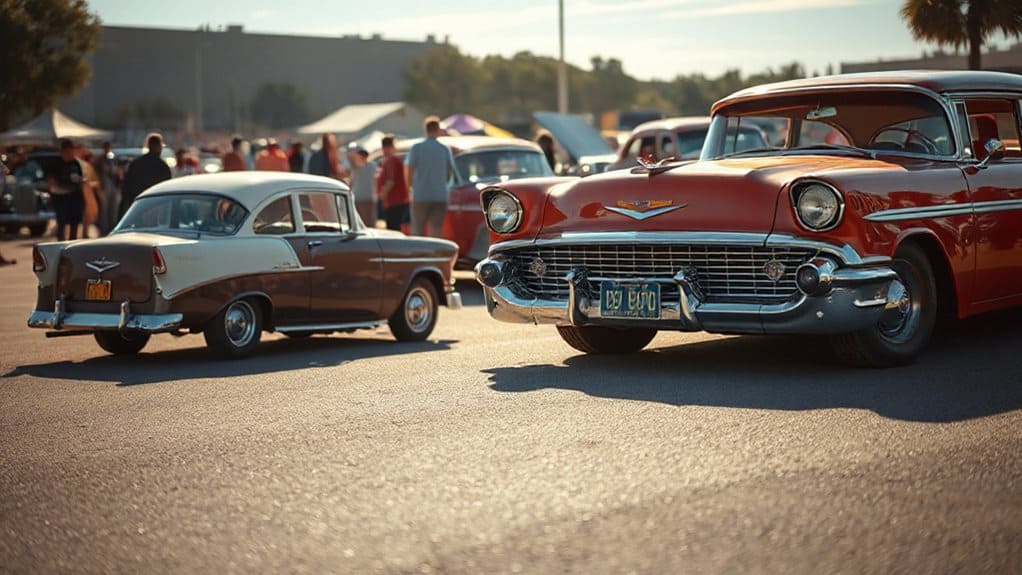
What makes the 1955‑57 Chevrolet 210 and Bel Air so attractive to collectors? The Bel Air’s top‑shelf trim, limited hardtop production, and iconic V‑8 make it rarer and drive auction highs, often exceeding $70 k.
The 210, produced in larger numbers, offers abundant stock parts, lower entry prices, and strong aftermarket support, appealing to resto‑mod enthusiasts and practical restorers alike.
Original 1950s Pricing vs. Modern Collector Value
Ever wondered how the 1950s price tags of the Chevrolet 210 and Bel Air compare to today’s collector market? In the early ’50s the 210 sold for roughly $1,700, while the Bel Air ranged from $1,740 to $2,600. Modern auctions push 210 averages to $51,000, but Bel Air averages $70,000, preserving a $19,000 premium. First‑year models and the Nomad wagon command the highest premiums.
How to Verify Authenticity – VIN and Trim Tags
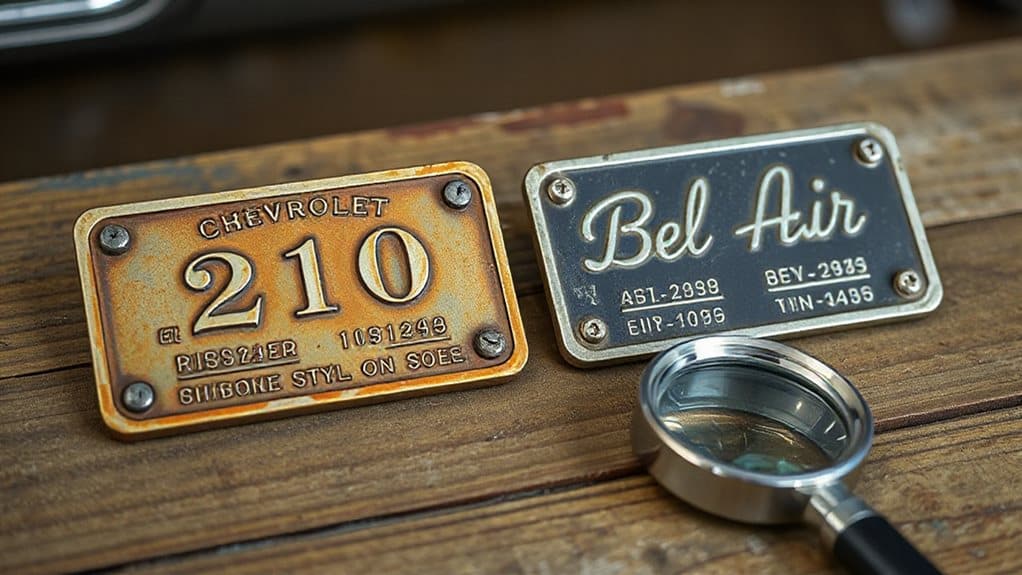
First, locate the VIN on the dashboard or door jamb and note its ten characters; the second character tells you the series—“B” for a 210, “C” for a Bel Air—while the first character indicates the engine type and the third and fourth digits give the model year (55, 56, or 57).
Then compare the VIN’s second‑character “B” or “C” with the trim tag’s style code prefix “10” for 210 or “10” plus a “D” suffix for Bel Air, confirming the body‑style digits and year code match the VIN’s details.
Bottom Line – Which Model Fits Your Classic‑Car Goals?
You’ll need to weigh your budget against the styling you want, because the 210’s simpler trim and fewer expensive parts keep costs low, while the Bel Air’s premium gold accents and longer fins add price but also visual impact.
If you’re aiming for collectibility and future investment, the Bel Air’s higher‑end interior patterns and distinctive chrome‑to‑gold upgrades generally command stronger resale values, whereas the 210 offers solid value for buyers who prioritize affordability over top‑tier aesthetics.
Ultimately, the model that aligns with your classic‑car goals depends on whether you prioritize initial expense, visual flair, or long‑term market appeal.
Budget Priorities vs. Styling
So, should you prioritize budget or styling when choosing between the Chevy 210 and the Bel Air?
The 210 keeps costs low with painted trim, modest louver chrome, and a six‑cylinder base engine, while the Bel Air adds anodized ribbed trim, gold louvers, longer tail‑fin accents, and a premium V8 option.
If your budget leans toward essentials, the 210 fits; if you value upscale aesthetics, the Bel Air justifies its higher price.
Collectibility and Investment Potential
Which model aligns best with your classic‑car goals depends on how you weigh rarity, resale potential, and maintenance costs. Bel Air’s limited production, premium trim, and higher auction prices elevate appreciation and resale value, but parts are pricey and scarce.
The 210’s greater volume, simpler trim, and lower entry price lower ownership costs, yet it appreciates slower and appeals to budget‑focused collectors.
Choose based on whether you prioritize maximum investment return or affordable, reliable ownership.
Wrapping Up
Pick you’re after classic‑car authenticity, the Bel Air delivers premium styling, higher‑grade interior trim, and greater collector rarity, while the 210 offers a more affordable entry point and simpler maintenance. Choose the Bel Air if you value historical prestige and resale potential; opt for the 210 when budget constraints and ease of restoration dominate your goals. Both models share core Chevrolet engineering, so verify VINs and trim tags to confirm originality before purchase.