You should replace the fuel filter at the interval your owner’s manual lists—generally every 30,000‑50,000 miles for gasoline engines and 10,000‑25,000 miles for diesel. Adjust this schedule if you drive in dusty, gravel‑filled, or low‑fuel‑level conditions, because those environments accelerate wear. Some manufacturers offer “lifetime” filters, but they’re usually tied to the fuel pump assembly and still benefit from periodic inspection. Ignoring the schedule can cause misfires, rough idle, or low fuel pressure, so follow the recommended mileage and keep an eye on symptoms. Continue for, and you’ll discover practical steps to replace the filter yourself.
Quick Tips
- Follow the interval in the owner’s manual; gasoline cars usually 30‑50 k mi, diesel 10‑25 k mi.
- Adjust the schedule for harsh conditions: dusty roads, gravel, low‑fuel habits, or poor‑quality fuel.
- Lifetime filters are replaced only when the fuel pump assembly is serviced; otherwise replace at the recommended mileage or years.
- Watch for symptoms like misfiring, rough idle, stalling, or a check‑engine light indicating low fuel pressure.
- Replace the filter by depressurizing the system, noting flow direction, using a fresh O‑ring, and checking for leaks after installation.
Identify Your Vehicle’s Recommended Fuel Filter Replacement Interval
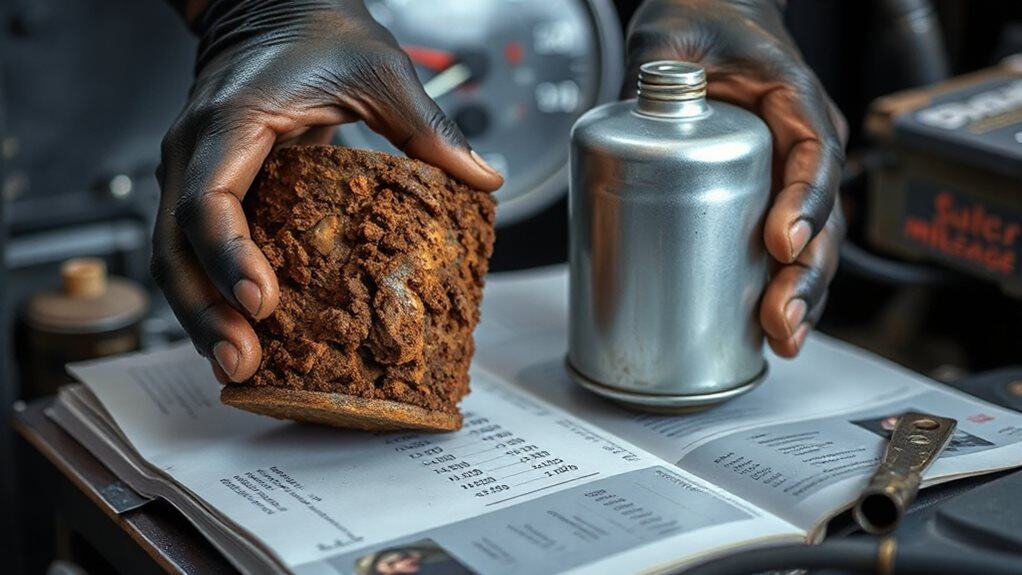
Where do you start when figuring out how often to replace your fuel filter? Check your owner’s manual first; it lists the manufacturer‑specified interval for your make and model. Gasoline cars usually need changes every 30,000–50,000 miles, though some modern engines stretch to 60,000 miles. Diesel engines demand more frequent swaps, typically every 10,000–25,000 miles. If your vehicle has a “lifetime” filter, it’s replaced only with the fuel pump assembly. Driving conditions can accelerate wear, so adjust the interval if you frequently drive in dusty or polluted environments. Suspension and tire issues can also cause noticeable vehicle instability while driving, so have the chassis inspected if you feel excessive rocking while driving.
Understand How Driving Habits Shorten Fuel Filter Replacement Life
How often you drive in dusty, polluted, or low‑fuel conditions can dramatically shorten the life of your fuel filter.
When you travel on gravel roads, sediment and rust particles enter the tank, clogging the filter faster than the usual 20,000‑40,000‑mile interval.
Low‑fuel habits stir up tank sludge, while poor‑quality fuel adds dirt and rust, both accelerating wear.
Older, high‑mileage vehicles also feel these effects, requiring earlier replacements.
A faulty door ajar sensor can also cause unrelated electrical gremlins that may make diagnosing fuel system issues harder.
Compare Manufacturer Fuel Filter Replacement Recommendations
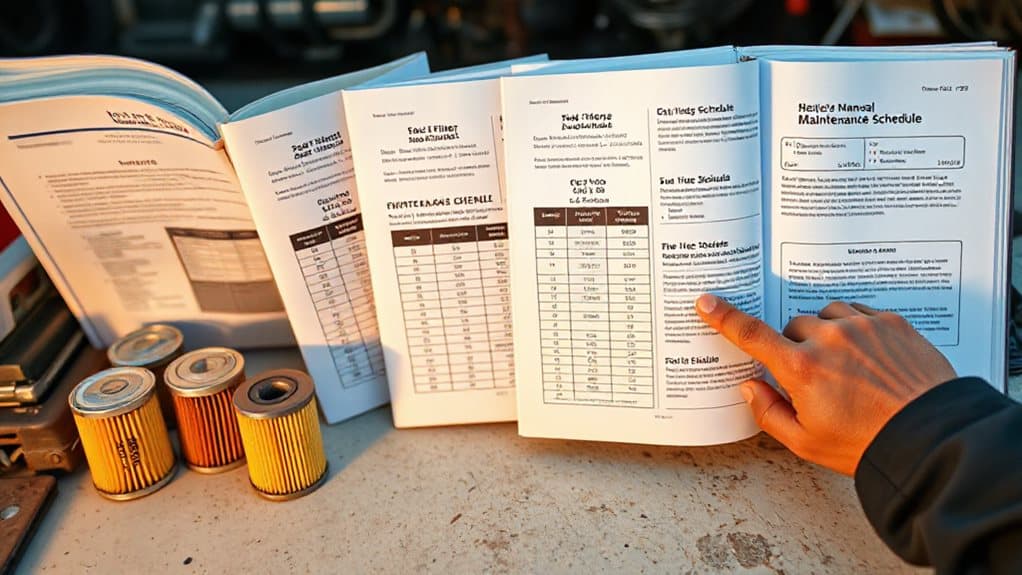
Dusty roads and low‑fuel habits can wear a filter faster, but the next step is to see what the manufacturers themselves prescribe.
Gasoline makers typically suggest 20,000‑40,000 mi, with some models using lifetime‑type filters.
Diesel makers often recommend two‑year or 15,000‑30,000 mi intervals, especially for Cummins 6.7 and heavy‑duty trucks, while marine specs cap service at two years regardless of vacuum readings.
Consider also that switching to high‑quality fuel and regular inspections can help extend filter life and prevent engine issues.
Detect Clogged Fuel Filter Symptoms Early
If your engine keeps misfiring or hesitating when you press the accelerator, it’s often a sign that the fuel filter is restricting flow. You’ll also notice rough idle, frequent stalling at low speeds, and difficulty starting the vehicle, especially when it’s cold. These symptoms point to low fuel pressure caused by a clogged filter, so checking for them early can prevent more serious engine damage. The 3-valve Triton typically produces more power and torque than the 2-valve version, which can affect fuel delivery requirements and diagnosis.
Ign Engineying Starts
Why does your car sometimes struggle to start, especially after it’s been sitting for a while? A clogged fuel filter reduces pressure, so the pump must work harder, causing long cranking and weak ignition. You may hear a high‑pitched whining from the tank during key‑on. The check‑engine light can flash, indicating low fuel pressure or misfires. These signs point to restricted fuel flow that hampers starting.
Rough Idle & Stalling
After a car that struggles to start, the next warning sign often appears while the engine is running: a rough idle and unexpected stalling.
A clogged fuel filter restricts fuel flow, causing low pressure, lean mixtures, and intense vibrations at stops. You’ll notice the engine lurch, misfire, or stall when idling or accelerating.
Check pressure, monitor vibrations, and replace the filter promptly to avoid damage.
Replace Your Fuel Filter: Step‑by‑Step Instructions
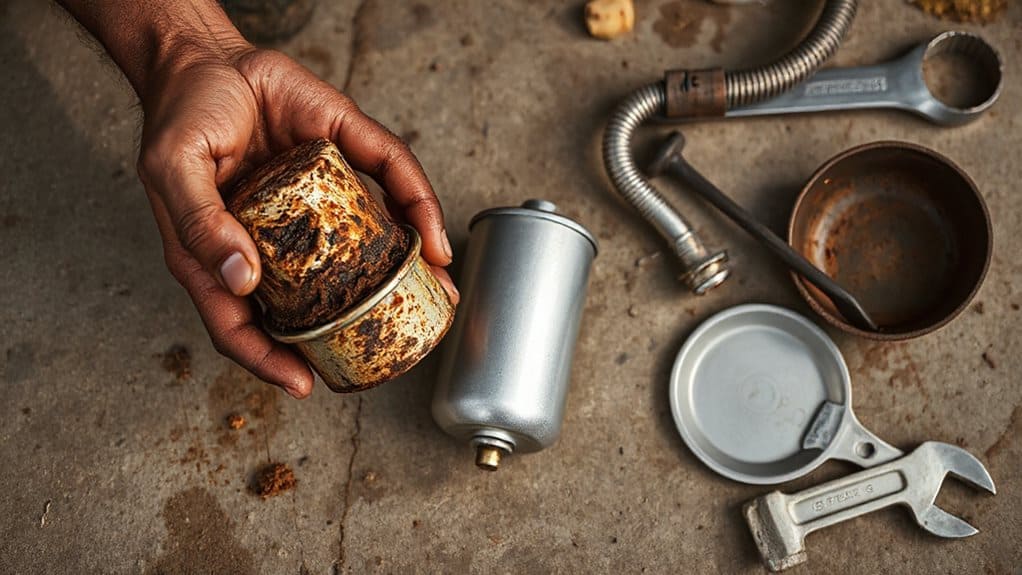
How do you safely replace a fuel filter? Park on level ground, engage the brake, and jack the car if needed. Depressurize the system by removing the pump fuse, run the engine until it stalls, then reinstall the fuse. Position a drip pan, loosen fuel lines with wrenches, and remove the old filter. Check flow direction, install the new filter with a fresh O‑ring, tighten clamps, reinstall the fuse, start the engine, and inspect for leaks. OBS trucks are valued for their Old Body Style robustness, which can make fuel filter access and maintenance simpler on many models.
Extend Fuel Filter Replacement Life With Proven Maintenance Tips
Replacing a fuel filter is only part of keeping your fuel system healthy; maintaining the surrounding conditions can stretch the filter’s service life dramatically.
Fill the tank above a quarter to avoid sediment suction, use high‑grade fuel from reputable stations, and inspect pressure and discoloration regularly.
Clean the filter with spray when minor fouling appears, dry it fully, and reinstall with anti‑corrosion lubricant.
Follow manufacturer intervals, but adjust for poor‑quality fuel regions.
Choose the appropriate component ratings and construction, such as tire speed ratings, to ensure overall vehicle reliability and handling.
Wrapping Up
By sticking to the manufacturer’s recommended interval—typically every 20,000‑30,000 miles—you’ll keep the fuel system clean and avoid costly engine issues. Adjust the schedule if you drive in dusty conditions or haul heavy loads, as these habits accelerate filter clogging. Watch for symptoms like rough idle or loss of power, and replace the filter promptly using the step‑by‑step guide. Regular maintenance, combined with proper fuel quality, maximizes filter life and ensures reliable vehicle performance.