To drive safely in dense fog, guarantee your vehicle is well-prepared by checking headlights, fog lights, brakes, tires, and windshield wipers. Use low-beam headlights and fog lights to improve visibility without causing glare, and keep taillights on low-beam. Follow road lines and markers closely, maintaining a safe distance from other vehicles. If visibility drops severely, pull over, activate hazard lights, and stay inside. Continuing will provide detailed steps to steer effectively in poor conditions.
Quick Tips
- Turn on low-beam headlights and fog lights to improve visibility and reduce glare for yourself and others.
- Maintain at least a four-second following distance to allow ample reaction time.
- Follow road markers, reflectors, and lane lines to stay in the correct lane.
- Reduce speed and avoid sudden maneuvers when visibility is limited.
- Pull over safely, turn on hazard lights, and wait until conditions improve if visibility becomes extreme.
Get Your Car Ready for Foggy Weather
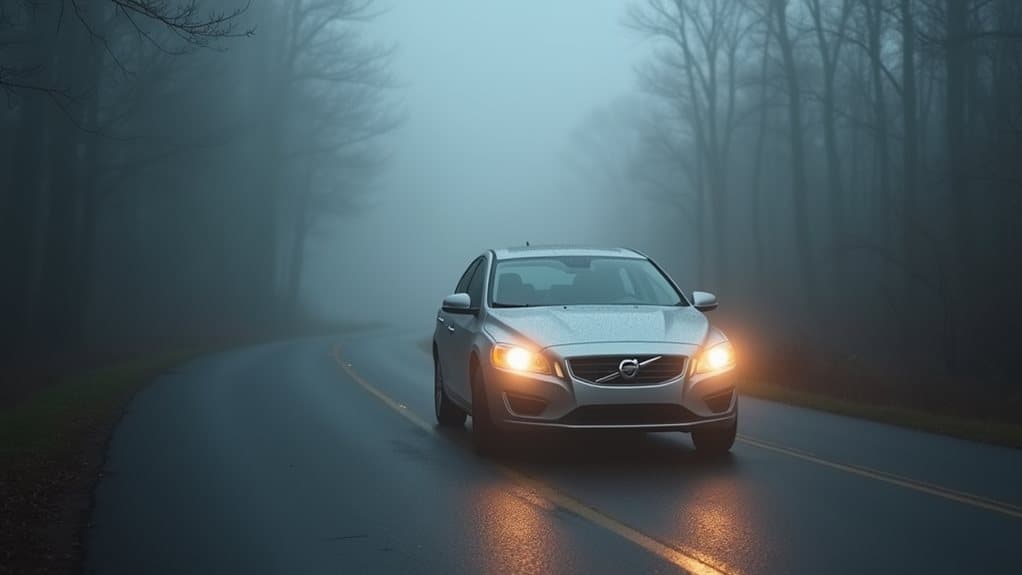
Before driving in foggy conditions, it’s essential to thoroughly prepare your vehicle to guarantee maximum safety and visibility.
Check that your fog lights are functioning properly, as they’re designed to cut through fog and improve your view.
Make sure all lights, including low beams, work correctly.
Also, verify windshield wipers, use the defroster, and confirm brakes and tires are in good condition.
Consider applying a protective coating to exposed metal to reduce the risk of rust build-up on vehicle components.
Use Your Headlights and Fog Lights Correctly
Using your headlights correctly in foggy conditions is crucial for safety. Low-beam headlights provide better visibility without causing glare, unlike high beams which reflect off moisture in the air.
If your vehicle has fog lights, turn them on, as they’re specifically designed to cut through fog and improve road illumination.
Keep taillights on low-beam settings to make certain other drivers can see you.
Avoid using exterior lights unnecessarily, as they can create additional glare and confusion.
Also, check and maintain your air vents regularly to ensure proper cabin airflow and prevent distractions while driving in fog.
Proper Headlight Usage
Proper headlight usage is essential for safe driving in dense fog, as it considerably affects your visibility and the ability of other drivers to see you.
Always turn on low-beam headlights, which provide sufficient illumination without causing glare.
Use fog lights if available, and keep your taillights on with low beams to enhance your vehicle’s visibility to others.
Fog Light Benefits
Fog lights are designed to improve visibility in low-visibility conditions like fog, rain, or snow by producing a wide, bar-shaped beam that directs light close to the road surface.
Using fog lights helps illuminate the road directly ahead while reducing glare, making it easier to see and be seen.
Combining fog lights with low-beam headlights maximizes safety in poor weather.
Avoid High Beams
In foggy conditions, high-beam headlights can do more harm than good because they tend to reflect off the fog, creating a glare that considerably reduces your visibility.
Avoid using high beams, as they can impair your ability to see and blind other drivers.
Instead, turn on low-beam headlights and fog lights if available to improve safety and visibility.
Drive Safely: Tips for Foggy Conditions
When driving in fog, it’s essential to use proper lighting, such as low-beam headlights and fog lights, to improve visibility and reduce glare.
Maintaining a safe distance from the vehicle ahead allows you to stop safely if visibility suddenly worsens.
Following road lines helps keep your vehicle in the correct lane.
Additionally, turning on hazard lights when stopped or moving slowly alerts other drivers to your presence, minimizing the risk of accidents.
Regular maintenance like cleaning cameras and checking camera alignment can help ensure any backup or parking aids remain visible and reliable.
Use Proper Lighting
Using proper lighting is essential for safe driving in foggy conditions because it greatly enhances your vehicle’s visibility to others and improves your own sightline.
In dense fog, turn on your low beams and fog lights, avoiding high beams which cause glare.
Keep taillights on, and if stopped, switch off all lights except hazard lights to avoid confusion.
Following these safety tips helps maintain safe driving near the white line and on the side of the road.
Maintain Safe Distances
Maintaining a safe distance from other vehicles becomes even more critical in foggy conditions, where limited visibility reduces reaction times. You should keep at least a four-second following distance, especially behind larger vehicles like trucks, which need longer stopping distances.
Use road markings, such as the white fog line, to gauge safe distances and avoid tailgating to lower collision risks.
Navigate Using Road Markers and Reflectors

Traveling through dense fog requires careful attention to visual cues provided by road markers and reflectors, which serve as essential guides when visibility is limited. Use roadside highway reflectors to determine road curvature and alignment.
Follow the white line on the right shoulder to stay in your lane. Recognize marker countdowns at specific distances before exits. These tools help maintain safe wayfinding despite low visibility.
What to Do When Visibility Becomes Extreme?
When visibility drops to dangerous levels during dense fog, taking immediate action is necessary to guarantee safety. Turn on hazard lights to alert others, then pull over to a well-lit, safe area like a parking lot or driveway.
Keep only hazard lights on, engage the emergency brake, and stay inside your vehicle. Avoid driving until visibility improves markedly.
Safe Practices for Stopping and Waiting in Fog

In dense fog, it’s crucial to follow specific safety practices when stopping and waiting to prevent accidents and guarantee your vehicle remains visible to others.
Pull off the road to a safe location, like a parking lot or driveway, avoiding the shoulder.
Turn on hazard lights immediately, keep other lights off, engage the emergency brake, and only stop when necessary for safety.
Use a visible reference point to ensure your vehicle is fully clear of the travel lanes before remaining stopped.
Plan Your Trip and Stay Informed About Fog Conditions
Preparing for foggy conditions before starting your trip is essential to guarantee safety and minimize risks. Check the National Weather Service forecasts regularly for fog warnings and updates.
Use real-time traffic apps like Caltrans QuickMap to stay informed about current road and fog conditions.
Plan extra travel time, especially in areas prone to Tule fog, and monitor regional weather variations.
Wear appropriate protective gear such as butyl rubber gloves when handling any hazardous materials you may transport, and avoid open flames in enclosed spaces.
Wrapping up
Driving in dense fog requires careful preparation and attentiveness. Always make sure your vehicle’s lights are functioning correctly and use fog lights appropriately to improve visibility. Reduce speed, maintain a safe following distance, and rely on road markers and reflectors to stay oriented. If visibility drops considerably, pull over safely and wait for conditions to improve. Planning your trip and staying informed about weather updates can prevent unexpected dangers, guaranteeing your safety in challenging foggy conditions.