To safely merge onto a highway with a trailer, first make certain your trailer is properly hitched, lights are working, and load is evenly distributed. Accelerate gradually in the acceleration lane to match traffic speed, typically around 65 mph, while checking mirrors and blind spots thoroughly. Signal early and identify a large gap in traffic before merging smoothly, maintaining a longer following distance for stability. Staying vigilant and avoiding quick movements are key—continue for more detailed techniques.
Quick Tips
- Gradually accelerate in the merge lane to match highway speed, checking mirrors and blind spots before merging.
- Signal early and ensure a large enough gap in traffic for safe entry.
- Verify trailer lights, brakes, and load security before merging.
- Use shoulder checks and mirrors to confirm blind spots are clear during the merge.
- Maintain a safe following distance and avoid sudden movements for stability.
Why Safe Merging With a Trailer Matters for Road Safety
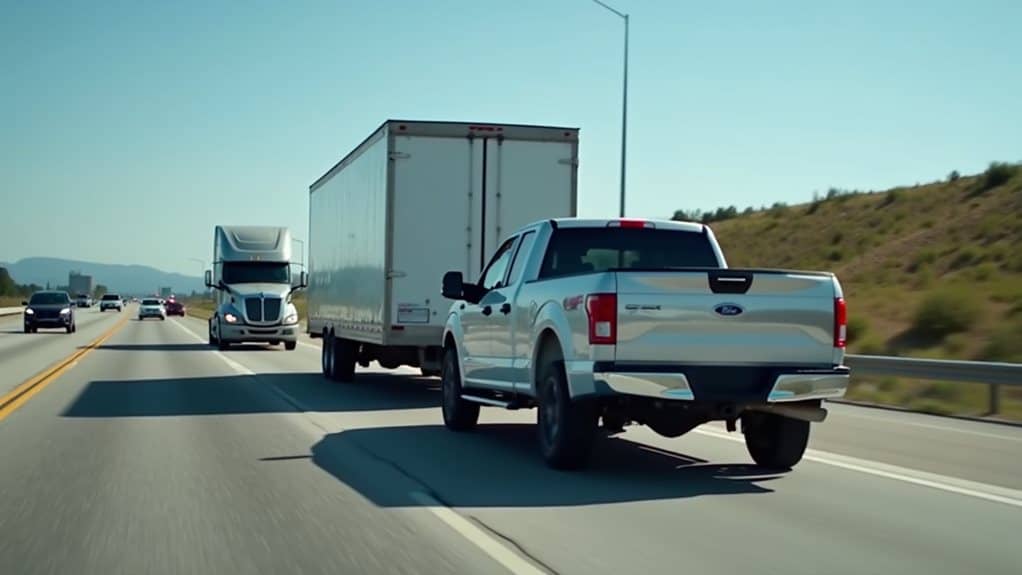
Safe merging with a trailer is crucial because trailers have a high center of gravity, making them more prone to tipping over if not handled properly during lane changes or acceleration.
Proper merging guarantees smooth traffic flow and minimizes sudden stops.
Correct technique helps trailers stay stable, preventing accidents and disruptions, especially when merging onto busy highways where safety depends on control and stability.
Regular checks of your vehicle’s HVAC and ventilation, including the cabin air filter, can help ensure clear visibility and driver comfort during long merges.
Prepare Your Vehicle and Trailer Before Merging
Have you checked your vehicle and trailer thoroughly before attempting to merge? Prepare by ensuring your trailer is properly hitched, secured, and all lights and signals work correctly.
Adjust mirrors, including blind spot and convex mirrors, for maximum visibility.
Verify that the trailer’s brake and turn signals are functioning, and confirm the load is evenly distributed and fastened securely.
Use a digital caliper to check critical fasteners for proper fit and tightness, especially the shank diameter on key trailer bolts to ensure safe connections.
How to Accelerate and Find the Right Gap When Towing

When merging onto a highway while towing a trailer, it’s essential to carefully accelerate and identify an appropriate gap in traffic to guarantee a safe entry.
Use the acceleration lane to gradually increase your speed, aiming for around 65 mph if that matches traffic flow.
Check mirrors and shoulder for blind spots, then merge smoothly into a large enough gap.
It’s also important to be aware that some drivetrains may enter limp mode to protect the transmission if overloaded or overheated, which can severely limit acceleration and affect your ability to merge safely.
Signal Clearly and Check Blind Spots When Merging
Before merging onto a highway with a trailer, it’s essential to signal your intentions clearly to other drivers. Use your turn signal early to warn others.
Check your blind spots thoroughly by using mirrors and performing shoulder checks. Remember, trailers create larger blind spots, so confirming no vehicles are approaching is vital to avoid collisions and trailer sway. Properly secure and store any hazardous materials, such as chemical waste, out of reach of children and pets.
Expert Techniques for Merging Safely With a Trailer
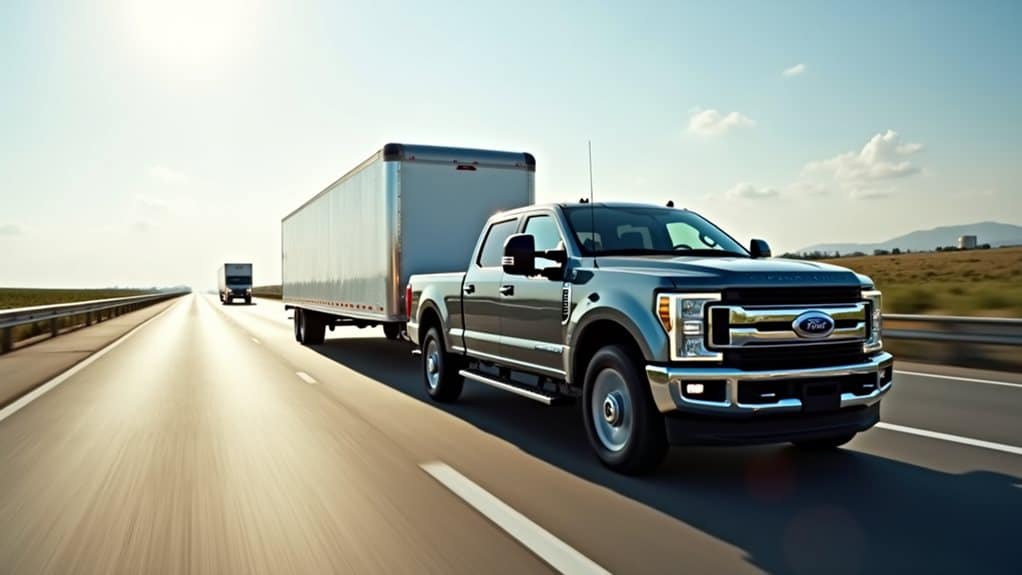
To merge safely onto a highway with a trailer, you must use precise techniques that account for the trailer’s size and energetic behavior.
Gradually increase your speed in the acceleration lane to match traffic flow, checking mirrors and blind spots diligently.
Execute smooth, steady maneuvers, signaling early and maintaining a longer following distance to guarantee stability and safety.
Common Mistakes to Avoid When Merging With a Trailer
Many common mistakes can compromise safety when merging onto a highway with a trailer, and recognizing these errors is the first step to avoiding them.
Failing to account for the trailer’s length and stopping distance can cause rear-end collisions.
Not adjusting your speed early or checking blind spots thoroughly increases the risk of hitting traffic or trailer sway, leading to unsafe merges.
Always inspect and maintain your trailer brakes regularly to ensure proper stopping performance and reduce dust and residue buildup brake maintenance.
Build Confidence: Tips for Nervous Drivers Merging With Trailers

To build confidence when merging with a trailer, you should focus on gradually adjusting your speed in the acceleration lane to match highway traffic. This helps reduce sudden movements and anxiety.
Using clear signaling techniques, like early and precise turn signals, informs other drivers of your intentions. This makes the merge safer and smoother.
Additionally, maintaining constant visual awareness with wide mirrors and shoulder checks guarantees you have a clear view of your trailer and blind spots. This allows for better control during the merge.
For extra protection against corrosion on trailer components, consider using rust prevention products appropriate for metal surfaces to reduce maintenance and extend lifespan.
Practice Gradual Speed Adjustment
Practicing gradual speed adjustment is essential for merging safely onto a highway, especially when towing a trailer.
By steadily increasing your speed in the merge lane, you reduce sudden lane changes or collisions.
This controlled acceleration helps you find a comfortable, consistent speed, minimizing abrupt braking or acceleration after merging, which improves safety and confidence during trailer highway entry.
Use Clear Signaling Techniques
Using clear signaling techniques is essential for safe merging, especially when towing a trailer. You should use your turn signal well in advance to indicate your merging intention, allowing other drivers time to respond.
Always check mirrors and blind spots before signaling.
Consistent, steady signaling and speed adjustments help others anticipate your lane change, reducing confusion and improving safety.
Focus on Visual Awareness
Building strong visual awareness is essential for nervous drivers merging with trailers, as it directly impacts safety and confidence.
Regularly check your mirrors and perform shoulder checks to monitor blind spots, especially since they’re larger when towing a trailer.
Use convex mirrors and wide-angle lenses to improve peripheral vision, helping you detect hazards and judge safe gaps more accurately.
Wrapping up
To merge safely onto a highway with a trailer, always prepare your vehicle and trailer beforehand, guaranteeing proper lighting, tire pressure, and load security. Use clear signals, check blind spots thoroughly, and accelerate smoothly to find an adequate gap. Avoid common mistakes like rushing or neglecting visibility. Building confidence takes practice; stay calm, follow proper techniques, and remain attentive. This careful approach minimizes risks, enhances safety, and guarantees a smooth, controlled merge onto busy highways.