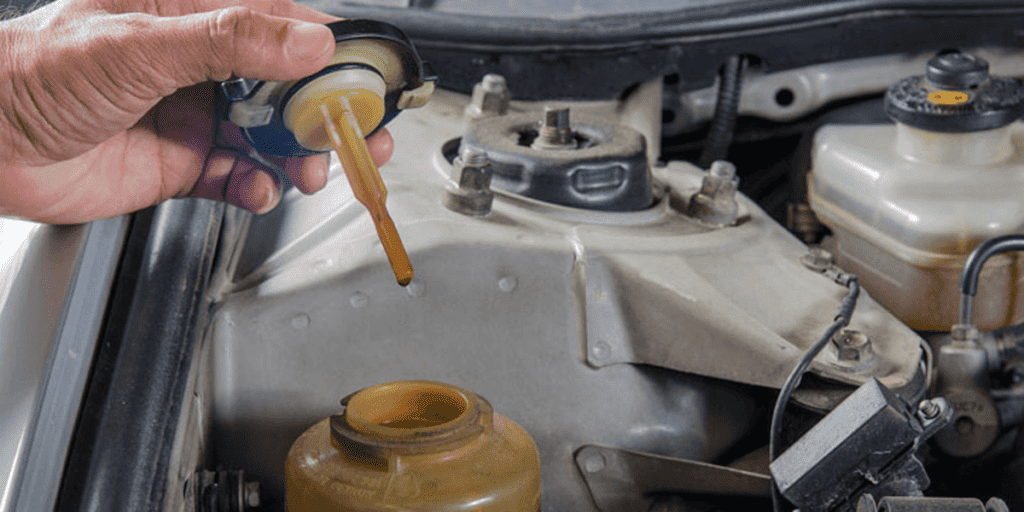
When you turn on the AC, the engine faces extra strain from the compressor’s load, which can cause the engine to shake if parts like engine mounts are worn or damaged. Faulty belts, pulley issues, or refrigerant overpressure also worsen vibrations. Additionally, a dirty air filter or vacuum leaks can further disturb idle stability. If these issues persist, vibrations may intensify. Continuing to investigate these causes provides a clearer understanding of how to address and prevent this problem.
Quick Tips
- The AC compressor increases engine load, causing vibrations, especially if engine mounts are worn or damaged.
- Worn or loose engine mounts fail to absorb engine vibrations during AC clutch engagement.
- A faulty or overcharged refrigerant system can cause pressure fluctuations, leading to engine shaking.
- Dirty air filters or blocked vents cause rough idle, amplifying engine shake when the AC is turned on.
- Belt or pulley issues can misalign components, increasing vibrations when the AC compressor is activated.
What Causes Your Car to Shake When You Turn on the AC?
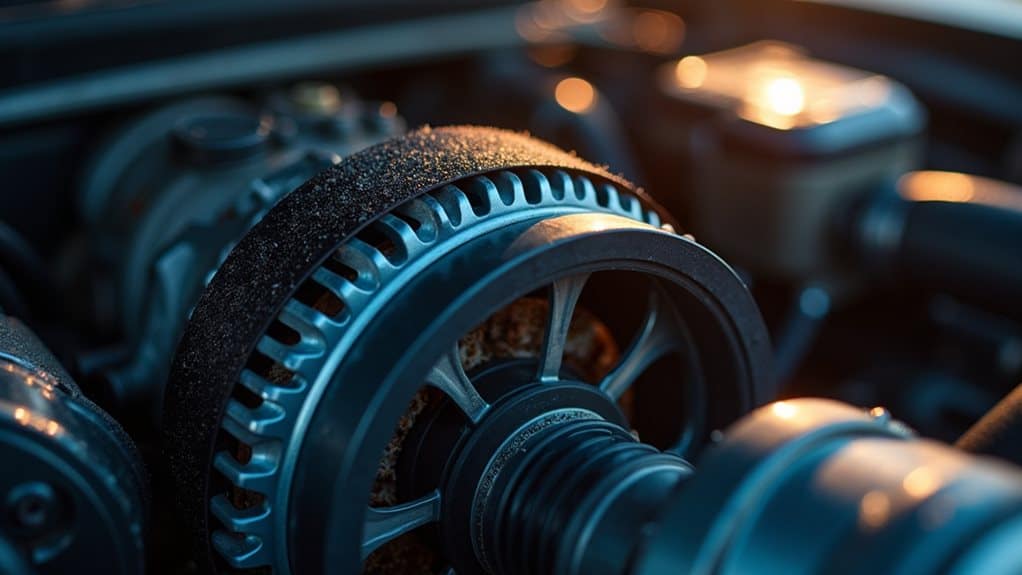
When you turn on the air conditioning in your car, the engine may start to shake or vibrate more than usual. This occurs because the AC system places additional strain on the engine. The compressor increases load, causing vibrations that aren’t absorbed well by worn engine mounts.
A dirty air filter or rough idling can worsen engine shake during AC operation. The vibration can be amplified by issues like a sticking IAC valve or vacuum leaks that cause erratic idle behavior.
Can a Worn Engine Mount Make Your Car Shake More When the AC Runs?
Worn engine mounts lose their ability to dampen engine vibrations effectively, which becomes more noticeable when the AC compressor adds extra load to the engine.
When these mounts are damaged or loose, they allow more engine movement, leading to increased shaking, especially during AC operation.
Replacing worn mounts can help stabilize the engine and reduce the vibrations you feel when the AC is running.
Regular checks of related components like the blower motor and cabin air filter can help identify airflow issues that sometimes accompany AC-related vibrations.
Mount Wear and Tear
Engine mounts serve as the essential connectors between your vehicle’s engine and its chassis, absorbing vibrations and maintaining stability during operation.
Worn mounts can allow increased engine movement, leading to more engine vibrations, especially when the AC compressor adds strain.
Mount deterioration can cause visible engine shake, and replacing these mounts restores vehicle stability and reduces shaking caused by AC-related load.
Impact on Vibration Damping
The effectiveness of engine mounts in damping vibrations plays a crucial role in how much your vehicle shakes, especially when additional systems like the air conditioning (AC) are engaged.
Worn mounts reduce vibration damping, allowing increased engine movement and engine shake. When the AC compressor activates, the added load exacerbates engine vibrations, making shaking more noticeable.
Replacing mounts restores stability during AC operation.
Signs of Mount Damage
Identifying signs of mount damage is essential to determine whether your vehicle’s increased shaking, especially when the AC runs, is due to compromised engine support.
Worn engine mounts can cause increased engine vibrations and engine movement. Look for visible signs like cracks, tears, or softness.
Deteriorated or loose mounts often lead to engine shake, worsening during AC operation.
Does the AC Compressor Put Too Much Strain on Your Engine?
When you turn on your car’s air conditioning, the compressor’s clutch engages to start cooling, adding a significant load on the engine. This increased load can cause engine shake and vibrations.
A faulty compressor or worn engine mounts may worsen this, leading to belt slippage or extra engine strain, making the shaking more noticeable during AC operation.
Are Faulty Belts or Pulley Systems Making Your Engine Vibrate?
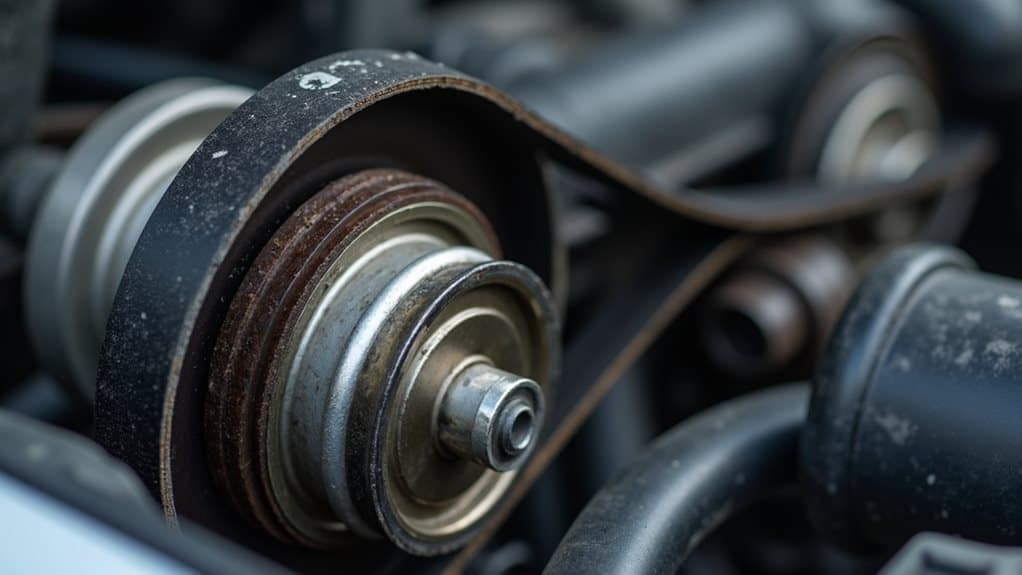
Faulty belts or pulley systems are common contributors to engine vibrations that become more noticeable when you turn on the AC.
Worn or frayed serpentine belts, improper belt tension, and damaged pulley bearings can cause belt wear and misalignment, leading to engine shake.
Regular inspection and replacement of these components help prevent vibrations caused by issues in the belt system or pulley bearings.
Furniture, fixtures, and equipment like personal property are movable items that, while unrelated to engines, are similarly categorized by whether they are fixed or portable.
How Do Refrigerant Pressure and System Leaks Cause Shaking?
When refrigerant pressure becomes too high, usually above 400 PSI, it puts extra strain on the compressor, which can cause your engine to shake when the AC is on.
If there’s a system leak, refrigerant levels drop, forcing the compressor to work harder or cycle on and off rapidly, leading to instability and vibrations.
Both overcharged and undercharged systems disrupt normal operation, transmitting vibrations to your engine and causing noticeable shaking.
Excessive Refrigerant Pressure
Excessive refrigerant pressure in the A/C system can cause significant stress on your engine, resulting in vibrations and shaking.
When the refrigerant is overcharged, it increases high pressure, forcing the compressor to strain. This added load can lead to engine vibrations and shake.
Properly maintaining refrigerant pressure and avoiding overcharging helps prevent these issues and keeps your engine stable.
System Leaks and Pressure Loss
System leaks in your vehicle’s air conditioning (A/C) system can considerably impact refrigerant pressure, leading to engine shaking during A/C operation. These leaks cause pressure loss, creating pressure imbalances that increase compressor strain.
As refrigerant pressure drops, pressure fluctuations occur, resulting in engine vibrations and irregular compressor cycles. These issues ultimately cause the engine to shake when you turn on the A/C.
Overcharged or Undercharged System
Refrigerant pressure levels play a crucial role in the proper functioning of your vehicle’s air conditioning system. Deviations from the recommended range can cause your engine to shake when the AC is turned on.
An overcharged system increases pressure, straining the compressor.
Meanwhile, an undercharged system reduces efficiency, causing it to cycle more and create engine shaking due to pressure imbalance and refrigerant leaks.
Could Dirty Air Filters or Blocked Vents Cause Engine Vibrations?
When your engine starts to shake more noticeably when you turn on the air conditioning, it could be related to airflow issues caused by dirty air filters or blocked vents.
A dirty air filter causes airflow restriction, leading to engine vibrations and rough idling.
Blocked vents disrupt air circulation, affecting engine performance when the AC system adds extra load.
Using a dirty air filter can also increase engine load and exacerbate shaking when accessories like the AC engage.
How to Fix Car Shaking When the AC Is On and Prevent It in the Future
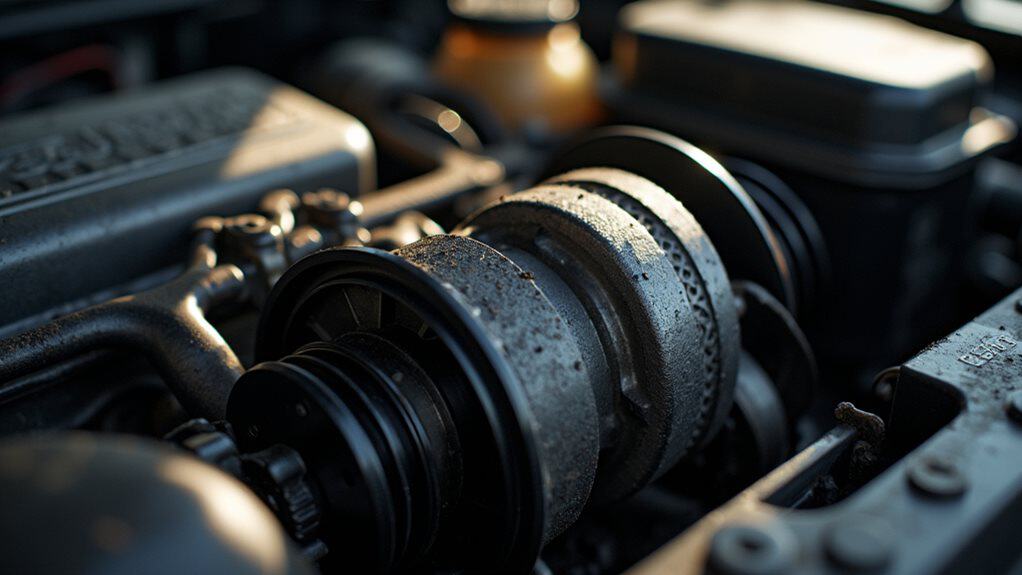
To fix car shaking when the AC is on and prevent it from happening again, start by inspecting and maintaining key engine components. Check engine mounts for wear.
Guarantee refrigerant levels are proper, and replace or clean the air filter.
Adjust idle speed if needed, and schedule professional inspections to identify issues like engine strain, faulty belts, or hoses that cause vibrations during AC operation. Ensure electrical connections such as the engine ground are secure to prevent additional electrical-related vibrations or faults.
Wrapping up
To prevent your engine from shaking when you turn on the AC, regularly inspect and maintain engine mounts, belts, and pulleys. Make certain refrigerant levels are correct and check for leaks, as system issues can cause vibrations. Keep air filters clean to reduce strain on the system. Proper maintenance of these components minimizes engine strain and vibration, helping your vehicle operate smoothly. Addressing these issues promptly can also prevent more costly repairs in the future.