
You’ll need to use different oil for each Kia Sorento powerplant. The 2025 2.4‑L gasoline engine holds about 5 qt (≈4.8 L) and calls for 5W‑20 or 5W‑30 full‑synthetic oil, with 5W‑20 offering the best fuel‑economy in mild climates. The 3.3‑L V6 requires roughly 6 qt (≈5.8 L) and also accepts 5W‑20 or 5W‑30, though the thicker 5W‑30 can protect better under heavy loads. The 1.6‑L hybrid’s 6.13 qt (≈5.8 L) capacity demands a low‑viscosity synthetic 0W‑30 meeting ACEA C2 standards for optimal cold‑start flow and reduced pumping loss. Follow the manual’s exact quarts, replace the filter, and check the dipstick to avoid over‑ or under‑filling, which can cause smoke, foaming, or low‑pressure warnings. If you keep going, you’ll discover the step‑by‑step V change process and how viscosity choices affect wear and MPG.
Quick Tips
- 2024 Kia Sorento Hybrid (1.6 L turbo) requires ~6.13 US qt (5.8 L) oil with filter change.
- Use full‑synthetic 5W‑30 meeting ACEA A5/API standards for the 2024 model.
- 2025 Sorento Hybrid calls for low‑viscosity synthetic oil that meets Kia hybrid specifications.
- Older Sorento models (2003‑2005) use 10W‑30 oil, capacity 4.4 L.
- For 2006+ Gamma engines, capacity 3.3 L; oil grade 5W‑30 or 5W‑40.
Which Kia Sorento Engine Types Need Different Oil?
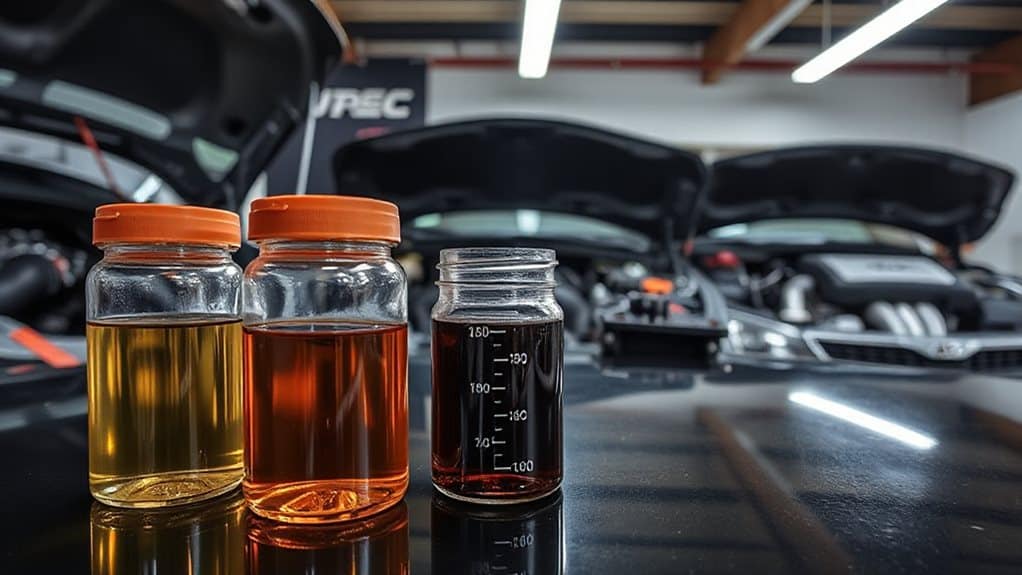
What oil your Kia Sorento needs depends on the engine family it belongs to.
Diesel 1.5 VGT requires 4.8 L of SAE 0W‑20, meeting ACEA C5/C3/C2 and full‑synthetic API/ILSAC standards, while petrol Smartstream G1.2 and 1.0 T‑GDi use 5W‑20 synthetic or 5W‑30 conventional grades. Each engine’s oil viscosity and specification differ, ensuring optimal lubrication and performance. For cold-weather reliability, consider a jump starter with adequate peak amperage to ensure a reliable cold-weather start.
2025 Sorento Gas Engine: Oil Capacity & Viscosity
How much oil does a Kia Sorento’s gasoline engine need, and which viscosity should you use? The 2019 V6 takes about 6.9 qt (6.5 L) of 0W‑30 oil, while the Smartstream G2.5 GDi needs 6.1 qt (5.8 L) of 0W‑20 synthetic meeting API SN PLUS/SP. Older 2003‑05 models use 4.4 L of 10W‑30; 2006+ Gamma engines require 3.3 L of 5W‑30 or 5W‑40. Use full‑synthetic, filter‑replace, and verify exact specs for your model year. Regular oil changes are essential to preserve engine performance and fuel efficiency forturbine‑hybrid powertrains. New ceramic brake pads can sometimes make temporary noises during bedding, so inspect braking components if you hear unusual grinding while driving with new oil bedding‑procedure.
2025 Sorento Hybrid Engine: Oil Capacity & Low‑Viscosity Needs

You’ll need a low‑viscosity synthetic oil that meets Kia’s hybrid specifications, because its thinner grade reduces friction and helps the turbocharged system stay efficient. The exact oil capacity varies with the filter change, so a qualified technician must confirm the precise volume to avoid over‑ or under‑filling. Using the OEM‑approved oil and filter ensures proper lubrication of the hybrid components and protects emissions controls. If any brake contamination from cleaners or lubricants is suspected near service areas, have the braking system inspected immediately.
Low‑Viscosity Oil Requirements
Ever wondered why the Kia Sorento hybrid insists on a low‑viscosity oil? You need a thin, fast‑flowing oil—like 5W‑20 or 5W‑30 full synthetic—so the pump reaches every bearing instantly at start‑up, especially during frequent stop‑start cycles. Low viscosity cuts internal friction, enhances fuel economy, and protects hybrid components. Follow the manual’s exact grade to avoid wear and efficiency loss.
Hybrid Engine Oil Capacity
What’s the exact oil amount you need for a 2024 Kia Sorento Hybrid’s 1.6‑liter turbocharged engine? You’ll require about 6.13 US quarts (5.8 L) for a drain‑and‑refill, assuming you replace the filter.
Use full‑synthetic 5W30 meeting ACEA A5/API standards; this protects the turbo, maintains hybrid efficiency, and prevents wear.
Verify the final volume with a qualified technician to avoid over‑ or under‑filling.
Choosing 5W‑20 vs. 5W‑30 for Sorento Gas Oil
Which viscosity should you pick for your Kia Sorento’s gasoline engine—5W‑20 or 5W‑30?
5W‑20 flows easier at high temps, enhancing fuel economy and reducing internal drag, ideal for moderate climates and the 2.5 L models.
5W‑30 stays thicker when hot, giving stronger film strength for heavy loads or hotter regions, and fits older 3.3 L engines.
Consult your manual, match climate, and use full‑synthetic oil.
Why Do Some Sorento Caps List 0W‑30?
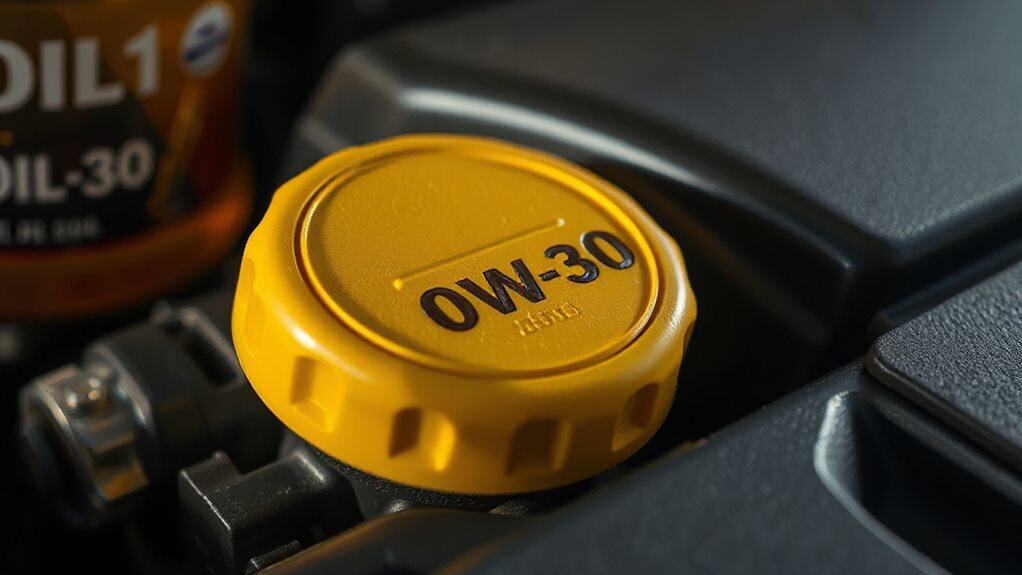
Choosing between 5W‑20 and 5W‑30 hinges on climate and engine load, but the next question is why some Sorento oil caps are labeled 0W‑30.
Turbocharged T‑GDi engines need 0W‑30 because higher compression creates extra heat, demanding a thicker hot‑viscosity oil, while the “0W” ensures fluidity at freezing temperatures.
The cap reflects that exact engine’s spec, and the manual overrides any dealership guess.
Older Sorento Oil Grades (2003‑2009) and API Specs
You’ll notice that the early 2003‑2005 Sorento models used the API SH grade, which set the baseline for detergent and oxidation performance, while the 2006‑2009 models upgraded to API SJ/SL for stricter cleanliness and wear resistance.
Both periods recommend a 10W30 viscosity, a low‑temperature rating that helps cold starts and a high‑temperature rating that maintains film strength under load.
Understanding how these API specifications evolved lets you match the right oil to the engine’s year and design, ensuring optimal protection and compliance with the manufacturer’s standards.
For synthetic blends and modern formulations, consider oils formulated for high fastness to maintain performance across temperature extremes and prolonged use.
API SH Grade Evolution
What does the API SH grade tell you about the 2003‑2005 Kia Sorento’s petrol engine? It indicates a now‑2006 standard that offered adequate wear protection but lacked modern sludge‑control. SH succeeded SG/SF, yet it fell short for post‑1996 engines, prompting Kia to shift to SJ/SL in later models.
The 2003‑2005 Sorento used 4.4 L of 10W‑30 oil, but you should consider upgrading to newer specs for better oxidation resistance.
Viscosity Recommendations by Year
How do the oil‑viscosity recommendations change across the 2003‑2009 Kia Sorento lineup? For 2003‑2005 petrol models you need 10W30 meeting API SH; 2006‑2009 petrol shifts to API SJ/SL but stays 10W30. Diesel versions both use 10W30, but early years require API CF‑4 while later years accept ACEA B4. Always verify the manual for exact specs.
How to Verify Correct Oil Level & Grade on Your Sorento
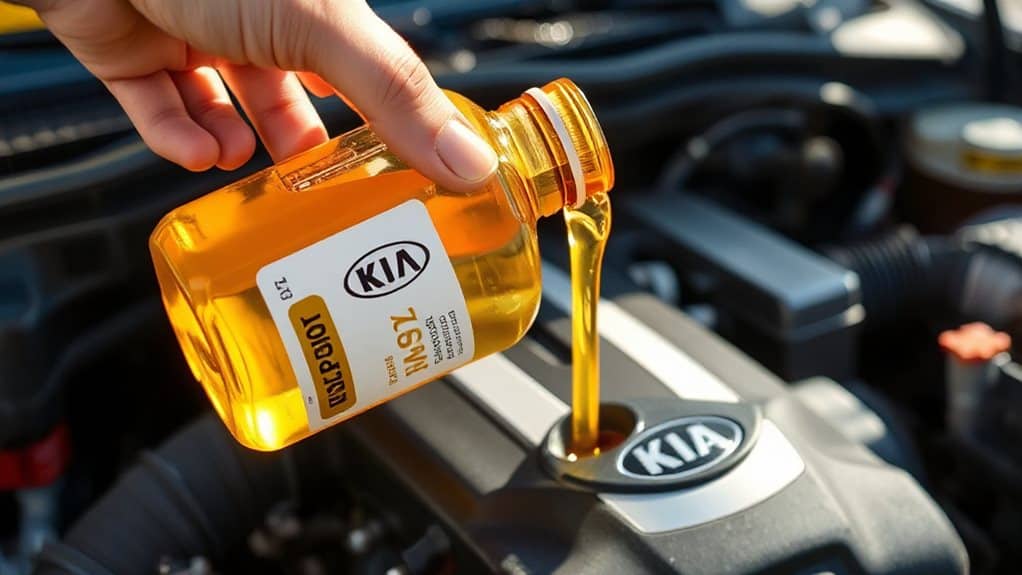
Is the oil level in your Kia Sorento within the proper range and the correct grade? Park on level ground, let the engine cool, then wait fifteen minutes. Pull the dipstick, wipe it clean, reinsert fully, and pull again. Read the oil between L and F marks; it should be near F. Verify the oil matches 5W‑20 or 5W‑30 as printed on the cap. Also inspect coolant and other fluid levels to ensure there are no leaks or low reservoirs that could indicate broader maintenance issues like fluid leaks.
How to Change Oil on a 2025 Sorento V6 – Step by Step
After confirming the oil level and grade, the next step is to replace the oil entirely. Warm the engine briefly, then position the Sorento on a level surface and engage the parking brake. Loosen the 17 mm drain plug, let the oil flow into a pan, and remove the filter housing plug with an 8 mm hex. Replace the filter, reinstall the plug, and refill with 0W‑30 oil, about 5‑6 quarts. Tighten the drain plug to spec, start the engine, run briefly, then shut off and reset the oil‑change reminder. The Sorento’s fuel system health benefits from regular maintenance and using high-quality fuel to protect emissions and related components.
Common Over‑/Under‑Filling & Viscosity Errors
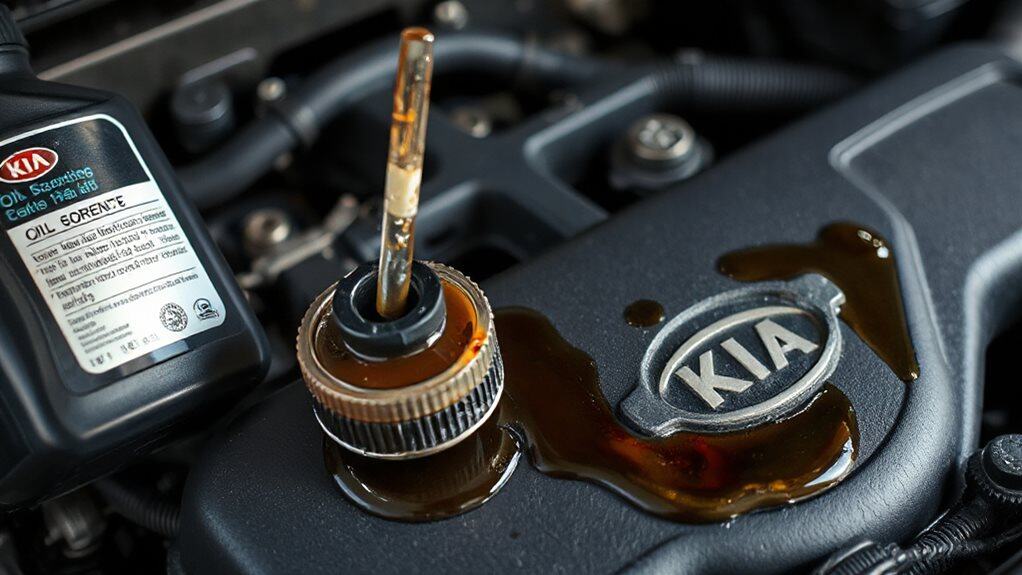
You’ll see that over‑filling can trigger the oil pressure sensor, cause foaming, and even lead to hydraulic lock, while under‑filling starves bearings, raises temperatures, and risks metal‑to‑metal contact.
Choosing the wrong viscosity—such as a thicker oil that raises operating temperature or a thinner one that fails high‑pressure protection—affects flow properties and can damage a GDI engine.
Pay close attention to the specified 0W‑30 synthetic grade and the exact quarts listed for your model, because even a small mismatch in quantity or grade can compromise lubrication and emissions control.
Over‑filling Risks
What happens when you add too much oil to a Kia Sorento? Excess oil overflows, causing smoke from the exhaust and foaming that reduces lubrication. Crankcase pressure rises, damaging seals and gaskets. Aerated oil accelerates wear.
Adding 5 quarts to a 4.6‑quart hybrid or 6 quarts to a 5‑quart engine easily exceeds capacity. Always verify the manual’s exact quarts and check the dipstick after filling.
Under‑filling Consequences
How does an under‑filled Kia Sorento engine behave when the oil level drops below the manufacturer’s minimum? You’ll notice low‑oil‑pressure warnings, ticking noises, and reduced power as lubrication thins. Metal‑to‑metal contact rises, accelerating wear on pistons, bearings, and camshafts. Overheating can lead to seizure, shortening engine life and prompting costly repairs if the deficit isn’t corrected promptly.
Viscosity Mismatch Effects
Why does the oil’s viscosity matter for a Kia Sorento? It determines how easily the oil flows at cold‑start (the “5W” rating) and how well it maintains thickness at operating temperature (the “20” or “30” index).
Using a non‑5W‑20/30 oil reduces fuel economy, impairs lubrication in GDI engines, and can void warranty.
Matching the exact grade prevents foam, overheating, and premature wear.
Sorento Oil Viscosity: Fuel Economy & Wear Impact
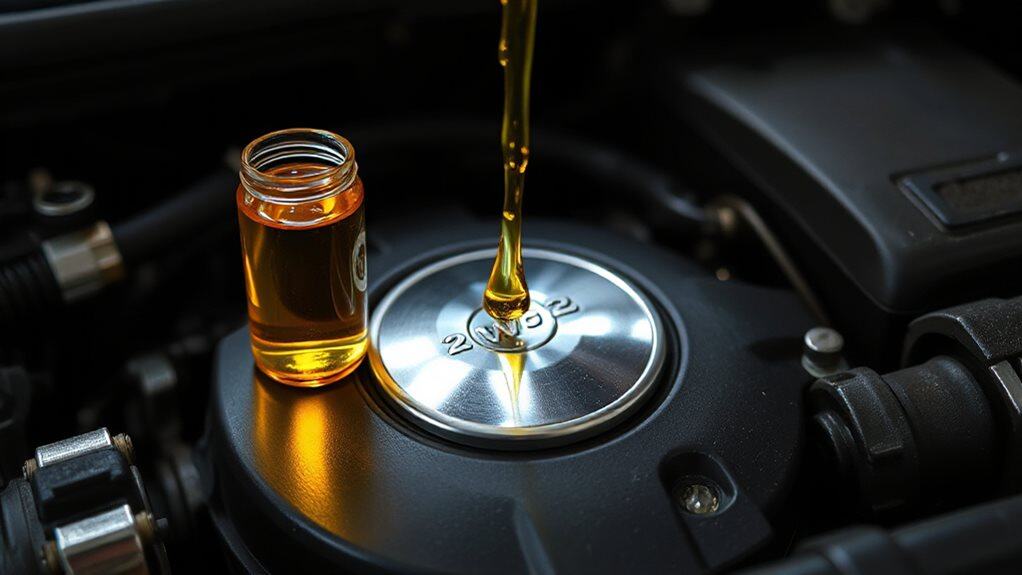
Ever wondered how the right oil viscosity can enhance your Kia Sorento’s fuel economy while protecting the engine? Using SAE 0W‑30, preferably ACEA C2, reduces pumping losses and drag, boosting MPG by 2‑3 %. Its low‑temperature flow prevents startup wear, while full synthetic film strength resists breakdown, minimizing metal‑to‑metal contact during high‑load conditions.
Quick Reference: Engine, Capacity, Viscosity, Grade
The right oil viscosity not only affects fuel economy and wear, it also dictates how much oil you need to fill each engine. For the 2.4 L I‑4, plan about five quarts, using 5W‑20 or 0W‑30 synthetic or conventional oil, API SH/SJ/SL grade.
The 3.3 L V6 needs roughly six quarts, but total capacity is 6.87 quarts with a 0W‑30 cap, same API grade.
Older models use 10W‑30.
Wrapping Up
Stick to the oil type and capacity your specific Sorento engine requires; using the wrong viscosity can reduce fuel efficiency and increase wear. Regularly check the dipstick and fill to the marked level, avoiding over‑ or under‑filling. Follow the step‑by‑step change procedure for your V6, gas, or hybrid model to keep the engine protected. Proper maintenance guarantees reliable performance and prolongs the vehicle’s service life.


