
Chill the gum with an ice cube or a blast of cold compressed air for 1‑2 minutes until it hardens, then scrape it off gently using a plastic razor blade, credit‑card edge, or palette knife, working from the outer edge inward to avoid lifting paint. Apply a citrus‑based adhesive remover like d‑limonene, let it dwell briefly, and wipe the softened residue with a microfiber cloth. Follow with a mild soap‑and‑water rinse, then polish and wax the area to restore gloss and protect the finish; the next steps will show you how to ensure long‑term protection.
Quick Tips
- Chill the gum with ice or a frozen spray for 1–2 minutes, then gently scrape it off with a plastic blade to avoid scratching paint.
- Apply a citrus‑based solvent (e.g., d‑limonene) or a commercial adhesive remover, let it dwell briefly, and lift softened residue with a soft cloth or plastic scraper.
- Test any solvent on an inconspicuous area first to ensure it won’t affect the clear coat or paint color.
- After removal, rinse the area with soapy water, then dry with a microfiber towel to prevent streaks.
- Finish by polishing the spot and applying a protective wax or coating to restore gloss and guard against future gum stains.
Quick‑Start: How to Remove Gum From Car Paint Without Damage
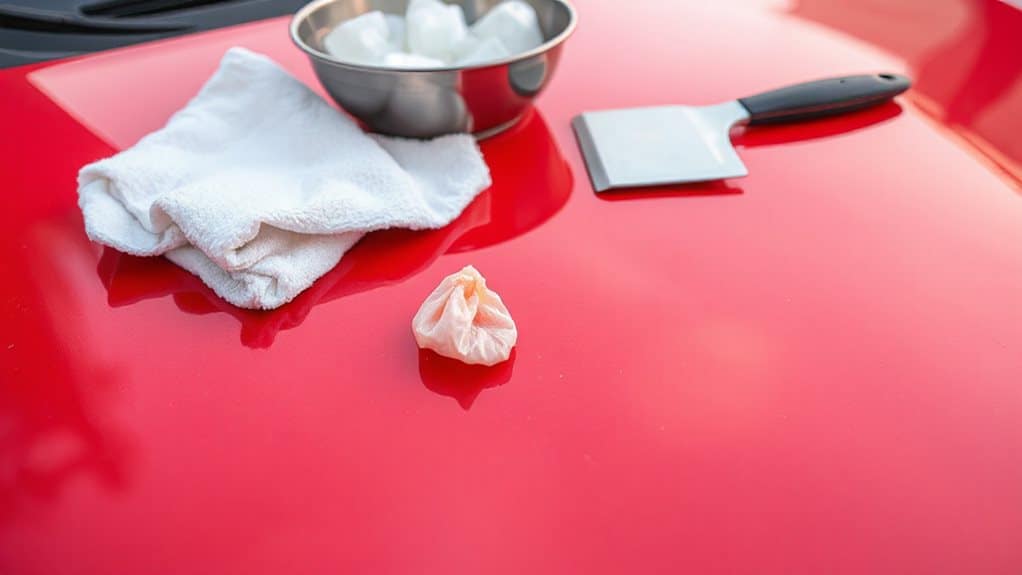
First, chill the gum so it becomes brittle and easy to lift without harming the paint. Spray a can of compressed air or press an ice‑filled bag onto the gum until it freezes solid. Then scrape gently with a plastic knife or credit card, working from the edges inward. Finally, wipe the area with a citrus‑based cleaner or adhesive remover to dissolve any residual stickiness. Using vegetable oil can also help dissolve the remaining residue. For tougher residue, consider using a mild solvent like rubbing alcohol on a white cloth and testing in an inconspicuous spot first.
Choose the Right Tool for Removing Gum From Car Paint
When you’re ready to tackle gum on your car’s paint, picking the right tool is essential to avoid scratches and achieve a clean finish. Use a plastic razor blade to scrape gently from the edges inward; it won’t gouge the surface. Spray bug‑and‑tar remover or WD‑40 to soften the gum, then press a d‑limonene‑soaked cloth onto it. After lifting, apply a Goo Gone‑type adhesive remover to clear residue, finishing with soap and water.
Freeze the Gum First – a Fast Way to Remove Gum From Car Paint
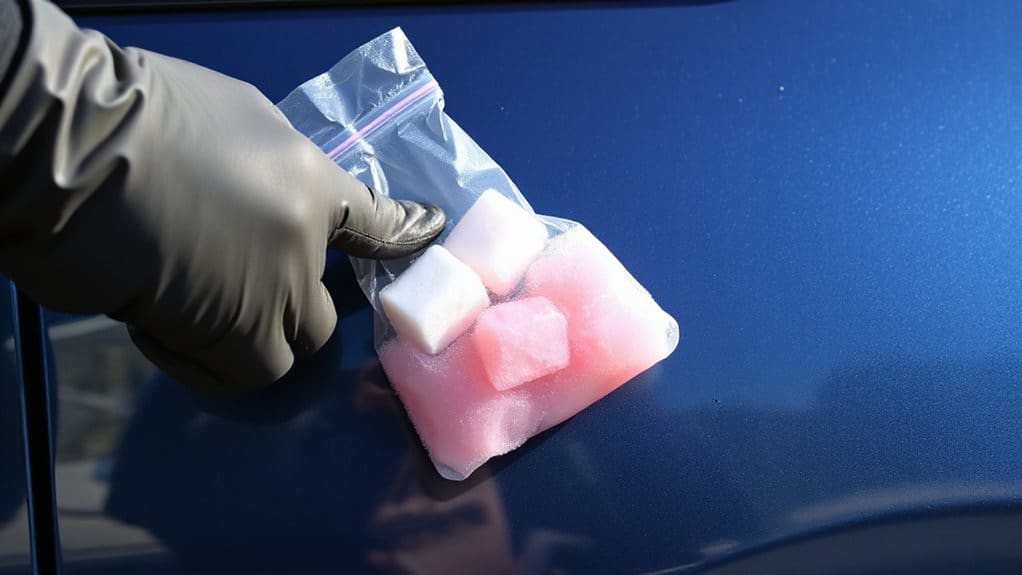
You’ll want to freeze the gum quickly, because the cold makes it brittle and reduces its grip on the paint.
Using a can of compressed air upside‑down blows a freezing gas directly onto the spot, and once the gum solidifies you can scrape it off with a plastic knife or a credit‑card edge.
This method avoids solvents, minimizes the risk of scratching, and usually clears the residue in just a few minutes.
Cool, humid air can create a perceived cooling effect, but it does not lower room temperature perceived cooling.
Freeze Gum Quickly
How does freezing make gum easier to remove from a car’s paint? You chill the gum, which contracts and hardens it, reducing adhesion and making it brittle. Place an ice cube on the spot for one to two minutes, or pour ice water around it. For faster results, use a freeze‑spray, avoiding strong Freon agents. After the gum cracks, gently lift it with a plastic scraper.
Use Compressed Air
Ever wondered why a burst of compressed air can turn stubborn gum into a brittle scrap you can peel off? Spray short, controlled bursts directly onto the gum; the rapid freeze makes it hard and brittle.
Use a fingernail or plastic blade to lift pieces, re‑freezing if it thaws. Keep pressure low to avoid lifting paint, and follow with a soft‑cloth residue remover.
Scrape With Plastic Knife
After the gum is solidified with a burst of compressed air or an ice cube, the next step is to scrape it off using a plastic knife. Choose a thin, flexible plastic razor blade or palette knife; it won’t scratch the paint. Hold the tool at a low angle, gently lift the brittle gum, and work in small sections. Clean the blade between strokes to avoid spreading residue.
Citrus Cleaner: How It Removes Gum From Car Paint
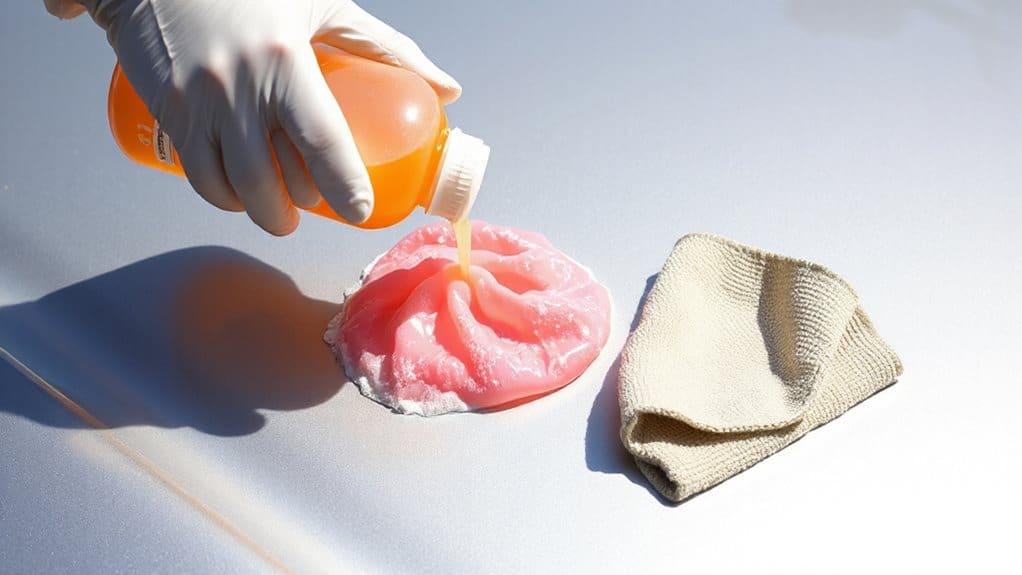
You’ll find that citrus cleaners use d‑limonene, a natural solvent that breaks down the polymer bonds in chewing gum, making it pliable without attacking the clear coat.
Because the formula is silicone‑free and formulated for automotive finishes, it won’t discolor or etch the paint, and you can apply it with a soft, soaked cloth to soften the gum around its edges.
After a brief 30‑second to 10‑minute soak, a plastic razor blade or microfiber towel easily lifts the softened residue, leaving the surface clean and undamaged.
For best results, test the cleaner on a small hidden area first and keep sockets and tools organized in a socket organizer to avoid losing small parts while you work.
Citrus Solvent Power
How does a citrus‑based solvent actually lift gum from a car’s finish? D‑limonene, the active ingredient, penetrates gum adhesives and breaks down their bonds. You soak a soft cloth with a d‑limonene cleaner, press it onto the gum, and let it sit a few minutes. The solvent softens the gum, allowing you to wipe it away gently without scraping or damaging paint.
Gentle Paint Compatibility
The citrus‑based solvent’s ability to lift gum hinges on its compatibility with automotive clearcoat, a thin, protective polymer layer that shields the underlying paint.
Its water‑based, d‑limonene formula is mild enough to dissolve gum without attacking the clearcoat’s resin.
You can safely use it on chrome, glass, plastic, rubber, and vinyl, but always test a hidden spot first to confirm no discoloration or softening occurs.
Easy Application Technique
A soft microfiber cloth soaked in a d‑limonene citrus cleaner is the first tool you’ll need, because the solvent’s mild, oil‑based chemistry penetrates gum without attacking the clearcoat.
Apply the cleaner to the gum’s edges, let it dwell a few minutes, then gently wipe the softened material.
Repeat soaking and wiping until residue disappears, finish with a soapy‑water rinse.
Household Remedies That Remove Gum From Car Paint
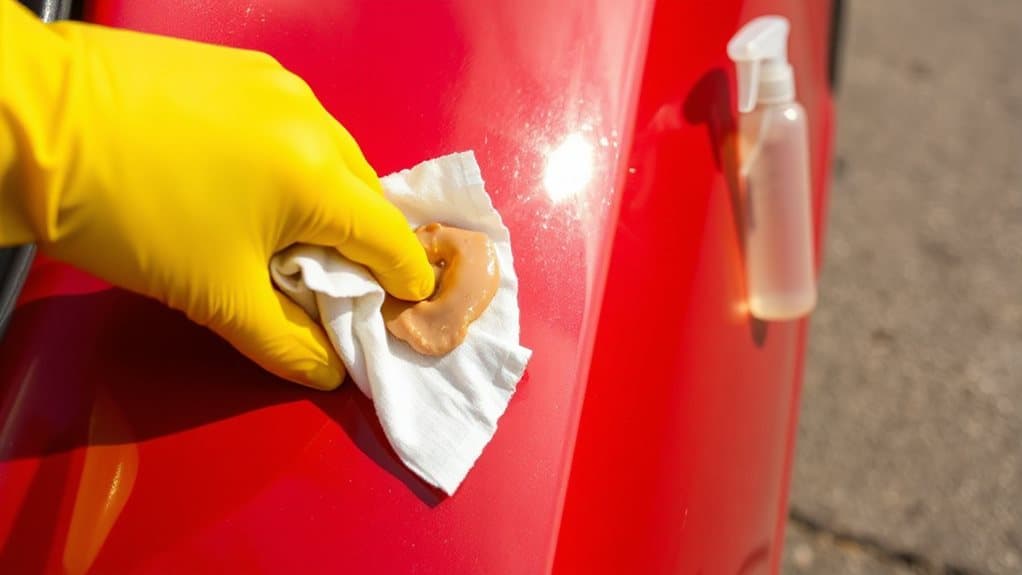
Ever wondered which everyday items can safely lift gum from a car’s finish without damaging the paint? You can spread peanut butter or Avon’s Skin‑So‑Soft on the gum, let it sit, then wipe with a soft cloth; the oils dissolve the polymer.
D‑limonene cleaner, a vinegar‑water mix, or Goo Gone work similarly—apply, soften, and lift the residue without harming the clear coat. Maintain a minimum indoor temperature of 55°F to reduce the risk of freeze-related plumbing issues.
Scrape Gently to Remove Gum From Car Paint Without Scratches
You’ll start with a gentle plastic blade, holding it so the edge meets the gum first and you scrape from the outer edges toward the center.
This edge‑first technique lets the softened gum lift without the blade digging into the clear coat, and the plastic material reduces the risk of scratches compared to metal tools.
Keep the surface lubricated with a remover while you work, and reapply the blade as needed until the gum comes off cleanly.
For particularly stubborn residue, consider using a small amount of acetone-based solvent applied cautiously to avoid damaging the paint, since acetone can help dissolve adhesives.
Gentle Plastic Blade
Choosing the right plastic blade is essential for removing gum without scratching car paint. Use a non‑abrasive plastic razor or a palette knife; both prevent digging into the surface. Position the edge under the gum, keep the blade angled away from your hand, and lift slowly. Work deliberately, re‑lubricating with bug‑and‑tar remover as needed, then peel the softened gum away.
Edge‑First Scraping
How does the edge‑first scraping method keep your car’s paint safe while removing stubborn gum? You insert a non‑sharp razor blade or palette knife with the edge facing away from your hand, slide it gently under the gum, and lift the material without touching paint. Keep the blade at a shallow angle, repeat until the gum releases, then clean with a soapy sponge and rinse.
Use Adhesive Remover to Remove Remaining Gum From Car Paint
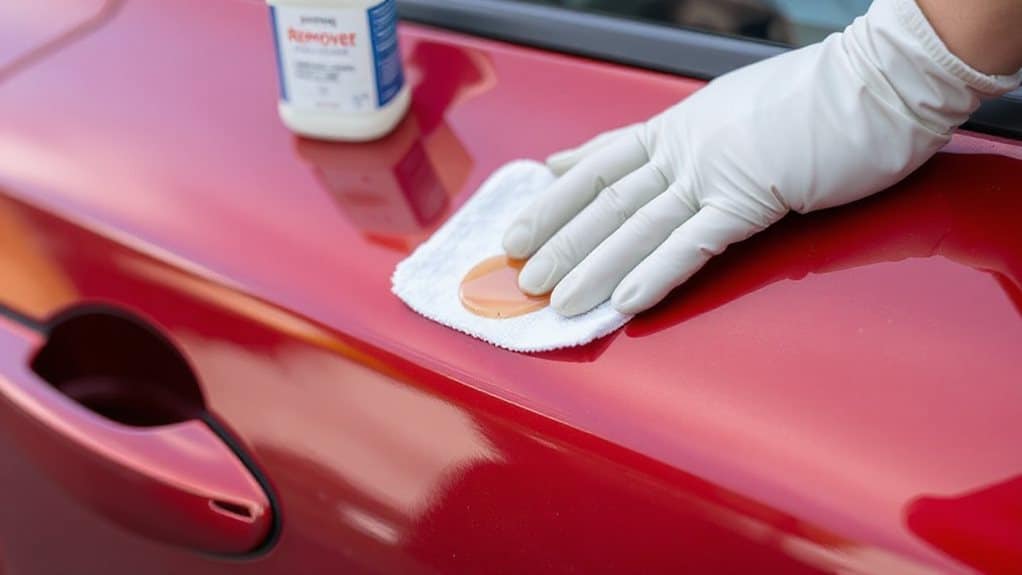
If the gum has already softened but still clings to the paint, an adhesive remover can finish the job without harming the finish. Spray a non‑abrasive automotive remover—like 3M™ Adhesive Remover or a citrus‑based formula—onto the residue, let it sit 2‑5 minutes, then wipe with a microfiber towel. Use a plastic scraper only if needed, and avoid delicate trims. For added protection after removal, consider applying a protective coating such as Master Series Silver to help resist future contamination and environmental damage.
Polish After Removing Gum From Car Paint
What comes next after you’ve cleared the gum is a thorough polish to restore the paint’s gloss and protect the clear coat. Apply SonX polish to a clean pad, spread it with your fingers, then rub gently for fifteen minutes. Wipe residue with a microfiber cloth, followed by a dry‑wipe and an IPA panel wipe. Inspect under a correction light to confirm a smooth, shiny finish.
Wax Your Car to Prevent Future Gum Stains
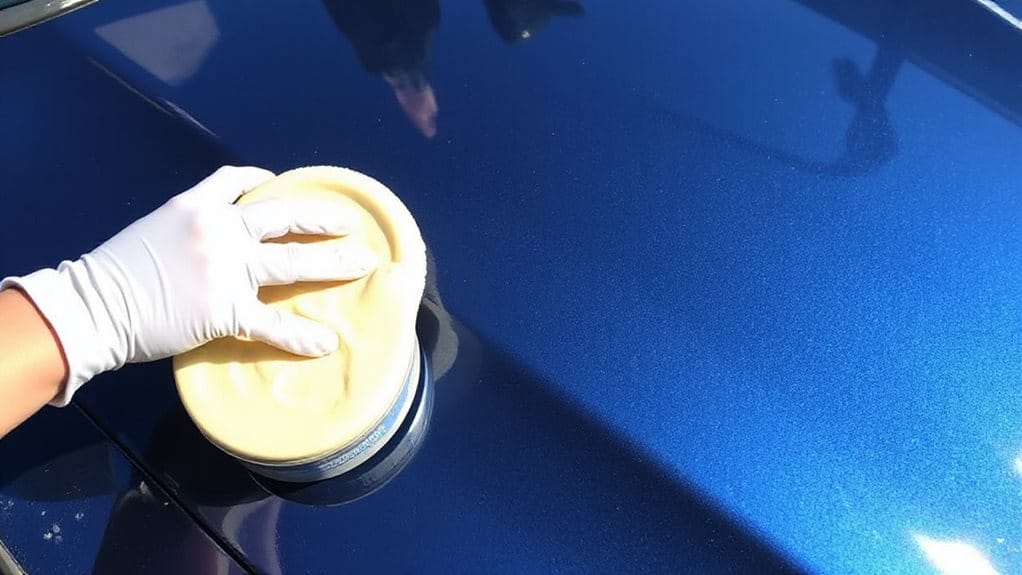
After polishing away the gum residue, the next step is to apply a protective wax layer that will keep future gum and other contaminants from adhering to the paint.
Choose a natural wax like carnauba for deep shine or a synthetic spray for long‑lasting coverage.
Wash, dry, and apply wax on a cool surface using circular motions, then buff with microfiber.
Reapply each season, or every 2‑3 weeks for carnauba, to maintain a hydrophobic, UV‑shielded barrier.
Spot‑Test Any Product Before Removing Gum From Car Paint
Before you apply any gum‑removal solution to your car’s paint, you should always perform a spot‑test to verify that the product won’t damage the finish. Choose a hidden spot—under the hood or in a wheel well—apply a tiny amount with a cloth, wait five to ten minutes, then wipe and inspect. If color, texture, or clear‑coat integrity remain unchanged, you can safely proceed with full‑scale removal.
Wrapping Up
By following the steps above, you’ll safely eliminate gum without harming the paint. Using the right tool—whether a freezer spray, citrus cleaner, or adhesive remover—prevents surface abrasion. After removal, polishing restores gloss, and waxing adds a protective barrier against future contaminants. Always spot‑test any product to confirm compatibility, and work methodically to avoid scratches. Consistent maintenance keeps the finish pristine and extends the vehicle’s aesthetic lifespan.


