
You’ll find that a limited‑slip differential (LSD) and a Posi‑style differential both manage torque between left and right wheels to enhance traction, but they work differently. Traditional LSDs use clutch plates or gear cones that engage only when wheel‑speed differences exceed a set threshold, causing the unit to lock partially or fully. A Posi‑style unit employs a torque‑bias system with preload‑controlled friction elements that continuously share torque, keeping both wheels turning and reducing wheel hop during cornering. The result is smoother, chatter‑free operation, especially in street and light‑track scenarios. If you keep exploring, you’ll uncover more about bias configurations and maintenance.
Quick Tips
- Traditional LSD uses clutch plates that lock when wheel‑speed difference exceeds a set threshold, while Posi‑style LSD employs a torque‑bias system that continuously shares torque.
- Posi‑style differentials keep both wheels turning, reducing wheel hop and providing smoother cornering compared to the abrupt lock‑up of clutch‑type LSDs.
- LSDs can be 1‑way (locks only on acceleration), 1.5‑way (partial lock on deceleration), or 2‑way (locks both ways); Posi differentials generally bias torque in both directions without distinct lock modes.
- Maintenance for clutch‑type LSDs requires regular fluid changes and occasional rebuilds, whereas Posi differentials have fewer wear parts and typically need only fluid inspection.
- Choose a traditional LSD for higher torque bias and off‑road capability, and a Posi‑style differential for everyday driving with smoother, chatter‑free torque distribution.
Limited Slip Differential: Core Function
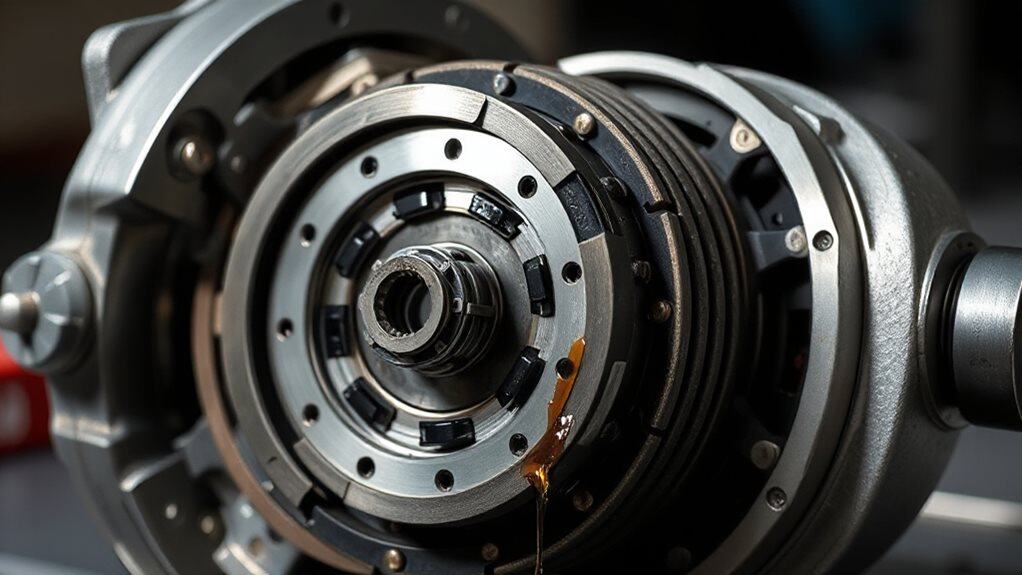
A limited‑slip differential (LSD) primarily distributes torque between the left and right drive wheels so that wheel slip is minimized and traction is maximized.
It behaves like an open differential during normal driving, letting wheels turn at different speeds.
When a wheel loses grip, the LSD automatically raises friction or locks, redirecting power to the wheel with traction, reducing spin and improving stability on low‑traction surfaces. Clutch‑type LSDs use friction plates and springs to increase resistance when a wheel starts to slip. A corroded or leaking differential housing can accelerate wear and reduce effectiveness, especially on older vehicles with known transmission leaks.
Posi‑Style Limited Slip Differential vs Traditional LSD
You’ll notice that a posi‑style limited slip uses a torque‑bias system that constantly distributes power between the axles, whereas a traditional LSD relies on clutch plates that engage only when a traction difference exceeds a set threshold.
The posi‑style’s bias mechanism keeps both wheels turning, reducing wheel hop in corners, while the clutch‑type LSD allows the inside wheel to spin freely until the clutches lock and transfer torque to the wheel with more grip.
Understanding these mechanical distinctions helps you predict how each design will behave under varying traction conditions.
Posi‑Style Torque Bias
Ever wondered how a Posi‑style limited‑slip differential (LSD) actually biases torque compared to a traditional helical LSD? A Posi‑style uses carbon friction discs and preloaded springs; when one wheel loses traction, the springs push the discs together, forcing both wheels to share torque. The bias builds progressively, transferring power to the higher‑traction wheel without the gear‑jam behavior of helical cuts. This results in smoother, chatter‑free operation and consistent traction.
Traditional LSD Clutch Mechanics
How does a traditional clutch‑type limited‑slip differential (LSD) actually transfer torque compared to a Posi‑style unit? Spring‑loaded plates press against the cage, creating baseline friction. When wheel speeds diverge, bevel gears push pressure rings outward, squeezing the clutch pack. Friction then redirects torque to the wheel with grip, while the preload spring maintains base distribution. Adjusting spring tension or disc count changes the locking threshold.
Limited Slip Differential Biases: 1‑Way, 1.5‑Way, 2‑Way
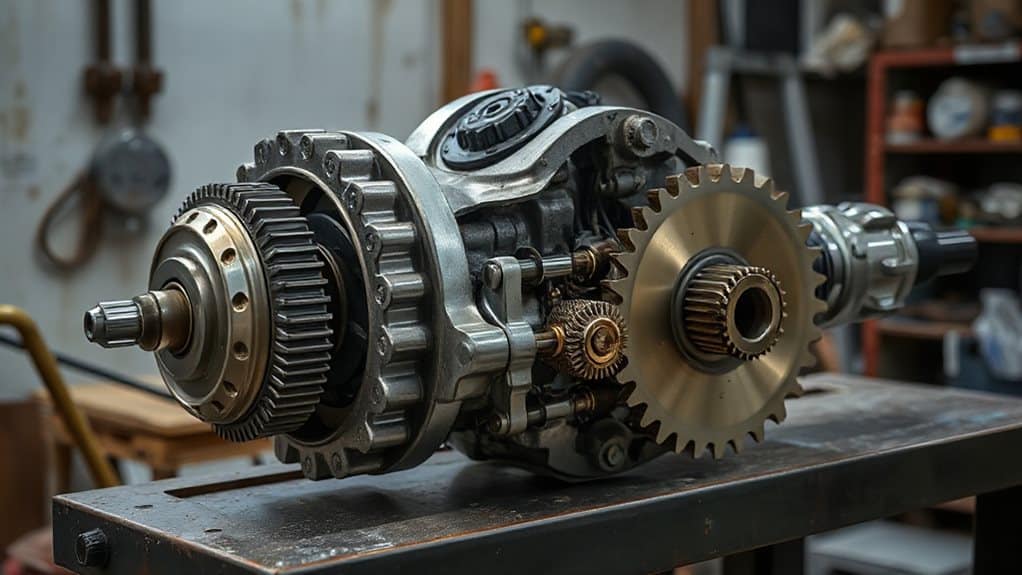
What distinguishes a 1‑Way, 1.5‑Way, and 2‑Way limited‑slip differential (LSD) is the way each design controls torque transfer when the wheels accelerate or decelerate.
A 1‑Way LSD locks only under acceleration, acting open when coasting; a 1.5‑Way locks forward and partially reverse, offering smoother brake‑torque bias; a 2‑Way locks fully in both directions, delivering symmetric, high torque bias for aggressive driving.
Proper maintenance, including regular fluid checks and timely service to prevent fluid breakdown, helps ensure reliable LSD performance and longevity, especially under extreme temperatures and heavy use, so inspect fluid level and condition as part of routine care and when diagnosing shifting or torque-transfer issues related to the transmission fluid.
Choosing LSD Over Locker or Open Differential
When you weigh traction against mobility, a limited‑slip differential (LSD) gives you enough grip to move through ice or rain while still allowing the wheels to turn independently, unlike an open diff that can leave you stuck when one wheel spins freely.
You’ll also notice that an LSD’s clutch‑pack design requires periodic oil changes and occasional rebuilds, whereas a locker’s simpler mechanics need less upkeep but can be harsh on pavement.
Ultimately, the choice hinges on whether you prioritize everyday all‑weather performance and moderate maintenance (LSD) or extreme off‑road torque and minimal service (locker).
Many drivers also consider manufacturer support and long‑term reliability when choosing, since customer support can significantly affect ownership experience.
Traction vs Mobility
Should you need both grip and the ability to steer smoothly, a limited‑slip differential (LSD) often outperforms an open or fully locked unit. An LSD transfers torque to the wheel with more traction, preventing spin while still allowing wheel‑speed differences for cornering. It delivers better grip than an open diff and more mobility than a full locker, making it ideal for mixed‑surface driving.
Maintenance and Longevity
A limited‑slip differential (LSD) keeps the wheels turning together enough to maintain grip, but it also requires regular upkeep to stay reliable, especially when you compare it to an open diff or a fully locked unit. Change the fluid every 30‑50 k miles, inspect clutch packs for wear, and replace viscous fluid before 60 k miles. Gear‑based LSDs can last 150 k miles, while clutch‑type units need rebuilds at 30‑50 k miles. Proper maintenance prevents torque loss, overheating, and costly rear‑diff repairs.
Servicing Clutch‑LSDs, Cone‑LSDs, and Posi Differentials
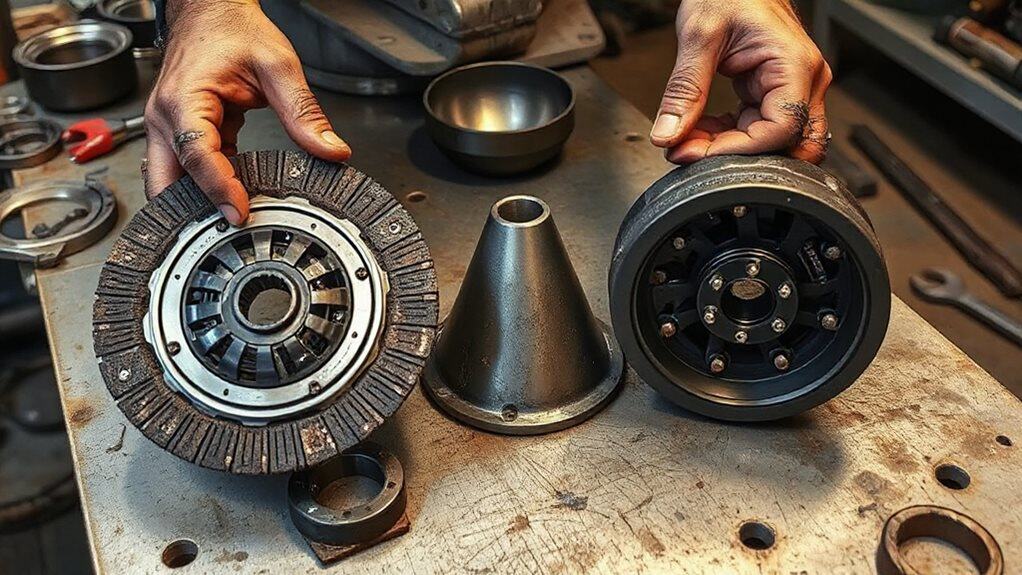
If you’re tackling the service of clutch‑LSDs, cone‑LSDs, and Posi differentials, start by understanding that each type relies on a distinct friction‑based mechanism to transfer torque between wheels.
Disassemble, inspect disc wear, glazing, or cone taper, then clean and replace worn parts.
Adjust spring preload with shims or washers, use LSD‑specific oil with additive, and reassemble, ensuring proper torque and fluid change intervals.
Be alert for related electrical issues like a repeatedly blowing transmission fuse, which can cause no engagement and mimic mechanical failure.
Best Use Cases: Street, Track, and Light Off‑Road
After you’ve learned how clutch‑LSDs, cone‑LSDs, and Posi differentials are serviced, the next step is to match each design to its ideal driving environment. On streets, a pre‑loaded LSD gives equal traction, smooth turning, and slip control on wet pavement. On track, 2‑way or 1.5‑way LSDs lock during acceleration and braking for predictable, high‑speed cornering. Light off‑road benefits from gear‑type LSDs that progressively bias torque, preventing wheel spin on gravel or mild trails. Regular monitoring of related vehicle fluids like oil levels and addressing low readings promptly helps prevent engine and drivetrain damage.
Wrapping Up
You’ve seen how limited‑slip differentials manage torque, how posi‑style units differ from traditional LSDs, and the bias types—1‑way, 1.5‑way, and 2‑way—that affect traction. When you need predictable grip on street or track, an LSD usually outperforms an open differential, while a locker excels in extreme off‑road scenarios. Proper servicing of clutch‑LSDs, cone‑LSDs, and posi units keeps performance consistent. Choose the differential that matches your driving conditions and maintenance willingness.


