
First, open the fob by sliding out the backup key and prying the left notch with a flathead screwdriver; replace the old CR2032 battery with a new one, positive side down, and reseal the halves. Next, inspect the battery contacts for corrosion or flattening—clean any white/green deposits with a baking‑soda paste and straighten bent terminals so they sit flush against the posts. If the “Key ID Incorrect” message persists, hold the fob flat against the START/STOP button near the steering column while pressing the brake, or try the emergency start method of pressing the button three times. Finally, test for RF interference by moving the fob three feet away from phones, laptops, or metal objects, and replace the battery again if needed. These steps usually resolve the issue, and further details on re‑syncing or dealer re‑programming await.
Quick Tips
- Replace the fob’s CR2032 battery, ensuring correct polarity and a fresh charge.
- Verify the valet switch is off and the fob is held flat against the START/STOP button near the steering column.
- Perform a proximity‑sensor start: hold the fob against the button while pressing the brake pedal, repeat up to three times.
- Inspect and clean corrosion on the battery terminals and contacts; straighten any flattened contacts.
- Schedule a dealership appointment for a free reprogramming under the 2024 class‑action settlement (eligible 2016‑2022 Altima).
Explain the “Key ID Incorrect” Message on Nissan Altima
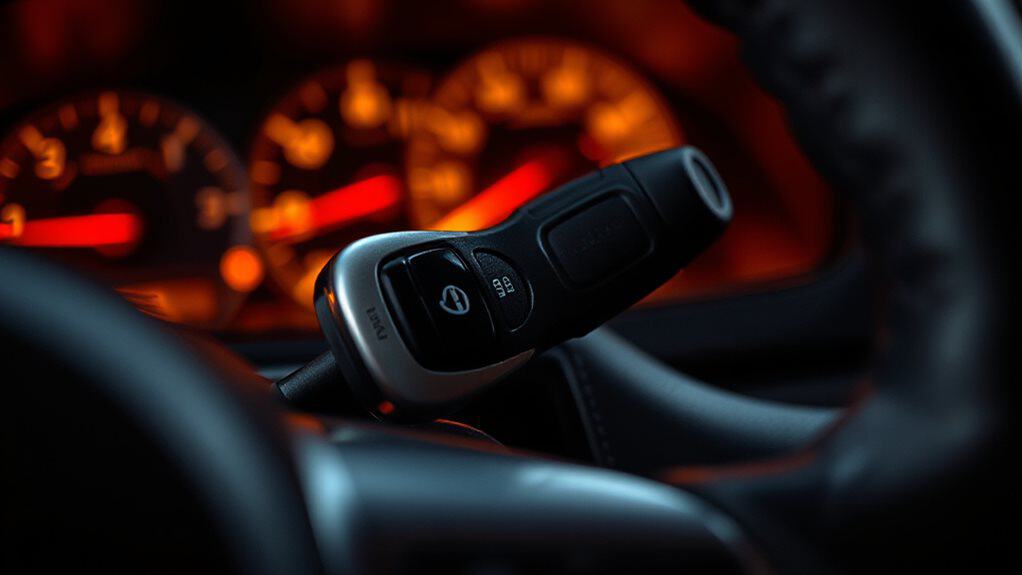
Why does the dashboard flash “Key ID Incorrect” when you press the start button on a Nissan Altima? It means the vehicle’s Intelligent Key System can’t match the transponder ID in your fob with the code stored in the car’s control module. Weak batteries, damaged circuitry, or corrosion can block the signal. Likewise, a faulty body‑control module, antenna issues, or poor grounding can prevent detection, prompting the warning and halting engine start. The issue often stems from a low‑power battery in the key fob. Also check the valet switch and key fob battery as simple, quick causes before pursuing major repairs.
Swap the CR2032 Battery for Nissan Altima Key ID Incorrect
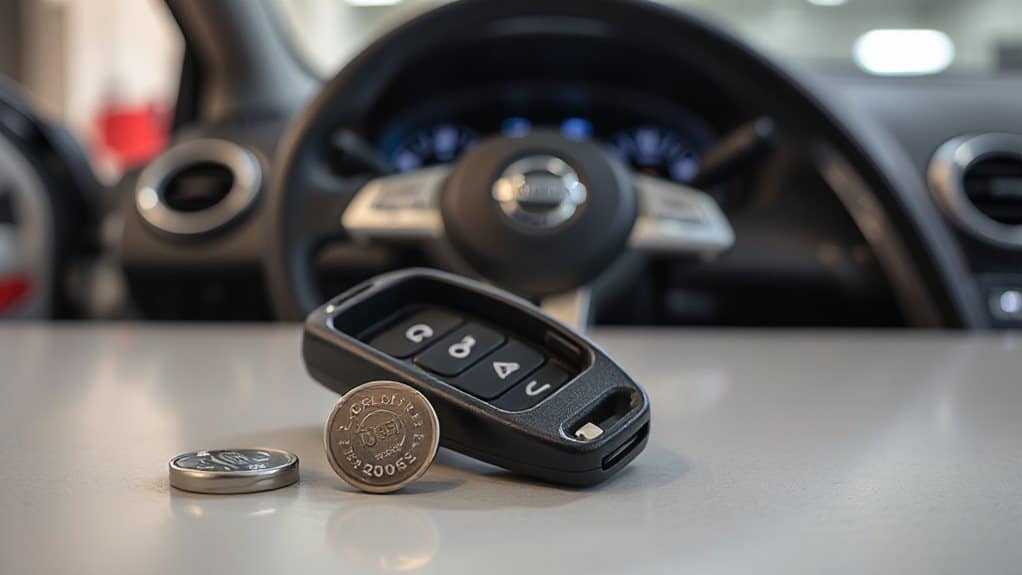
How do you replace the CR2032 battery that’s causing the “Key ID Incorrect” warning on your Nissan Altima? First, slide the backup key out, then insert a flathead screwdriver into the left notch and twist gently to split the fob. Lift the old battery from its spring‑held slot, discard it, and place a new CR2032 with the positive side down. Align the halves, press together, reinsert the backup key, and test the remote. If the warning persists after replacing the battery, you may need to reset the vehicle’s ECU or re-sync the key to the car.
Emergency Start Tricks When Nissan Altima Doesn’t Recognize Key
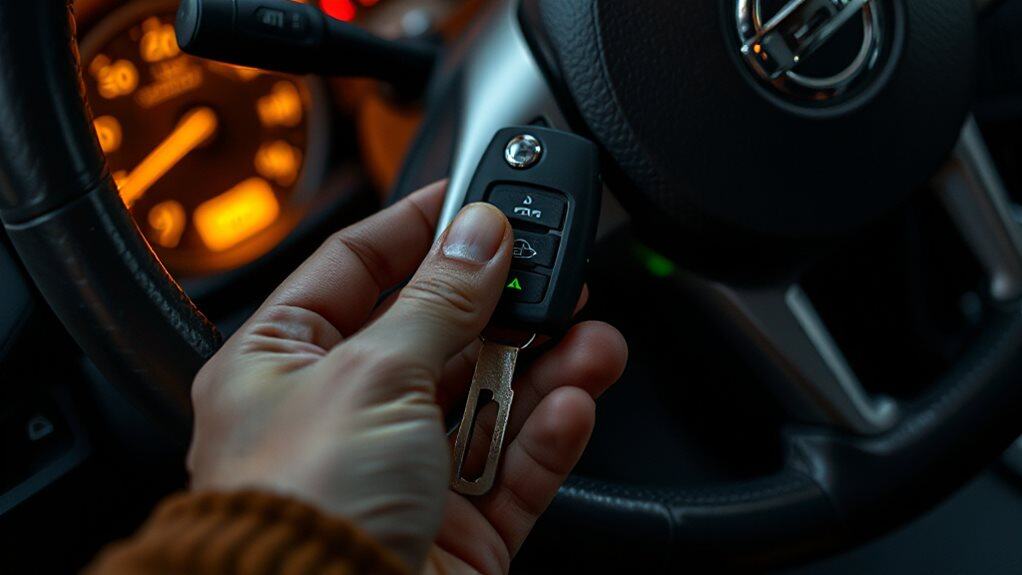
You’ll need to position the key fob close to the vehicle’s proximity sensor, usually near the steering column, while you press the brake pedal and hold the fob against the start button; this brake‑pedal hold technique lets the car register the fob’s signal even when its battery is dead.
If the engine doesn’t fire on the first attempt, repeat the ignition cycle—press brake, hold fob, and press start—up to three times, which often clears a temporary communication glitch.
These steps work for 2019‑2023 Altima models and give you a reliable backup when the key isn’t recognized.
If repeated attempts fail, check the fob battery and verify there’s no signal interference that could be preventing the vehicle from detecting the key.
Proximity Sensor Placement
Ever wonder why the proximity sensor sometimes ignores your Nissan Altima key fob? Hold the fob flat against the START/STOP button, logo toward the windshield, and press firmly so the sensor reads the transponder through conduction. Align the nose side with the button’s left edge for maximum sensitivity, and adjust the angle if the initial beep doesn’t sound. Keep phones and laptops away to avoid interference.
Brake‑Pedal Hold Technique
When the proximity sensor can’t read the key, the next reliable trick is to use the brake‑pedal hold technique. Press the brake pedal firmly and keep it depressed while you press the start button. The brake switch then signals the car that you’re ready, bypassing the faulty proximity read.
If the vehicle still won’t start, inspect the brake‑pedal switch for loose white connectors or misalignment, and press the switch housing down to reseat it. This often restores the “press brake” signal without needing a replacement.
Repeated Ignition Cycle Method
Do you know why a Nissan Altima sometimes refuses to recognize its key even after the brake‑pedal hold fails? Try the Repeated Ignition Cycle Method: press START/STOP, release, wait a couple seconds, then press again.
Repeat three times while holding the key fob near the button. This forces the vehicle’s I‑Key module to re‑scan the transponder, often bypassing a dead battery or interference. Use it on 2019‑2023 Altima models.
Fix Flattened or Corroded Battery Terminals to Resolve Key ID Incorrect
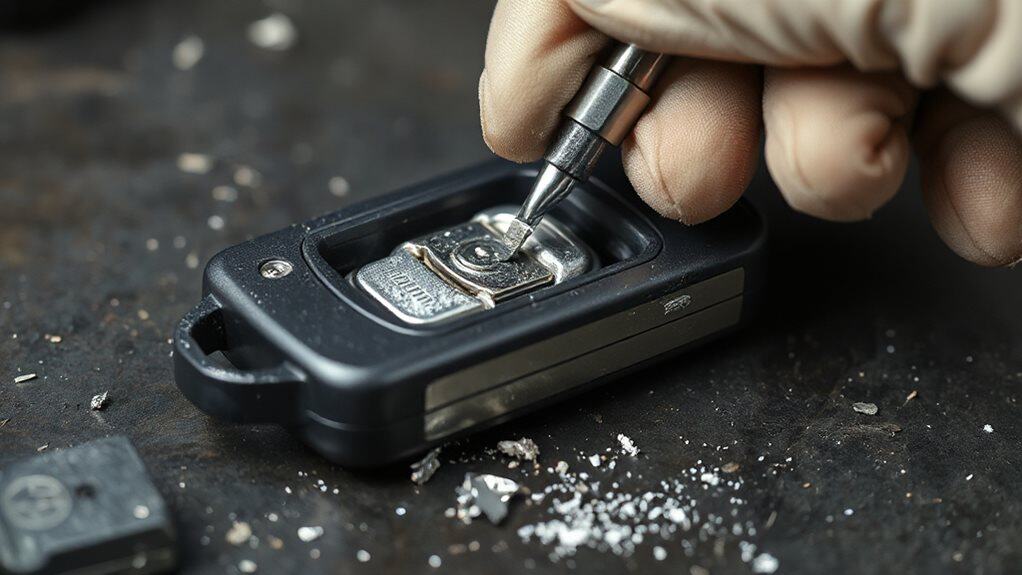
First, inspect the terminals for corrosion—white or greenish powder, bulging, or pitting indicates chemical damage that can interrupt the key‑ID signal. If the contacts are flattened, straighten them gently with a non‑conductive tool, making sure they sit flush against the battery posts.
Finally, verify the battery is oriented correctly, then reconnect the cables securely, tightening the bolts to maintain a solid electrical connection.
Inspect Terminal Corrosion
Corrosion on your Nissan Altima’s battery terminals shows up as whitish, bluish, or greenish deposits that can be lead sulfate, anhydrous copper sulfate, or hydrated copper sulfate, depending on the chemical reaction involved. You should examine each terminal for these colors, note any sulfur smell, and check whether the negative side looks more corroded, indicating an undercharged battery.
Compare the buildup to a clean, galvanized OEM surface; if it differs, the corrosion is likely interfering with power flow and must be addressed before further diagnostics.
Straighten Flattened Contacts
Why do your Nissan Altima’s key‑fob terminals become flat, and how does that cause the “Key ID Incorrect” error?
Pressing buttons too hard flattens the metal contacts, preventing proper battery contact.
Open the fob gently, locate the flattened terminals, and lift them with fine‑tipped tweezers.
Rotate the battery to test the connection, then reassemble and verify the fix.
Secure Proper Battery Orientation
After flattening the fob’s metal contacts, the next step is to make sure the battery sits correctly and its terminals are free of corrosion. Align the positive (+) pole with the red terminal and the negative (‑) pole with the black terminal, ensuring each fits snugly.
Clean any whitish, bluish, or greenish buildup with a brush and baking‑soda paste, then reinstall OEM‑style galvanized terminals, tightening them just enough to prevent movement without stripping threads. This orientation stops uneven corrosion, stabilizes voltage, and restores proper ignition and accessory power.
Dry and Restore a Water‑Damaged Nissan Altima Key Fob
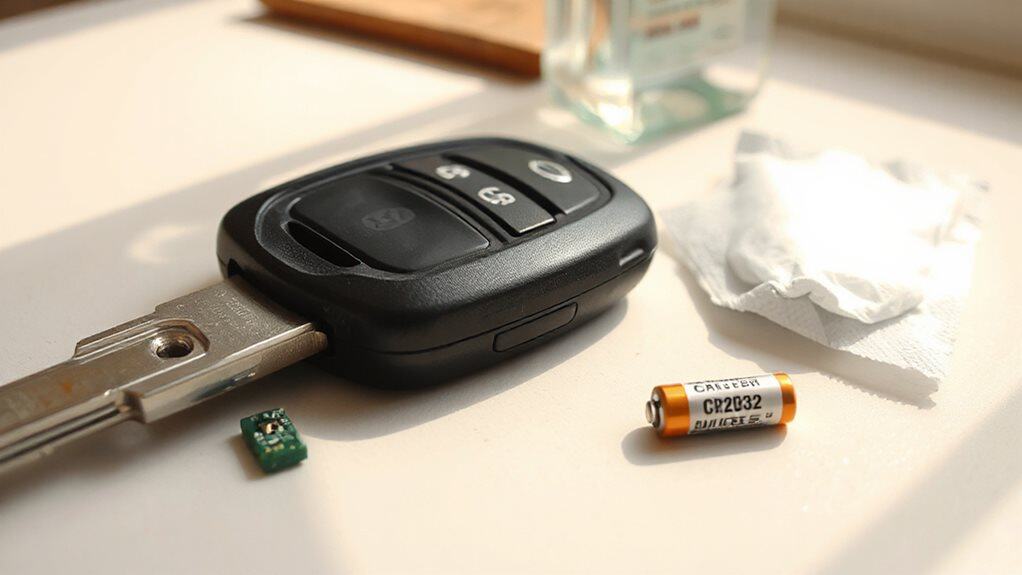
How do you begin restoring a water‑damaged Nissan Altima key fob? First, remove it from liquid, open the case with a plastic pry tool, and extract the battery. Wipe the exterior, then disassemble fully, noting battery orientation. Rinse the circuit board with 90%+ isopropyl alcohol, swab corrosion, and vacuum debris. Dry with silica gel 24‑48 hours, reinstall a fresh CR2032, reassemble, and test all functions. Electrical faults like voltage abnormalities can cause malfunctions and may require professional diagnostic inspection.
Dealership Re‑program Costs and Timeframe for Nissan Altima
You’ll find that a Nissan dealer typically charges $165‑$170 plus tax to re‑program a 2017 Altima key, and the service usually takes about 30‑45 minutes while you wait.
The dealership’s warranty often covers the programming work for a limited period, so you should confirm the exact terms before paying.
Compared with locksmiths, the dealer’s price is higher, but the appointment ensures you receive factory‑approved equipment and a documented service record.
For additional safety when transporting parts or replacements, consider vehicle fit and protection methods for larger items like TVs to avoid damage, especially by keeping them upright during transport.
Dealership Re‑program Pricing
What you’ll encounter at a Nissan dealership when fixing an “Key ID Incorrect” issue is a set fee labor and parts charge plus a time estimate for the re‑program. Typically, you’ll pay a flat labor rate—often $80 to $120 per hour—plus the cost of a new transponder chip, which ranges from $30 to $60. Dealerships usually bundle these into a single invoice, so you’ll see one total amount rather than separate line items.
Estimated Completion Time
When you schedule a Nissan dealership appointment for a key‑ID‑incorrect fix, the overall timeline typically stretches from a single‑day turnaround to up to five days, depending on dealer availability and the complexity of the job.
You’ll usually wait 1‑3 days for a slot, then the technician spends 15‑30 minutes per fob, up to an hour for several keys, plus 5‑10 minutes for final verification.
Warranty Coverage Details
The “Key ID Incorrect” issue is covered by the 2024 class‑action settlement, which means eligible Nissan Altima owners — specifically model years 2016‑2022 — can get the dealership re‑programming service at no charge. You’ll schedule a dealer appointment; the technician uses Nissan‑approved diagnostic tools, confirms part number 285E3‑9PB3A, and completes the fix within an hour. No out‑of‑pocket fees apply, and your vehicle warranty stays intact.
Free 2016‑2022 Class‑Action Reprogramming for Nissan Altima
Ever wonder why rumors of a free 2016‑2022 Nissan Altima class‑action reprogramming keep circulating despite lacking any legal basis? You won’t find a lawsuit targeting key‑ID issues; searches show none.
The only existing suit concerns door‑lock actuators, not key fobs. Consequently, no free reprogramming program exists, and any claim to the contrary is unfounded.
Test for Phone/Laptop Interference With Nissan Altima Key Fob

Could your Nissan Altima’s key fob suddenly stop responding, and you suspect your phone or laptop is to cause? Move the fob at least three feet from any smartphone, laptop, Wi‑Fi router, or metal object, then press a button.
If it works, repeat the test with a backup fob. Compare results; consistent failure near electronics indicates RF interference, so keep devices separated. Regularly check and replace the battery in your key fob to rule out power issues.
Switch to a Digital or Smartphone Key for Newer Nissan Models
If your key fob keeps losing signal near electronic devices, consider swapping it for Nissan’s Virtual Key, which lets you lock, open, and start your Altima directly from a smartphone. The app uses Bluetooth Low Energy to communicate securely, eliminating the need for a physical fob.
Pair your phone via the NissanConnect Services app, enable the feature, and you’ll gain proximity‑based entry, remote climate control, and revocable temporary sharing—all with encrypted, device‑specific access.
Preventive Maintenance: Battery Replacement Schedule and Handling Tips
When do you need to start thinking about your Altima’s battery health? Test it every six months and during each annual safety inspection; Nissan dealers offer complimentary diagnostics.
Replace the 12.6 V battery every three to five years, using group 35 or 24F units that match original specs.
Avoid extreme heat, handle terminals gently, and let trained technicians perform service without an appointment.
Summary Checklist: Quick Fixes for Nissan Altima Key ID Incorrect
Why does your Altima keep flashing “Key ID Incorrect”? Check the battery first—replace the CR 2025 or CR 2032 cell, pry the fob open, and ensure terminals contact cleanly. Gently adjust any flattened contacts.
Try proximity activation by holding the fob near the start button, under the driver’s seat, or in the center console.
If those steps fail, reprogram the fob with ignition cycling or visit a dealer for professional reprogramming.
Wrapping Up
By checking the battery, terminals, and possible interference, you can usually eliminate the “Key ID Incorrect” error on a Nissan Altima. Replace the CR2032 cell promptly, clean corroded contacts, and dry any moisture‑damaged fob. If the problem persists, test for electronic interference or consider a digital key upgrade. Regular maintenance—periodic battery swaps and careful handling—prevents recurrence and keeps the vehicle’s immobilizer system reliable.


