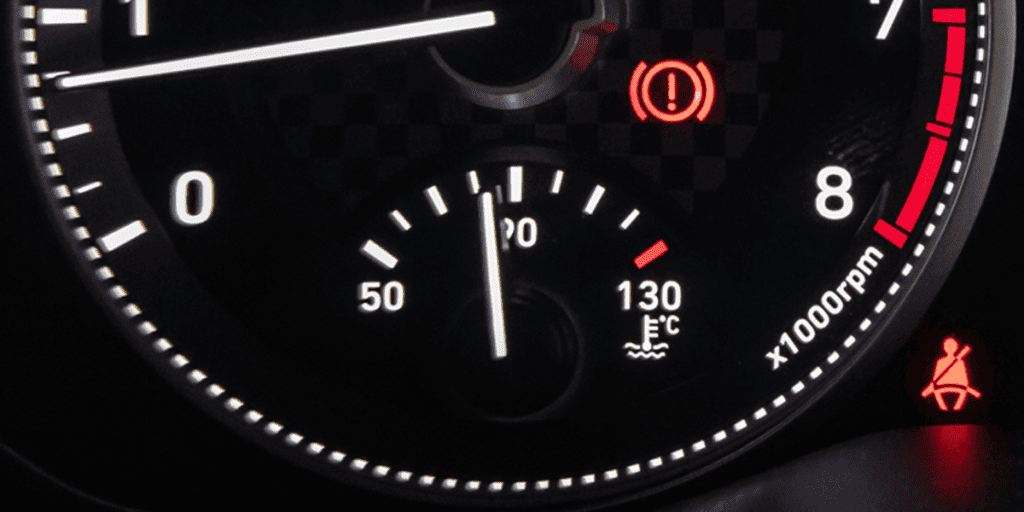
You’ll see P0430 when the downstream O₂ sensor on bank 2 reports catalyst efficiency below 95 %, usually meaning the catalytic converter is losing effectiveness, an exhaust leak is skewing sensor data, or the sensor itself is faulty. Expect reduced fuel economy, a rough idle, and a check‑engine light that may fade once the PCM adapts. Common causes include catalyst degradation, soot deposits, misfires from bad plugs or injectors, and wiring problems. Fixes range from cleaning or replacing the sensor, sealing exhaust leaks, and cleaning the MAF to swapping the converter if it’s truly worn. Continue for deeper diagnostics and step‑by‑step repair guidance.
Quick Tips
- P0430 indicates the downstream O₂ sensor on bank 2 sees catalyst efficiency below 95 %, meaning the converter isn’t properly cleaning exhaust gases.
- Common causes include a failing catalyst, a faulty downstream O₂ sensor, exhaust leaks, or misfires from bad plugs or injectors.
- Symptoms are reduced fuel economy, rough idle, and a check‑engine light; the downstream sensor will mirror upstream voltage fluctuations.
- DIY steps: scan for codes, compare upstream/downstream O₂ readings, inspect and seal exhaust leaks, clean or replace the downstream sensor, and address any misfire sources.
- Repair vs replacement: cleaning/welding a universal catalyst costs $200‑$300; OEM sensor replacement $286‑$2,876 plus labor $95‑$214.
What P0430 Means for Your Honda Accord – Immediate Implications
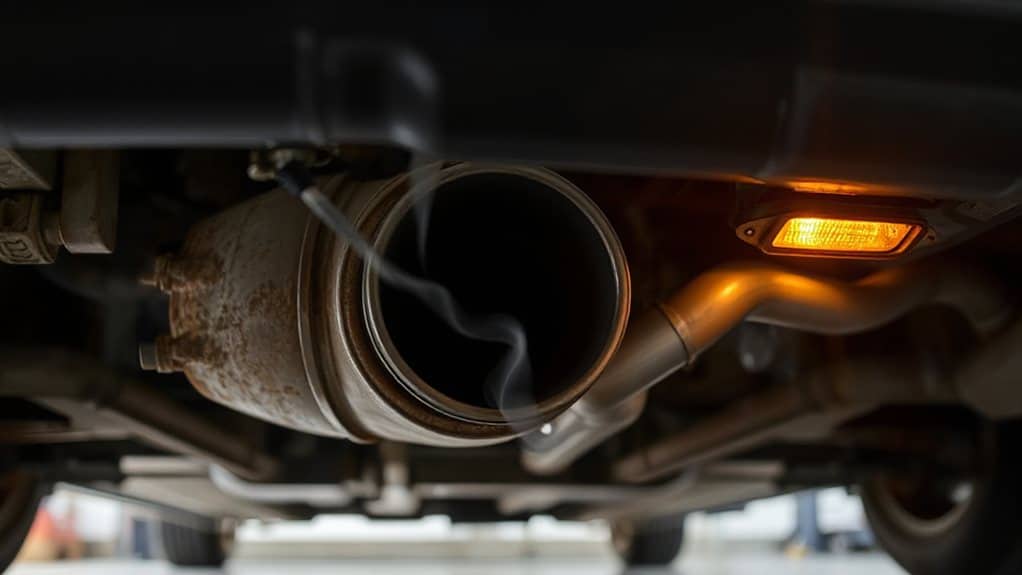
What does P0430 actually tell you about your Honda Accord? It means the downstream O₂ sensor on bank 2 detects that the catalytic converter’s efficiency has fallen below the 95 % threshold. The PCM compares upstream and downstream sensor readings; similar values indicate the converter isn’t cleaning exhaust gases. You’ll see the check‑engine light, but power loss is rare initially. Ignoring it can raise emissions, cause rough idle, and eventually damage the engine. Exhaust leaks can also affect sensor readings and trigger the code. Dune buggies designed for hardpack or rocky terrain use a trail body that offers more protection and durability.
P0430 Diagnostic Checklist You Can Run at Home
You’ll start by scanning the OBD‑II port to confirm the P0430 code and note any related codes like P0420.
Next, use a multimeter or scan tool to compare the voltage or frequency readings of the upstream and downstream O₂ sensors, looking for the expected similarity that indicates a healthy catalytic converter.
If the sensor values diverge or the code persists, you’ve identified the next step in the diagnostic process.
If you find signs of contamination on nearby components, clean them with brake cleaner and inspect for damage before proceeding.
Scan OBD-II Codes
Ever wondered how to confirm that a P0430 code truly originates from the Bank 2 catalytic system before diving into repairs? Plug an OBD‑II scanner into the under‑dashboard port, turn the ignition on, and select “Read Codes.” Verify P0430 appears, note any related codes, then clear them.
Retest after a short drive to see if the code returns, confirming the issue’s persistence.
Compare O₂ Sensor Readings
How can you tell whether the Bank 2 catalytic converter is truly under‑performing? Warm the engine, hook an OBD‑II scanner, and watch live data.
The upstream O₂ sensor should swing between 0.1 V and 0.9 V, while the downstream sensor stays steady around 0.6‑0.8 V. If downstream mirrors upstream’s rapid fluctuations, efficiency has dropped below 95 % and the converter is likely failing.
P0430 Symptoms to Watch for Before the Check‑Engine Light Fades
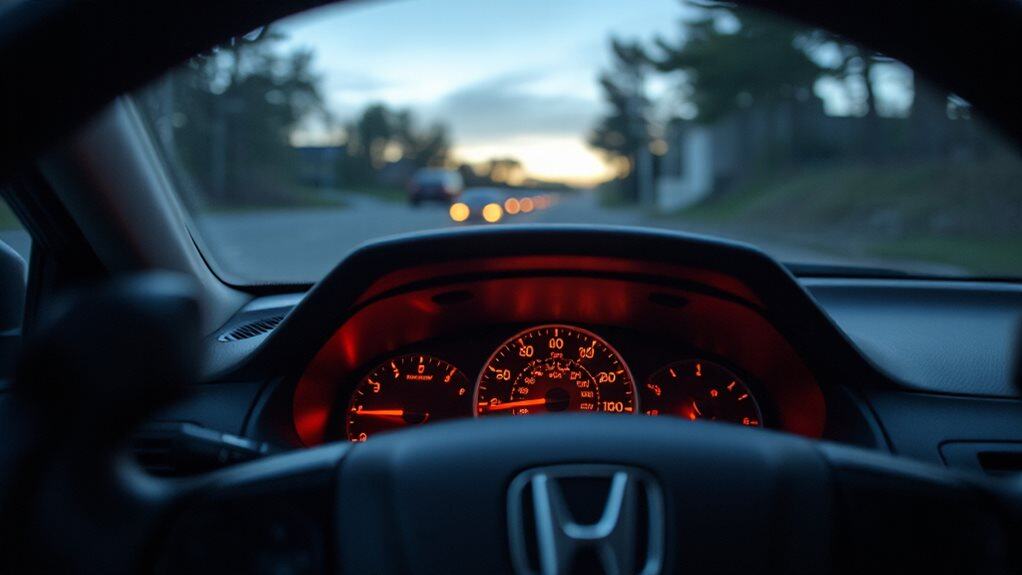
You’ll notice your Accord’s fuel economy slipping, especially on the highway, because the catalytic converter isn’t cleaning exhaust gases efficiently. At the same time, the engine may idle roughly or even stall, which often shows up as a low‑rpm wobble before any warning light appears. These early signs give you a chance to address the issue before the check‑engine light finally illuminates. Regular maintenance like cleaning sensors and checking related components can help prevent worsening symptoms and restore performance, including inspecting wiring issues that might affect emissions systems.
Reducedcreasedved Fuel Economy
Why does your Honda Accord suddenly sip more gasoline after a P0430 code appears?
The catalytic converter can’t process exhaust efficiently, so the engine works harder and the ECU enriches the fuel mixture to compensate.
Oxygen sensor irregularities reinforce this, causing richer mixtures.
Exhaust leaks and clogging add drag, further raising fuel use.
Within days, fill‑up frequency rises noticeably.
Rough Idle or Stalling
When the P0430 code appears, the first sign you’ll often notice is a rough idle that feels like the engine is shivering at a stop. You’ll feel increased vibrations, especially in neutral, as the bank‑2 catalyst drops below 95 % efficiency.
Sudden stalls may follow low‑speed maneuvers, caused by restricted exhaust flow and mis‑fires. Monitor RPM variance, O₂ sensor data, and any sulfur odor to catch the problem before the check‑engine light illuminates.
Common Causes of a Bank 2 Catalytic Converter Failure (P0430)
What typically triggers a P0430 code is a drop in Bank 2 catalytic converter efficiency below the 95 % threshold, and several distinct factors can cause that decline.
Over time, the honeycomb inside degrades, and soot or fuel deposits clog it, reducing efficiency.
Faulty downstream O₂ sensors misread oxygen levels, while exhaust leaks introduce extra air, skewing sensor data.
Misfires from bad spark plugs or fuel injector leaks also overheat and damage the catalyst.
Electrical issues such as blown fuses and loose connections can also cause instrument cluster or sensor malfunctions that may contribute to incorrect fault readings, so check corroded connectors and related wiring during diagnosis.
Decide: Repair or Replace the Bank 2 Catalytic Converter?
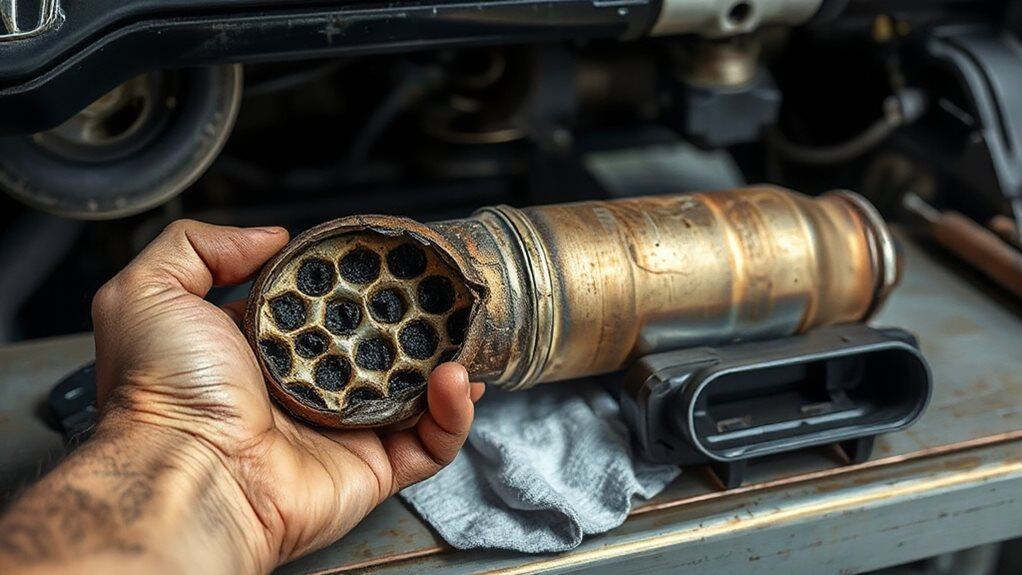
If the Bank 2 catalytic converter’s efficiency has dropped below the 95 % threshold, you’ll need to decide whether to repair it or replace it entirely. Repair may involve cleaning or welding a universal fit, costing $200‑$300, but only works if the converter isn’t integrated.
Replacement costs range from $286 (YourMechanic) to $2,876 (OEM), with labor $95‑$214. Check related OBD codes first to confirm failure before spending.
DIY Fixes for P0430: Sensor Swaps, Leak Repairs, and Fuel Tweaks
Although the P0430 code can seem intimidating, you can often clear it with a few hands‑on fixes that target the most common culprits on a Honda Accord’s Bank 2. Swap a faulty upstream or downstream O2 sensor using a Denso or NTK unit, tighten to 30 ft‑lb, and clear the code.
Inspect for exhaust leaks with soapy water, seal with silicone or new gaskets, then retest.
Clean the MAF, replace clogged injectors or spark plugs, and run a fuel‑system additive to correct mixture issues. A portable 12V electric extractor can help drain and replace fluids quickly during service, especially for frequent DIYers or larger jobs with higher capacity tanks.
Preventive Tips to Keep Your Accord’s P0430 System Healthy
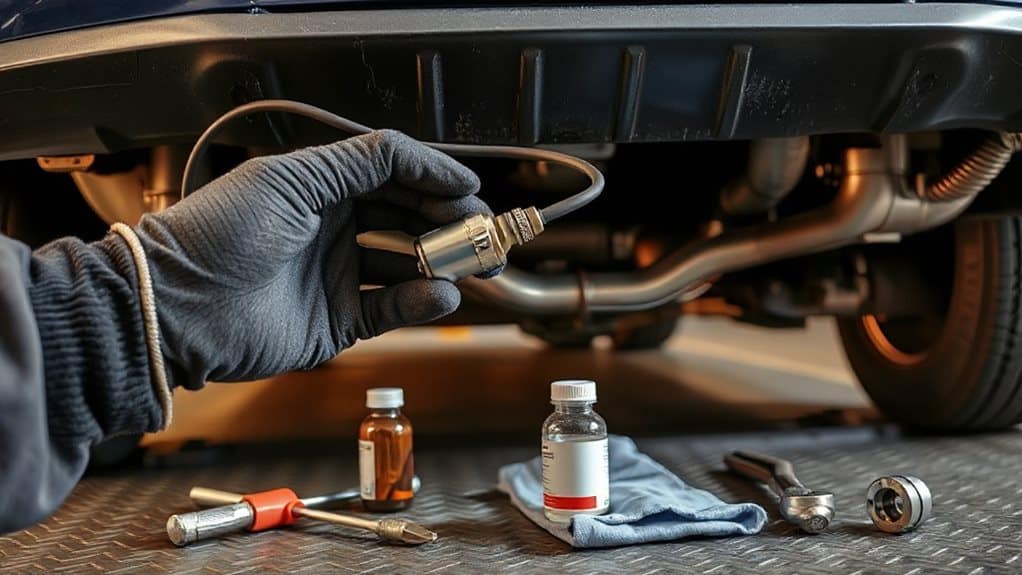
How can you keep the P0430 system in your Honda Accord running smoothly? Inspect the catalytic converter regularly for carbon buildup and leaks; clean or replace it before efficiency drops below 95 %.
Test downstream oxygen sensors, tighten wiring, and replace them at manufacturer intervals. Use high‑quality fuel, change the fuel filter, and clean injectors to avoid rich conditions.
Scan for codes quarterly and check exhaust integrity for cracks or rust. Add proper support when working under the vehicle and use jack stands rated for your vehicle’s weight to prevent workshop accidents.
Wrapping Up
By addressing the P0430 code promptly, you’ll prevent further damage to the catalytic system and maintain fuel efficiency. Regularly inspect the oxygen sensors, exhaust leaks, and fuel mixture to catch issues early. If diagnostics point to a faulty bank 2 converter, weigh repair costs against replacement, considering mileage and driving conditions. Consistent maintenance—cleaning connections, using high‑quality fuel, and following service intervals—keeps your Accord’s emissions system reliable and compliant with environmental standards.