
You’ll find a resonator shapes the exhaust note by canceling specific frequencies with acoustic chambers, while a catalytic converter cleans harmful gases through oxidation and reduction reactions. The converter sits right after the manifold to meet EPA and CARB emissions standards, and the resonator follows downstream to fine‑tune tone without adding back‑pressure. Sound changes are noticeable with a resonator swap, but a converter upgrade mainly affects emissions and modestly reduces back‑pressure. Failure signs differ: rattles and no OBD‑II codes point to a resonator, whereas persistent rattles, power loss, and trouble codes indicate a bad catalyst. Legal compliance hinges on the converter; resonators are unrestricted. Upgrading either component involves flange‑clamp connections, but professional installation guarantees proper fit and regulatory adherence, whereas DIY can save money if you match diameters and handle heat shields correctly. Continue further to uncover detailed trade‑offs and installation tips.
Quick Tips
- A catalytic converter chemically treats exhaust gases, meeting emissions regulations, while a resonator is an acoustic device that shapes sound without affecting emissions.
- The converter adds modest back‑pressure and virtually no audible change; the resonator fine‑tunes tone, canceling specific frequencies and reducing drone.
- Catalytic converter issues trigger OBD‑II codes and power loss; resonator problems cause rattles or whines but rarely set a check‑engine light.
- Upgrading to a high‑flow cat can modestly increase horsepower while staying legal; swapping or removing a resonator alters sound and may violate noise ordinances.
- Installation locations differ: the converter sits directly after the manifold for heat‑based reactions, whereas the resonator follows downstream to adjust exhaust acoustics.
Purpose and Operation of Resonators and Catalytic Converters
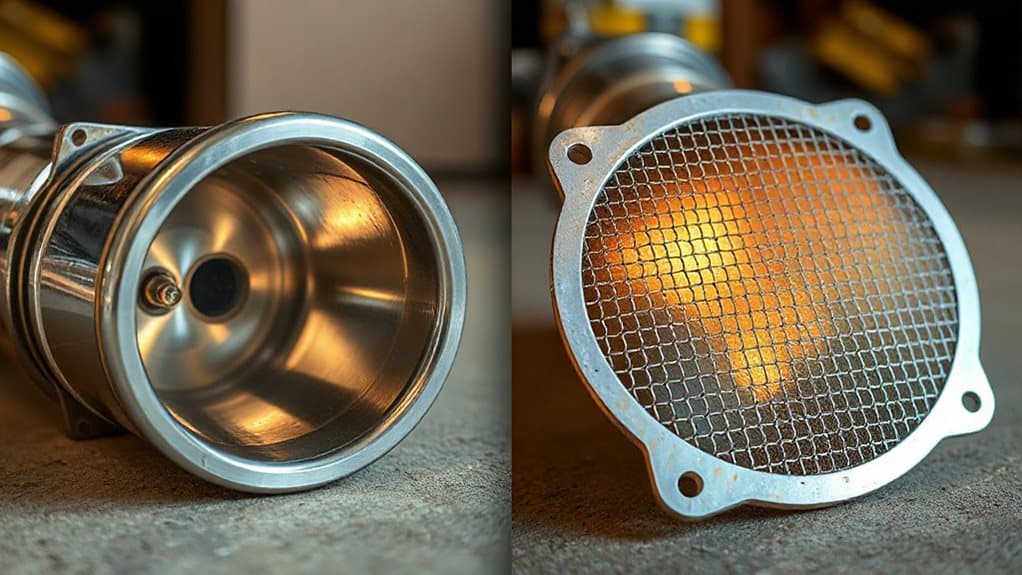
What exactly do resonators and catalytic converters do in your exhaust system? Resonators tune sound by targeting specific frequencies, using acoustic chambers or absorbent material to cancel high‑pitched whines through destructive interference, while adding no backpressure. Catalytic converters, by contrast, perform chemical reactions—oxidation and reduction—to turn harmful gases into safer emissions, meeting legal standards and creating noticeable backpressure, but they don’t affect acoustic quality. Performance mufflers are engineered with multiple perforated or baffled chambers to reduce pressure and sound. Trickle chargers can maintain charge over long storage periods by preventing battery sulfation with a low, steady current battery maintenance.
Where the Resonator and Catalytic Converter Sit in the Exhaust System
You’ll find the catalytic converter right after the exhaust manifold, mounted to the downpipe with clamps or flanges, which keeps it close to the engine for optimal heat‑based pollutant conversion.
The resonator follows downstream, usually positioned under the front seats and before the muffler, so it can fine‑tune the exhaust tone and reduce drone.
Engine Proximity Placement
Where does each component sit relative to the engine, and why does that placement matter?
The catalytic converter attaches directly to the exhaust manifold via a downpipe flange, positioning it closest to the engine for optimal emission control.
The resonator follows, bolted to the converter’s front with a three‑bolt flange, staying near the downpipe but downstream, allowing early sound tuning while preserving exhaust flow.
Mid‑Pipe Positioning
Ever wondered how the resonator and catalytic converter share the mid‑pipe?
The converter sits right after the exhaust manifold, controlling emissions, then a flange‑gasket connection leads to the resonator. You can place the resonator halfway, upstream, or close to the muffler; each choice trades drone reduction for exhaust velocity. No welding’s needed—flanges and a 1.75‑inch clamp secure everything, keeping flow smooth.
Downstream Sound Tuning
After the catalytic converter does its job of cleaning the exhaust, the resonator sits further downstream, typically just before the muffler.
You’ll notice the converter’s boxy shape near the engine, then a tubular resonator mid‑pipe.
This downstream placement lets the resonator fine‑tune low‑frequency drone without affecting emissions, preserving flow while reducing cabin noise and improving overall exhaust sound.
Sound Impact of a Resonator vs. a Catalytic Converter
You’ll notice that a resonator shapes the exhaust note by cancelling specific frequencies, which smooths the highway drone and lowers back‑pressure.
In contrast, a catalytic converter adds virtually no sound‑dampening material, so its presence barely alters the volume or tone of the exhaust.
Together they create a balanced acoustic profile: the resonator handles tuning while the converter focuses on emissions without affecting the audible experience.
The M21 transmission’s close-ratio design helps keep the engine in its power band for optimal performance when paired with appropriate exhaust tuning, especially with close-ratio gearing that maintains higher RPMs.
Resonator Tuning Effects
How does a resonator shape the exhaust note compared to a catalytic converter? You’ll notice that resonators act as acoustic equalizers, canceling low‑frequency drone and tweaking high‑end tones, while catalytic converters barely affect sound.
Straight‑through resonators let sound pass with modest reduction; packed inserts dampen more aggressively.
Proper tuning avoids boomy highway noise, preserves engine breathing, and changes emissions or power.
Catalytic Converter Noise Absence
Why does a catalytic converter hardly affect the exhaust sound while a resonator can reshape it?
The converter’s primary job is cleaning emissions, not shaping acoustics, so its solid housing and internal honeycomb produce no wave interference. It lacks chambers or baffles that cancel frequencies.
Conversely, a resonator contains tuned chambers that target droning tones, using internal reflections to smooth the note without reducing overall volume.
Combined System Sound Balance
Ever wondered how a resonator and a catalytic converter work together to shape your car’s exhaust note?
The cat first scrubs pollutants, letting raw sound pass through.
The resonator then fine‑tunes that flow, canceling drone and high‑end rasp while preserving volume.
Together they balance tone, reduce buzz, and keep back‑pressure low, delivering a smoother, quieter highway performance.
How to Recognize a Failing Catalytic Converter vs. a Bad Resonator?
When you hear a metallic rattle that changes with road conditions, you’re likely dealing with a resonator problem; when the same rattling persists at idle or during start‑up, the culprit is probably a failing catalytic converter. A resonator rattles only on rough pavement, produces louder, raspier exhaust notes, and rarely triggers a check engine light. A converter rattles constantly, causes power loss, misfires, emits a rotten‑egg smell, and sets OBD‑II codes for emissions. Inspect for road‑dependent noise versus persistent rattling, performance loss, and odor to differentiate. Regular inspections of related systems like the HVAC and airflow components can reveal other issues that affect overall vehicle performance, such as a clogged cabin air filter.
Emissions Law for Converters vs. Resonator Freedom
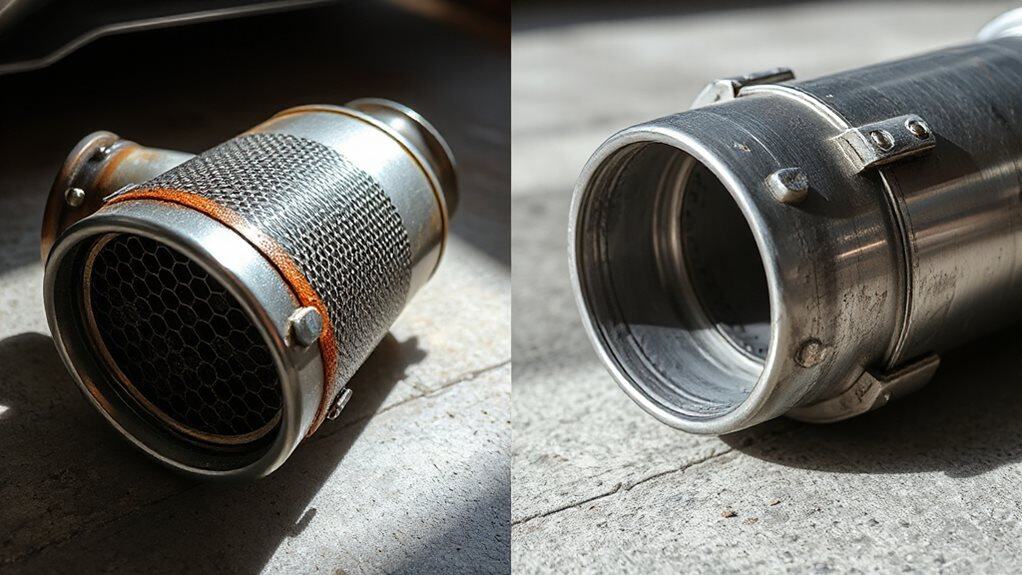
Do you know how the law treats catalytic converters differently from resonators? Catalytic converters must meet EPA standards nationwide and CARB standards in California, Colorado, New York, and Maine, requiring certification, warranties, and fines for non-compliance. Resonators face no emissions regulations, can be removed or modified freely, and have no testing mandates. Consequently, converters are heavily regulated, while resonators enjoy unrestricted legal freedom. Regular maintenance like cleaning and checking components can prevent issues with backup camera displays, including missing grid lines, which may disappear due to software resets, obstructions, or wiring problems.
Performance Trade‑offs Between Resonator and Catalytic Converter
The legal distinction between catalytic converters and resonators sets the stage for comparing their performance impacts. High‑flow cats add 5‑8 HP with minimal back‑pressure and no check‑engine light, while deleting a resonator yields only 1‑2 HP and triggers a CEL and louder, harsher tone. Cats keep emissions clean and smell absent; resonators affect sound only, offering quieter exhaust without power gain.
Aftermarket Resonator vs. Catalytic Converter Upgrade Options
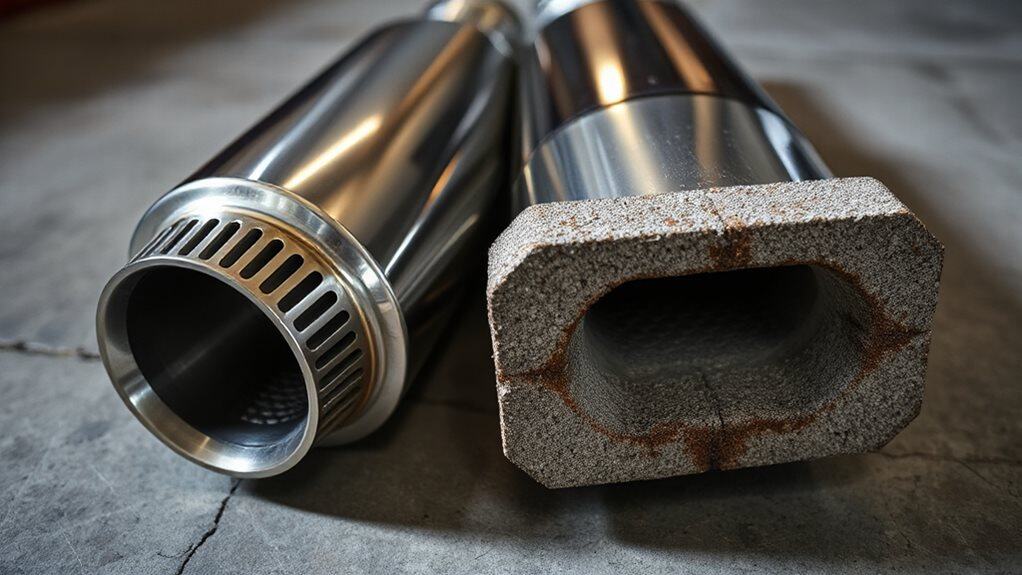
Which aftermarket path you choose—installing a high‑flow catalytic converter or swapping in a resonator—depends on your goals for power, sound, and legal compliance.
High‑flow cats add modest horsepower, keep emissions legal, and dampen gasoline odor while still sounding louder than stock.
Resonator swaps enhance power further, generate aggressive, high‑pitched noise, and produce strong fuel smell, but they trigger a check‑engine light and violate federal emissions rules.
DIY Versus Professional Installation of Resonators and Catalytic Converters
Where you’re comfortable with tools and can follow precise measurements, a DIY installation of a resonator or catalytic converter can save money and give you hands‑on knowledge of your exhaust system; however, professional installation guarantees proper fit, compliance with emissions regulations, and reduces the risk of costly errors.
DIY requires matching diameters, cutting, welding, and handling heat shields, while pros use OE‑style hardware, ensure legal compliance, and avoid alignment mistakes.
See which 2026 floor jacks combine safety ratings, lifting power, and portability to handle your vehicle’s weight without compromise and consider checking safety ratings when selecting lifting equipment.
Quick Decision Guide: Replace, Upgrade, or Keep Stock Parts?
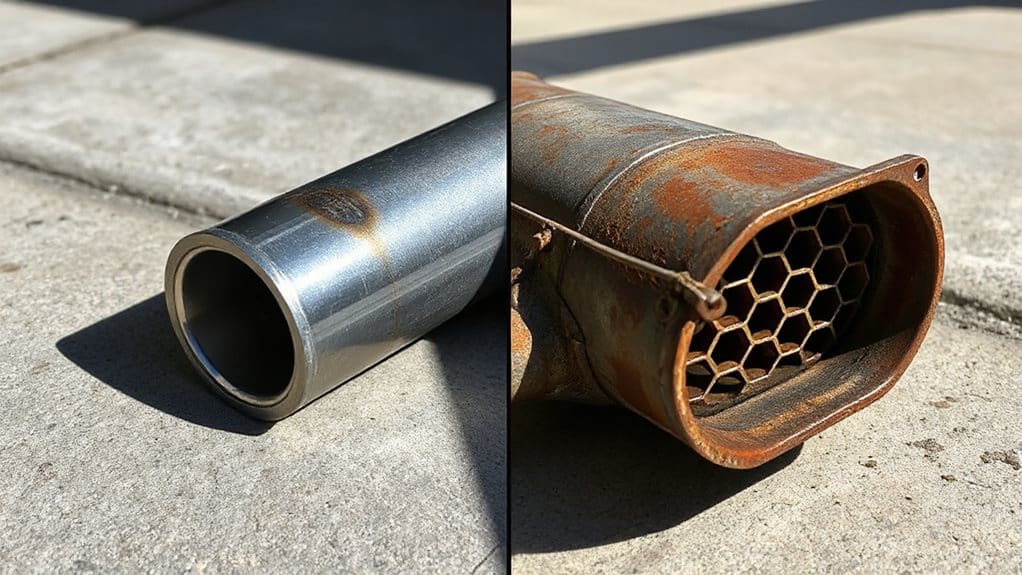
Wondering whether to replace, upgrade, or keep your stock catalytic converter and resonator? If you need legal compliance and modest power, retain the stock cat or upgrade to a high‑flow cat for 4 hp gain and cleaner emissions.
Choose a resonator only when sound matters and you’re in a non‑testing zone; it won’t enhance power or cut pollutants.
Keep stock parts if budget and simplicity outweigh performance or acoustic goals.
Also consider door and sensor issues—like a faulty door ajar sensor that can cause beeping and indicate electrical faults unrelated to exhaust choices.
Wrapping Up
In short, resonators shape exhaust tone while catalytic converters control emissions. Both sit in the exhaust line, but the converter must meet legal standards, whereas the resonator can be modified for sound. A failing converter shows reduced efficiency and error codes; a bad resonator produces odd noises or rattles. Choose based on your priorities: keep the converter for compliance, upgrade the resonator for performance, or replace both if they’re worn. Proper installation—DIY if skilled, otherwise professional—ensures safety and optimal function.


