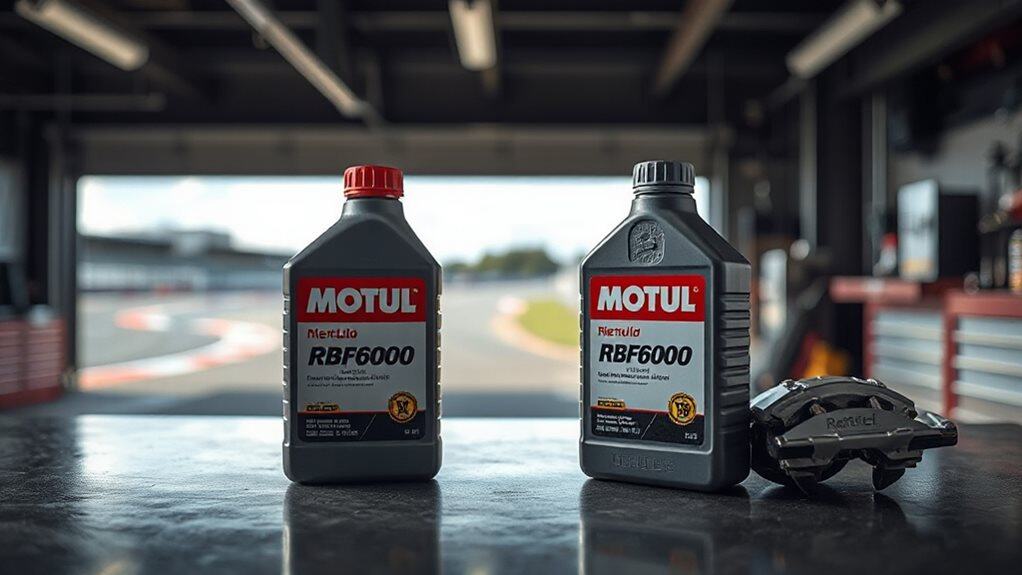
You’ll find that both Motul RBF600 and RBF660 meet Super‑DOT4 standards and share a wet‑boiling point of 205 °C, so everyday street driving is covered by either fluid. The 660, however, offers a higher dry‑boiling point—about 325 °C versus 312 °C for the 600—giving it better resistance to vapor lock during high‑heat track sessions. Both are glycol‑ether based, come in nitrogen‑sealed 500 mL bottles, and require similar maintenance schedules, though the 660 is pricier. If you keep the system clean and avoid water contamination, you’ll maintain optimal brake performance; continue to explore the details for more insight.
Quick Tips
- RBF660 has a higher dry‑boiling point (≈325 °C) than RBF600 (≈312 °C), giving better resistance to vapor lock in high‑heat track use.
- Both fluids share the same wet‑boiling point (≈205 °C) after ~3.7 % water absorption, so moisture resistance is comparable.
- RBF660 is pricier (≈$1.60/oz) and suited for regular track or carbon‑brake applications; RBF600 is cheaper (≈$0.90–$1.36/oz) and adequate for everyday or occasional spirited driving.
- Both are DOT4‑rated glycol‑ether fluids, compatible with standard systems but not with silicone‑based DOT5; they can be mixed without a full flush, though proper bleeding is required.
- Store in nitrogen‑sealed containers, replace every 2 years (or before each track event for RBF660) to prevent moisture‑induced boiling and maintain performance.
Quick Verdict: RBF660 vs RBF600 – Which Wins on the Track?
How does the wet‑boiling point affect your lap times?
A higher wet‑boiling point means the fluid resists vapor formation when brakes heat up, reducing fade. RBF600 reaches 216 °C, outperforming RBF660’s 205 °C, so it maintains pressure longer during repeated braking. This extends fluid life across a track season and keeps performance consistent, especially for non‑ceramic brake setups. The nitrogen‑filled container extends shelf life by preventing moisture absorption.
Dry Boiling Point – 660 °C vs. 600 °C (13 °C Difference)
After noting how wet‑boiling points keep brake pressure steady during repeated stops, the next factor to examine is the dry‑boiling point, the temperature at which fresh fluid begins to vaporize.
RBF660 reaches about 325 °C, roughly 13 °C higher than RBF600’s 312 °C.
That extra heat tolerance delays vapor lock, helping carbon or racing brakes stay firm during prolonged, high‑temperature laps.
If any fluid contaminates the pads or rotors it can create a greasy film and reduce braking performance, so contaminated components should be cleaned or replaced immediately.
Wet Boiling Point – Identical 205 °C for Both Fluids
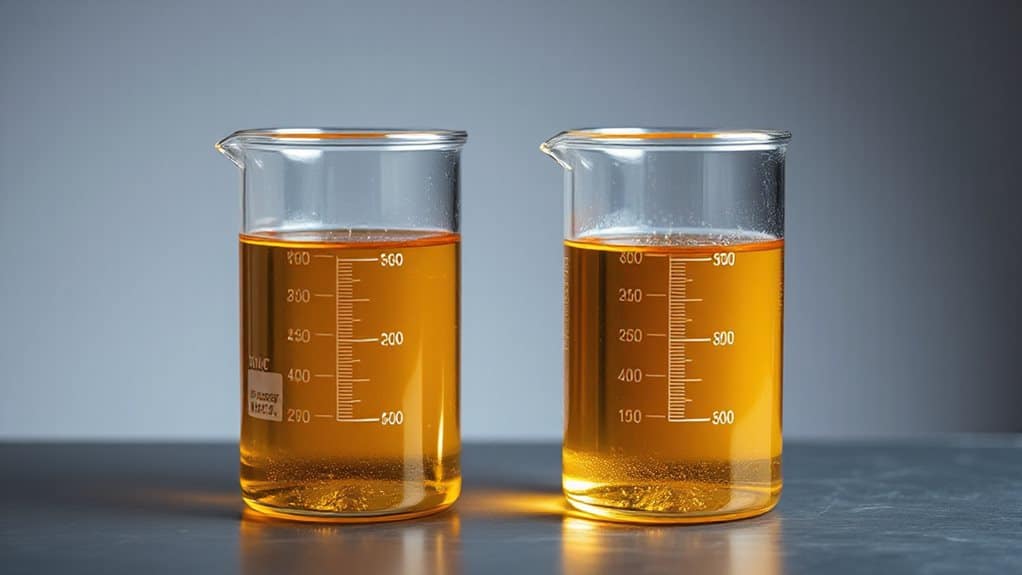
What does a wet boiling point of 205 °C mean for both Motul 600 and 660?
It indicates that after absorbing 3.7 % water—typical after two years of use—each fluid still boils at 205 °C, far above the DOT 4 minimum of 155 °C. This high value shows strong moisture resistance, reducing steam formation, pedal sponginess, and brake fade under repeated hard braking.
DOT Ratings – Super‑DOT4 Classification & DOT‑5 Exceedance
Why do the DOT ratings matter when choosing between Motul 600 and 660? Both fluids meet DOT4 specifications, but they’re classified as Super‑DOT4, meaning they exceed the standard 1400 cSt low‑temperature viscosity limit and surpass DOT5.1 boiling points. They remain glycol‑ether based, so they’re incompatible with silicone‑based DOT5. This assures you can’t mix them with DOT5 systems, and they’re safe for DOT4 brake lines. These fluids also require proper system preparation, including degreasing and ensuring surfaces are fully dry before application to maximize longevity.
Viscosity & Packaging – Normal Viscosity, 500 mL Nitrogen‑Sealed Bottles
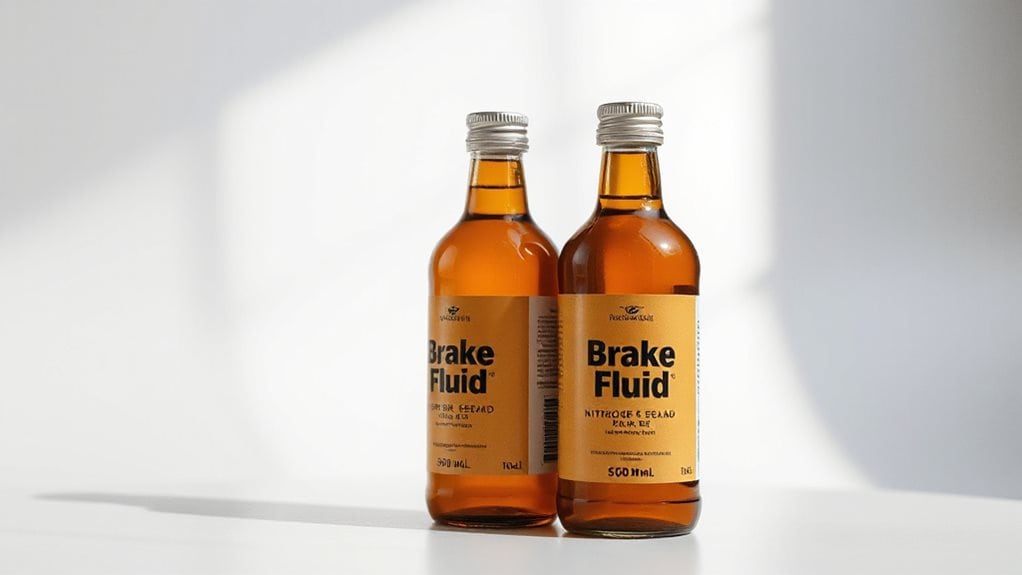
You’ll notice that both RBF 600 and RBF 660 keep a normal‑viscosity profile, staying around 2.6–2.7 mm²/s at 100 °C and well below the DOT4 limit at -40 °C, which means they flow smoothly when hot but remain thick enough when cold.
The nitrogen‑sealed 500 mL bottles protect the fluid from moisture and oxygen, extending shelf life and preventing contamination until you break the seal. This convenient size lets you pour precise amounts for track‑day changes while the sealed environment preserves the fluid’s consistent performance. High‑speed reversing is generally unsafe because vehicle suspension and weight distribution are optimized for forward motion, reducing stability when backing up at pace, so reversing should be done cautiously and at low speed to minimize risks and potential collisions with reduced stability.
Viscosity Consistency
How does the viscosity consistency of RBF600 and RBF660 affect their performance in real‑world braking? Both fluids maintain normal viscosity, staying around 1750 mm²/s kinematic, and they share the same 2.7 cSt at 212 °F, ensuring predictable pedal feel. At -40 °C, RBF600 is slightly thicker (1525 cSt) than RBF660 (1434 cSt), but the difference is minor, so neither fluid dramatically alters low‑temperature response. Their 500 mL nitrogen‑sealed bottles protect this consistency until use.
Nitrogen‑Sealed Longevity
Sealing the bottles with nitrogen enhances the fluid’s shelf life by keeping moisture out and preserving the dry boiling point until you break the factory seal.
The 500 mL nitrogen‑sealed containers prevent water ingress, so the brake fluid retains its normal viscosity at both low (≈‑40 °C) and high (≈212 °F) temperatures.
This protection extends usability, allowing you to store the fluid for up to two years or 20,000 miles before performance degrades.
500 mL Convenience
When you pick a brake fluid, the 500 mL nitrogen‑sealed bottle matters as much as the fluid’s viscosity. The modest size fits most passenger‑car reservoirs, allowing a complete flush without excess waste.
Nitrogen back‑fills preserve normal viscosity, keeping the fluid stable at high and low temperatures. This packaging also limits oxidation, ensuring the fluid remains within DOT 4 specifications until you’re ready to replace it.
Performance Use‑Cases – When to Choose RBF660 vs. RBF600
What kind of driving do you do most often? If you hit the track regularly, choose RBF660—its 325 °C dry boiling point resists vapor lock and fade in high‑heat steel or carbon ceramics.
For occasional spirited drives or moderate track days, RBF600’s 312 °C dry point suffices, saving cost and extending service intervals.
Both meet DOT4, share viscosity, and work with standard glycol‑ether systems.
Consider your vehicle’s drivetrain and handling characteristics—especially if it’s a rear‑wheel‑drive sports car—when choosing between the two.
Shelf Life & Nitrogen Sealing – Extending Freshness
Your brake‑fluid’s longevity hinges on how it’s sealed and stored, not just on the performance specs you chose earlier. Motul packs RBF 600 and RBF 660 in nitrogen‑filled plastic bottles with a metallic foil seal; this blocks moisture and slows degradation. Keep the cap tight, avoid heat, humidity, and sunlight, and check the date code. Unopened, the fluid stays effective for two years, sometimes longer, while opened bottles lose freshness after about six months. For storing and transporting brake fluid, consider using roof racks only when containers are sealed and protected from temperature extremes.
Cost per Ounce – RBF660 $1.60 vs. RBF600 $0.89
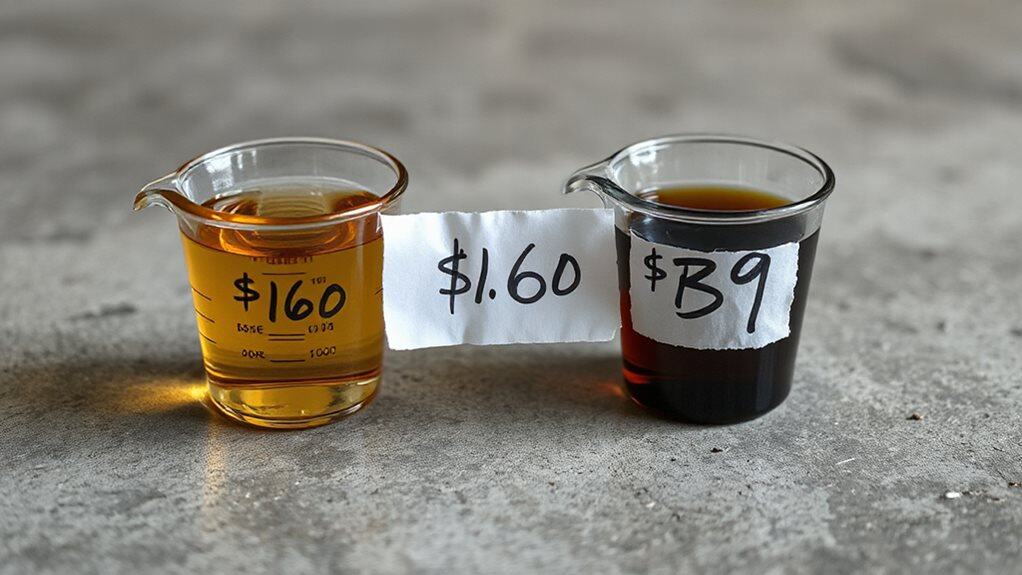
A typical 500 ml bottle holds about 16.9 oz, so the price per ounce is a useful way to compare RBF660 and RBF600. RBF660 averages $1.60 per ounce, ranging from $1.35 on sale to $2.04 at premium retailers.
RBF600 stays near $0.89–$1.36 per ounce, typically under $25 for 500 ml. Therefore, RBF600 costs roughly 40‑60% less per ounce, reflecting its lower-temperature rating and broader market positioning. This price difference may influence buyers who also consider regular maintenance needs and long-term replacement intervals.
Maintenance Frequency – Track vs. Daily‑Driver Recommendations
When you drive a car mainly on public roads, you’ll typically change the brake fluid every two years or about 20,000 miles, because manufacturers set that interval to guard against moisture absorption that lowers the wet boiling point and can cause brake fade.
For track days, flush RBF660 before each event and replace it at least annually; RBF600 can stretch 18‑24 months if not used every weekend.
Daily drivers must bleed the whole system, not just top up.
Switching Fluids – Flush Procedure & Compatibility Concerns
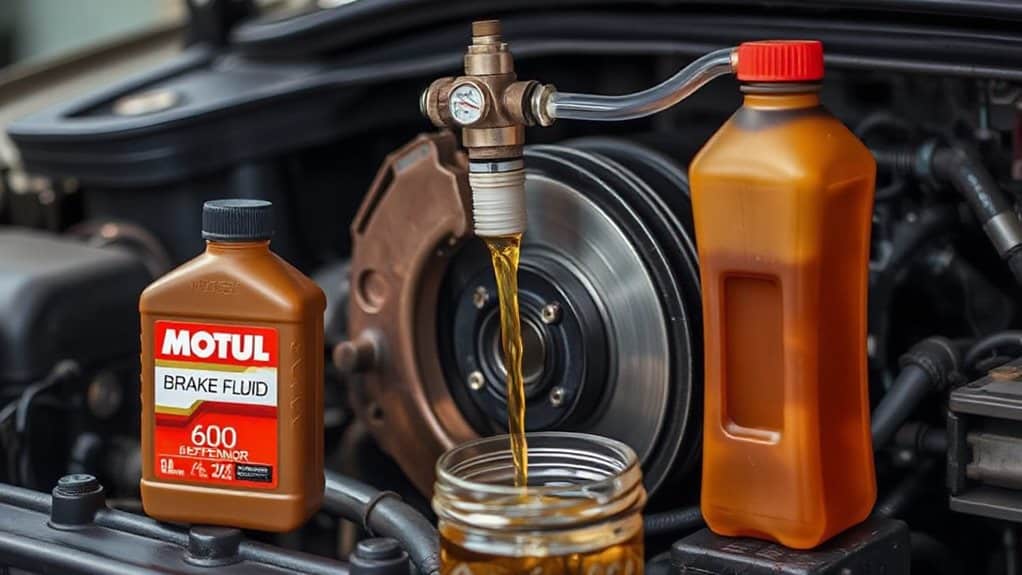
Most drivers already know they need to change brake fluid regularly, but swapping from RBF600 to RBF660 adds a few extra steps to keep the system performing at its best.
Use a pressure bleeder or two‑person method, starting at the farthest caliper, and evacuate the entire system to avoid mixing old fluid.
Fresh, sealed RBF660 prevents contamination; its glycol‑ether base mixes directly with RBF600, so a full flush isn’t required, though you must still bleed until clear fluid exits and verify pedal firmness.
Common Pitfalls – Water Absorption, Contamination, and Mis‑use
You’ll notice that even a few percent of moisture in your brake fluid drops the boiling point dramatically, which can cause vapor bubbles and a spongy pedal feel during heavy braking.
Keep the reservoir sealed, wipe the cap clean, and store the fluid in a nitrogen‑purged container to prevent water and dirt from entering.
If you ever add the wrong type of fluid or skip the scheduled change, the seals will degrade, corrosion will set in, and overall braking performance will suffer.
Moisture Uptake Effects
Ever wondered why brake fluid can turn a reliable system into a spongy nightmare? Moisture seeps into hoses, seals, and lines, lowering the fluid’s dry boiling point from 446 °F to 284 °F with just 3 % water.
When you brake hard, that water vaporizes, forming compressible bubbles that make the pedal feel soft and can cause vapor lock.
Corrosion also accelerates, weakening metal components.
Contamination Prevention Tips
Moisture that entered the system in the previous section can quickly become a bigger problem if you don’t keep the fluid sealed and clean.
Store brake fluid in its original, nitrogen‑blanketed bottle, label it with the purchase date, and keep the cap tight.
Never reuse empty containers, and avoid mixing DOT types.
Wear gloves, use clean tools, and regularly test fluid for discoloration or separation.
Bottom Line Summary – Best Choice for Your Braking Needs
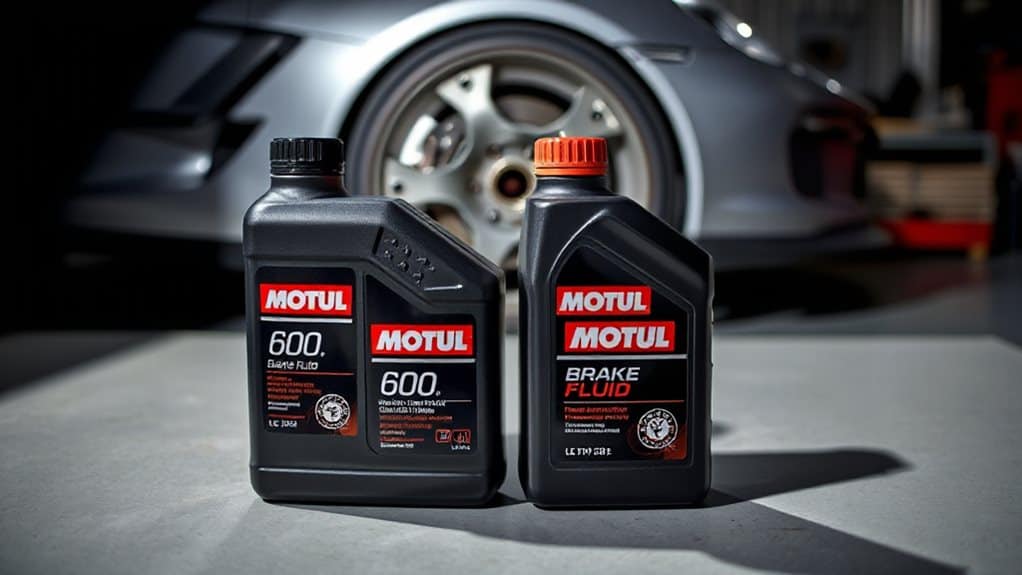
Which brake fluid fits your driving style? If you race on a track with carbon brakes, choose Motul 660 for its higher dry boiling point (325 °C) and better vapor‑lock resistance, despite its higher price. For everyday street driving or moderate track use, Motul 600 meets DOT4 standards, costs less, and provides adequate performance. Regularly replace fluid to avoid moisture‑induced boiling.
Wrapping Up
Pick RBF660’s higher dry‑boiling point gives a modest edge for high‑performance or track use, while the RBF600 meets all standard daily‑driver requirements. Both share the same wet‑boiling point, DOT‑4 classification, and viscosity, so either will work in typical passenger cars. Choose RBF660 if you demand extra heat resistance; otherwise, RBF600 is sufficient and often more cost‑effective. Remember to flush and replace fluid according to the manufacturer’s schedule to avoid water‑induced boiling.