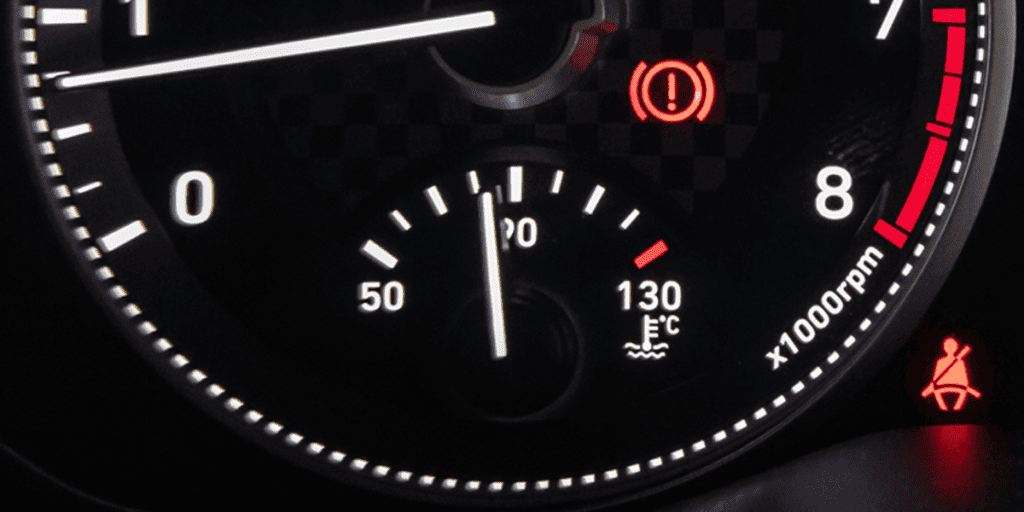
A MIL Command Status Fail means the engine control module has detected an emissions‑related fault, actively commanded the Check Engine Light to stay on, and will cause a smog test to fail until the fault is repaired and the system reports Commanded OFF. You’ll see the light steady (not flashing) and a scan tool will show “Commanded ON” with stored diagnostic trouble codes. To fix it, connect an OBD‑II scanner, read the codes, repair the indicated component—often an oxygen sensor, catalytic converter, or exhaust leak—then clear the codes and verify the MIL turns off after a few drive cycles. A KOER retest will confirm the fix, and following routine maintenance can prevent future failures, so keep going for more details.
Quick Tips
- Commanded ON means the ECM detected an emissions fault and has lit the MIL, causing a guaranteed smog‑test failure regardless of stored codes.
- Common triggers are oxygen‑sensor failures, exhaust leaks, catalytic‑converter inefficiency, or EGR/EVAP faults that introduce unmetered air or poor emissions control.
- Verify MIL status with an OBD‑II scan; “Commanded ON” shows a steady light, while “Commanded OFF” indicates no active faults and a passable test.
- Repair the identified component (sensor, wiring, converter, leak), clear the DTCs, and run three normal drive cycles to let the PCM re‑verify the fix.
- After repair, confirm the MIL extinguishes on KOER and that the scanner reports “Commanded OFF” before retesting for emissions compliance.
What a MIL Command Status Fail Means
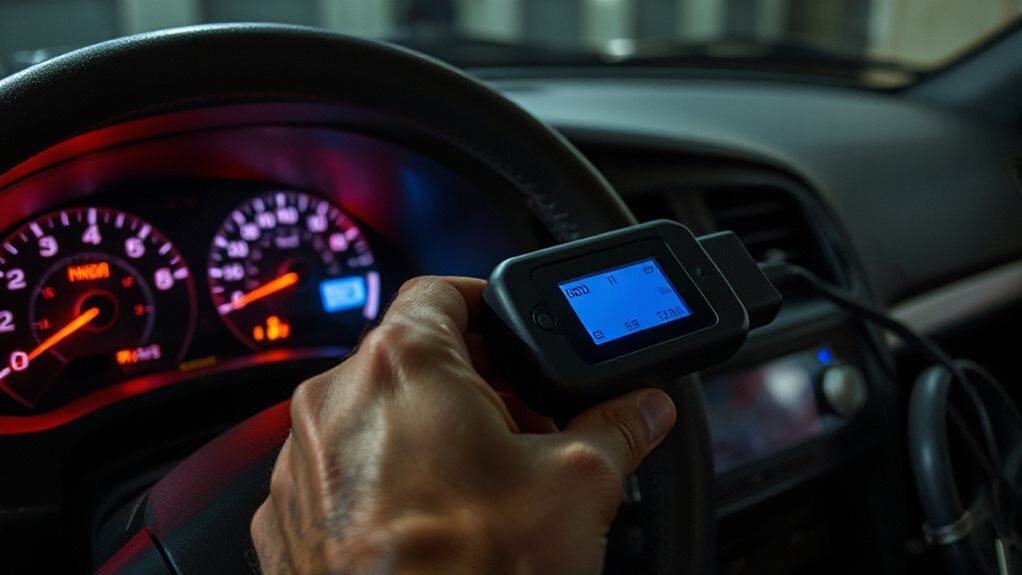
What does a MIL Command Status Fail actually indicate? It means the Malfunction Indicator Lamp was commanded on or flashing during the emissions inspection, signaling a severe fault that could damage the catalyst. The test treats any commanded‑on condition as a failure, even if stored codes are inactive. You’ll see a steady light for minor issues, but flashing denotes a safety‑critical problem requiring immediate service. The MIL being commanded ON ensures the vehicle fails the test regardless of any stored codes. Many owners choose a smart battery charger to keep their vehicle battery healthy and avoid false failures caused by low voltage.
Why the Check Engine Light Stays On
Why does the check‑engine light stay illuminated after a drive? It remains on when sensors like the MAF, coolant temperature, camshaft position, oxygen, or MAP detect abnormal readings, causing rich or lean mixtures, misfires, or false overheating signals. Faulty ignition coils, spark plugs, fuel injectors, or a loose gas cap can also trigger it. Emissions components—catalytic converter, EVAP system, air injection, or vacuum hoses—may fail, prompting the light. Tighten the cap, reduce stress, or consult a mechanic if it persists. High exhaust gas temperatures can indicate issues like clogged catalytic converters, which may also cause the check‑engine light to remain on.
How to View MIL Command Status on a Scan Tool
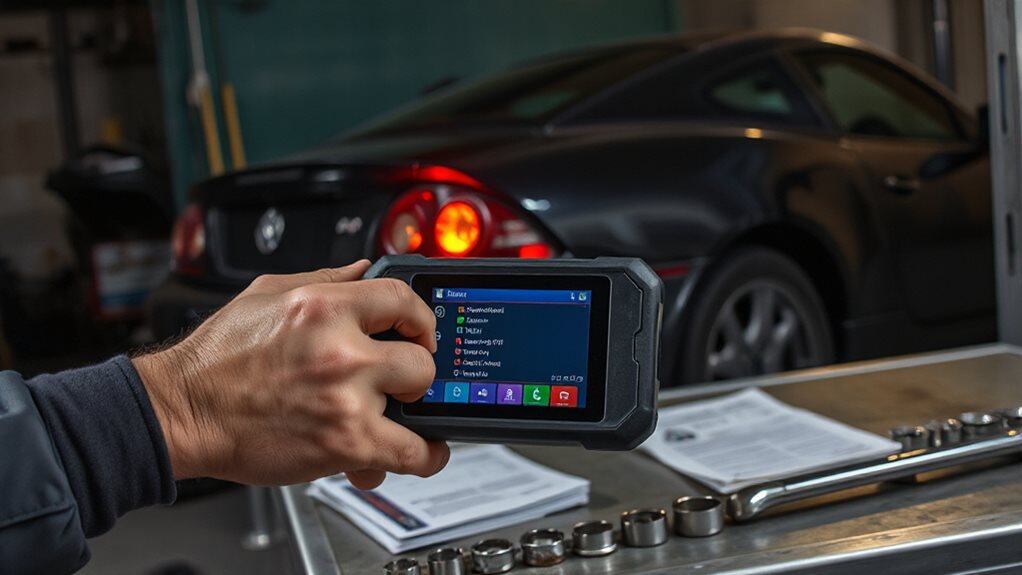
After checking why the check‑engine light stays on, the next step is to confirm whether the MIL (Malfunction Indicator Lamp) command is actually being sent by the vehicle’s control module. Plug the OBD‑II scanner into the driver’s footwell, power it on, and select System Status → Global OBD2. Wait for 100 % link, then view MIL status in the data stream or MIL Status tab. Note “ON” during KOEO and “OFF” when no faults exist. For enhanced long‑term reliability, consider treating exposed metal and chassis areas with a rust‑blocking product like chassis saver to help prevent related electrical issues.
Interpreting Commanded ON vs. Commanded OFF in MIL Status
When the ECU commands the MIL ON, it means it has detected an emissions‑related fault and stored a diagnostic trouble code, so the Check Engine Light should stay lit steadily.
If the ECU commands the MIL OFF, there are no active faults and the light stays dark, indicating the vehicle is ready for a smog test.
Understanding this distinction helps you decide whether to retrieve codes for repair or verify that a hardware issue isn’t causing a false illumination.
Regular maintenance, such as replacing the cabin air filter, can prevent unrelated HVAC issues that might be mistaken for electrical or engine faults.
Commanded ON: Emissions Fault Detected
What does “Commanded ON: Emissions Fault Detected” actually tell you about the MIL (Malfunction Indicator Lamp) status? It means the ECM has issued a command to illuminate the check‑engine light because an emissions‑related fault is present, even if the engine runs smoothly.
The command reflects diagnostic trouble codes from fuel‑trim, EGR, or EVAP systems, and it will cause an OBD‑II emissions test to fail until the fault is repaired and the MIL is commanded OFF.
Commanded OFF: No Active Fault
“Commanded ON: Emissions Fault Detected” tells you the ECM has told the MIL to stay lit because an emissions‑related trouble code exists. Commanded OFF means the ECM keeps the lamp off, confirming no active fault. You’ll see no stored DTCs, and the bulb briefly illuminates on key‑on then extinguishes.
Scan tools show zero codes, and the system passes smog tests unless a bulb or connector issue misreports the status.
Typical Emissions Faults That Turn the MIL ON
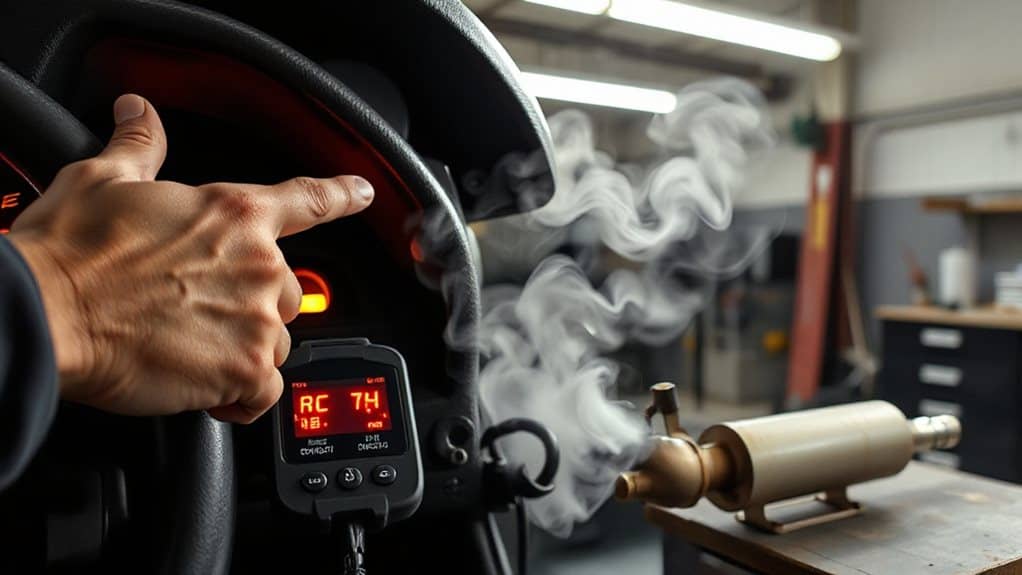
You’ll often see the MIL light turn on when the exhaust system has a leak, because unmetered air throws off the oxygen sensor’s readings and triggers a fault code.
A failed oxygen sensor itself can also command the MIL, as it can no longer accurately measure the oxygen level in the exhaust gases, causing the engine control unit to flag an emissions problem.
Finally, catalytic converter damage—whether from overheating, contamination, or physical breakage—will command the MIL, since the converter can no longer reduce harmful pollutants to acceptable levels.
Roof painting cost can vary widely depending on the materials used, shop choice, and extent of prep work.
Ohaust System Leaks
Why do exhaust system leaks often trigger the MIL (Malfunction Indicator Light) to stay on?
Cracks in the manifold let unburned fuel escape, raising hydrocarbons and fooling the sensor. Leaking gaskets or perforated pipes dump raw fuel vapors or carbon monoxide, causing emission thresholds to be exceeded. Mis‑routed vacuum lines and faulty PCV vents also create leaks, prompting the ECU to set a DTC and keep the MIL illuminated.
Oxygen Sensor Failures
What triggers the MIL to stay lit when an oxygen sensor fails?
Contamination from sulfur, fuel additives, or silicone sealant can poison the sensor, turning its head white, black, or green‑brown.
Heater‑circuit faults, wiring breaks, or low voltage prevent the sensor from reaching temperature, sending faulty O₂ readings.
The ECU then logs codes like P0171, P0175, or P155 and illuminates the MIL.
Catalytic Converter Damage
When the catalytic converter starts to fail, the MIL (Malfunction Indicator Lamp) flashes on because the engine’s emissions control system detects a drop in efficiency, typically logged as code P0420.
You’ll notice poor acceleration, a rotten‑egg smell, and reduced fuel economy as backpressure builds.
Check for rattling noises, discoloration, and P0420 DTCs; inspect for clogged honeycomb, oil coating, or structural damage to restore proper emissions performance.
How Stored OBD‑II Codes Cause a MIL Failure
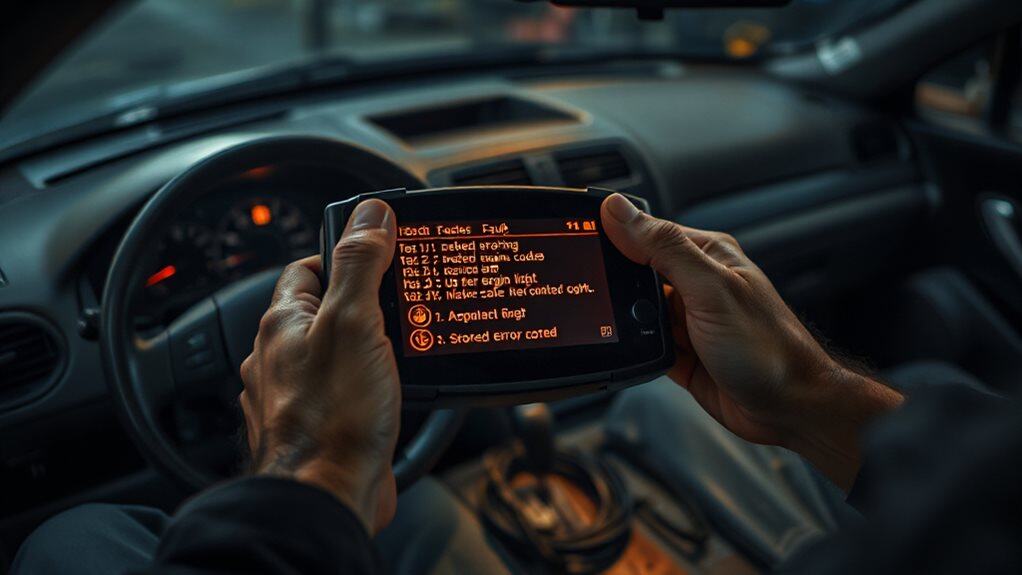
How stored OBD‑II codes lead to a MIL (Malfunction Indicator Lamp) failure is simple: once the vehicle’s computer records a Diagnostic Trouble Code (DTC) across multiple drive cycles, it upgrades the code from “pending” to “stored,” and the stored status tells the system the fault is persistent enough to warn you.
Stored codes confirm a non‑temporary issue—like a bad oxygen sensor, misfire, or clogged MAF—so the MIL stays illuminated until you repair the component and clear the code with a scanner or after a successful drive‑cycle reset.
Consider checking the vehicle’s roof rack load limits and distribution to avoid unrelated weight capacity overloads that can affect overall vehicle performance.
Why Flashing MIL Indicates Possible Catalytic Damage
Why does a flashing MIL often point to catalytic problems? When the PCM detects a misfire, it flashes the MIL and suspends steady illumination. A failed O₂ sensor, especially P0137, blocks catalytic readiness, linking the flash to possible converter damage.
P0420/P0430 codes also trigger flashing. Verify sensor health, check catalytic DTCs, and clear codes only after confirming repairs.
Retrieve MIL Data With Bluedriver (Step‑By‑Step)
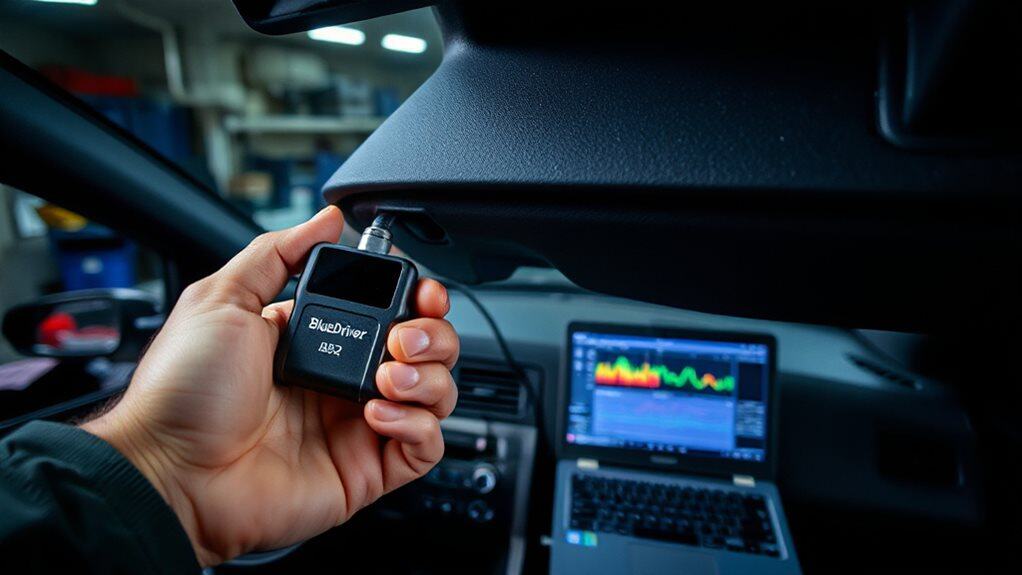
Ever wondered how to pull precise MIL information from your car using the BlueDriver scanner? First, locate the OBD‑II port under the driver’s dashboard, pair the charged BlueDriver via Bluetooth, and open the app. Plug the scanner, grant permissions, and confirm the VIN. Tap “MIL Status” on the Scan Tool tab; the app instantly shows light status, run time, distance traveled, and cleared‑code timers, with options to view live data or log results.
Diagnose the Issue Using OBD‑II Codes
What you’ll see when you pull OBD‑II codes is a structured set of letters and numbers that tells you exactly which system and component have triggered a fault. The leading letter (P, B, C, U) identifies the vehicle system, while the first digit after it points to a subsystem, such as fuel/air metering. Subsequent digits narrow the fault..
Pending codes appear after one drive cycle; confirmed codes activate the MIL immediately. History codes remain for past issues. Use a capable scanner to read all categories.
Clear Codes and Verify MIL Turns OFF After Repair
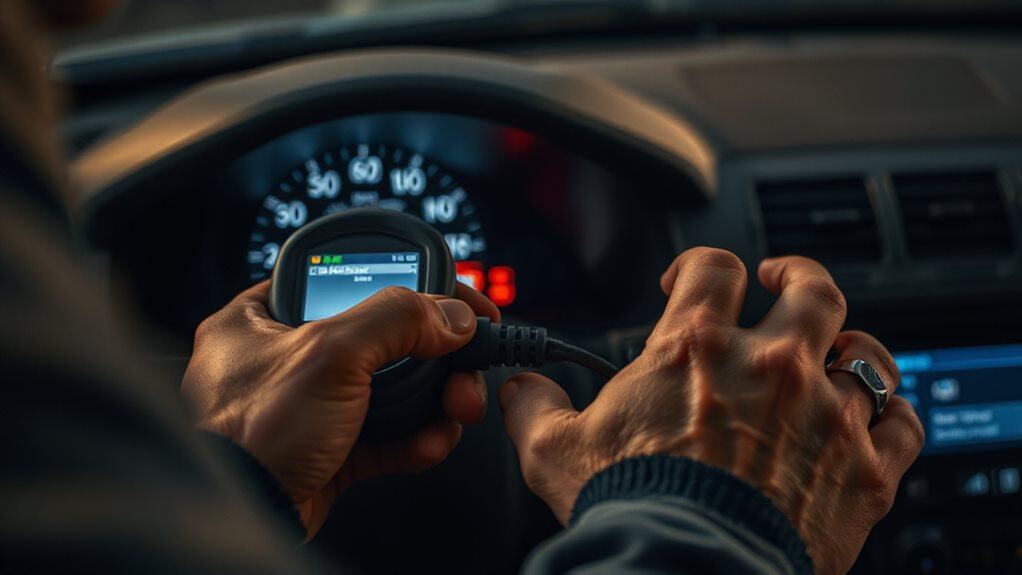
After you’ve pulled the OBD‑II codes and identified the faulty component, the next step is to clear those codes and confirm that the Malfunction Indicator Light (MIL) stays off.
Use a scan tool to erase the DTCs, then drive three normal cycles—about thirty minutes each—without the fault reappearing.
Verify the MIL remains dark; if it lights again, the repair wasn’t complete or a new issue exists.
Retest KOER and MIL Command Status for a Pass
How do you confirm that a vehicle passes the KOER (Key On Engine Running) and MIL (Malfunction Indicator Light) command status on a retest? Verify the MIL extinguishes when the engine runs, and that the PCM reports “off” on the VIR. Check DLC pins 5 and 16 for proper ground and voltage. Repair any bulb, wiring, or circuit faults, clear DTCs, and repeat the OBD scan to ensure the status switches correctly.
Prevent Future MIL Failures With Maintenance Tips
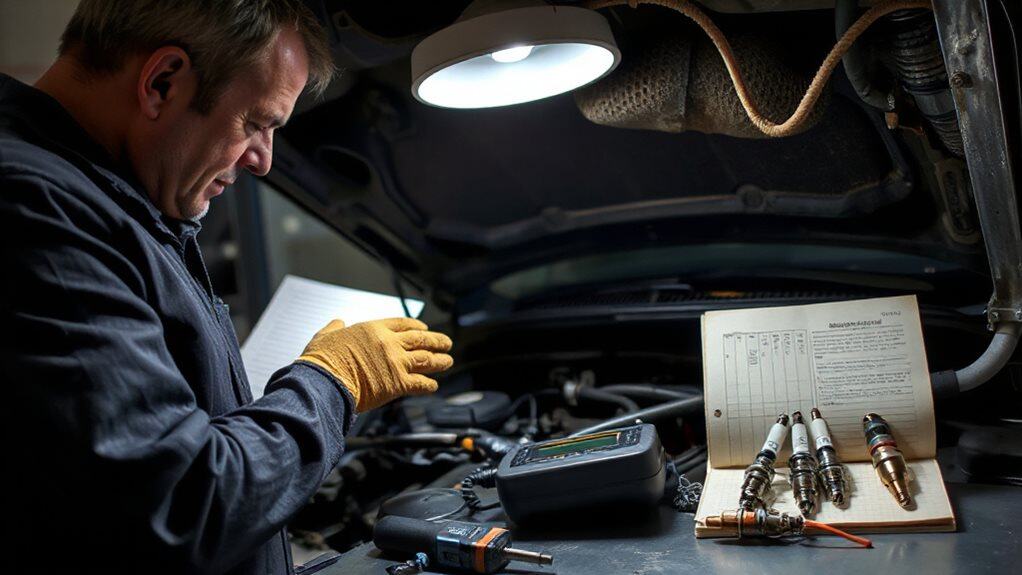
Confirming a clean KOER and MIL status on a retest is only half the battle; keeping that status from slipping back requires disciplined upkeep.
Change oil and filter every 3‑5 k miles, using the right viscosity, and inspect for contamination.
Replace air filters annually, clean reusable ones, and check intake leaks.
Swap spark plugs at manufacturer intervals, gap them correctly, and inspect coils.
Use premium gasoline, change fuel filter every 30 k miles, and clean throttle body.
Scan for pending codes quarterly, clean oxygen sensors, and secure wiring harnesses.
Wrapping Up
By checking the MIL command status, you pinpoint why the check‑engine light stays on and whether the system is commanded ON or OFF. Use an OBD‑II scanner to read and interpret codes, then address the specific emissions fault—whether a sensor, valve, or wiring issue. After repairing, clear the codes, verify the MIL turns off, and retest the KOER and MIL status to confirm a pass. Regular maintenance, timely sensor replacement, and proper diagnostics will help prevent future MIL failures.