
You can bolt 351W heads onto a 302 block, but you’ll need 1/2‑inch bolts or stepped washers and must verify water‑passage and intake‑manifold bolt‑pattern alignment. The larger 351W combustion chambers drop compression from about 9:1 to 8.2–8.5:1, so you may have to mill the deck or use higher‑compression pistons to regain power. Early 351W heads often have an extra intake bolt and lack valve relief for 2.02‑inch intake valves, so check clearance and consider custom pistons or smaller valves. Use 351W‑specific gaskets, a compatible intake manifold such as a GT‑40 X‑Head, and upgrade studs, pushrods, and possibly the cam for reliability. If you follow these steps, the swap can be practical; the next sections explain each requirement in more detail.
Quick Tips
- 351W heads bolt onto a 302 block, but you must use 1/2‑inch bolts or ARP studs and verify water‑passage and intake manifold bolt pattern alignment.
- The larger 351W combustion chambers drop stock compression to ~8.2‑8.5:1; milling the deck can recover up to ~13:1 when paired with appropriate pistons.
- Stock 302 pistons lack valve relief for the 2.02‑inch intake valves on 351W heads, so custom‑ground or valve‑relief pistons (or smaller valves) are required.
- Choose an intake manifold that matches the 351W port locations (e.g., GT‑40 X‑Head); many 351W manifolds are incompatible with a 302 block.
- Overall worth depends on labor and machining costs versus power goals; proper fasteners, gaskets, and supporting upgrades are essential for reliable performance.
Fit‑Check Checklist: Bolting 351W Heads on a 302 Block
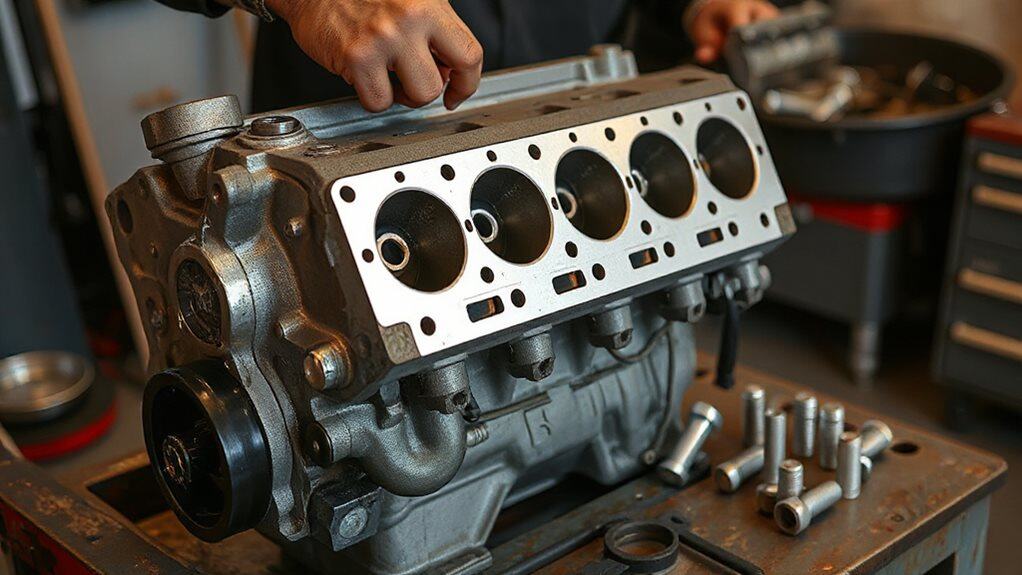
Ever wonder how to bolt a 351W head onto a 302 block without ruining the engine? You need 1/2‑inch bolts or stepped washers because the block uses 7/16‑inch bolts. ARP studs or Crane Cams kits work well, eliminating sleeve bolts. Verify water passages align, and check that the intake manifold bolt pattern matches. Proper fasteners prevent gasket failure. Early 351W heads had an extra intake manifold bolt that may affect fitment. For safe workshop practices, always dry and dispose of any turpentine‑soaked rags in a cool, ventilated area before throwing them away to reduce fire risk and environmental harm turpentine disposal.
Compression Ratio Impact of 351W Heads on a 302 Block
When you bolt 351W heads onto a 302 block, the larger combustion chambers shrink the effective volume, raising the compression ratio and often exceeding stock limits. You can mill the block’s deck surface to lower the piston’s top‑dead‑center position, which recovers some of the lost compression and brings the ratio back into a safer range. However, the pistons you use must match the new deck height and dome shape, otherwise the head‑to‑piston clearance will be incorrect and the engine could suffer from detonation or reduced efficiency. Also, if you notice symptoms like a burning smell, delayed engagement, or dashboard warnings you should check for leaks and stop driving to avoid serious transmission or engine damage.
Chamber Size Reduction
How much does a larger combustion chamber affect the compression ratio when you swap 351W heads onto a 302 block? The 351W chambers sit at roughly 64 cc, 4‑6 cc bigger than the 302’s 58‑60 cc, dropping the stock 9:1 ratio to about 8.2‑8.5:1. A 1 cc increase shaves 0.2‑0.3 points off the ratio, and thinner gaskets or dish‑relief pistons can push it lower, sometimes toward 7:1.
Milling to Recover Compression
So, can you restore the lost compression when you bolt 351W heads onto a 302 block?
You’ll need to mill the deck to reduce the combustion chamber volume created by the taller 351W deck.
Milling removes material from the block surface, raising the piston’s top‑dead‑center position and increasing the compression ratio.
Properly done, you can regain up to 13:1, matching the 351W head’s design.
Piston Design Compatibility
A 351W head on a 302 block changes the compression ratio mainly because the 351W combustion chamber is larger—typically about 1 cc more than a stock 302 chamber. That extra volume drops static compression, often from 8:1 to near 6.5:1, unless you mill the chamber or use higher‑relief pistons.
Stock 302 pistons lack adequate valve relief for 2.02‑inch intake valves, so you’ll need smaller valves or custom‑ground pistons.
Forged or hypereutectic pistons may also require reliefs to avoid valve‑to‑piston interference.
Early‑Era 351W Heads vs. Modern Aftermarket Options
Do you know why early‑era 351W heads still attract attention when you’re building a 302? Their 64 cc chambers and 2.19‑in intake valves can reach 350 hp stock, but smaller ports limit high‑RPM flow.
Ported heads can match modern Trick Flow or Edelbrock performance, delivering 500‑plus hp with custom throttle response.
Aftermarket heads offer larger ports, CNC‑ported consistency, and bolt‑on ease, but cost more.
Choose based on budget, desired power band, and willingness to invest labor.
Correct installation and torque sequence are essential to prevent leaks and ensure longevity, so always follow a proper torque pattern during assembly.
Intake Manifold Compatibility for 351W Heads on a 302
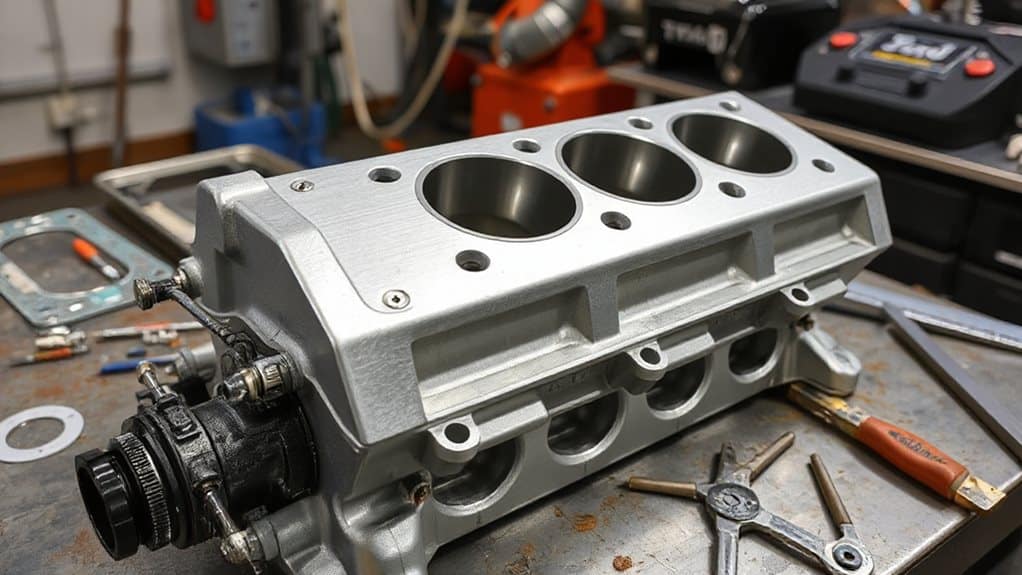
Early‑era 351W heads give you a solid foundation, but the intake manifold you choose will determine whether the combo works on a 302 block. Use a GT‑40 X‑Head manifold; it bolts directly because the port locations match OEM specs for 289/302/351W.
Avoid Edelbrock Performer 351W, which is exclusive to 351 Windsor and won’t fit. Single‑plane Victor Jr. works if you prioritize high‑RPM power, while Z‑Head ports accept standard intakes without modification.
Required Supporting Parts for 351W‑Head/302‑Block Swaps
How do you guarantee a 351W head fits a 302 block without compromising reliability? Use ARP stud kits instead of standard bolts; the kits provide larger ½‑inch studs and washers, eliminating sleeves. Choose 302 rocker arms with matching pushrods, or lengthen pushrods if you switch rocker styles. Replace the camshaft, lifters, and spider with 351W‑compatible parts, and verify cooling‑passage alignment. Reuse the water pump and timing set if they match. Persistent white smoke with a gasoline smell can indicate stuck-open injectors or other fuel-system faults and requires prompt inspection.
Is Upgrading to 351W Heads on a 302 Block Worth It?
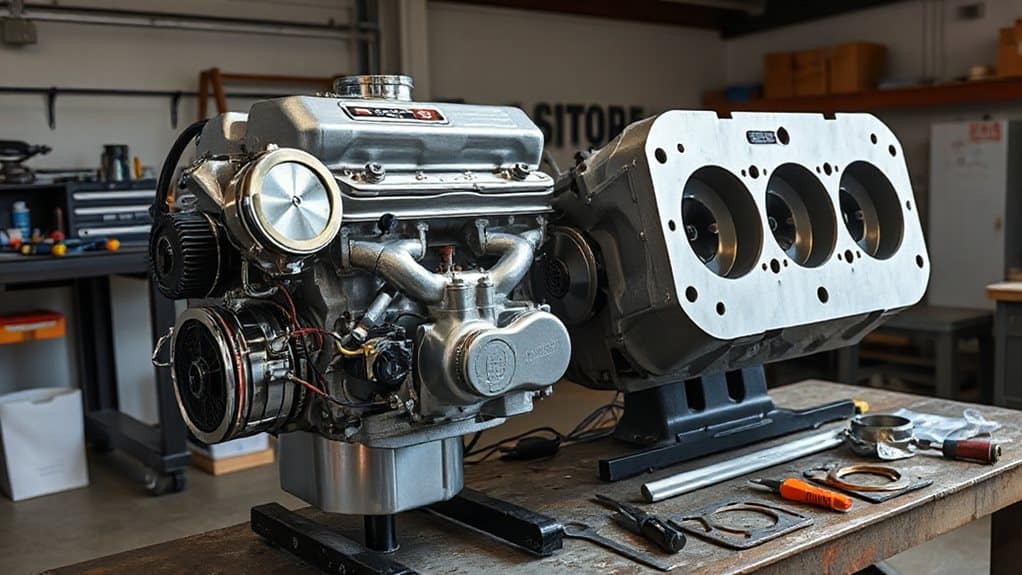
You’ll need to address fit‑ment compatibility first, because 351W heads won’t bolt directly to a 302 block without the proper intake manifold, head‑bolt bushings, and possibly drilled steam holes to align the cooling passages.
The performance gains from larger valves and better airflow can add noticeable horsepower, yet the cost of extra hardware, machining, and potential weight increase may outweigh the benefits for a street‑oriented build.
We, weigh the added power against the expense and complexity before deciding if the swap aligns with your goals. Copper wires carry more electricity than aluminum.
Fitment Compatibility Issues
Because the bolt holes on 351W heads are 1/2‑inch while the 302 block uses 7/16‑inch holes, you’ll need a precise machining solution before you can bolt the heads on. You must mill the block or use a custom adapter to prevent thread stripping.
Additionally, you’ll need 351W‑specific gaskets, a matching intake, and a custom exhaust header, because standard 302 components won’t seal or align correctly.
Performance Gains vs. Cost
What you’ll uncover is that the horsepower lift from 351W heads isn’t a free lunch; it hinges on a cascade of supporting changes. You’ll need larger intake manifolds, upgraded fuel delivery, and exhaust tweaks to realize gains, while stepped head bolts and possible water‑port work add cost. Compared with cheaper E7 upgrades or full engine swaps, the head‑only route often offers modest power for a sizable investment.
Wrapping Up
If you bolt 351W heads onto a 302 block, you’ll gain higher flow and potential power, but you must address compression‑ratio changes, manifold fit‑, and supporting components such as upgraded camshafts, intake manifolds, and cooling systems. Modern aftermarket heads can mitigate some compatibility issues, yet the swap demands precise machining and proper tuning to avoid detonation. In short, the upgrade is technically feasible and can improve performance, but it requires careful planning, additional parts, and thorough engine management to be worthwhile.


