
You’ll notice a bad ABS module when the warning light stays on, the brake pedal feels unusually hard or unresponsive, and the pump hums continuously even when you’re not braking. The speedometer may give erratic or zero readings because wheel‑speed sensors aren’t communicating properly. You might also experience unexpected pulsating of or loss of lock‑up protection, especially on wet surfaces. These symptoms point to sensor, hydraulic, or electrical failures that compromise anti‑lock braking and related safety functions, and further details await.
Quick Tips
- ABS warning light stays on or flashes, indicating a fault in the anti‑lock system.
- Brake pedal feels unusually hard, stiff, or unresponsive, requiring extra force to stop.
- Unexpected pulsating or pump‑whirring pedal during light braking, suggesting unintended ABS activation.
- Speedometer displays erratic or zero readings due to wheel‑speed sensor or module failure.
- Diagnostic trouble codes such as U0121, C0035, or C0040 appear, pointing to ABS module or sensor problems.
ABS Warning Light: Causes and Meaning
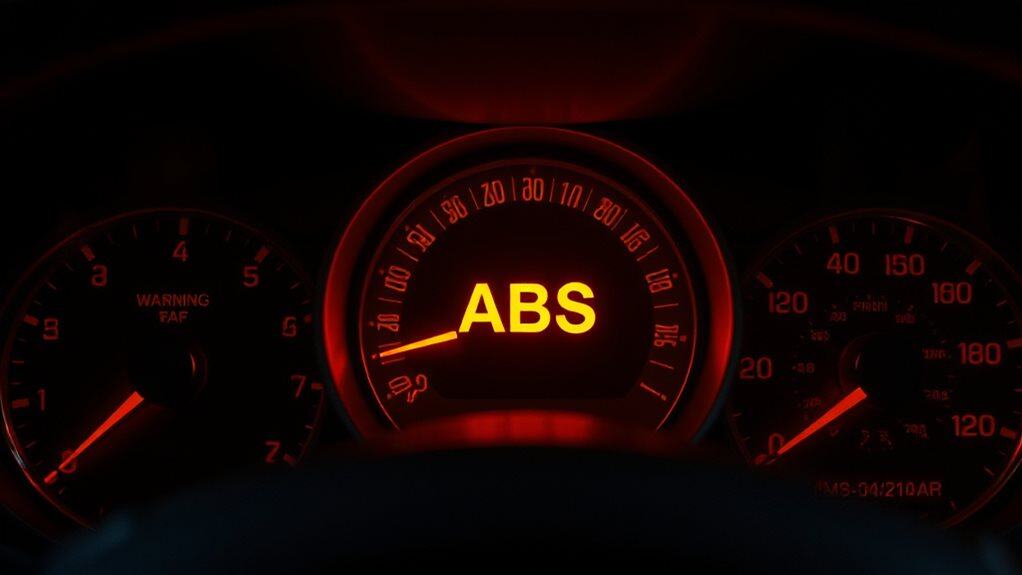
Why does the ABS warning light turn on? It signals a fault in the anti‑lock braking system that may reduce braking performance. Common causes include dirty or damaged wheel‑speed sensors, low brake fluid, a malfunctioning ABS module, or blown fuses and relays. Each issue disrupts sensor data or hydraulic control, disabling ABS and possibly traction control until a professional diagnoses and repairs the problem. Low fluid level can also trigger the light by reducing hydraulic pressure needed for proper ABS operation. Many vehicles today use speed‑sensing steering and other vehicle systems that rely on accurate wheel‑speed data, so related sensor faults can affect multiple functions.
Stiff or Unresponsive Brake Pedal From a Failing ABS Module
You’ll notice the brake pedal feels unusually hard and takes extra force to press, especially when you try to stop quickly. This stiffness often comes with a delayed response, meaning the vehicle doesn’t decelerate as soon as you apply the pedal. Both signs point to the ABS module failing to modulate hydraulic pressure, so a professional inspection is essential. During troubleshooting, also check for related electrical issues such as grounding problems that can lead to erratic brake system behavior.
Hard Pedal Feel
Ever notice the brake pedal feeling unusually firm when you slam on the brakes? A failing ABS module removes hydraulic modulation, so the pump can’t adjust fluid pressure.
Without that assistance, you must apply more force, especially during emergency stops.
The ABS warning light often flickers, and diagnostic codes like U0121 appear.
Check pressure levels, scan for fault codes, and inspect for moisture or corrosion to confirm the issue.
Delayed Pedal Response
When the ABS module starts to fail, the brake pedal can feel sluggish or even unresponsive, a condition that often follows the hard‑pedal feel described earlier. The pump may not build pressure quickly, so you notice a delay between pressing the pedal and feeling braking force.
Faulty wheel‑speed sensors can mis‑communicate speed data, causing the control unit to hesitate. This lag reduces traction control, lengthens stopping distance, and makes the pedal feel stiff during normal braking.
Unexpected ABS Activation or Loss of Lock‑Up Protection?
Why does your ABS sometimes kick in during a gentle stop, or fail to prevent wheel lock‑up when you need it most? You may feel a pulsating pedal or hear the pump whirring as the module misreads sensor data, causing unwanted activation.
Conversely, a failed module can stop regulating pressure, letting wheels lock on hard braking, especially on wet surfaces, and disabling steering control. Electrical system problems like a failing alternator can cause multiple warning lights and may also affect ABS operation, so have your electrical system inspected promptly.
Speedometer Errors Caused by ABS Module Sensor Loss
When a wheel speed sensor fails, the ABS module can’t relay accurate rotation data, so the speedometer starts showing erratic readings that may freeze or drop to zero. You’ll often see the ABS warning light flash and retrieve diagnostic trouble codes such as C1233 or U0121, which point to missing sensor signals or lost communication with the module. Understanding these codes helps you pinpoint the sensor loss and correct the speedometer’s faulty output.
Wheel Speed Sensor Failure
What happens when a wheel‑speed sensor fails? The ABS warning light illuminates first, signaling loss of essential wheel data and disabling ABS, traction control, and stability systems. You’ll notice increased stopping distances, brake pedal pulsation, and occasional wheel lock‑up. Diagnostic codes appear, often accompanied by corrosion or wiring damage. Cruise control may refuse to engage, and hill‑hold warnings can also appear.
Erratic Speedometer Readings
Could an erratic speedometer be a sign that your ABS module has lost contact with the wheel‑speed sensors?
When the module misreads or drops sensor signals, the instrument cluster receives corrupted data, causing the needle to jump or the digital readout to flicker.
You’ll see rapid fluctuations even on a steady road, because the speedometer depends on reliable wheel‑speed information transmitted through the ABS system.
Diagnostic Trouble Codes Explained
Why do speedometer glitches often point to ABS sensor problems? A damaged C0035 or C0040 wheel‑speed sensor breaks the signal, causing the ABS light and loss of speed data. U0121 shows module communication failure, while C0121 flags internal performance loss. Low voltage (C0899) disrupts processing. Diagnose each code, inspect wiring, connectors, and replace faulty sensors to restore accurate readings.
Constantly Running ABS Pump: What the Noise Tells You
Ever notice a steady hum or clicking from your ABS pump even when the engine’s off? That noise usually means a relay is stuck, the control module is sending power, or wiring is shorted. Buzzing can signal air bubbles or valve damage, while clicking points to solenoid chatter. Check the ABS warning light, scan for codes 52 or 01, and inspect the fuse, relay, wiring, and fluid level. Consider inspecting the vehicle’s reinforced frame for related grounding or mounting issues that could affect ABS sensor stability.
Safety Risks and Cost of Ignoring a Faulty ABS Module

When the ABS pump hums or clicks while the engine is off, it often signals a stuck relay, a shorted wire, or low fluid, but the real danger emerges when the module fails to operate during braking.
You risk wheel lock‑up, longer stopping distances, and loss of traction control, which can cause skidding, crashes, and severe injuries.
Repairs easily exceed $1,000, and secondary damage may push costs beyond $2,000.
World Class units differ from Non-World Class units in internal construction, so verify World Class status when diagnosing to avoid misidentification.
Wrapping Up
By now you should recognize that a faulty ABS module can trigger warning lights, impair brake response, cause unexpected lock‑up, distort speed readings, and keep the pump running constantly. Each symptom points to sensor loss, hydraulic failure, or electronic malfunction, all of which reduce vehicle safety and increase repair costs. Ignoring these signs risks loss control and costly damage. Prompt diagnosis and replacement of the module restores proper braking performance and protects you and other road users.


