A stuck brake‑caliper piston usually results from moisture‑laden fluid that rusts the steel piston, damaged rubber boots that let debris in, or a collapsed hose that traps pressure. Rust roughens the piston surface, causing uneven pad wear, vehicle pull, and a spongy pedal. Check rotor temperatures with an infrared thermometer, push the piston manually to feel resistance, and inspect boots and hoses for cracks or swelling. Clean or rebuild the piston, replace seals with brake grease, and bleed the system. Following these steps will let you fix the issue and avoid further damage.
Quick Tips
- Corrosion from moisture‑absorbing brake fluid or damaged caliper boots causes piston surface rust, leading to sticking and uneven pad wear.
- A cracked or swollen brake hose can trap pressure, mimicking piston drag and causing a spongy pedal or pull to one side.
- Manually pushing the piston and comparing rotor temperatures with an infrared thermometer confirms whether the piston is truly stuck.
- Clean debris with a magnetic pickup and use a hydraulic press, compressed air, or grease gun to fully retract the piston before resealing.
- Regular fluid changes, piston exercises, and maintaining intact boots/hoses prevent corrosion and reduce the need for costly rebuilds or replacements.
Identify a Stuck Caliper Piston Before Damage Occurs
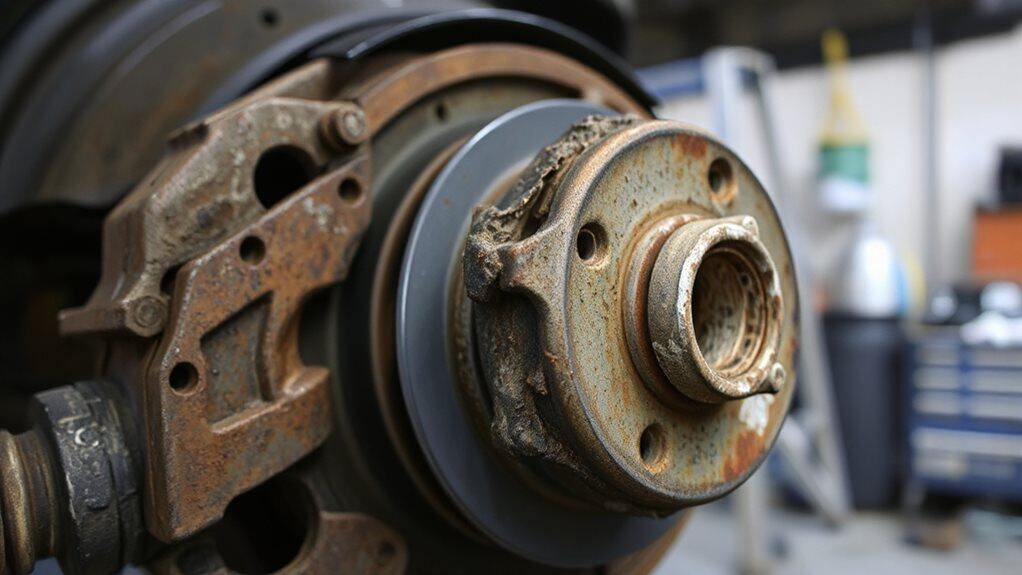
A stuck caliper piston can be spotted early by checking for uneven brake‑pad wear; if the pad on one side of the vehicle is thinning noticeably faster than its opposite counterpart, the piston is likely dragging. You’ll also notice the car pulling to one side, a spongy pedal, and hotter rotors on the affected wheel.
Measure rotor temperature with an infrared thermometer, compare pad thickness, and manually push the piston to confirm free movement. Inactivity can cause corrosion buildup that leads to the piston seizing. Use a magnetic pickup to help remove any loose debris or hardware that could interfere with piston movement.
Understand How Moisture‑Laden Brake Fluid Corrodes the Caliper Piston
When you notice uneven pad wear or a pulling sensation, the next step is to examine the brake fluid’s moisture content. Brake fluid is hygroscopic, so water infiltrates through seals, especially in damp climates.
This moisture reacts with steel pistons, forming rust that roughens surfaces and blocks smooth movement. Corroded pistons create uneven pressure, accelerating pad wear and reducing braking efficiency. Regular fluid changes and piston exercises mitigate corrosion. Using proper maintenance intervals and monitoring fluid condition helps prevent these issues and ensures components cure and perform as expected, since some treatments may require 24 hours to fully set.
Inspect Damaged Boots and Hoses That Cause a Stuck Caliper Piston
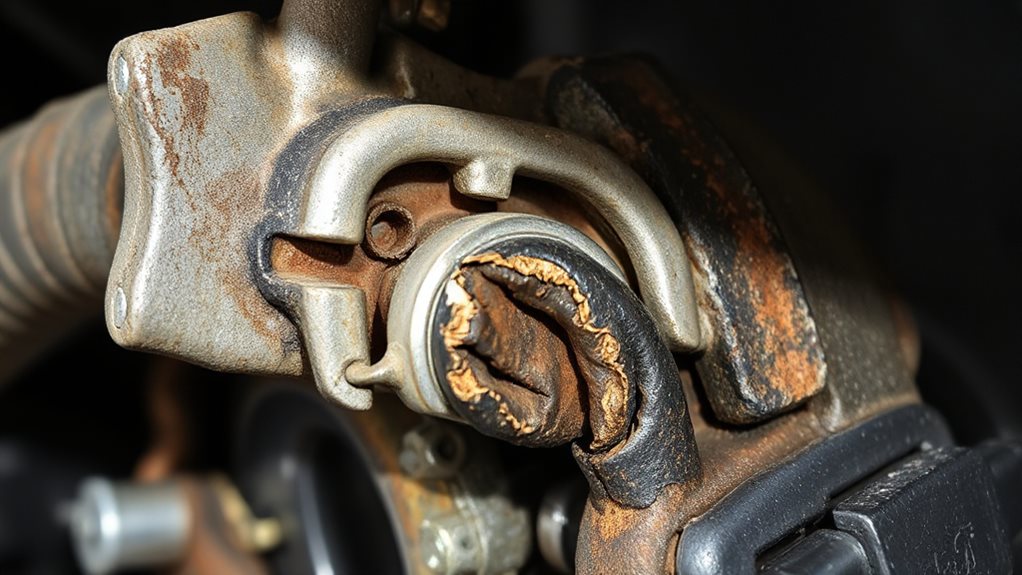
You should start by checking the rubber boot for any cracks, tears, or missing sections, because a damaged boot lets rust and debris reach the piston and cause it to stick.
Next, evaluate the brake hose condition, looking for swelling, internal collapse, or flaking that could trap pressure and prevent fluid return, which mimics a stuck piston.
Finally, apply corrosion prevention measures such as keeping the boot intact, using high‑quality hoses, and cleaning any contaminants to maintain smooth piston movement.
If you observe symptoms like idle surge or pinging in nearby engine operation, inspect associated vacuum or timing components that can exacerbate braking issues.
Boot Inspection Checklist
What should you look for when inspecting brake‑caliper boots? Examine each boot for rips, tears, cracks, or dents, and verify the inner boot seals the chamber without damage. Look for fluid contamination, dirt, or moisture entry that could seize the piston. Check slide‑pin boots for wear, ensure pins move freely, and document any defects before deciding on replacement.
Hose Condition Evaluation
Brake‑caliper boots protect the piston and hydraulic line, but even a perfect boot can’t compensate for a compromised hose. You should flex the hose and look for cracks, blisters, or bulges; pump the pedal and watch for expansion or irregular drips. Feel for hardness, brittleness, or sponginess, and check clamps, fittings, and brackets for rust or looseness. Replace any hose showing damage, deformation, or corrosion.
Corrosion Prevention Measures
A damaged boot or hose can let moisture seep into the caliper, and that moisture quickly creates rust that binds the piston, causing it to stick. Inspect boots and hoses each service, replace any cracked or worn pieces, and seal them properly.
Apply hard anodizing or nickel‑water sealing for durable protection, and consider zinc galvanization on steel components to prevent rust from compromising piston movement.
Free or Rebuild a Stuck Caliper Piston – Step‑by‑Step
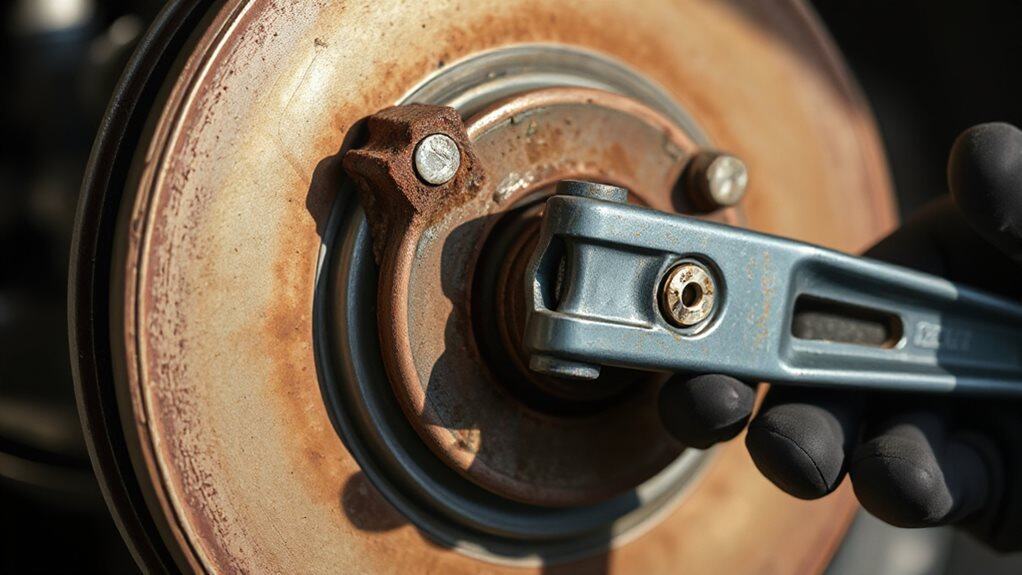
When a caliper piston sticks, you can free or rebuild it by following a systematic, step‑by‑step process that starts with safe vehicle preparation and ends with a fully functional brake assembly.
Jack the car, support it, remove the wheel and caliper, soak the piston with penetrating fluid, clamp the brake line, and gather a C‑amp, brake hone, and seal kit.
Use hydraulic pressure, compressed air, or a grease gun to push the piston out gradually, then clean the bore, replace seals with red brake grease, reinstall the piston with a C‑amp, reassemble the caliper, bleed the system, and test pedal travel.
Keep an eye on cooling-system-related symptoms like erratic temperature that can indicate engine or brake-area heat issues affecting components.
Cost Considerations: Repair vs. Replace a Stuck Caliper Piston
How much should you spend when a caliper piston sticks? A rebuild kit costs $3‑$6 and can save up to $400 versus a new caliper, but labor may dominate the bill, especially on luxury models where labor can be 90 % of total cost. Replacement runs $300‑$1,500, averaging $800; a Honda Civic averages $533, a Ford F‑150 $325, and a BMW Z4 $1,597. Choose based on part price, labor rates, and vehicle value. The cooling system capacity varies by model year, so consult the owner’s manual for exact coolant capacity before performing any brake work that might require engine cooling system access.
Monthly Checklist to Prevent a Stuck Caliper Piston
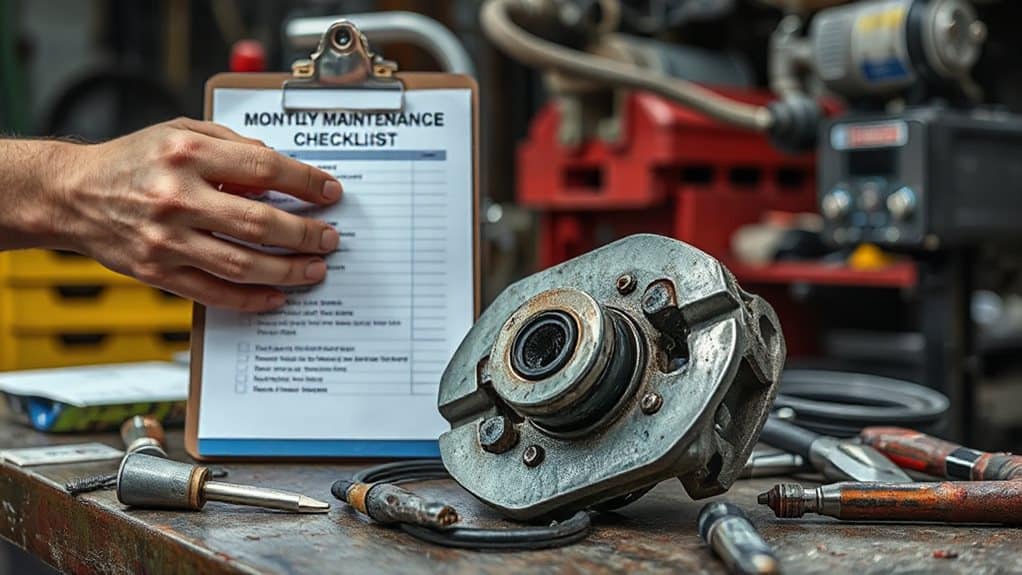
Regularly inspecting your brake system each month can keep a caliper piston from seizing and save you costly repairs.
Check fluid level, then use a C‑clamp to verify piston movement and look for torn dust boots.
Examine slide pins for rust, grease them, and relubricate O‑rings.
Inspect pad wear patterns for unevenness.
Clean pistons with isopropyl alcohol and re‑apply proper lubricant.
Ensure adequate ventilation to reduce harmful gases like radon when working in enclosed spaces.
Wrapping Up
By spotting a stuck caliper piston early, you prevent costly brake damage and maintain safe stopping power. Moisture‑laden fluid corrodes the piston, while damaged boots and hoses let contaminants in, so regular inspection is essential. Follow the step‑by‑step guide to free or rebuild the piston, and compare repair versus replacement costs to choose the best option. Finally, use the monthly checklist to keep your brakes reliable and avoid future piston seizures.