
You’ll notice repeated pump shutoffs when filling, fuel odors near the rear or inside the cabin, and dashboard codes like P0440, P0441, or P0455 that point to EVAP leaks, purge-flow faults, or canister saturation. You may get rough idle, stalling, or reduced MPG from a stuck purge valve or saturated charcoal, and trapped vapors or blocked vents raise backpressure. Do basic hose and gas-cap checks, try a low-pressure smoke test, and continue below to learn repair options and costs.
Quick Tips
- Repeated gas pump nozzle shutoffs or difficulty refueling from vent restriction and tank backpressure.
- Persistent fuel smell around the rear or inside the cabin from cracked or saturated canister housing.
- Check-engine light with EVAP codes (P0440, P0441, P0455) indicating leaks, purge or vent faults.
- Rough idle, stalling, poor throttle response, or reduced fuel economy from stuck-open purge or contaminated charcoal.
- Smoke testing, visual hose/check-valve inspections, or gas-cap checks help locate leaks before replacing the canister.
Quick Symptom Checklist: Is Your EVAP Canister Failing?
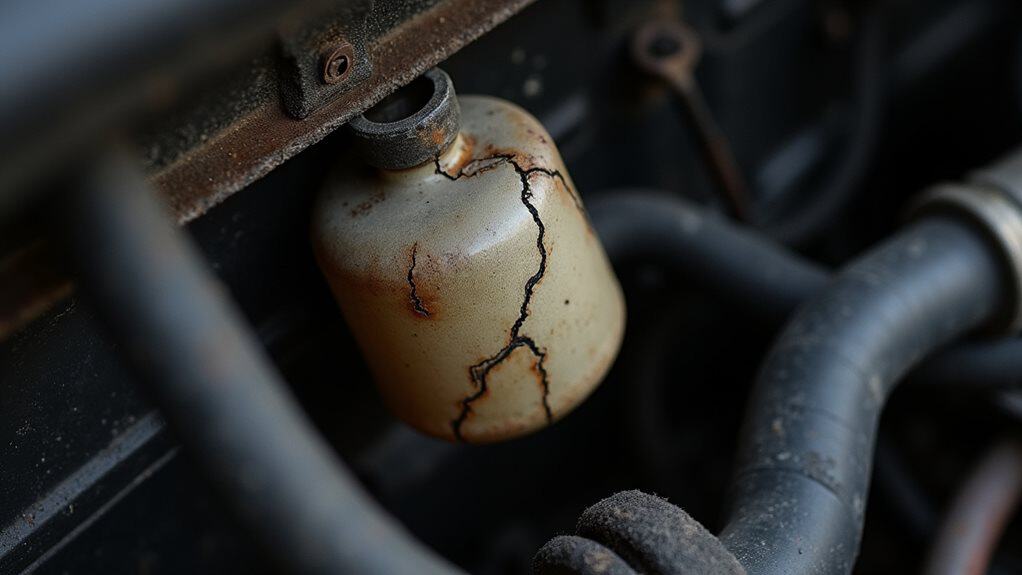
and refueling can become difficult, with the pump nozzle clicking off repeatedly as trapped vapors prevent proper venting.
Check codes, note persistent fuel odors, watch for hissing at the gas cap, and remember refueling interruptions; these practical clues pinpoint EVAP canister issues for timely diagnosis.
A non‑sealing gas cap can also cause EVAP pressure loss and trigger leak codes like P0455 when dirt, a damaged O‑ring, or a wrong cap prevents a proper seal and the cap won’t click gas cap sealing.
EVAP Canister Explained: How It Traps Fuel Vapors and Why Failure Matters
An EVAP (evaporative emissions) canister contains activated charcoal that captures fuel vapors from the tank and holds them until the engine can burn them, preventing hydrocarbons from escaping into the air.
You’ll learn that the charcoal’s huge surface area adsorbs vapor molecules, the ECU opens the purge valve when warm, and engine vacuum pulls stored vapors into the intake for combustion, reducing pollution. The system is monitored by the vehicle’s ECU, which can log EVAP leak codes such as P0455/P0456 when a leak or seal problem is detected.
Dashboard Codes That Signal a Bad Canister (P0440, P0441, P0455, Etc.)
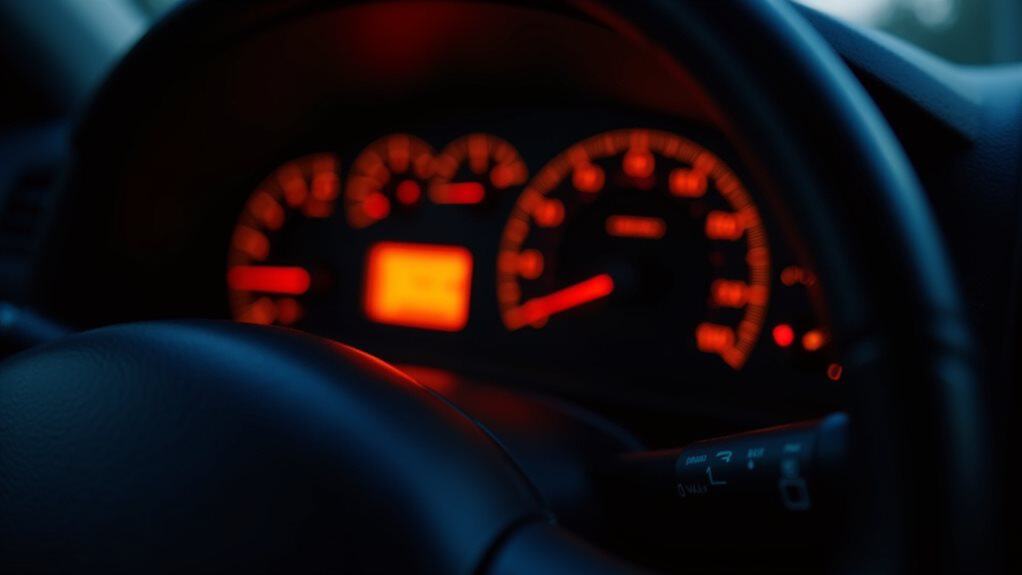
Now that you know how the EVAP canister traps and releases fuel vapors, it helps to recognize the dashboard codes that signal canister trouble; these codes tell you where the system failed and guide your next steps.
P0440 flags a general EVAP fault, P0441 shows purge flow issues, and P0455 means a large leak; combined codes often indicate a saturated or damaged canister. The presence of P0455 specifically indicates an Evaporative Emission System Leak detected (large leak), often caused by a loose gas cap, damaged hoses, or a faulty purge/vent valve. A loose or damaged gas cap can also cause rough idle by allowing EVAP leaks that alter fuel system pressure and delivery.
Why an EVAP Canister Makes the Gas Pump Click Off While Refueling
When you hear the gas pump click off before the tank’s actually full, it’s usually because pressure is building inside the sealed fuel tank and the nozzle’s automatic sensor thinks the tank has reached capacity.
A clogged EVAP canister or blocked vent traps displaced air during refueling, raising backpressure; the nozzle senses that pressure and shuts off, mistaking it for a full tank.
This trapped pressure can be exacerbated by a blocked vent that prevents proper airflow during refueling.
Smelling Gas? How a Failed Canister Affects Cabin Air and Surroundings

If your vehicle starts smelling like gasoline around the rear or inside the cabin, a failing EVAP canister is a likely cause and you should investigate promptly.
Vapors can leak from cracked housing, saturated charcoal, or stuck vents, then enter the cabin via air intakes or poor gas cap seals.
Check hoses, vent valves, and perform a smoke test to locate leaks and fix them.
Regular maintenance, including inspecting for visible damage and ensuring proper venting to allow the purge process, can help prevent canister failure.
Engine Clues: Rough Idle, Poor MPG, and Stalling Tied to EVAP Faults
When your EVAP canister starts failing, you’ll often notice a rough idle after refueling because trapped vapors or a faulty purge valve disrupt the air-fuel ratio and cause unstable RPMs.
You may also see reduced fuel economy as vapors escape instead of being routed back into combustion, forcing the engine to burn more liquid fuel and lowering miles per gallon.
In worse cases the engine can stall or hesitate—especially during low-speed driving or right after filling the tank—since excess vapors or pressure issues interfere with proper fuel delivery and ignition.
A common diagnostic clue is a persistent negative vapor pressure reading in the EVAP tank caused by intake vacuum pulling vapors into the canister, which can point to issues like a stuck purge or vent valve EVAP vent solenoid.
Rough Idle After Refueling
Although it may seem unrelated, refueling can trigger a rough idle because the EVAP (evaporative emissions) system can introduce excess fuel vapor or liquid into the intake, upsetting the air–fuel balance the engine relies on.
A stuck-open purge valve or liquid-contaminated charcoal canister will let rich vapors surge into the manifold immediately after filling, causing RPM swings, rough idling, longer cranks, and sometimes stalling.
Check for fuel odor, post-fill RPM surges over 150 RPM, or hard starts.
Test the purge valve vacuum, pinch the purge line to see if idle smooths, and scan for P0440–P0458 codes.
Replace faulty purge or vent valves and avoid topping off the tank.
Reduced Fuel Economy
A rough idle after filling up can point to broader fuel-economy problems tied to the EVAP system, and you’ll want to follow up because these symptoms often signal inefficient combustion or vapor loss that costs you miles per gallon.
EVAP faults upset air‑fuel ratios, leak unrecycled vapors, or trap tank pressure; scan codes like P0441/P0446/P0455, inspect hoses, and test purge and vent components.
Stalling And Hesitation
Stalling and hesitation often come from EVAP system failures that let unmetered fuel vapors or air into the intake, and you’ll notice the engine stumble, surge, or die especially at idle and during throttle application.
Unmetered air, vapor saturation, or a clogged canister upset air-fuel ratio, causing rough idle, misfires, poor throttle response, and sudden stalls; check purge valve and EVAP codes.
Quick At-Home EVAP Checks and Smoke-Test Checklist to Try First
Start by visually inspecting the canister for cracks, dents, or loose mounting hardware, and check the charcoal canister area near the tank for obvious damage.
Next, examine the gas cap and all EVAP hoses for torn rubber, brittle plastic, missing clamps, or poor seals, making sure the cap clicks when tightened and hoses seat firmly where they meet hard lines.
If you want to confirm a leak, you can perform a simple home smoke-test by sealing the fill neck, introducing low-pressure smoke into the EVAP inlet, and watching for smoke at hose connections, the canister, or the fuel-filler area to pinpoint escaping air.
Visual Canister Inspection
Because the EVAP canister sits exposed under the vehicle and handles fuel vapors, you should begin your inspection visually and methodically, working from the outside in so you don’t miss obvious faults.
Check the housing for cracks, impact damage, oil or fuel residue, loose mounting brackets and heavy dirt.
Then test ports and valves: blow through ports, inspect purge and vent solenoids, connectors, wiring, and watch for blocked or saturated charcoal.
Gas Cap And Hoses
While inspecting the EVAP system, start by checking the gas cap and all visible hoses, since these simple components are common sources of leaks that trigger fault codes and odors; a cap that doesn’t seal or hoses with cracks will let vapors escape, preventing the system from holding pressure and confusing sensors.
Tap the cap for a click, clean threads, inspect hoses for cracks, pinholes, swelling, or loose clamps.
Simple Home Smoke-Test
After you’ve checked the gas cap and inspected visible hoses for cracks or loose clamps, a simple home smoke-test will help you find leaks that aren’t obvious by sight or smell.
Secure the smoke hose to the EVAP test port or filler neck, seal vents, run smoke at low pressure (~0.5 PSI), watch for escaping smoke with a flashlight, and follow safety steps like disconnecting the battery.
Repair Options, Estimated Costs, and When to See a Mechanic
A clear plan for fixing a bad EVAP canister helps you choose the right repair path and estimate costs before you start work or call a shop.
You can replace the canister, clean and test ports, or swap hoses and valves; expect parts $80–$400, labor $120–$450, diagnostics $50–$150.
See a mechanic for complex access, persistent codes, or when time and tools are limited.
Wrapping Up
You can check EVAP symptoms quickly and, if needed, act before small problems become costly. Use your OBD-II reader to note P0440/P0441/P0455 codes, sniff for vapor odors, and watch for rough idle, poor fuel economy, or pump cut-offs while refueling. Try simple at-home tests—inspect hoses, listen for leaks, and perform a basic smoke test if equipped—then get a professional diagnosis. Replace the canister or repair lines when codes persist or symptoms continue.


