Tinted taillights aren’t uniformly illegal in the U.S.; federal rules (FMVSS 108) forbid changing red color or materially reducing light output, and many states add stricter limits. Some states ban any darkening, others allow tints if visible light transmission (VLT) and red signal visibility meet distance tests (often 500–1,000 feet). You can get stopped, fined, or fail inspection if lights aren’t DOT-compliant; keep manufacturer visibility or follow your state’s VLT rules to avoid trouble and learn what to do next.
Quick Tips
- Federal rules (FMVSS 108/DOT) prohibit taillight color changes and material reductions in brightness that impair visibility.
- States vary: some explicitly ban aftermarket taillight tinting, others allow it if visibility and VLT limits are met.
- Illinois, North Carolina, Pennsylvania, Tennessee, Vermont, and Wisconsin explicitly prohibit darkening or color-changing taillight tints.
- Many states enforce via stops, inspections, fines, correction orders, or registration/renewal denial if lights fail visibility tests.
- Conditional allowances usually require preserving red color, meeting VLT minimums (commonly ~25–50%) and visibility from several hundred feet.
Legal Status of Tinted Taillights (Federal View)
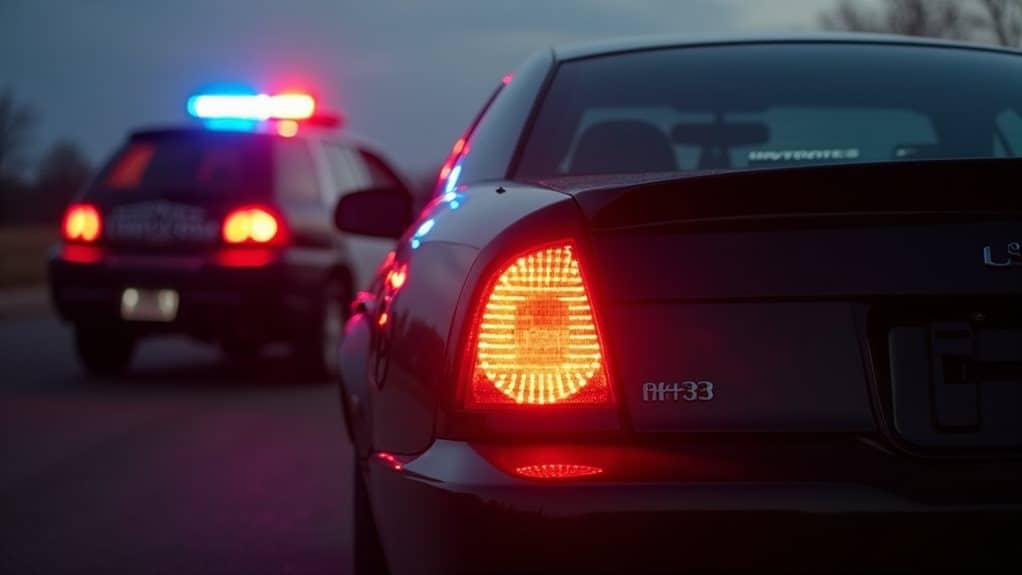
Under federal rules, taillights must stay red, remain bright enough to be seen from several hundred feet, and can’t be altered in a way that changes their color or materially reduces their output.
You must keep at least 25% light transmission, avoid color-changing tints, and preserve reflectors and signal visibility.
FMVSS 108 sets a 500–1,000 foot visibility benchmark and conditions for registration.
State laws can be stricter than federal standards, so compliance may still fail a stop or inspection if your lights are deemed too dark (state enforcement).
State Law Categories: Banned vs. Conditional
Because states set their own rules, you’ll find taillight tinting is treated very differently across the country: some states effectively ban any darkening that reduces visibility or changes the red color, while others allow tints so long as specific technical conditions are met.
You’ll encounter bans, VLT percentage thresholds, visibility-distance rules, DOT/color-preservation standards, local officer discretion, and hybrid multi‑criteria systems.
States That Completely Ban Tinted Taillights
You should know that six states—Illinois, North Carolina, Pennsylvania, Tennessee, Vermont, and Wisconsin—explicitly prohibit any aftermarket tinting that darkens or changes the red color of factory taillights.
These laws aren’t just suggestions: they tie to visibility standards (typically requiring red light visible from 500–1,000 feet) and are enforced through inspections, traffic stops, fines, and possible orders to restore factory lighting; repeat or severe violations can lead to larger penalties or registration issues.
If you drive in or through these states, plan to keep taillights unaltered for street use, or restrict any nonconforming modifications to track-only vehicles to avoid citations and safety risks.
States With Total Bans
While some states allow modest modifications, several U.S. jurisdictions completely forbid tinting or darkening taillights, and you need to know these rules if you plan any aftermarket change.
States like Illinois, North Carolina, Pennsylvania, Tennessee, Vermont and Wisconsin ban tint that changes color or reduces output.
Federal FMVSS 108 and DOT rules also prohibit any alteration that cuts visibility or obscures reflectors.
Consequences And Enforcement
In states that completely ban taillight tinting, enforcement focuses on maintaining prescribed red-light visibility and preventing any alteration that could reduce light output or change color, and you should expect immediate, practical consequences if your vehicle doesn’t comply.
Officers cite, require on-the-spot removal or issue correction orders; states may suspend registration, impose fines, add insurance penalties, and deny renewal until DOT-compliant lenses are restored.
States Permitting Tinted Taillights (Visibility/VLT Limits)
Because visibility is the primary legal and safety concern, several states allow taillight tinting only when the altered lenses still meet specific visible light transmission (VLT) or distance-based visibility requirements, and you should know what those thresholds mean before making any modifications.
States like Alabama, Iowa, Kansas, and Alaska permit minor tinting if VLT stays high enough and red output remains detectable at required distances.
Technical Rules: Color, Distance, VLT

For taillight tinting to be legal and safe, you must follow strict technical rules about color, visibility distance, and visible light transmission (VLT), because these factors together help other drivers can reliably see your vehicle and interpret its signals.
You must keep red-only output per FMVSS 108, meet 500–1,000 ft visibility, and respect state VLT minimums (typically 24–50%) so signals remain bright and clear.
In some states modifications that reduce required visibility or alter signaling may violate vehicle codes and emissions or safety rules, so check local regulations and certified exemptions such as CARB certification before modifying your lights.
Why Tinted Taillights Raise Crash and Ticket Risk
When you dim taillights with tinting film or dark lenses, you reduce the luminous intensity that other drivers rely on to judge your speed and following distance, and that decreased intensity makes it harder to perceive closing speed accurately; drivers behind you may not detect the rate at which your vehicle is slowing, leading to misjudged gap closure and an increased risk of rear-end collisions.
You also increase ticket risk because reduced output can violate visibility standards, delay brake-response recognition, and skew distance estimation, making enforcement and crash causation easier to establish.
How to Check Local Rules and Avoid Citations

You should start by checking your state DMV website for specific rules on tail light tinting, since those pages often list allowable light transmission percentages and required colors.
Next, inspect local ordinances and city or county traffic codes—municipal rules or police traffic divisions can add restrictions beyond state law, so look for any cited visibility distances or reflector requirements.
Finally, verify light transmission with a basic light meter or a professional inspection, ensuring the red signal is detectable at required distances and the tint hasn’t shifted the color, so you can avoid citations and insurance issues.
Also consider how different tint darkness levels affect nighttime visibility, since lower visible light transmission (such as 35% tint) can reduce the detectability of signals in low-light conditions.
Check State DMV Rules
How do you confirm whether tinted tail lights are legal where you live?
Visit your state DMV .gov site, open Vehicle Codes or Traffic Laws, and search “tail light” or “headlight.”
Download the current vehicle code PDF and inspection manual chapters on exterior lighting.
Call the DMV compliance line to ask allowed VLT, visibility distance, and request a written confirmation or case number for citation avoidance.
Inspect Local Ordinances
Because municipalities can adopt rules stricter than state law, inspect local ordinances to confirm whether tinted tail lights are allowed in your city or county;
start by locating the municipal code or traffic regulations online, then search sections on vehicle equipment, lighting, or obstruction to find exact language about tint, film, or any reduction of light output.
Then check police guidelines, local council minutes, and community legal summaries.
Verify Light Transmission
When checking whether your tinted tail lights meet local rules, start by confirming the required visible light transmission (VLT) and visibility-distance standards in your state and municipality, since these numerical thresholds determine whether a tint is legal or will attract a citation.
Measure VLT, compare to state minima (24%–70% common), verify visibility distance (500–1,000 ft), and retain test receipts.
If Cited: Fixes, Inspection Tests, and Safe Alternatives
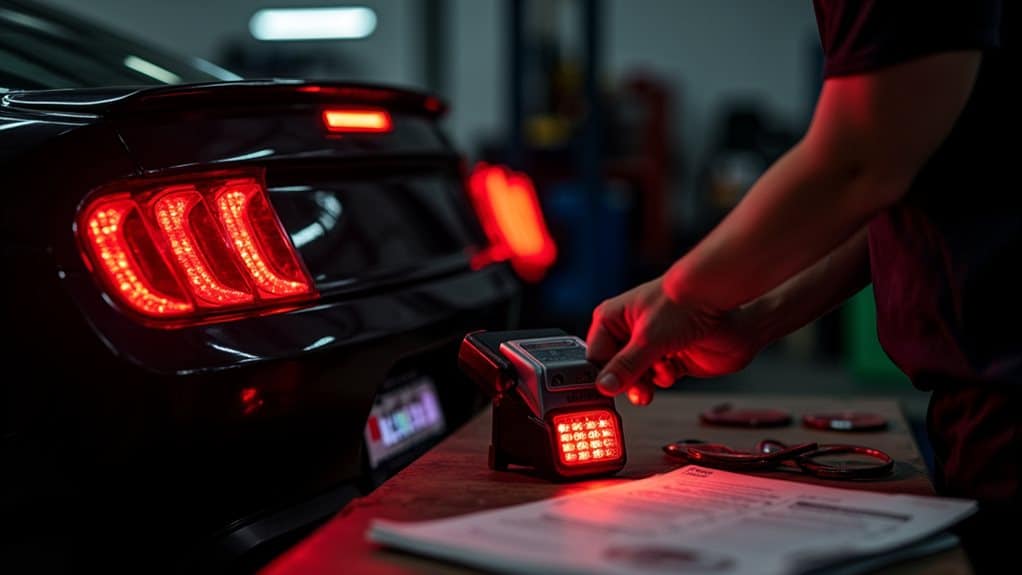
If you get cited for tinted tail lights, act promptly to avoid fines or inspection failures and restore legal compliance; remove film with a heat gun and plastic scraper, clean adhesive with acetone, inspect and polish lenses, and confirm red output.
Have testing measure transmission (minimums vary), brake intensity, and reflector function.
Use OEM red lenses, DOT-compliant LEDs, or ultra-thin protective films as safe alternatives.
Regular inspections and monitoring of driving conditions can help prevent issues like plug dislodgement and other tire- and lighting-related failures.
Wrapping Up
You’re responsible for following both federal guidelines and your state’s rules, since some states ban tinted taillights outright while others allow them if they meet visibility or VLT (visible light transmission) limits; VLT is the percent of light that passes through the lens. If cited, you’ll need to restore full visibility, pass inspection tests, or use approved alternatives like clear lenses or factory-approved films. Check local DMV or law enforcement resources before modifying lights.