You can technically drive with a warped rotor, but it’s not recommended because it can cause uneven brake contact, vibrations, or pulsations during braking, which compromise safety. Mild warping might not immediately affect stopping power, but over time, it worsens, risking brake failure and damage to other components. Persistent vibrations or pulsing indicate possible warping. Knowing how to identify and address warped rotors helps avoid costly repairs—continue exploring to learn how to maintain your brakes effectively.
Quick Tips
- Short-term driving is generally safe if no vibrations or pulsations are felt during braking.
- Mild warping may cause minor pedal pulsations without immediately affecting braking performance.
- Regularly monitor brake response and avoid aggressive braking to prevent worsening of the warping.
- Ignoring signs of warping can increase the risk of brake failure and damage to other components.
- Prompt inspection and maintenance are recommended if you notice vibrations or steering wheel wobble during braking.
How Do Warped Rotors Affect Your Brakes?
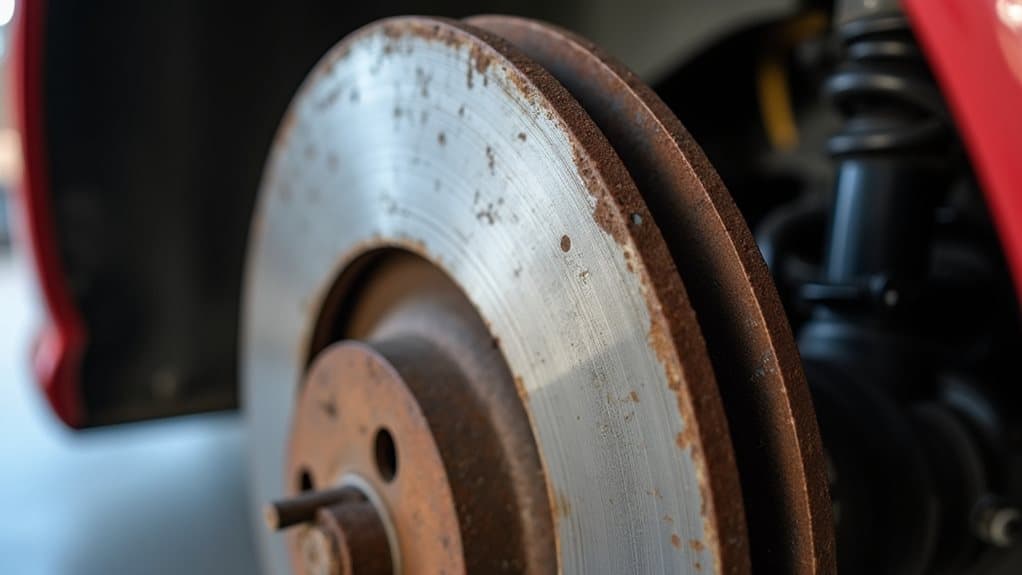
Warped rotors directly impact your braking system by causing uneven contact between the brake pads and the rotor surface. This unevenness creates vibrations during braking, leading to pulsations felt through the brake pedal.
Warped rotors result from excessive heat, which causes the rotor material to expand unevenly. This expansion decreases braking efficiency and increases brake pad wear, ultimately compromising your brake system’s performance. Regular inspection of brake components can catch related issues early, such as loose brake pads or bent backing plates that may produce similar clicking noises.
Can You Safely Drive With a Slightly Warped Rotor?
Driving with a slightly warped rotor for a short period—such as a few weeks or up to a month—is generally considered safe if you don’t notice vibrations or braking issues.
Mild warping may cause minor pedal pulsations but usually doesn’t immediately affect braking performance.
Regular inspections and cautious driving can prevent the warping from worsening and protect your braking system’s integrity.
Cold temperatures can sometimes cause cold-weather brake squeal, which is usually harmless but can indicate other brake issues.
What Are the Risks of Ignoring Warped Rotors?
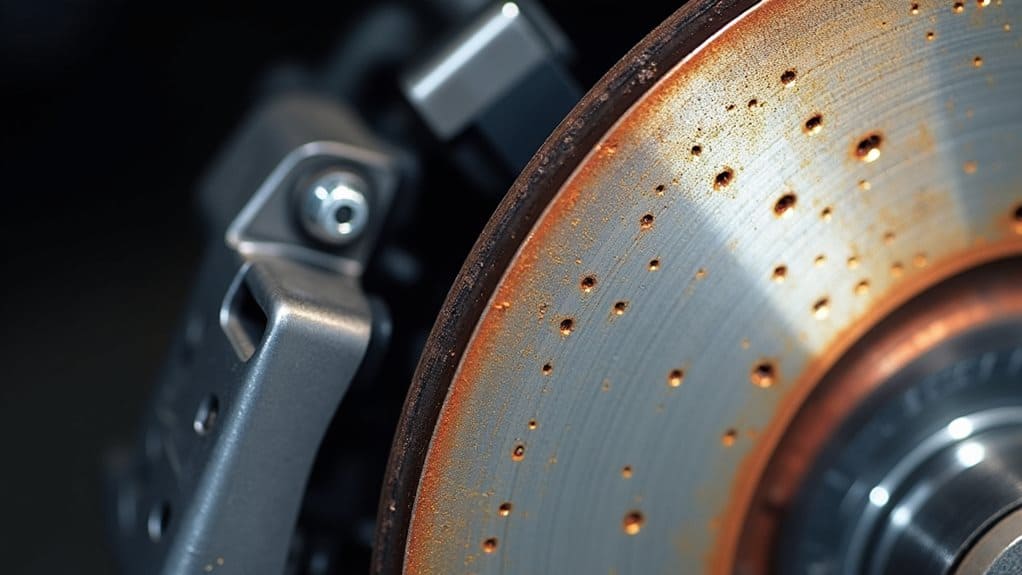
Ignoring the warning signs of warped rotors can have serious consequences for your vehicle’s braking system and overall safety.
A warped brake causes uneven contact between the rotor and brake pad, increasing the risk of brake system failure.
Continued driving may lead to brake fade, uneven wear, and damage to calipers and suspension, escalating repair costs and safety hazards.
A persistent ABS warning light can indicate related problems like faulty wheel-speed sensors or a malfunctioning ABS module, which can compound braking issues.
How Can You Tell If Your Rotor Is Warped?
You can tell if your rotor is warped by inspecting its surface for irregularities such as grooves, discoloration, or visible heat spots, which indicate uneven wear or excessive heat.
Additionally, feel for vibrations or pulsations in the brake pedal when applying brakes, as these sensations often result from a warped rotor causing uneven contact with the brake pad.
Wobbling or shaking of the steering wheel during braking also signals that the rotor surface may be uneven, affecting your vehicle’s handling and braking performance.
Check whether the rotor is considered personal property when determining replacement responsibility and whether it should be listed as movable equipment.
Visible Rotor Surface Irregularities
A warped rotor often exhibits clear visual irregularities that can be identified through careful inspection. Look for uneven or grooved brake rotors, which may appear scored or irregular.
Discoloration or bluish hues can signal overheating.
Additionally, surface warping causes high spots, creating ridges or bumps, while cracks or fractures along the rotor surface also indicate warping issues.
Brake Pedal Vibrations
When brake pedal vibrations occur during stopping, they often point to an issue with the brake rotors, specifically warping. Warped rotors create uneven surfaces, causing pulsations felt through the brake pedal.
Even tiny high spots as small as 0.0004 inches can produce noticeable vibrations.
Consistent shaking indicates rotor distortion, especially after heavy braking.
Should You Resurface or Replace Your Warped Rotors?
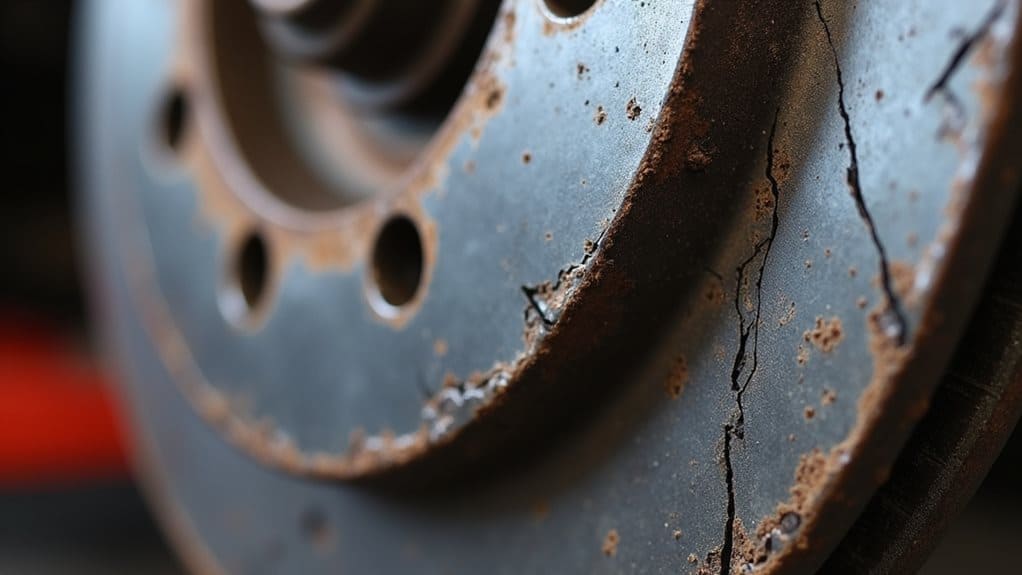
Deciding whether to resurface or replace warped rotors depends on the severity of the warping and their condition. Resurfacing can be a temporary fix if warping is minor and rotors meet thickness specs.
However, severe warping, cracking, or deep grooves mean replacement is best. Excessive resurfacing weakens rotors, risking future issues and reduced braking performance. The transmission may enter limp mode to protect itself when underlying issues strain braking or drivetrain systems.
How to Prevent Warped Rotors in the Future
Preventing warped rotors starts with proper maintenance and driving habits. Regularly inspect and replace brake pads before they become excessively worn, as uneven wear can transfer uneven pressure to the rotors.
Avoid aggressive braking, especially after high-speed driving, and follow correct bedding procedures for new brake components.
Using high-quality, heat-resistant brake parts also helps prevent warping over time. Additionally, applying corrosion-preventive coatings such as chassis saver can help protect rotors from environmental damage and flash rust.
When Is It Time to Replace Your Rotors for Good?
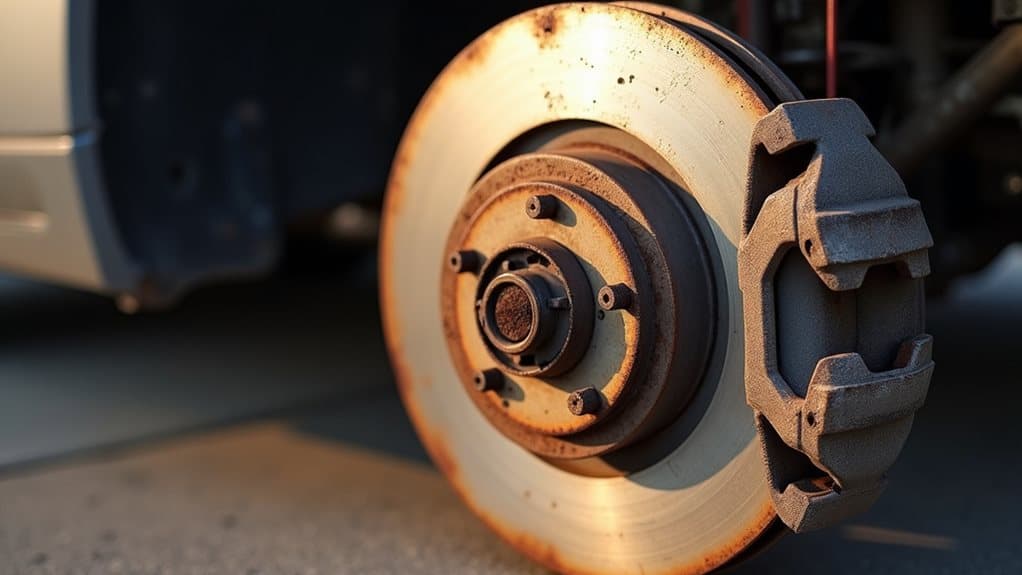
Knowing the signs that indicate your rotors need replacement is essential for maintaining safe braking performance.
If you notice warped rotors with grooves, discoloration, or uneven surfaces, it’s time for replacement rotors.
Persistent vibrations, brake noise, or a pulsating pedal also signal worn or warped rotors that can’t be fixed by resurfacing.
Replace them promptly to guarantee safety.
What Are Your Repair and Maintenance Options?
Regular inspection and accurate diagnosis are essential to identify warped rotors early and determine whether repair, resurfacing, or replacement is necessary.
When addressing repair options, replacing the rotor entirely is often the safest choice, especially if it’s too thin or damaged.
Resurfacing can be a temporary fix but risks weakening the rotor if overused.
Upgrading to high-quality OEM or aftermarket parts and performing preventive maintenance, such as checking calipers and brake pads, can improve braking performance and extend the lifespan of your brake system.
Inspection and Diagnosis
To accurately determine whether your rotor is warped, you need to conduct a thorough inspection and diagnosis process. This involves both visual examination and precise measurement tools.
Look for uneven surfaces or discoloration, signs of warped rotors.
Use a dial indicator or have a mechanic measure rotor runout.
Listen for vibrations or noises during braking to confirm issues.
Repair and Replacement Options
When dealing with warped rotors, you have several repair and replacement options depending on the severity of the damage.
Small warps can often be resurfaced or turned at auto parts stores for around $20.
However, if the warping is excessive, you should replace the rotors entirely.
Replacing rotors and brake pads together guarantees ideal brake performance and prevents uneven wear.
Upgrades and Preventive Maintenance
Upgrades and preventive maintenance are essential strategies to extend the lifespan of your brake system and reduce the risk of rotor warping.
You should consider upgrading to high-quality rotors and brake pads, which resist warping and improve braking.
Regularly inspect and replace worn calipers and components to prevent heat buildup.
Proper brake bedding and avoiding hard stops help maintain even rotor surfaces.
Wrapping up
Driving with a warped rotor can compromise your vehicle’s braking performance, leading to uneven pad wear, increased stopping distance, and potential safety hazards. If you notice vibrations or pulsing when braking, have your rotors inspected promptly. Resurfacing may restore functionality if the warping is minor, but significant damage often requires replacement. Regular maintenance, including brake inspections and avoiding aggressive driving, helps prevent warping. Address issues early to guarantee your braking system remains effective and safe.