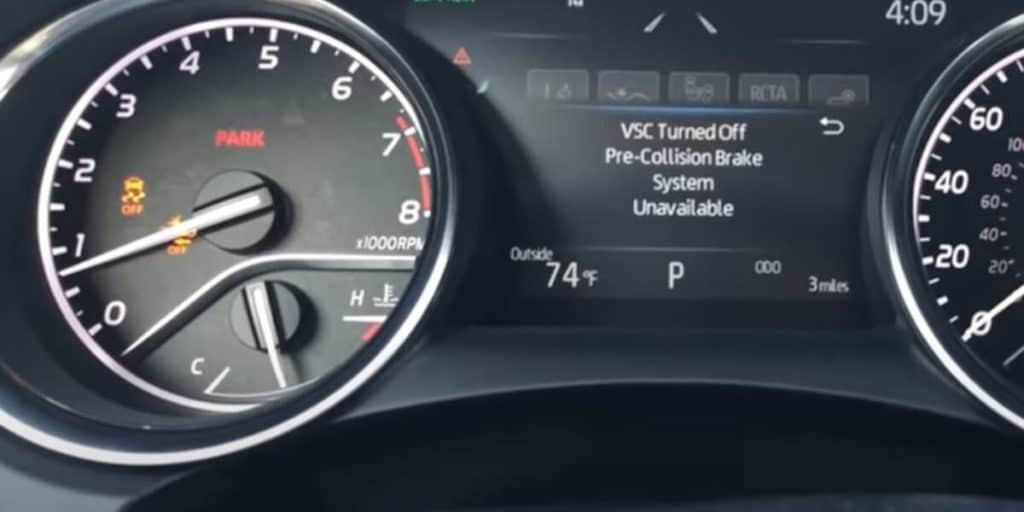
When your Lexus RX350 shows “Check AWD System,” it means the AWD control unit detected a drivetrain or sensor fault that can reduce rear drive and traction control authority, so you should inspect the battery, wheel‑speed sensors, wiring connectors, differential fluid, and tire condition immediately. Use an OBD‑II scanner to read codes (ABS/C12xx, C12xx pairs, P0/C codes) and live wheel‑speed and clutch data, avoid aggressive driving, and get diagnostics or dealer programming if needed to fix the issue and learn more.
Quick Tips
- “Check AWD System” means the AWD control unit detected a drivetrain or sensor fault, reducing rear-drive engagement and system authority.
- Confirm immediate safety: reduce speed, avoid slippery roads, and arrange inspection if traction control or power loss is present.
- Scan OBD‑II for codes (e.g., C12xx, C1253/C1254, U011D or related ABS/wheel-speed faults) and capture wheel-speed and clutch-duty live data.
- Inspect battery health, wiring/connector corrosion near the rear differential, wheel-speed sensors, and differential fluid level as first fixes.
- DIY fixes include sensor/wiring replacement and battery/service resets; tow to dealer for module programming or complex CAN/module repairs.
Immediate Checks for “Check AWD System”: Battery, Gas Cap, Tires, and Safety

Although a dashboard “Check AWD System” warning can mean a drivetrain fault, start with basic systems that commonly cause the message and are easy to inspect yourself.
Check battery voltage, terminal corrosion, and secure connections; low or dead batteries disrupt control modules. Also remember that leaving keys in the ignition can cause battery drain, which may affect control modules over time.
Inspect the gas cap for tightness or damage, examine tires for uneven wear or mismatched sizes, and verify tire pressure for safety. Be sure to also give the tires a hands-on pressure check with a good gauge, since visual checks can miss tire pressure issues.
What “Check AWD System” Means on a Lexus RX350 (Symptoms & Default Behavior)
After you’ve checked basic items like the battery, gas cap, and tires, you’ll need to understand what the dashboard message actually represents and how the vehicle will respond.
The warning means the AWD control unit detected a drivetrain or sensor fault, often wheel-speed or wiring failures.
The car locks AWD out, shows a wrench and “Trac Off,” limits rear drive engagement and reduces system authority.
Check the system codes with an OBD‑II scanner to read related trouble codes and guide repairs, especially for wheel speed sensors and control-module faults.
Is It Safe to Drive? Risks, Performance Impacts, and Short‑Term Precautions

If your Lexus shows a “Check AWD System” warning, don’t assume all-wheel drive is fully operational and avoid driving aggressively until you know the cause.
Reduced traction control, limited torque distribution to the rear wheels, or a fall-back to front‑wheel drive can increase stopping distances and reduce stability on wet or slippery roads, so you should limit speed, avoid sharp maneuvers, and steer clear of poor‑surface conditions.
Arrange an immediate inspection with a technician—short trips at moderate speeds are generally acceptable, but continued use without diagnosis raises safety and drivetrain damage risks.
Also, pull over safely and shut off the engine if you notice a flashing traction control light or sudden loss of power, since flashing traction control often signals issues that need immediate attention.
Driving Safety Risks
When the AWD warning appears on your Lexus, don’t assume you can drive the same way you normally would; the vehicle may have switched to two‑wheel drive or disabled parts of the traction system, which changes how it responds in rain, snow, and during sudden maneuvers.
Your control, stability, and acceleration can be compromised; braking and cornering responses may change, and untreated faults risk drivetrain damage.
Short-Term Precautions
Because a Lexus with an AWD fault often defaults to two‑wheel drive, you should treat the car as having reduced traction and altered handling until the system is repaired.
Reduce speed, keep longer following distances, avoid wet, icy, steep or unpaved roads, and limit highway trips to dry routes.
Monitor warnings, check coupling fluid, and avoid hard acceleration or abrupt maneuvers to minimize risk.
OBD‑II Scanning for “Check AWD System”: Common AWD Codes and Reading Live Data
When your Lexus shows “Check AWD System,” you’ll want to plug in an OBD‑II scanner to read common AWD trouble codes like C1201, C1253/C1254, and A000, because those codes point to ECM/AWD communication, wheel speed sensor faults, or internal AWD module failures.
You should then monitor live sensor data—wheel speeds (expect 0.0 km/h at rest and at least 0.5 Hz signal frequency when rotating), sensor voltages near 12 V, and clutch engagement percentage (around 95% for full torque transfer)—to confirm whether a code reflects a real hardware fault or a transient signal glitch.
Finally, learn to interpret code pairs and related live values (for example, C1253 paired with low sensor resistance ~150 Ω or static speed <0.1 km/h indicates a front sensor issue, while C1201 with CAN errors suggests module sync or ground problems) so you can prioritize repairs accurately.
Unlock dealer-level diagnostics at home with these professional OBD2 scanners that could save you thousands in 2026.
Common AWD Trouble Codes
Although the AWD warning can stem from many sensors and control modules, you’ll most often track it down with an OBD‑II scanner that reads stored and pending trouble codes and live data, guiding your troubleshooting steps.
Common codes include P0-series engine/VVT and ignition faults (P0011, P0340, P0352), P05x voltage/ECM errors, and C12xx ABS/chassis codes indicating front ABS motor or AWD control module issues.
Reading Live Sensor Data
Start by connecting a capable OBD‑II scanner or manufacturer tool to the diagnostic port and pull live data streams for all AWD‑related sensors and actuators so you can see real‑time system behavior rather than relying solely on stored trouble codes.
Watch wheel speed PIDs, clutch pack duty cycle, transfer case actuator voltage/current, differential solenoid status and temperatures, plus ABS correlations to spot inconsistencies.
Interpreting Code Pairs
In diagnosing a “Check AWD System” message, you’ll often see two related trouble codes stored together, and interpreting these code pairs gives a clearer scene of the underlying fault than reading a single code alone.
Compare pairs like U011D with C0035 to spot communication versus sensor failures; cross-reference Lexus-specific codes across GX, RX, LX, then read live data to confirm signal loss, voltages, or pulse counts.
Likely Causes and Prioritized Fixes: Sensors, Wiring, Fluids, and Module Steps
When your Lexus shows a “Check AWD System” warning, you should first consider sensors, wiring, fluids, and the control module in that order, because each area has distinct failure modes and diagnostic priorities that determine safe, cost-effective repairs.
Start by scanning for wheel sensor codes, inspect connector corrosion and wiring breaks near the rear differential, check differential fluid level/condition, then verify CAN bus and module firmware.
Also consider using a diagnostic scan tool to read ABS and AWD-related fault codes and live sensor data during initial troubleshooting.
DIY vs. Dealer: Cost, Tools, Programming Needs, and When to Tow

Although DIY diagnostics can save you significant money on a “Check AWD System” warning, you need to weigh tool needs, programming limitations, and safety before deciding to work on the car yourself.
Use an OBD-II reader, basic hand tools, and battery resets for initial checks; expect $50–$300 in parts/tools.
Tow to a dealer when module programming, complex wiring, or safety risks exceed your skills.
Also check related systems like the shift lock fuse and brake switch, since shared circuits can cause unexpected interlocks or electrical symptoms.
Wrapping Up
You should address a “Check AWD System” message promptly: inspect battery charge and terminals, tighten the gas cap, confirm tire pressures and matching tread, and note any drivability changes. If safe, scan OBD‑II for AWD or ABS traction codes and review live data from wheel sensors and the AWD module. Prioritize sensor wiring and connectors, fluid levels, and transfer‑unit faults; some fixes you can do, but module replacement or programming often requires dealer tools, so tow if unsure.