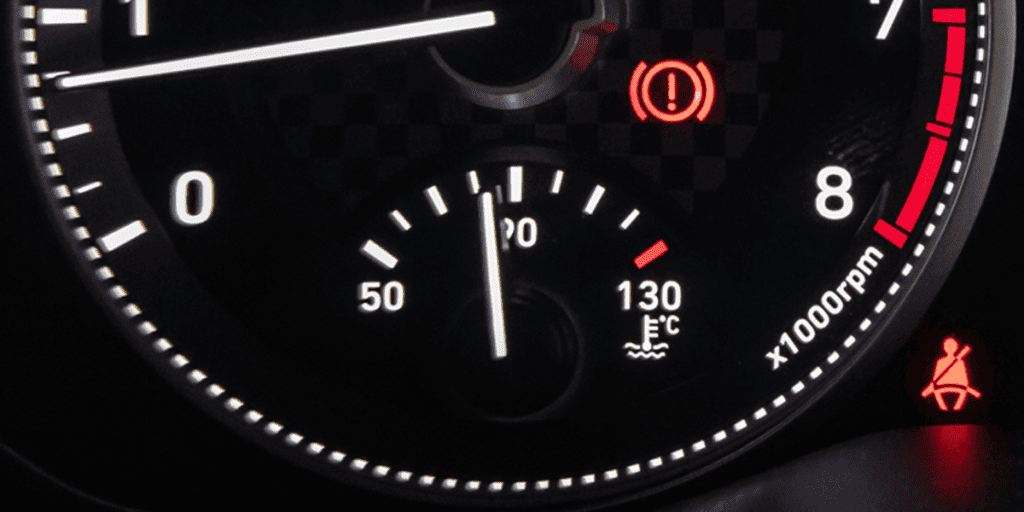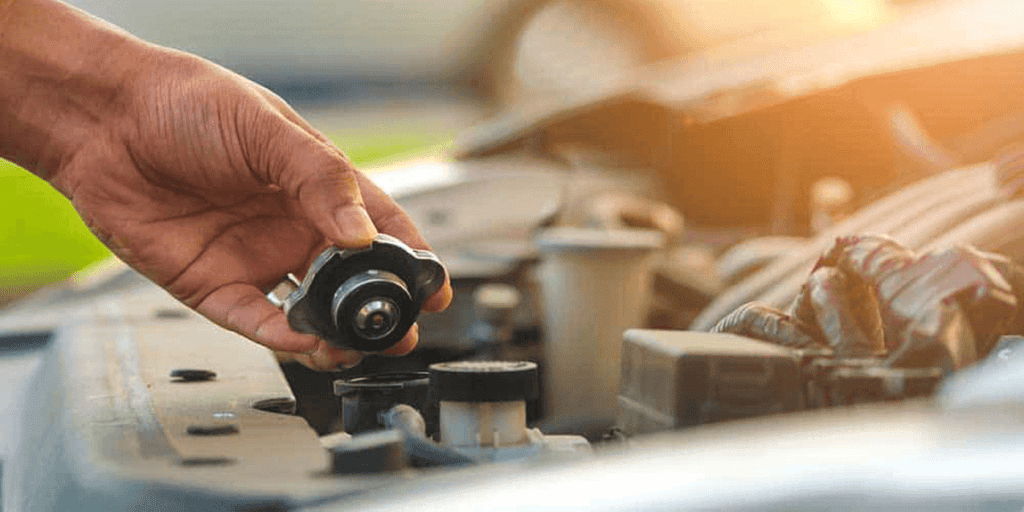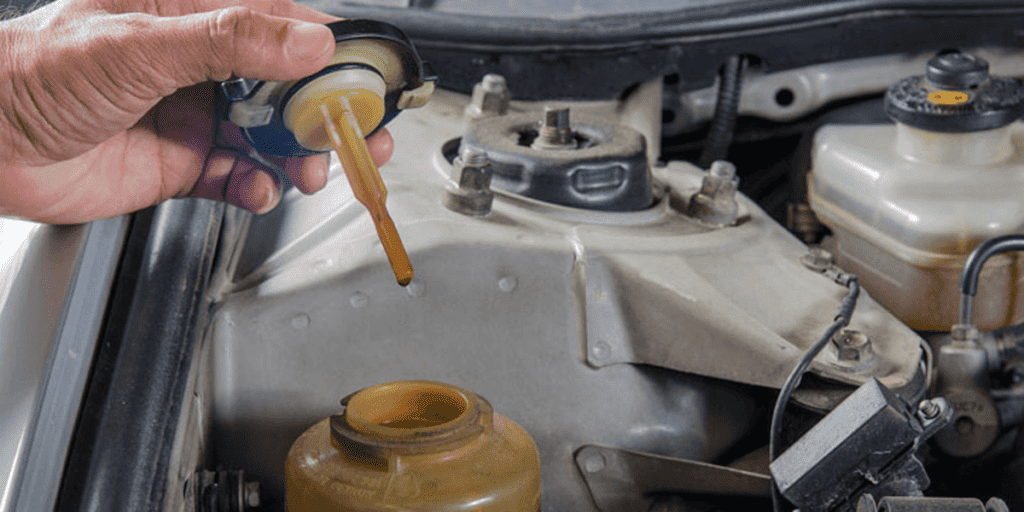
Your coolant turns brown when rust particles, oil, or exhausted additives infiltrate the system, each indicating a different problem. Rust from corroded metal—often a radiator, water pump, or engine block—suspends iron particles that tint the fluid. Oil or transmission fluid leaks create a thick, slick brown hue and may produce a milky emulsion. Depleted corrosion inhibitors lower the coolant’s pH, making it acidic and accelerating metal decay. A cracked radiator can also let debris mix in. If you keep an eye on color, odor, and texture, you’ll spot the exact cause and know what to fix next.
Quick Tips
- Rust from corroded metal parts suspends iron particles, tinting coolant brown.
- Depleted coolant additives lower pH, accelerating corrosion and producing a brown hue.
- Oil or transmission fluid leaks mix with coolant, creating thick, oily brown sludge.
- Heater‑core failure can cause brown coolant with a burnt‑plastic odor.
- Head‑gasket breach may show brown coolant plus white oil‑cap sludge, indicating oil intrusion.
Why Coolant Turns Brown – Core Reason
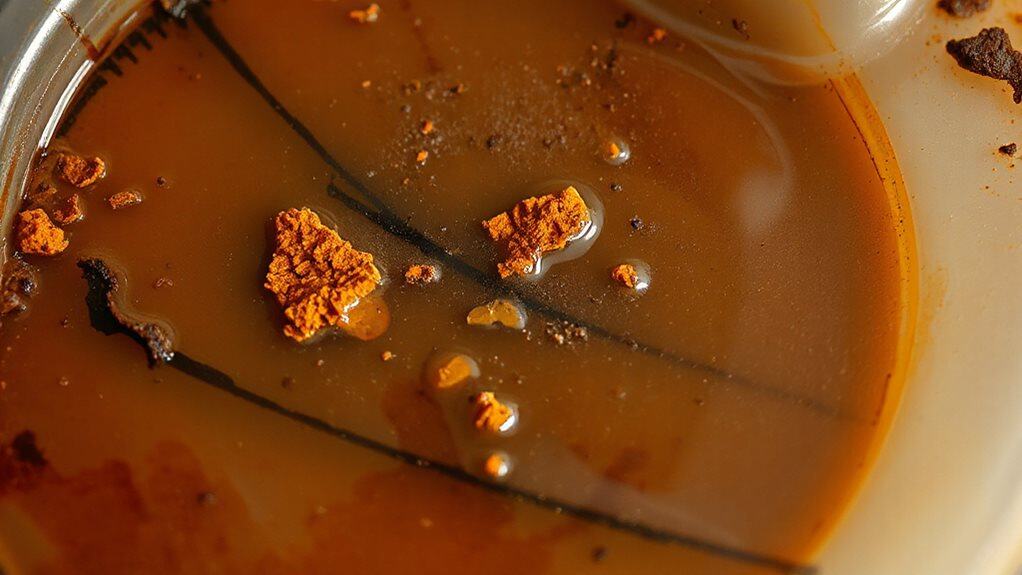
Why does your coolant turn brown?
Metal parts in the cooling system corrode when unprotected, especially in acidic conditions that speed rust on iron components. Rust particles stay suspended, tinting the fluid brown. This occurs in radiators, water pumps, and engine blocks, and worsens if you neglect regular maintenance. Checking fluid color, performing separation tests, and replacing coolant regularly prevent the buildup of rust and other contaminants. Regular maintenance, like timely fluid changes, also helps prevent circulation and contamination problems.
How Depleted Additives Cause Acidic Brown Coolant
When the protective additives in your coolant run out, the mixture loses its ability to neutralize acids, so the pH drops and the fluid becomes more corrosive. This acidity accelerates metal corrosion, releasing rust particles that suspend in the coolant and give it a brown tint. As a result, you’ll see both a chemical shift toward lower pH and a visible color change, indicating that the coolant’s inhibitor system is exhausted. Additive depletion reduces the coolant’s corrosion‑inhibiting capacity, leading to accelerated metal wear. Engines like the Ford inline-six often show these symptoms sooner in high-mileage work trucks due to their long service life and heavier duty use, especially the 300 cubic inch six.
Corrosion Accelerates Without Additives
What happens when the protective additives in your coolant disappear? Once the inhibitor package degrades, the coolant can no longer neutralize acidic by‑products, so metal surfaces become exposed to unchecked corrosion. Iron, copper, and aluminum dissolve faster, releasing ions that further lower pH and turn the fluid brown. The process accelerates quickly, especially in hot zones, producing rust‑colored coolant and reducing cooling efficiency.
Additive Depletion Lowers pH
Once the protective additives have vanished, the coolant’s built‑in buffers lose their ability to hold the pH in the neutral‑to‑basic range, typically above 7.0.
Without those buffers, glycol breakdown acids accumulate, dropping pH quickly below 7.5.
Acidic coolant accelerates metal corrosion, forms scale, and can cause overheating.
Test pH regularly, keep coolant properly diluted, and replace depleted fluid before damage spreads.
Rust Particles Tint Coolant Brown
Why does your coolant turn brown?
Rust particles from corroded aluminum radiators tint the fluid, especially after 8‑10 years of wear.
Depleted antifreeze additives cease protecting metal, allowing oxidation.
These particles settle, block passages, and act as insulators, reducing heat transfer.
The brown hue signals ongoing corrosion, urging you to flush, clean, and replace coolant with a proper 50/50 antifreeze mix.
Identify Rust vs. Oil Contamination in Brown Coolant
You’ll notice rust particles as gritty, brown specks that settle without any oily film, while oil contamination leaves a slick, deep‑brown hue that may smell faintly of burnt oil and forms a milky emulsion.
Running a fluid‑separation test—draining a sample into a clear container—shows rust sinking to the bottom and oil floating or dispersing.
If you also observe dashboard warnings like a persistent Service Ride Control light, inspect related vehicle systems as multiple faults can indicate broader maintenance issues.
Rust Particle Appearance
What you see when you look at a brown coolant sample can tell you whether rust particles or oil contamination are the culprit. Rust appears as fine, metallic reddish‑brown flecks that settle at the bottom, feel gritty, and scatter light when you shine a flashlight. A magnet pulls them out, and paper towels show a powdery residue. These signs indicate iron oxide corrosion rather than oily sludge.
Oil Smell Presence
When you notice a burnt, solvent‑like odor coming from a brown coolant sample, it’s a strong indicator that oil has entered the cooling system rather than rust particles. Oil’s sharp, burnt smell intensifies with heat, unlike rust’s faint metallic note. Check the dipstick; a higher oil level and solvent scent confirm oil contamination. This distinction helps you target gasket repair instead of rust removal.
Fluid Separation Test
How can you tell whether the brown hue in your coolant stems from rust or oil? Perform a fluid separation test by sampling coolant from a push‑button or KST‑Series valve at low idle, discarding debris, then filling a clear tube. Observe whether oily layers float and rust particles settle. Use a refractometer to confirm glycol concentration; water‑based readings indicate rust, while oily separation points to oil contamination.
Test Coolant pH and Acidity Levels
Testing coolant pH and acidity levels is essential for confirming that the coolant mixture still protects the engine from corrosion. Use pH test strips for quick color‑coded readings; they indicate whether the water‑antifreeze ratio stays within the 8.5‑10.0 range. For greater accuracy, a calibrated digital pH meter gives precise numbers and can detect reserve alkalinity. Values below 8.5 suggest replacement, while 7 or lower risk corrosive damage. In low-traffic areas or private driveways, consider also checking for external factors like exposure to road contaminants that can affect coolant condition and ventilation maintenance.
When a Cracked Radiator Lets Fluid Mix
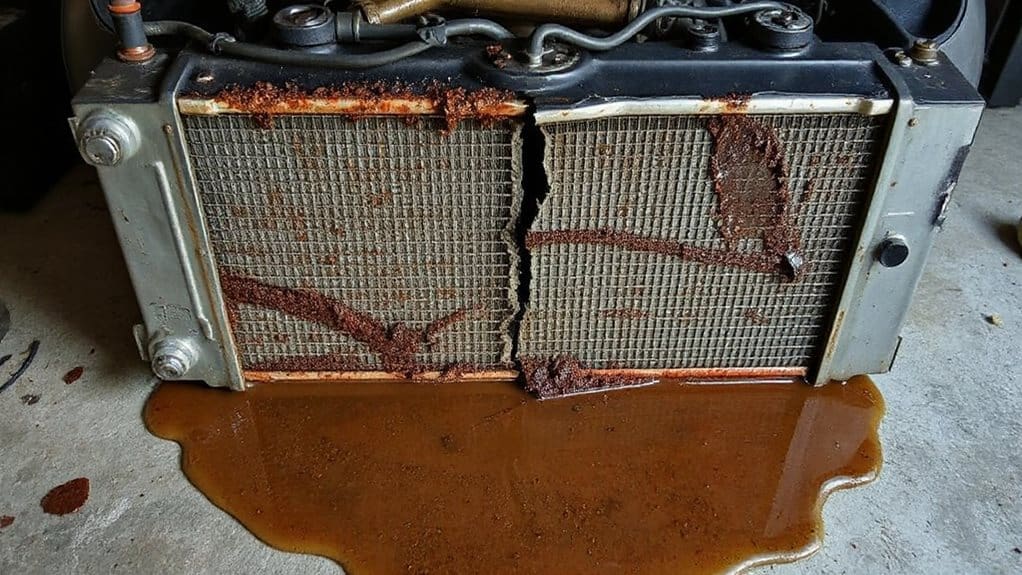
What happens when a radiator develops a crack? Coolant can leak into oil passages, mixing with engine oil and forming a milky, gravy‑like substance you’ll see on the dipstick or in the reservoir.
The contamination lowers oil viscosity, reduces lubrication, and may cause white smoke from the exhaust. Overheating, pressure loss, and sludge buildup follow, often leading to severe engine damage if not repaired promptly. Check the cooling system and transmission cooling lines, because excessive heat can accelerate fluid breakdown and cause overheating issues that compound engine and transmission damage.
Why a New Radiator Might Not Stop Coolant Contamination?
Even after you replace a cracked radiator, the coolant can stay brown because the rest of the cooling system still holds old contaminants. Residual rust particles, mineral deposits, and degraded hose additives linger, especially if you skip a thorough flush. Incorrect clamp placement creates crevices where rust builds, and using the wrong coolant type accelerates corrosion, so the new radiator continues to see brown fluid. Winter packages like BMW’s add features such as heated seats and a heated steering wheel to improve comfort in cold conditions, which can make cold-weather maintenance like preventing coolant contamination more manageable when you’re driving in winter.
Flush System and Add Fresh Coolant – Step by Step
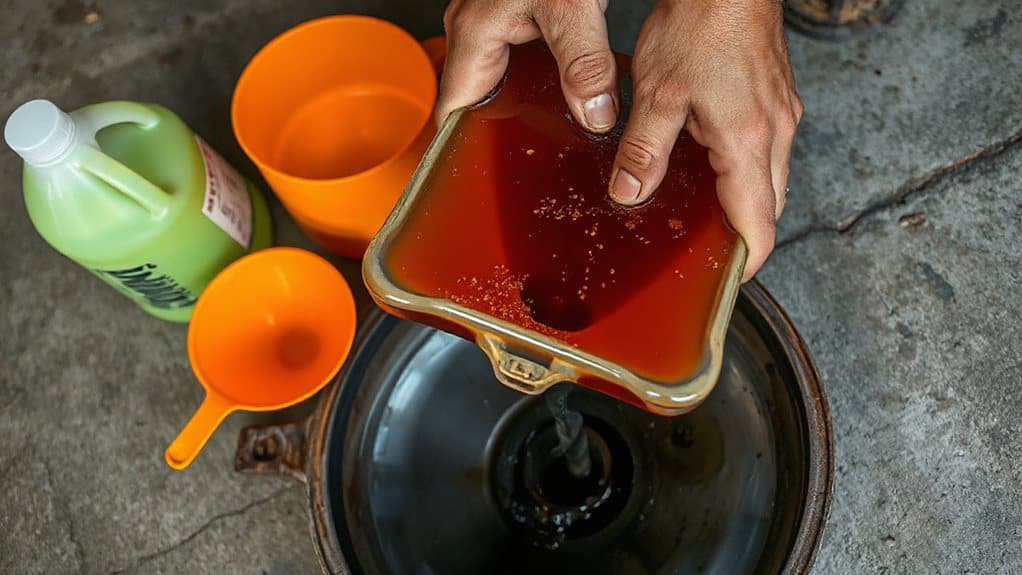
A proper flush and refill sequence restores the cooling system’s efficiency by removing rust, mineral deposits, and degraded coolant that cause brown fluid.
First, let the engine cool, place a pan under the radiator drain, and open the cap to speed flow. Loosen the petcock, drain completely, then close it. Fill with distilled water, run the engine with the heater high for ten minutes, cool, and repeat until water runs clear.
Finally, mix the recommended coolant‑to‑water ratio, fill to the “F” mark, run the engine again, and top up after cooling, bleeding any air pockets.
Preventive Monitoring of Radiator and Fluid Levels
After flushing out rust and old coolant, the next step is to keep the system clean by regularly checking the radiator and fluid levels. You should inspect the translucent reservoir, ensuring coolant sits between MIN and MAX marks, and verify hose clamps are tight.
Perform visual checks for leaks, use a pressure tester quarterly, and consult the owner’s manual for the correct 50/50 mix ratio. This routine prevents overheating and costly engine damage.
Quick‑Reference Troubleshooting Checklist
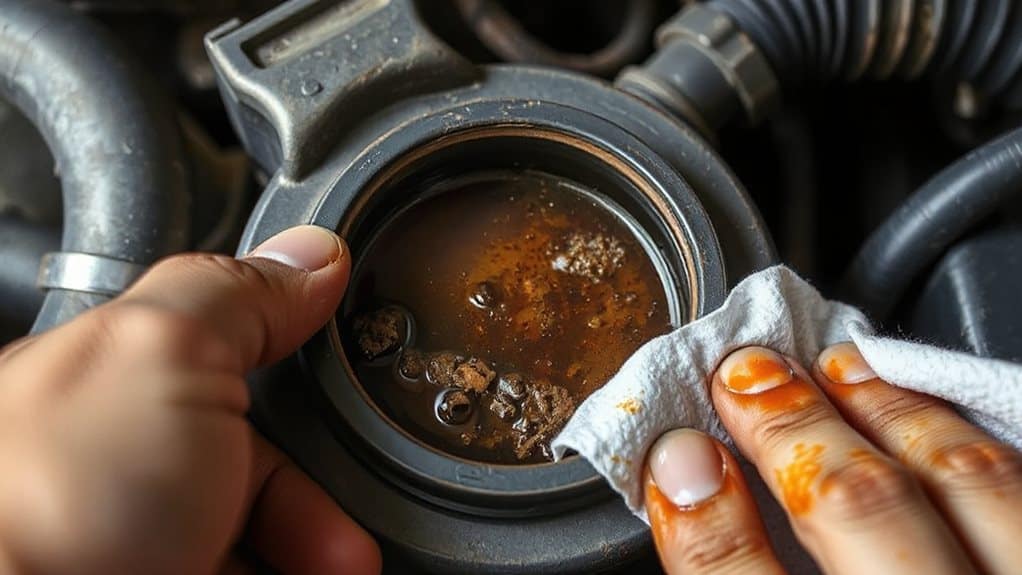
How can you quickly determine why your coolant turned brown?
Inspect color and smell: murky brown suggests rust, sludge‑like indicates oil mixing, thick brown points to oil or transmission fluid leaks, dark brown with burnt‑plastic odor hints at heater core problems.
Check the oil cap for white sludge (head gasket failure) or milky oil (coolant‑oil mix).
Flush system, then re‑examine. If discoloration persists, seek professional diagnosis.
Wrapping Up
You’ve learned that brown coolant usually signals rust, oil contamination, or depleted additives, each indicating a deeper issue in the cooling system. By testing pH, checking for cracks, and flushing the radiator, you can pinpoint the cause and restore proper function. Regular monitoring of fluid levels and condition will help you catch problems early, preventing costly repairs and ensuring the engine stays protected. Follow the outlined steps to maintain a clean, effective cooling system.